
Freshwater · Beginner
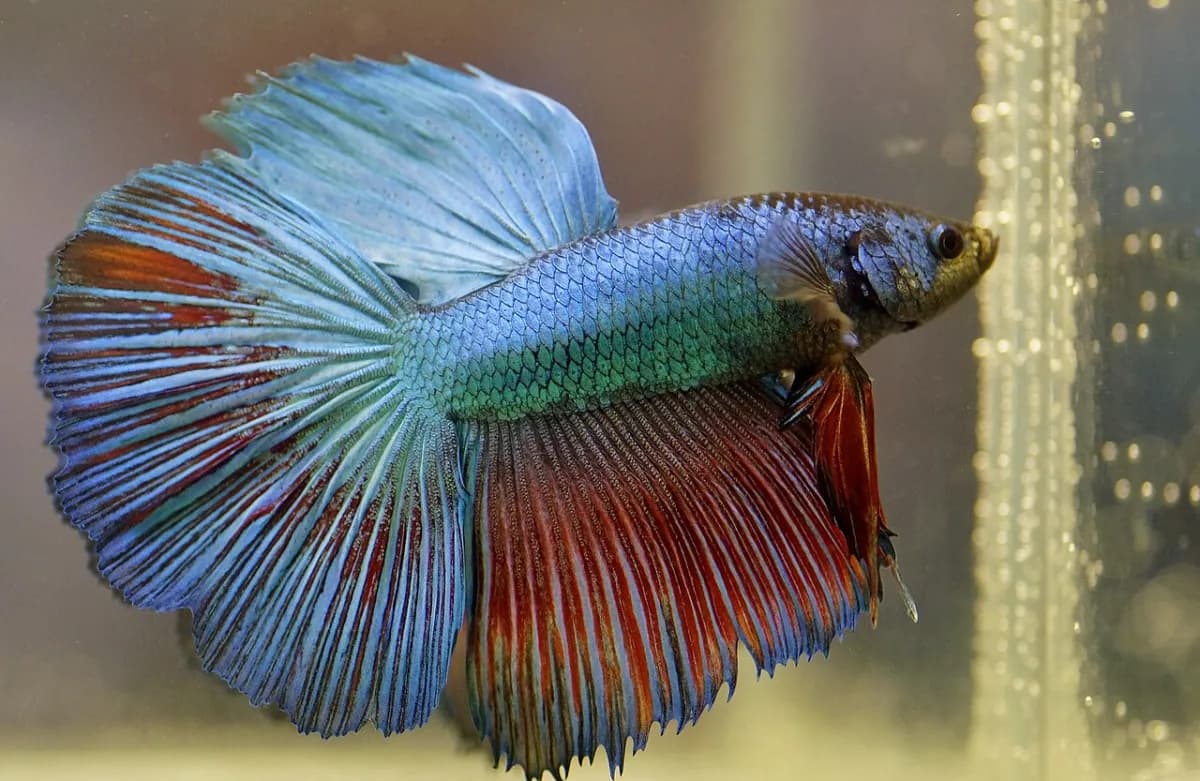
Betta
Betta splendens
Bettas are labyrinth fish that breathe from the surface, but they still need a heated, filtered aquarium, not a vase. A 5-gallon tank is a minimum for a single male.
Min. tank: 5 gal
Care notes →Profiles with adult tank sizes, temperament, and FAQs. Filter by water type or difficulty.
Showing 39 species
Freshwater · Beginner
Betta splendens
Bettas are labyrinth fish that breathe from the surface, but they still need a heated, filtered aquarium, not a vase. A 5-gallon tank is a minimum for a single male.
Min. tank: 5 gal
Care notes →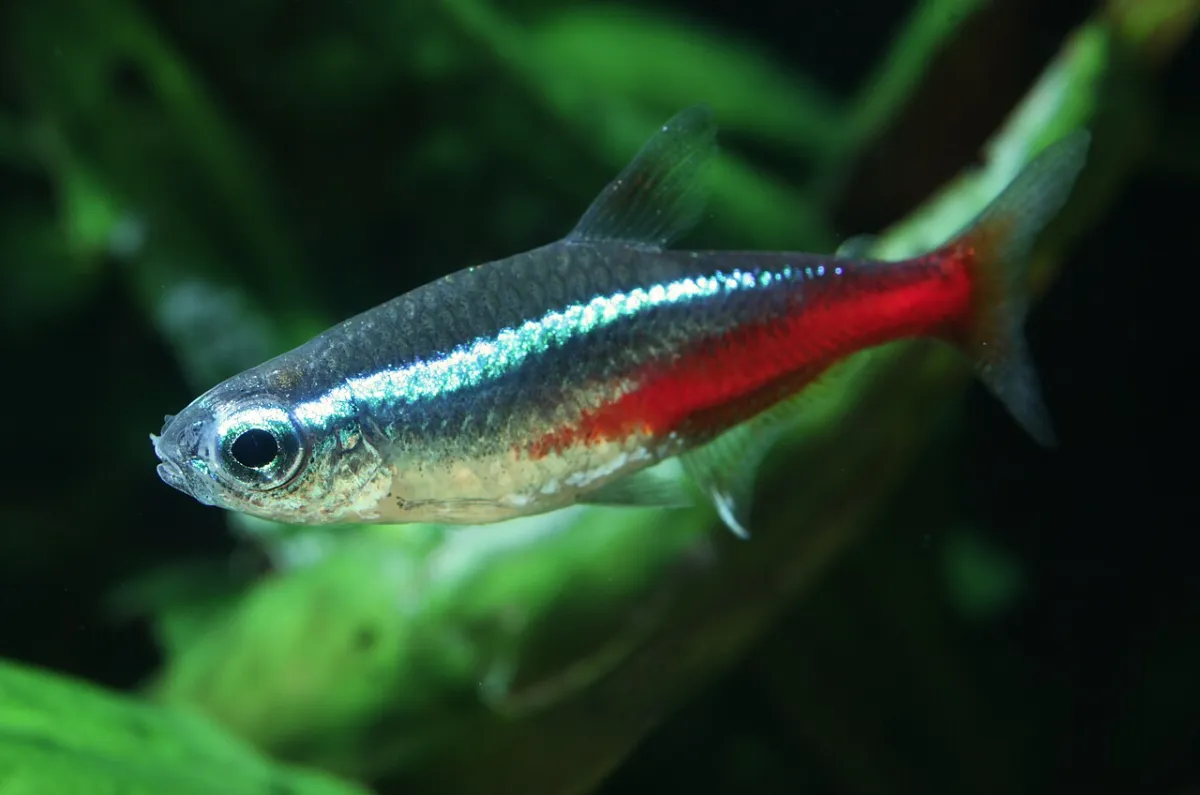
Freshwater · Beginner
Paracheirodon innesi
Keep neon tetras in a school of at least 6, and plan on 8 to 12 in a 20-gallon tank. Adults stay under 1.5 inches. A 10-gallon is the minimum for a small school. Hold the water at 72 to 78°F, soft and slightly acidic (pH 5.5 to 7.0), with plants and dim light.
Min. tank: 10 gal
Care notes →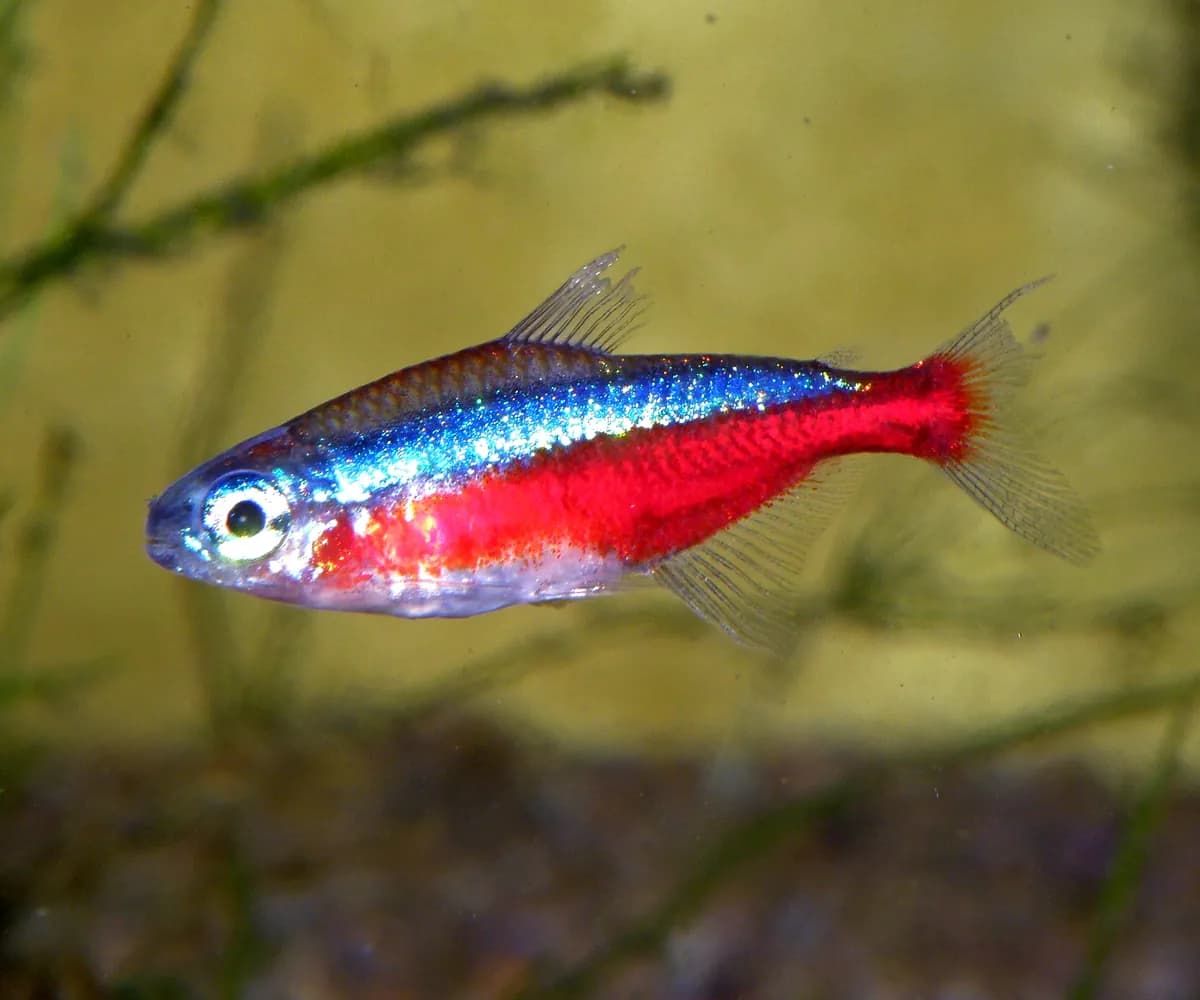
Freshwater · Intermediate
Paracheirodon axelrodi
Cardinal tetras (Paracheirodon axelrodi) are Amazon schoolers with a full red stripe from snout to tail. Plan a school of eight to ten in a planted 20-gallon with soft, clean water, not a neon-sized squeeze in a 10.
Min. tank: 20 gal
Care notes →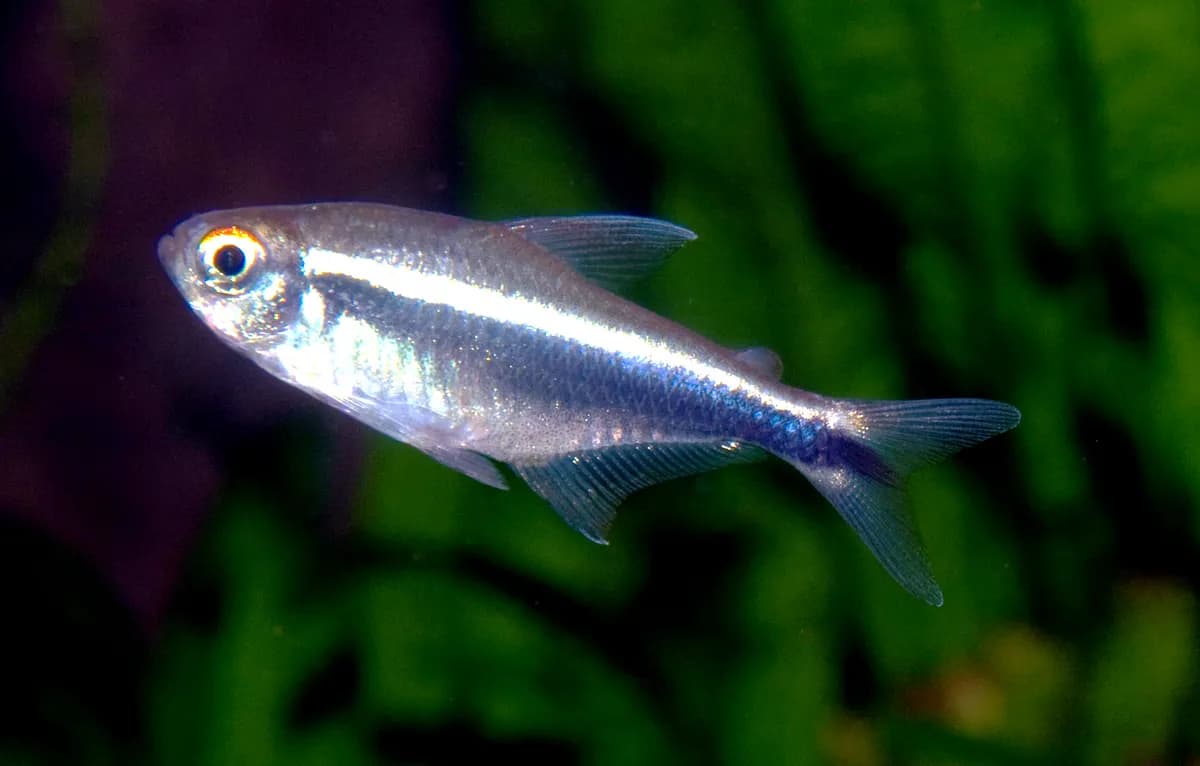
Freshwater · Beginner
Hyphessobrycon herbertaxelrodi
Black neon tetras (Hyphessobrycon herbertaxelrodi) stay about 1.5 inches. Keep at least six in a cycled 15-gallon, or eight to ten in a 20, with plants, moderate flow, and water at 72 to 80°F. They handle ordinary tap water better than neons or cardinals do.
Min. tank: 15 gal
Care notes →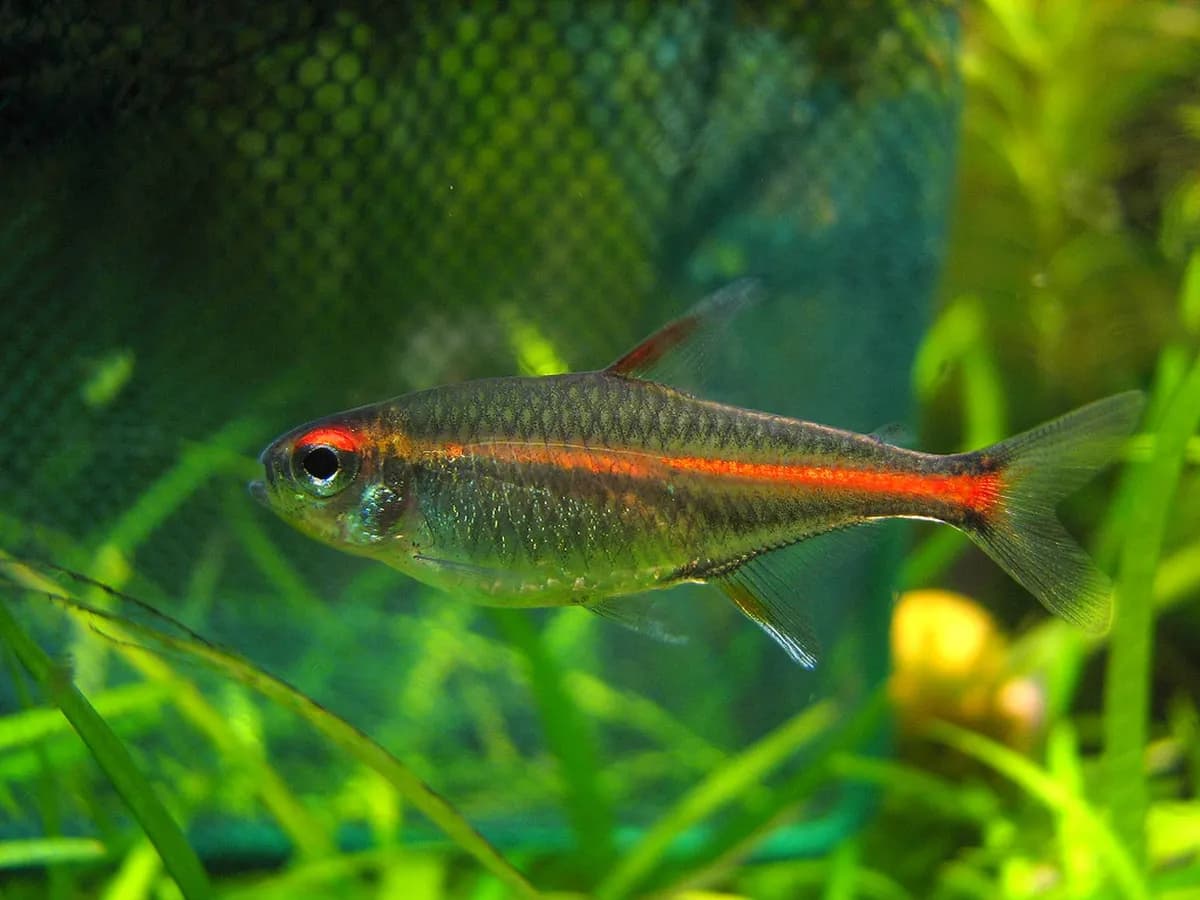
Freshwater · Beginner
Hemigrammus erythrozonus
Glowlight tetras (Hemigrammus erythrozonus) grow to about 1.5 inches and carry a thin orange-red line from nose to tail. Keep six or more in a cycled 15-gallon, or eight to ten in a 20, at 74 to 82°F. Dark substrate, floating plants, and dim light make the line show.
Min. tank: 15 gal
Care notes →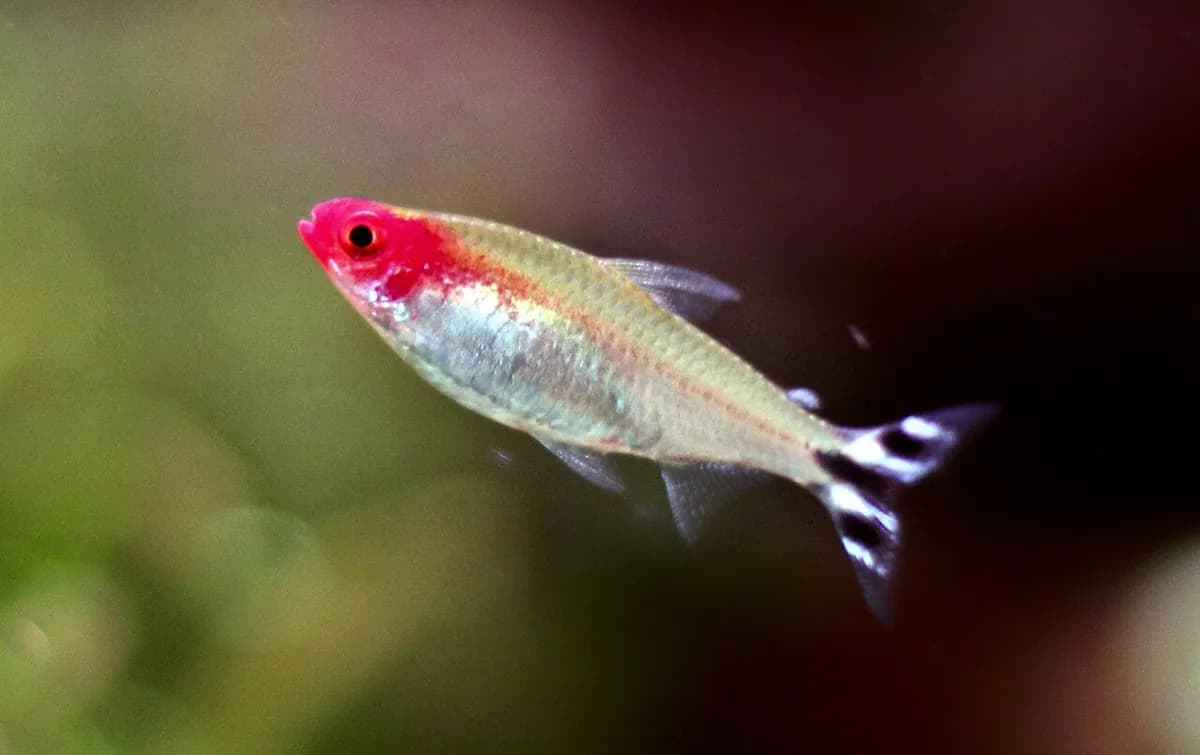
Freshwater · Intermediate
Hemigrammus bleheri / H. rhodostomus / Petitella (trade mix)
Rummy-nose tetras sold in shops are a trade mix of Hemigrammus bleheri, H. rhodostomus, and Petitella names. Care is the same lane. Adults reach about 2 inches. How many fit in a 20-gallon? Eight to ten in a 20-gallon long, and ten still leaves room for six peppered cories on the bottom. Plant it well and keep the water soft to moderate and clean. A bright red nose and black-and-white striped tail are the ID. A pale nose often means stress, a new tank, or dirty water.
Min. tank: 20 gal
Care notes →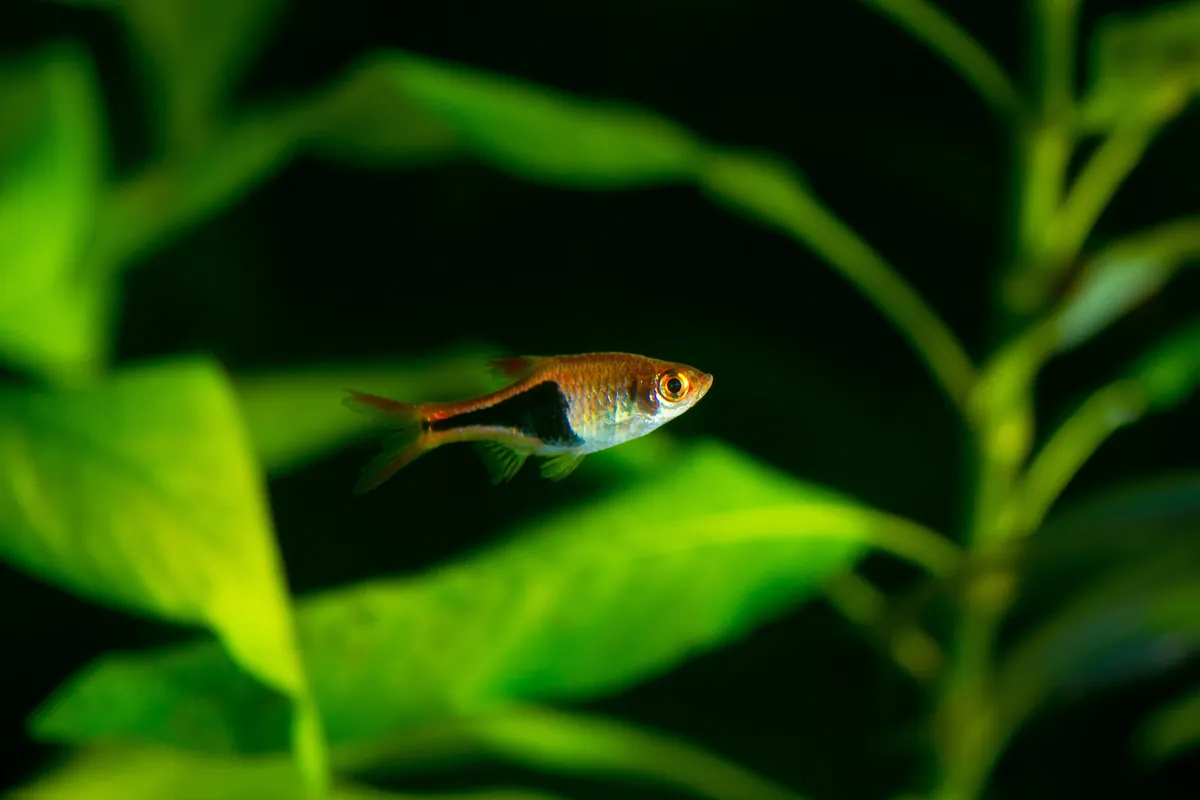
Freshwater · Beginner
Trigonostigma heteromorpha
Harlequin rasboras (Trigonostigma heteromorpha) are peaceful midwater schoolers with a black triangle on the rear body. Plan six to ten in a planted 20-gallon; a 10 is a tight floor for six, not a comfortable home.
Min. tank: 20 gal
Care notes →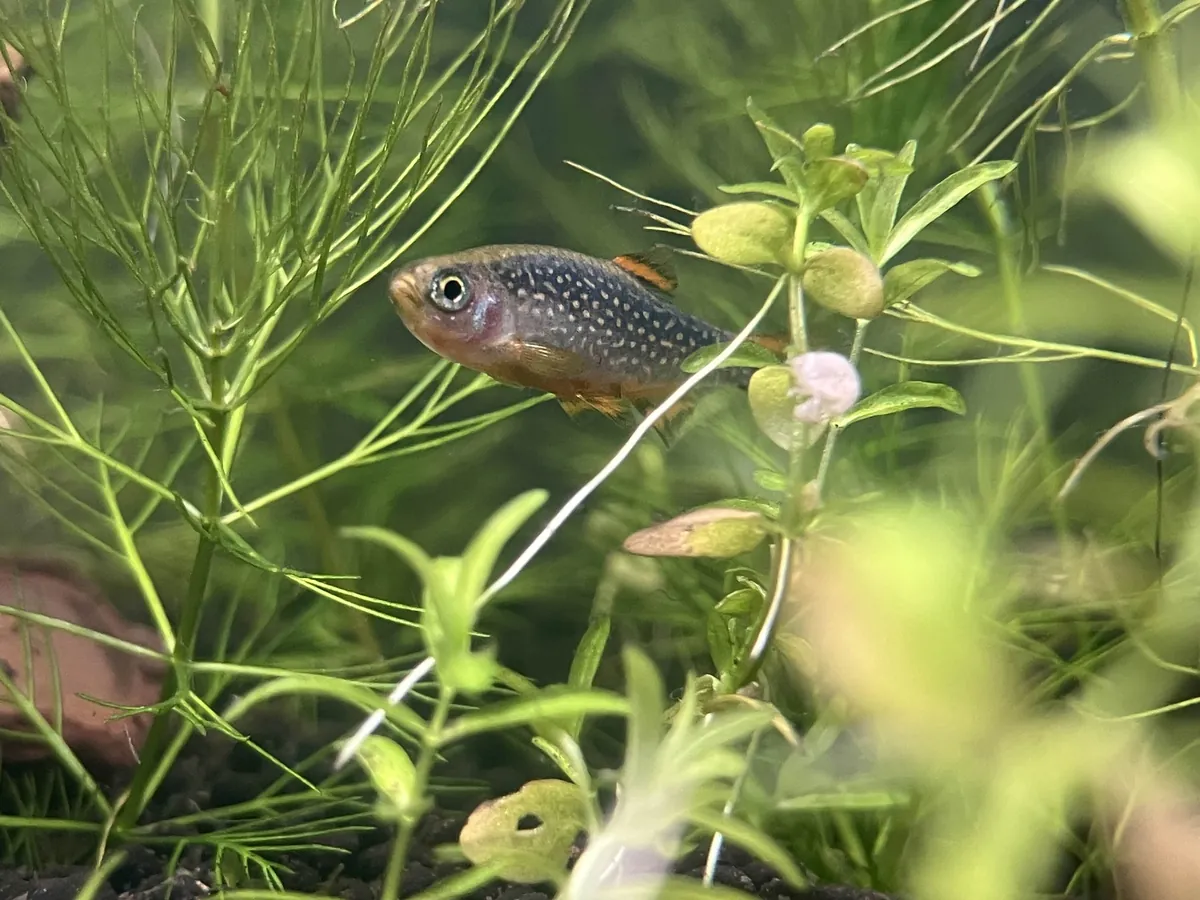
Freshwater · Beginner
Danio margaritatus
Celestial pearl danios (Danio margaritatus), also sold as galaxy rasboras, are ~1-inch nano schoolers for a planted 20-gallon. Keep 10-15 with gentle flow, dense plants, and dark substrate. A 10-12 gallon long is a tight species-only floor, not a comfortable community home.
Min. tank: 20 gal
Care notes →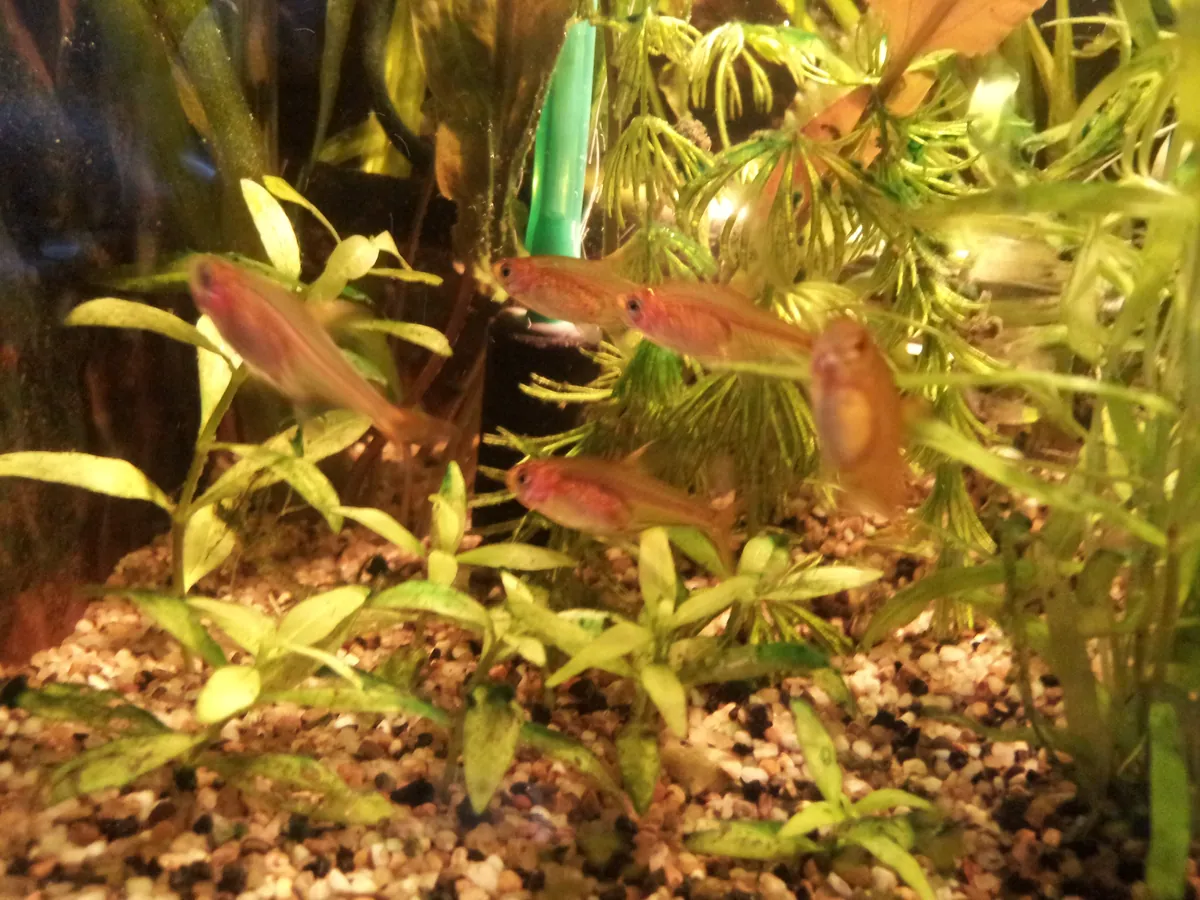
Freshwater · Beginner
Hyphessobrycon amandae
Ember tetras (Hyphessobrycon amandae) are ~0.7-1 inch orange nano schoolers for a planted 10-20 gallon. Keep 10 or more with gentle flow, plants, and micro foods. A 10-gallon works for a species school; use 20 gallons if you mix in other fish.
Min. tank: 10 gal
Care notes →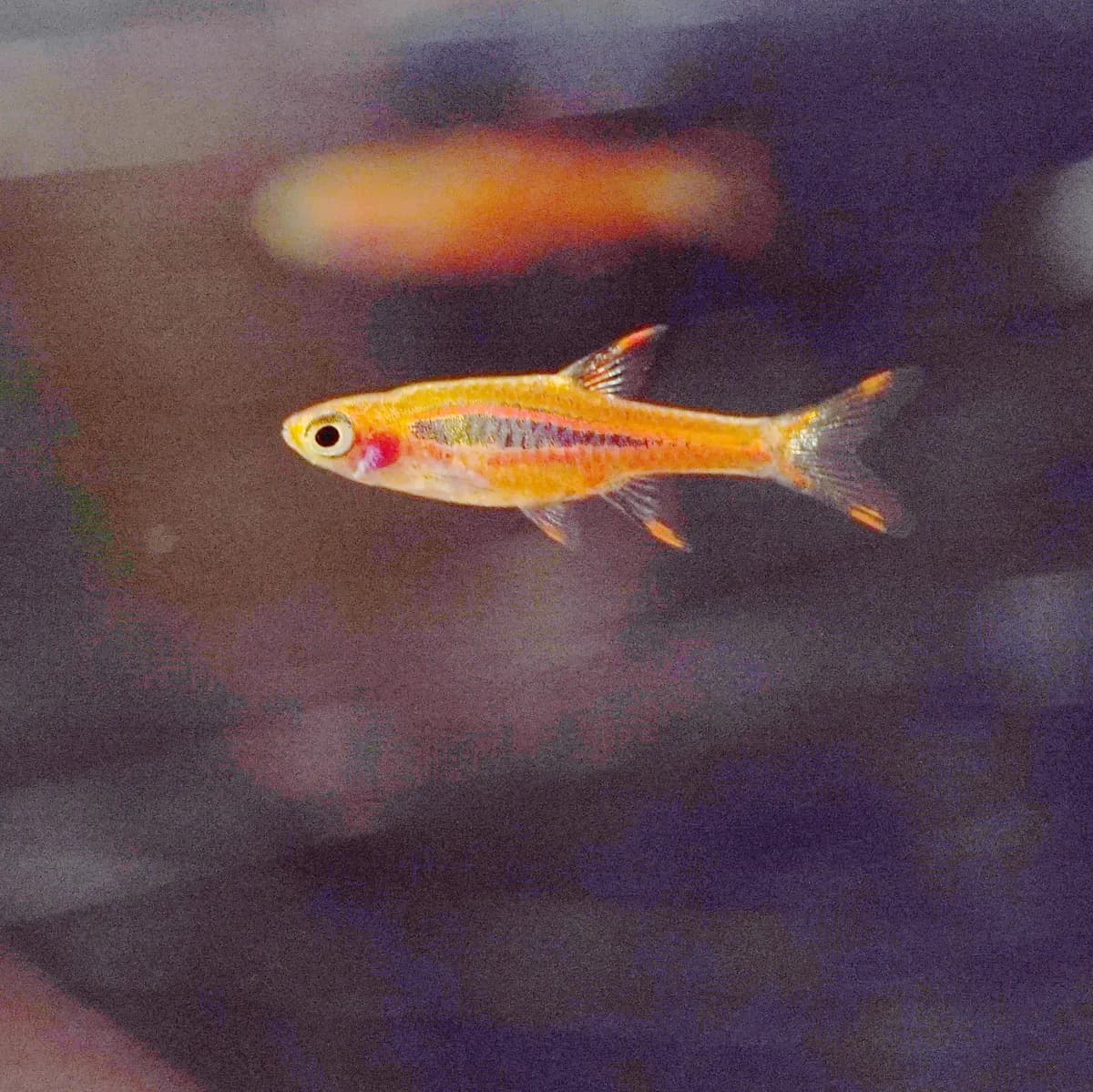
Freshwater · Beginner
Boraras brigittae
Chili rasboras (Boraras brigittae) are ~0.6-0.8 inch red nano schoolers for a densely planted 10-20 gallon. Keep 10-12 or more with soft acidic water, gentle flow, dark substrate, and micro foods. A 10-gallon is a species-only floor; use 20 gallons if you mix in other fish.
Min. tank: 10 gal
Care notes →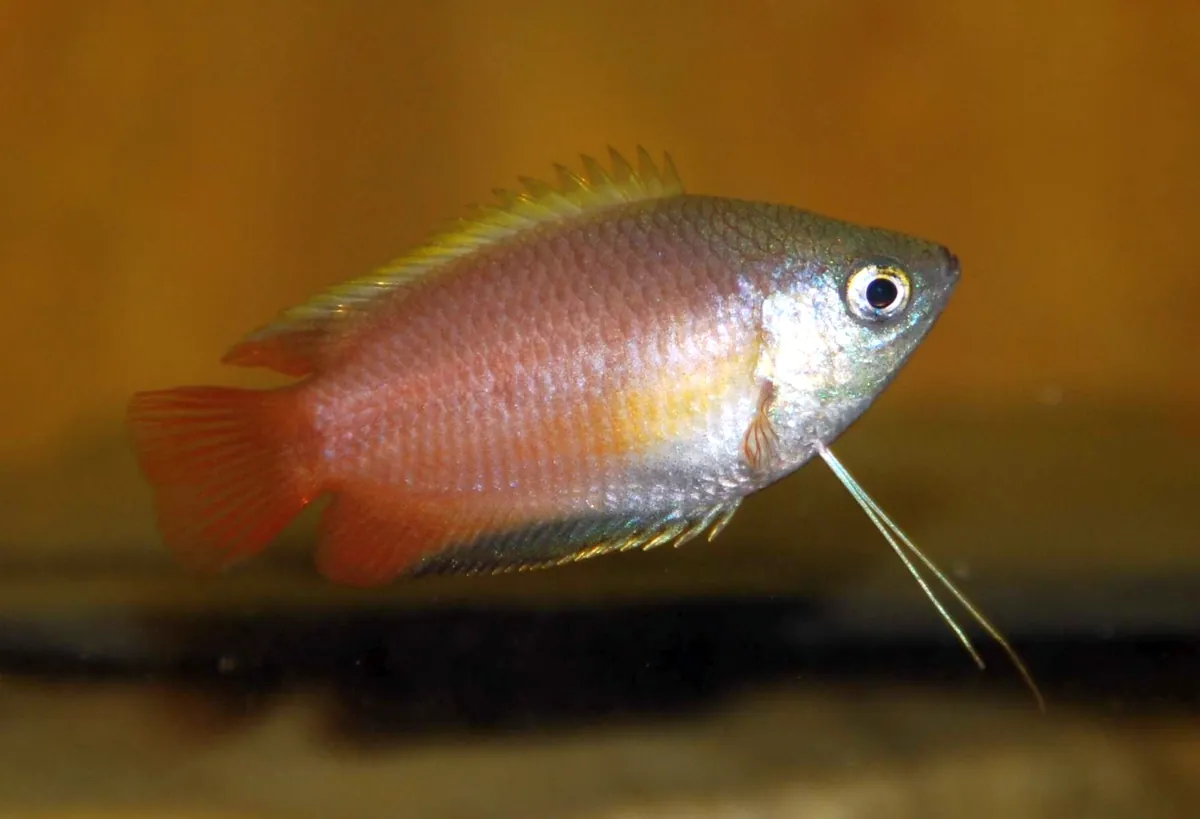
Freshwater · Beginner
Trichogaster chuna
Honey gouramis (Trichogaster chuna) are small, peaceful labyrinth fish for a planted 10-gallon solo or a 20-gallon pair or community. They are not dwarf gouramis. Shops often mislabel orange dwarfs as honey.
Min. tank: 10 gal
Care notes →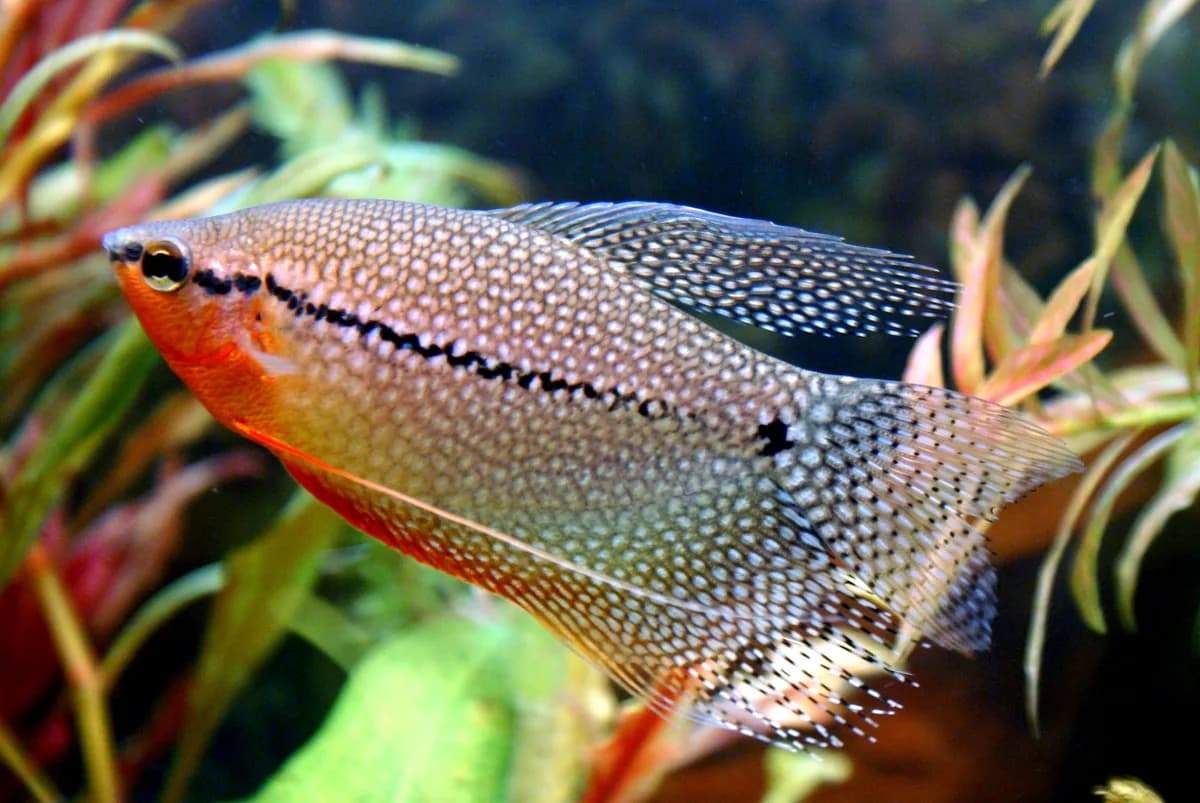
Freshwater · Beginner
Trichopodus leerii
Pearl gouramis (Trichopodus leerii) grow to about 4 to 5 inches and are calm enough to be the centerpiece of a community tank. Keep one in a cycled 20-gallon long, or a pair or one gourami plus a school in a 29. They want warm water at 77 to 82°F, floating plants, gentle flow, and a lid that keeps the air above the water warm.
Min. tank: 20 gal
Care notes →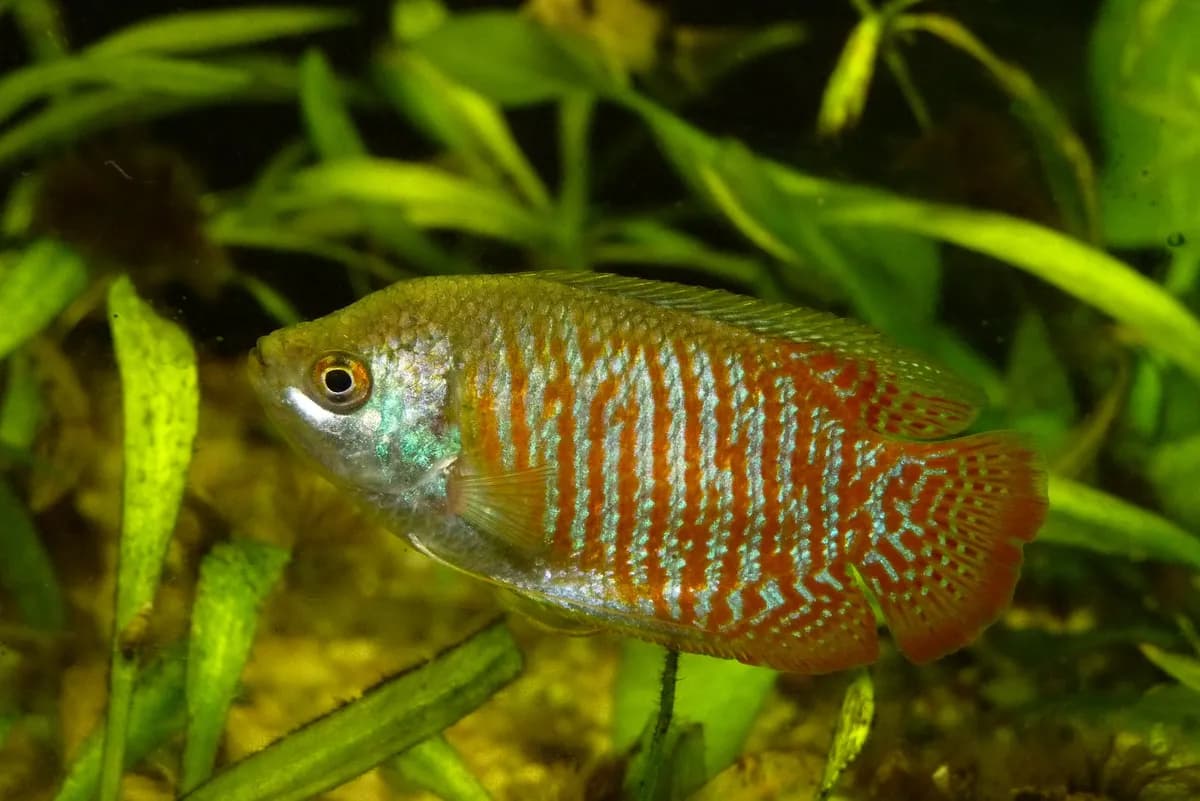
Freshwater · Beginner
Trichogaster lalius
Dwarf gouramis (Trichogaster lalius) grow to about 3 to 3.5 inches and are the most common gourami in shops. One male fits a cycled 10-gallon, and a 20 gives him room for a school or two females. Keep them at 75 to 80°F with floating plants and gentle flow. Farmed fish often carry dwarf gourami iridovirus, so buy carefully and quarantine.
Min. tank: 10 gal
Care notes →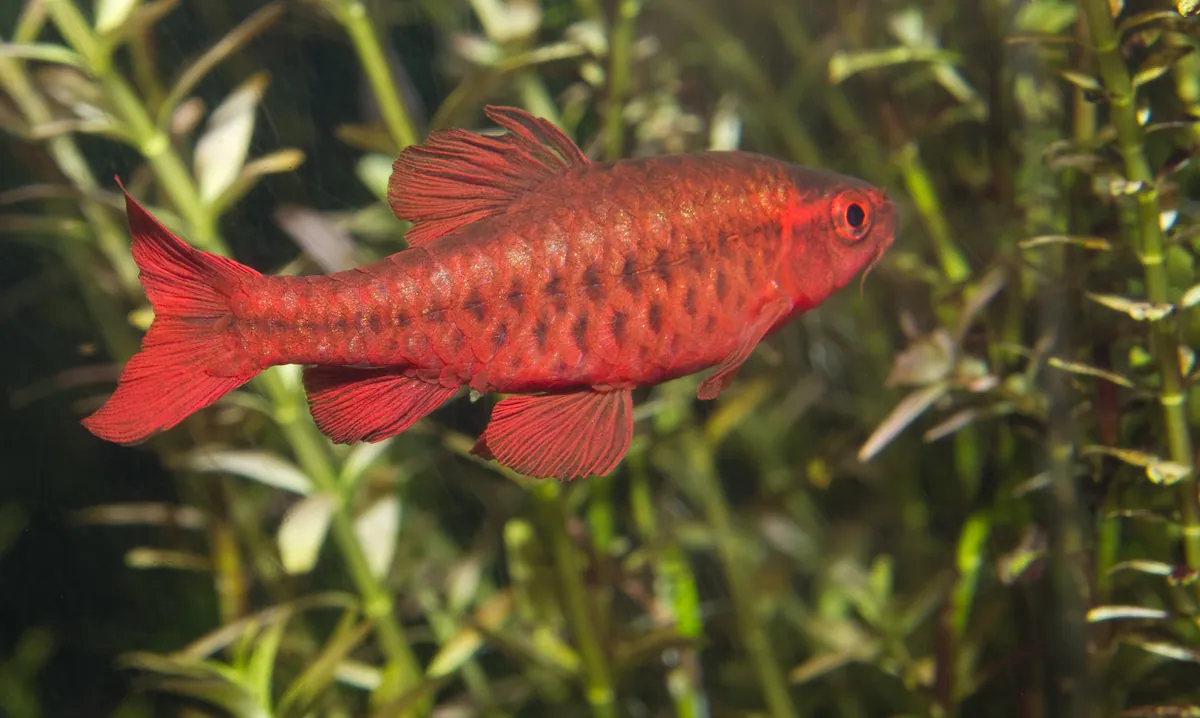
Freshwater · Beginner
Rohanella titteya
Cherry barbs (Rohanella titteya, still sold as Puntius titteya) are the peaceful Sri Lankan barb for a planted 20. Keep six or more so males color up deep red and any nipping stays in-group.
Min. tank: 20 gal
Care notes →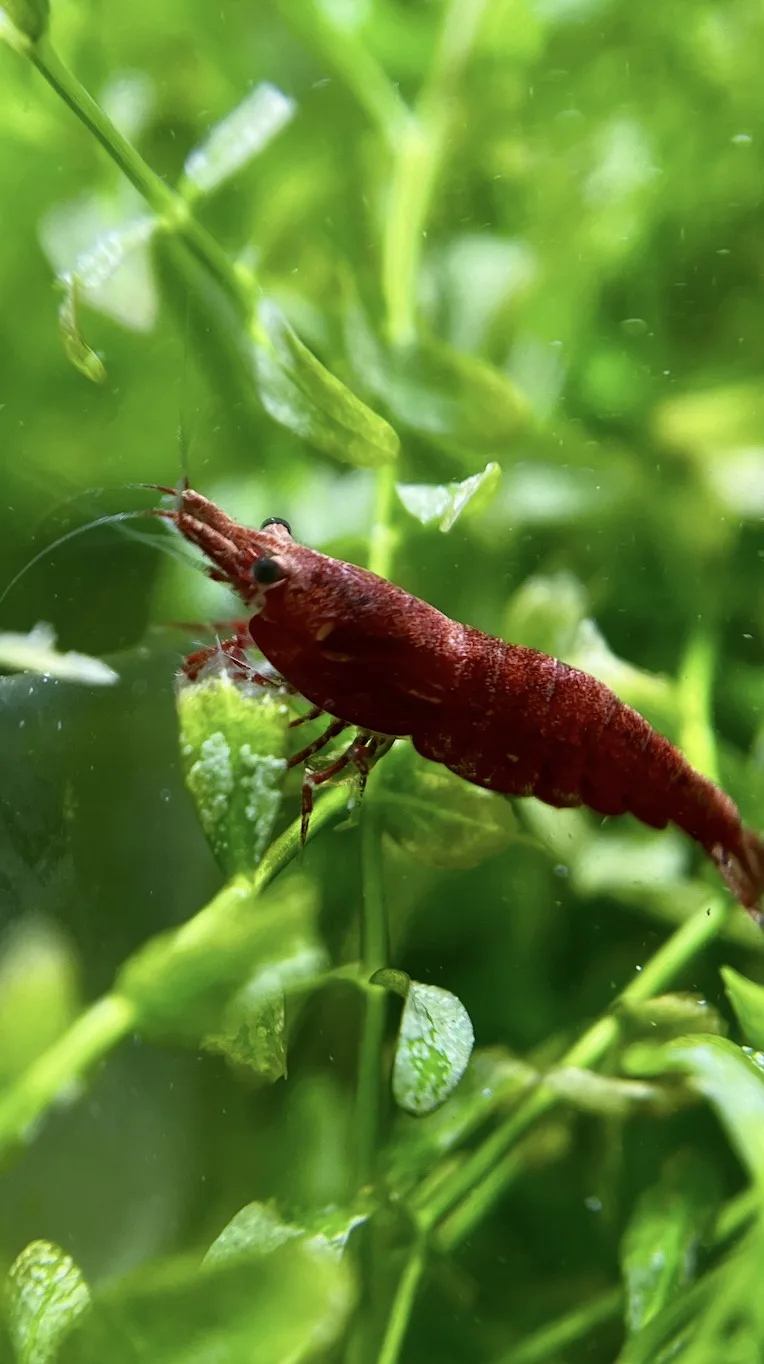
Freshwater · Beginner
Neocaridina davidi
Cherry shrimp (Neocaridina davidi) are beginner invertebrates if the tank is cycled and copper-free. A starter colony of 10+ needs about 5 gallons; 10 gallons is easier. They need minerals for molting, not a second fish-page clone.
Min. tank: 5 gal
Care notes →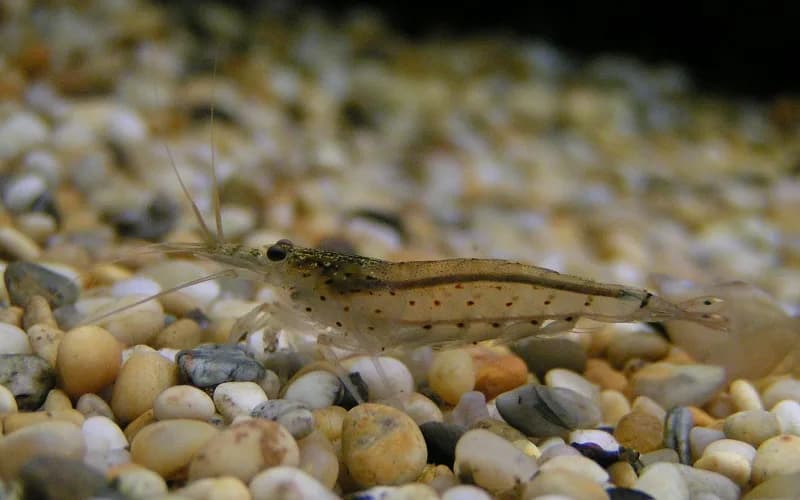
Freshwater · Beginner
Caridina multidentata
Amano shrimp (Caridina multidentata) are beginner invertebrates in a cycled, copper-free tank. Plan a crew of 3–6 in a 20-gallon planted setup. Adults reach about 1.5–2 inches. Feed biofilm plus wafers. Do not expect a freshwater breeding colony.
Min. tank: 20 gal
Care notes →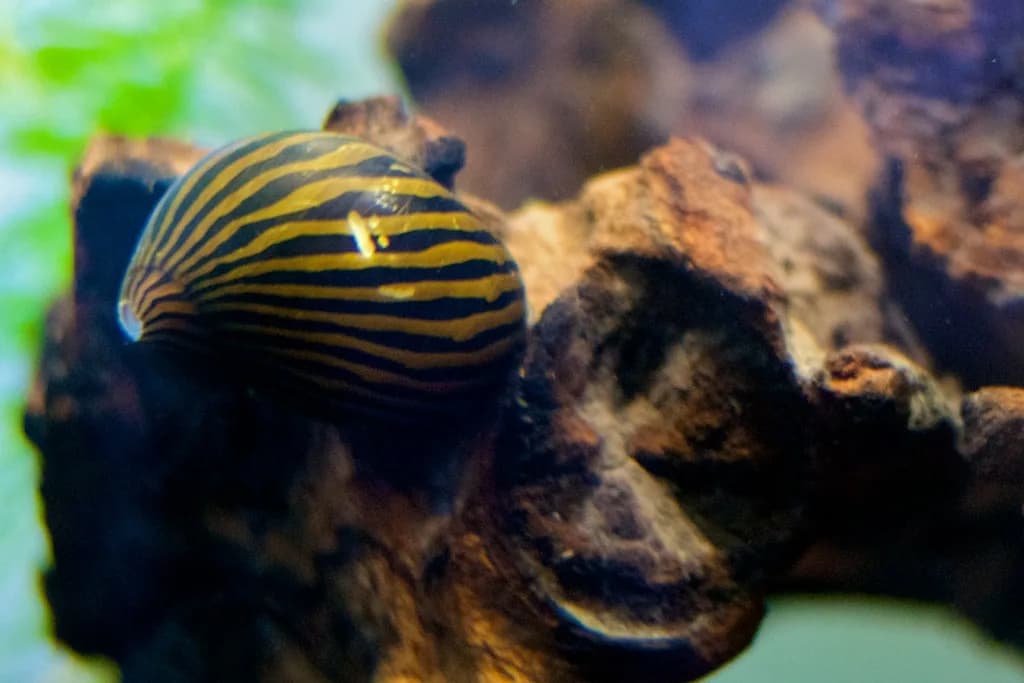
Freshwater · Beginner
Neritina / Clithon / Vittina (trade mix)
Nerite snails sold in shops are a trade mix of Neritina, Clithon, and Vittina. Zebra, olive, horn, and tiger are shell patterns with the same care. Beginner livestock if the water is hard enough. Adults reach about 0.75–1 inch. Plan one snail per 5–10 gallons, starting at 5 gallons. They graze algae and biofilm, lay eggs that do not hatch in freshwater, and need a lid.
Min. tank: 5 gal
Care notes →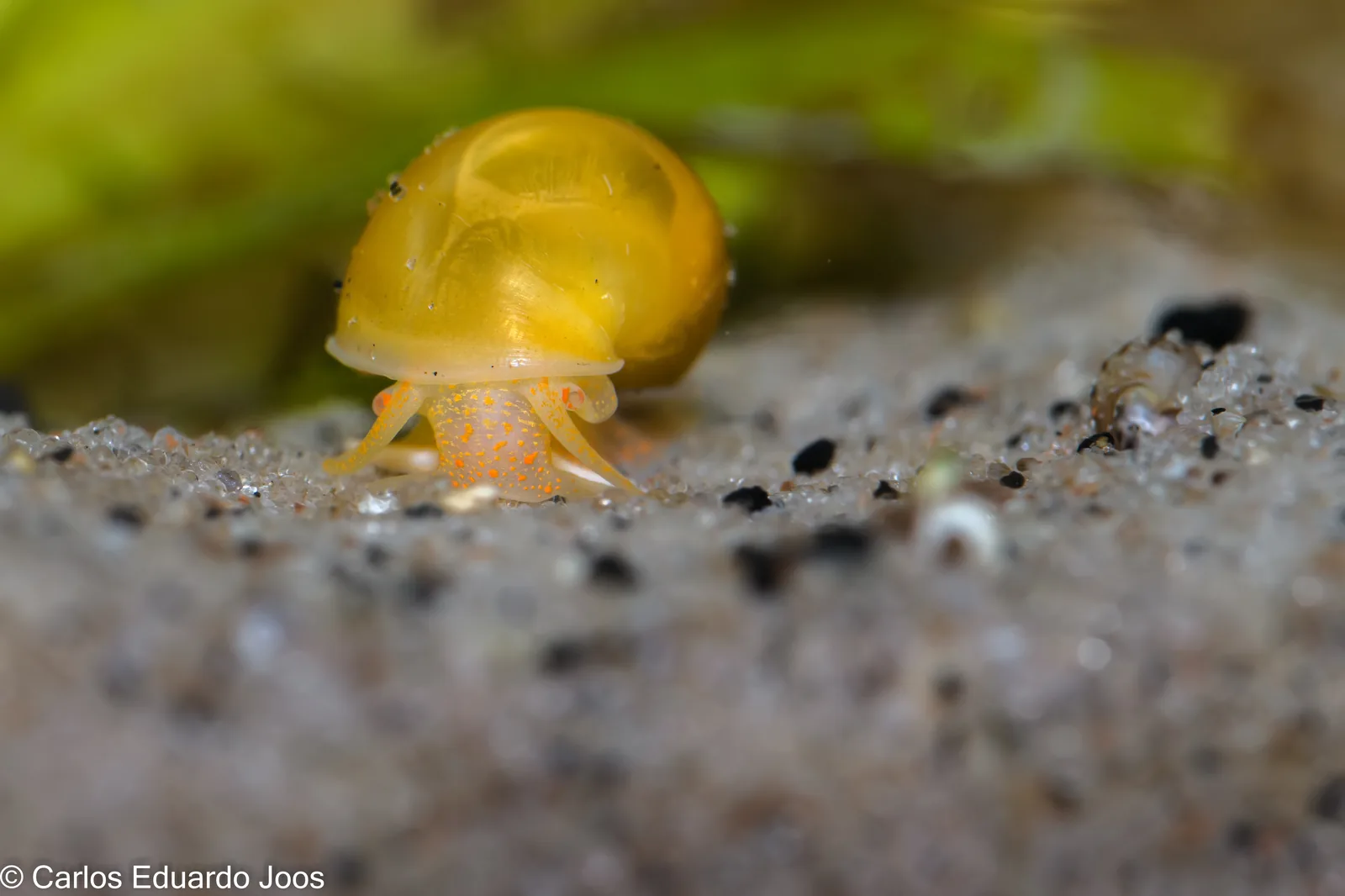
Freshwater · Beginner
Pomacea diffusa
Mystery snails (Pomacea diffusa) are the gold, ivory, blue, and magenta apple snails sold for aquariums. Same care across those color morphs. Adults reach about 2 inches. Plan 5–10 gallons for one, and expect more bioload than a nerite. They breathe at the surface, lay pink clutches above the waterline, and will tour the carpet if you skip the lid. Hard water and calcium keep the shell intact.
Min. tank: 5 gal
Care notes →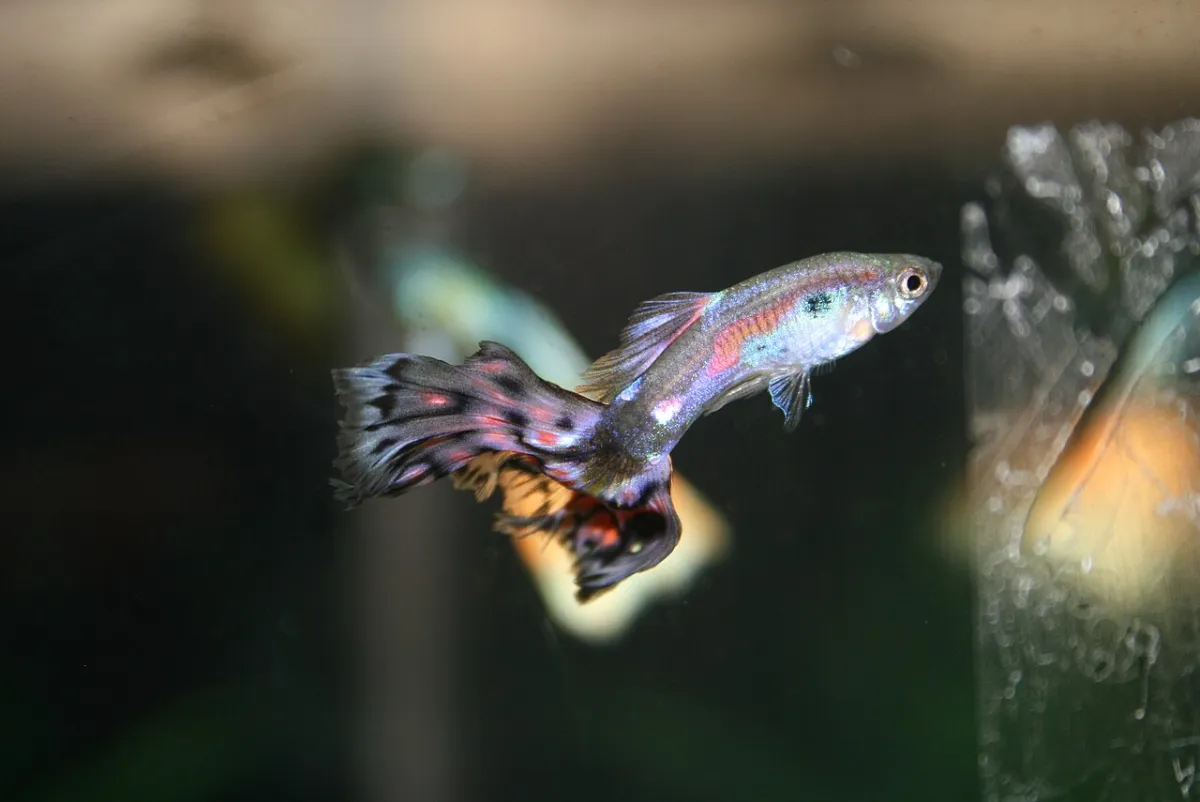
Freshwater · Beginner
Poecilia reticulata
Guppies are colorful, active livebearers for a heated 10-gallon (or larger) community, with one caveat: mixed sexes will produce fry, often lots of them.
Min. tank: 10 gal
Care notes →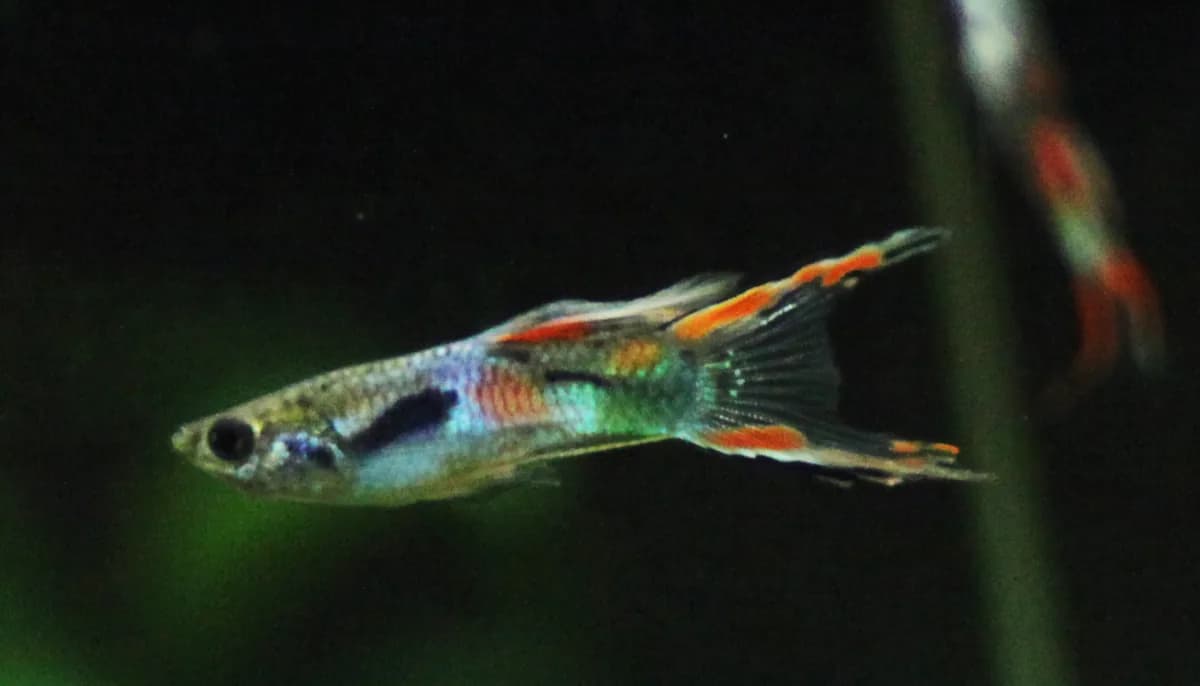
Freshwater · Beginner
Poecilia wingei
Endler's livebearers (Poecilia wingei) are about one-inch males (females a bit larger) for a heated 10-gallon colony. Hard, alkaline water, gentle filtration, and micro foods. Mixed sexes mean fry. Keep them apart from fancy guppies if you care about strain purity.
Min. tank: 10 gal
Care notes →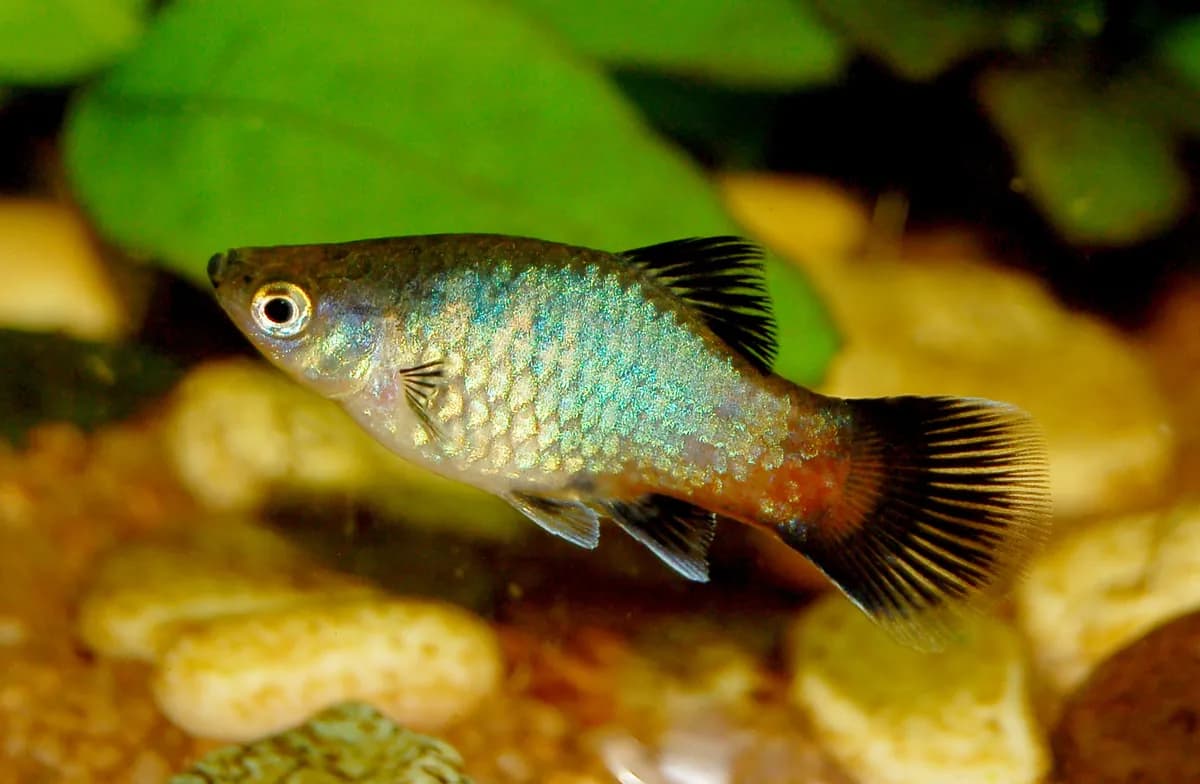
Freshwater · Beginner
Xiphophorus maculatus
Platies are hardy, hard-water livebearers for a heated 15-gallon (20 is easier). Mickey Mouse, wagtail, and sunset are color strains, not different care. Mixed sexes mean fry.
Min. tank: 15 gal
Care notes →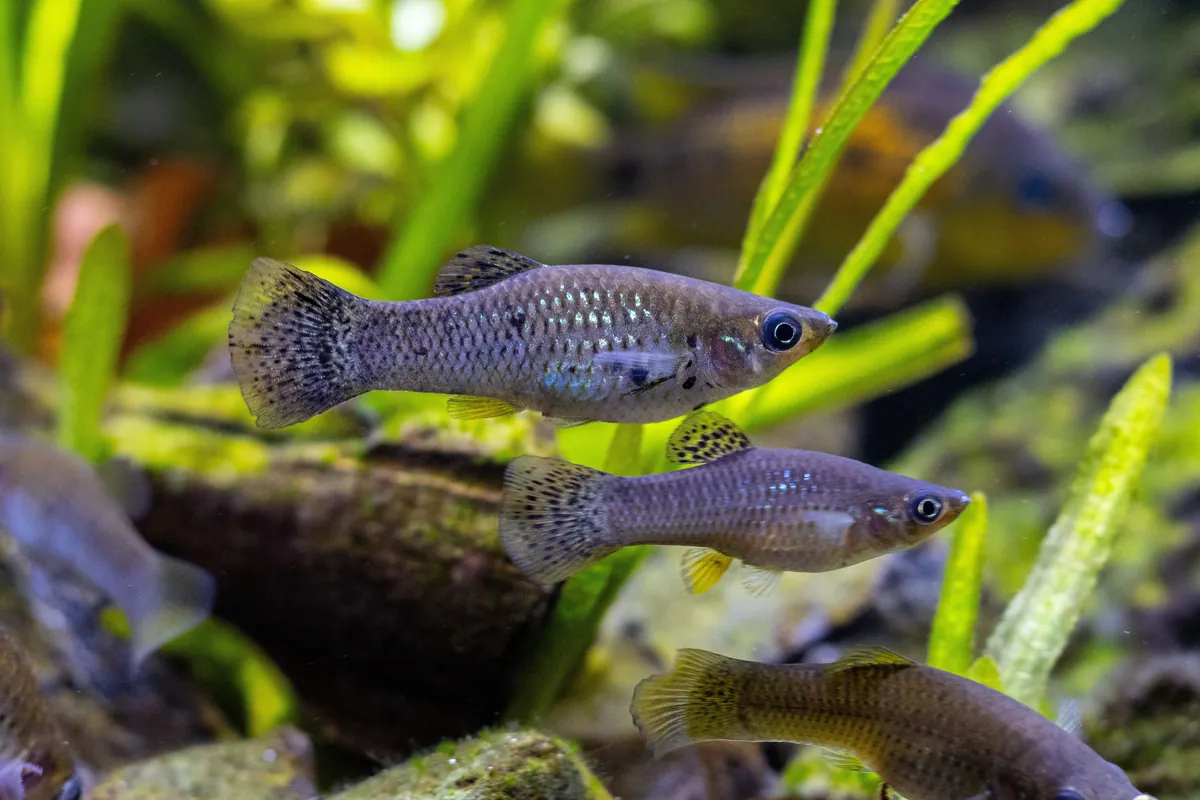
Freshwater · Beginner
Poecilia sphenops
Common mollies (Poecilia sphenops) are hardy, hard-water livebearers for a heated 20-gallon. Sailfins want 30+. Mixed sexes mean fry. Captive-bred stock lives in freshwater. They need minerals, not a permanent NaCl bath.
Min. tank: 20 gal
Care notes →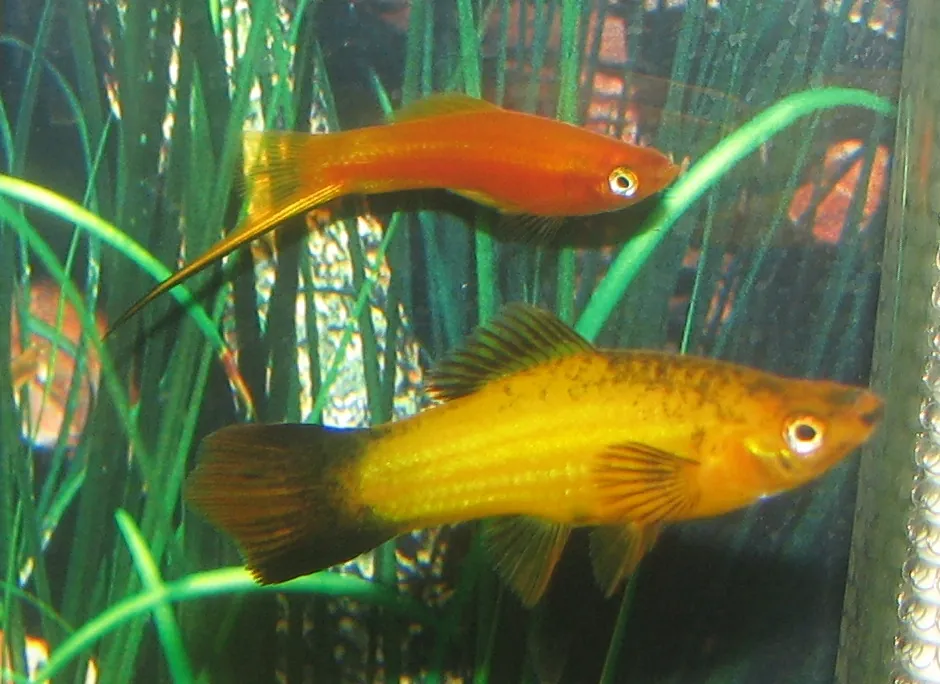
Freshwater · Beginner
Xiphophorus hellerii
Swordtails (Xiphophorus hellerii) are hard-water livebearers that want swimming length. Plan about 29–30 gallons for a mixed group with one male. Males grow a caudal sword; they hybridize with platies if you mix them.
Min. tank: 29 gal
Care notes →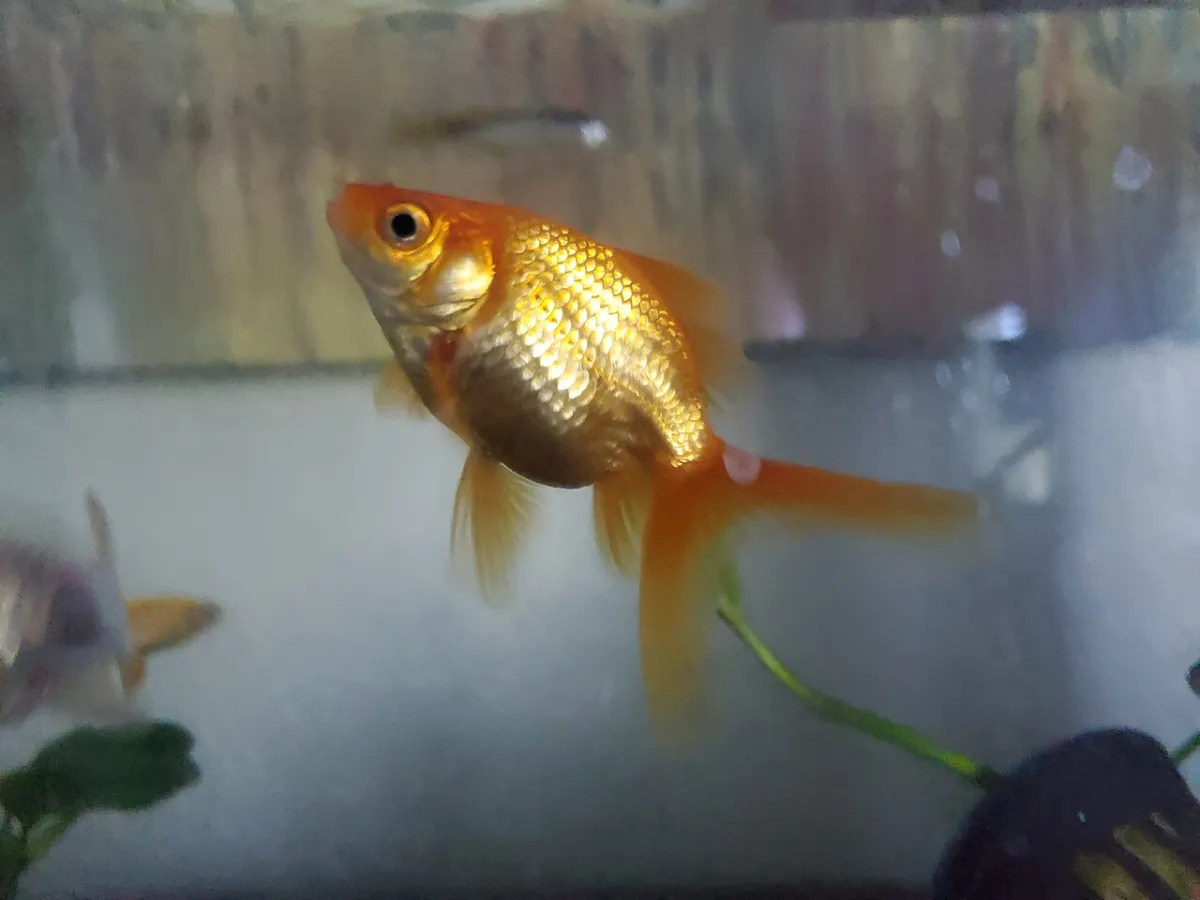
Freshwater · Intermediate
Carassius auratus
Goldfish are coldwater carp, not bowl ornaments. Fancy strains need tens of gallons and strong filtration; single-tail commons belong in very large tanks or ponds.
Min. tank: 30 gal
Care notes →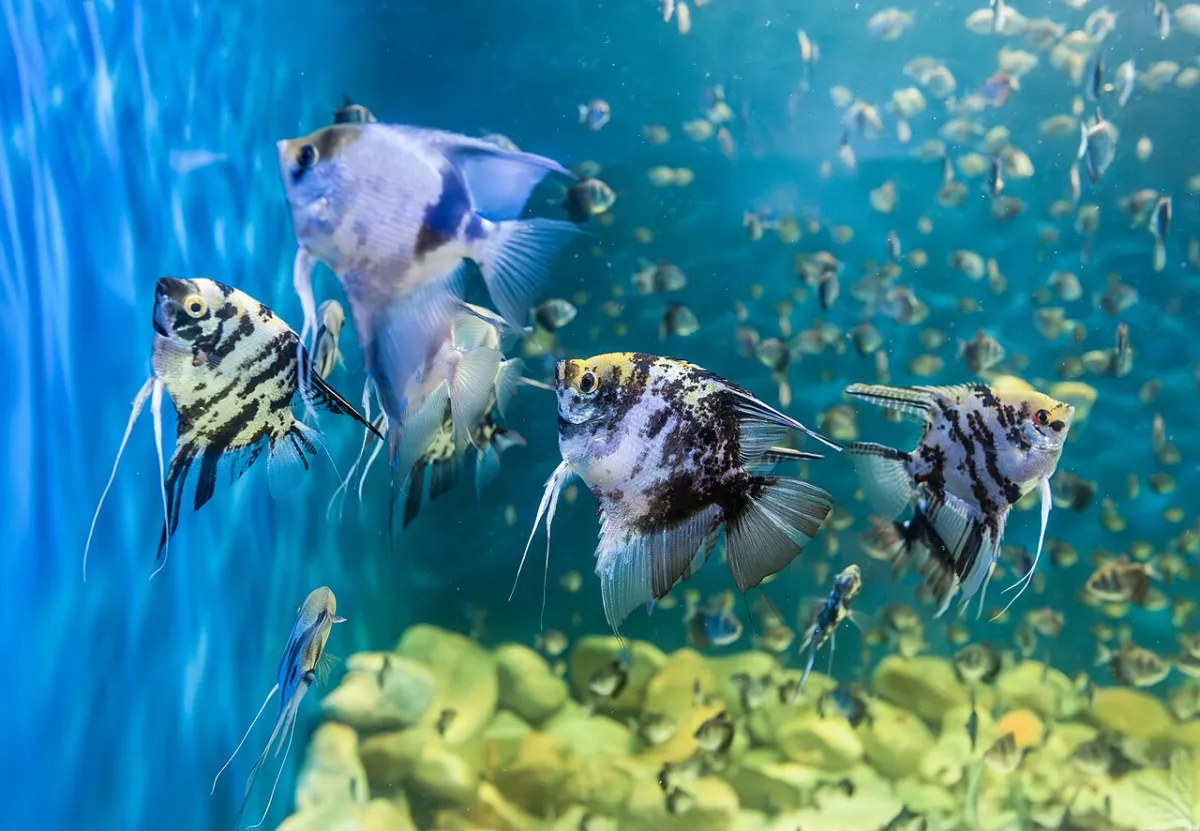
Freshwater · Intermediate
Pterophyllum scalare
Freshwater angelfish are tall Amazonian cichlids. They need height more than a long, low tank. About 30 gallons and 18+ inches of height for a pair is an indoor start.
Min. tank: 30 gal
Care notes →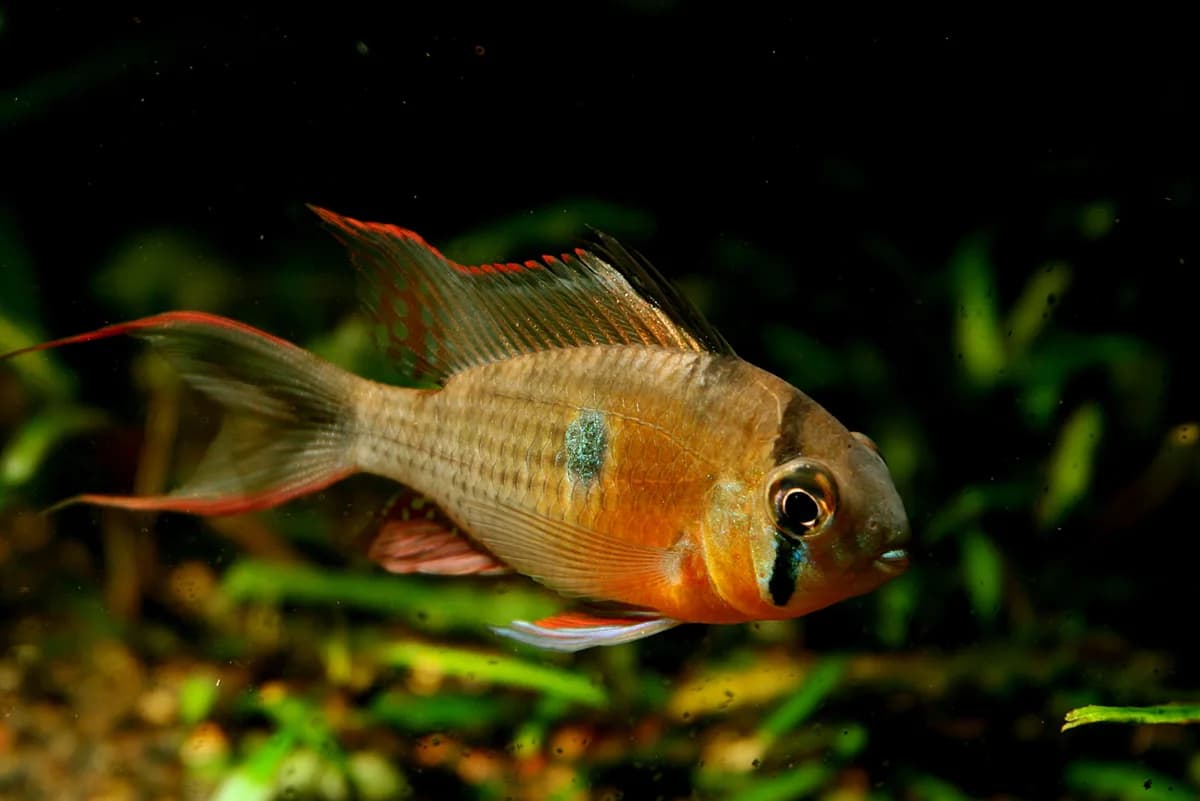
Freshwater · Beginner
Mikrogeophagus altispinosus
Bolivian rams (Mikrogeophagus altispinosus) are dwarf cichlids that grow to about 3 inches. One or a pair is comfortable in a 29-gallon or a 40 breeder, and a 20-gallon long works for one or a pair if the rest of the stocking stays light. Keep them at 73 to 79°F on fine sand, with gentle flow, some cover, and a school of small fish to make them feel safe.
Min. tank: 29 gal
Care notes →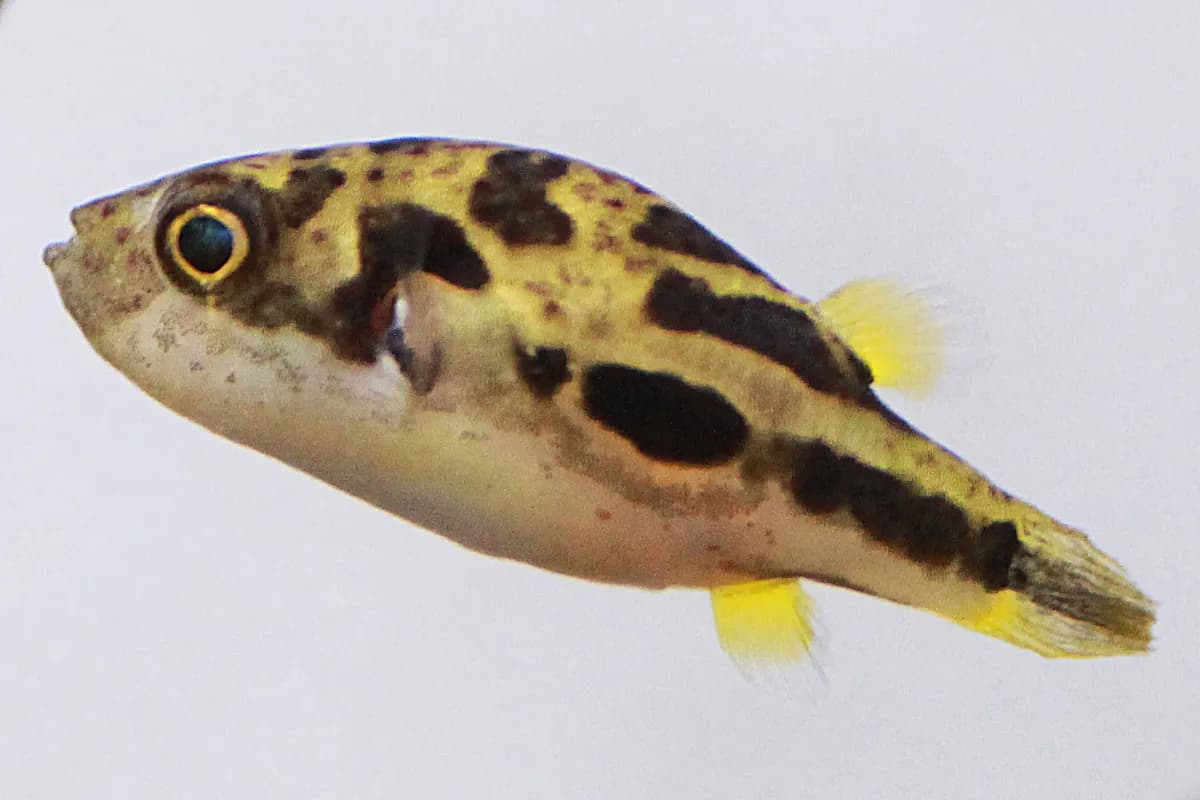
Freshwater · Intermediate
Carinotetraodon travancoricus
Pea puffers (Carinotetraodon travancoricus) are freshwater puffers from southwest India that top out around an inch. One fits a heavily planted 10-gallon. A small group needs a 20 long or larger with plenty of plants. Keep them at 74 to 80°F on frozen foods and snails, in a tank with no shrimp or long-finned fish.
Min. tank: 10 gal
Care notes →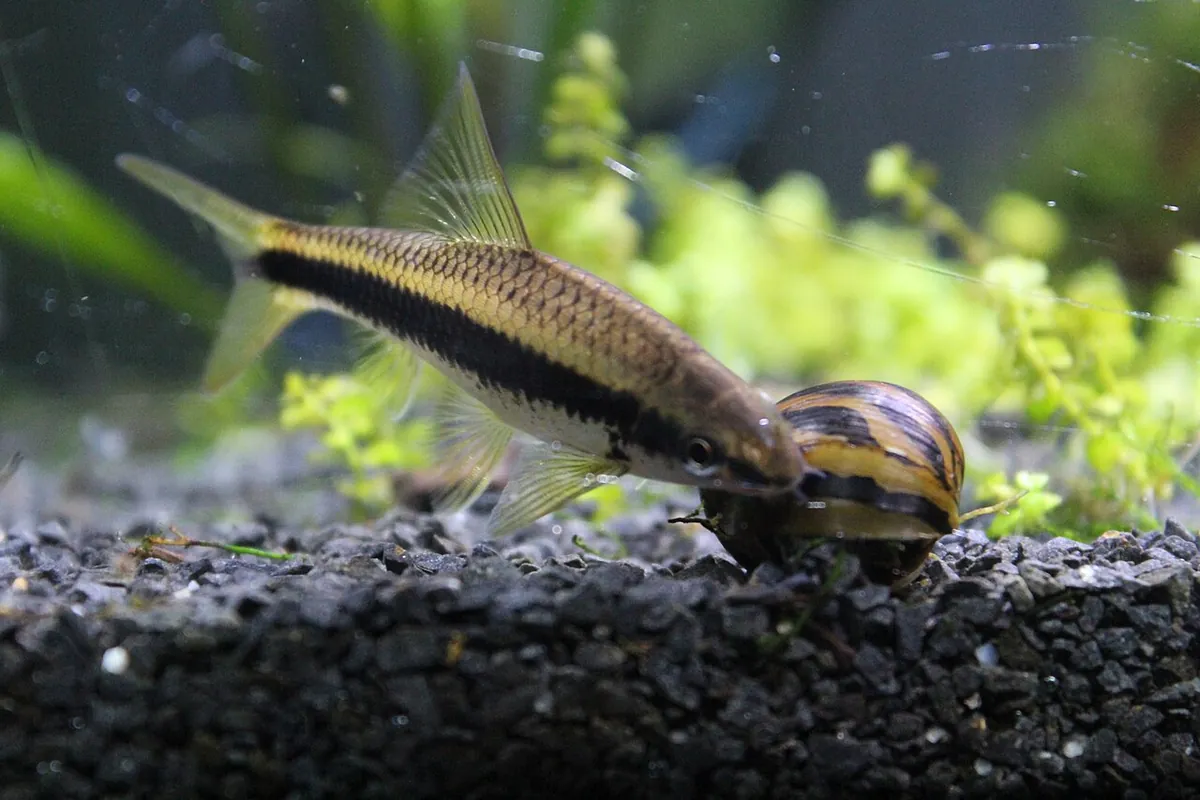
Freshwater · Beginner
Crossocheilus oblongus
Siamese algae eaters (Crossocheilus oblongus) are stream barbs from Southeast Asia that grow to about 6 inches. One needs a 30-gallon tank with 30 inches of length, and a group of three needs a 40 breeder or a 55. Keep them at 75 to 79°F under a tight lid. Young ones eat black beard algae. Adults eat mostly fish food.
Min. tank: 30 gal
Care notes →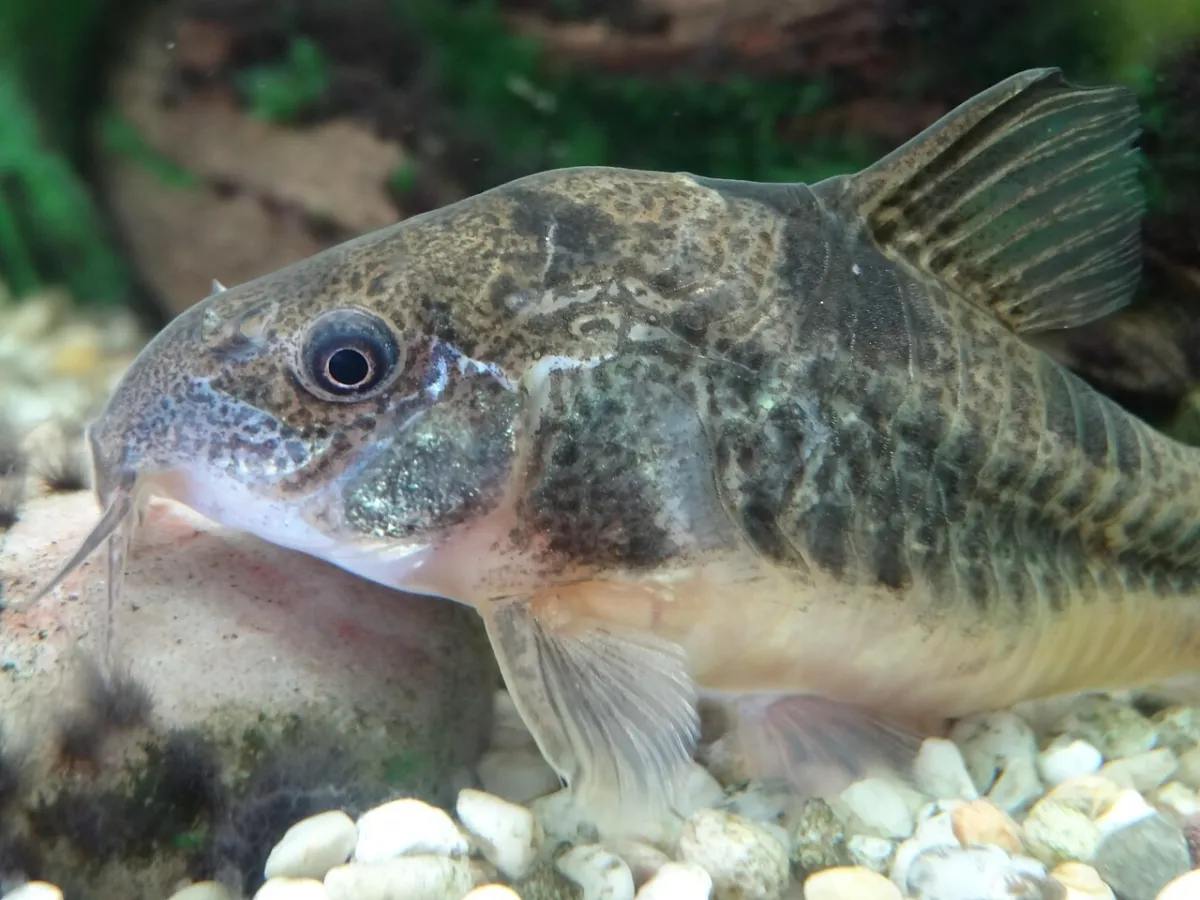
Freshwater · Beginner
Corydoras paleatus
Peppered corydoras are social, sandy-bottom catfish. Keep a group of six or more in a 20-gallon tank with sand, not gravel that can nick their barbels.
Min. tank: 20 gal
Care notes →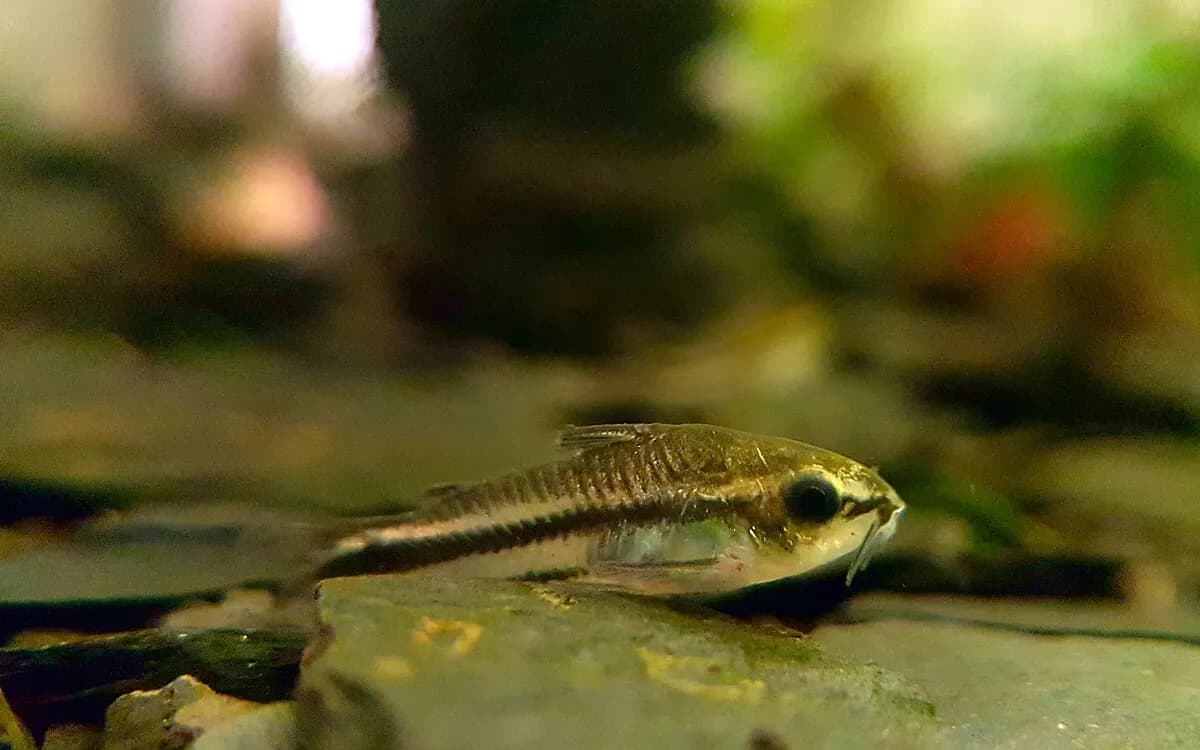
Freshwater · Beginner
Corydoras pygmaeus
Pygmy corydoras (Corydoras pygmaeus) are one-inch catfish that school in midwater as often as they sift the bottom. Keep eight or more in a cycled 10-gallon or larger with fine sand, gentle flow, and food small enough for their mouths.
Min. tank: 10 gal
Care notes →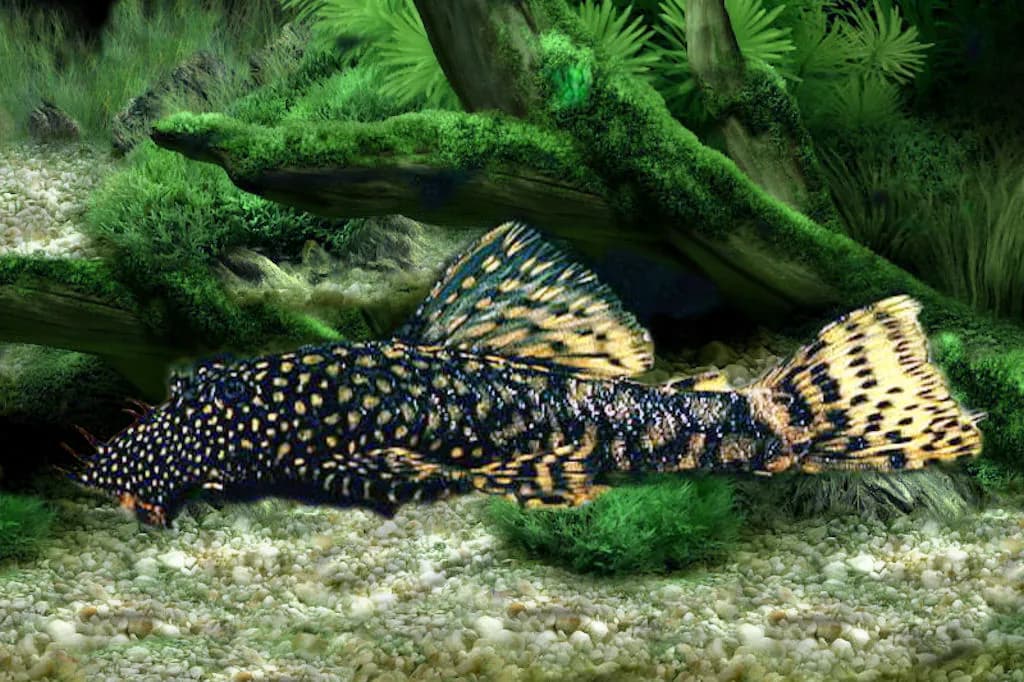
Freshwater · Beginner
Ancistrus spp.
Bristlenose plecos (Ancistrus) stay about 4–6 inches. A 20-gallon long is the floor for one adult; 29–30 gallons is the comfortable home. They need driftwood and wafers. They are not a common pleco and not a janitor.
Min. tank: 20 gal
Care notes →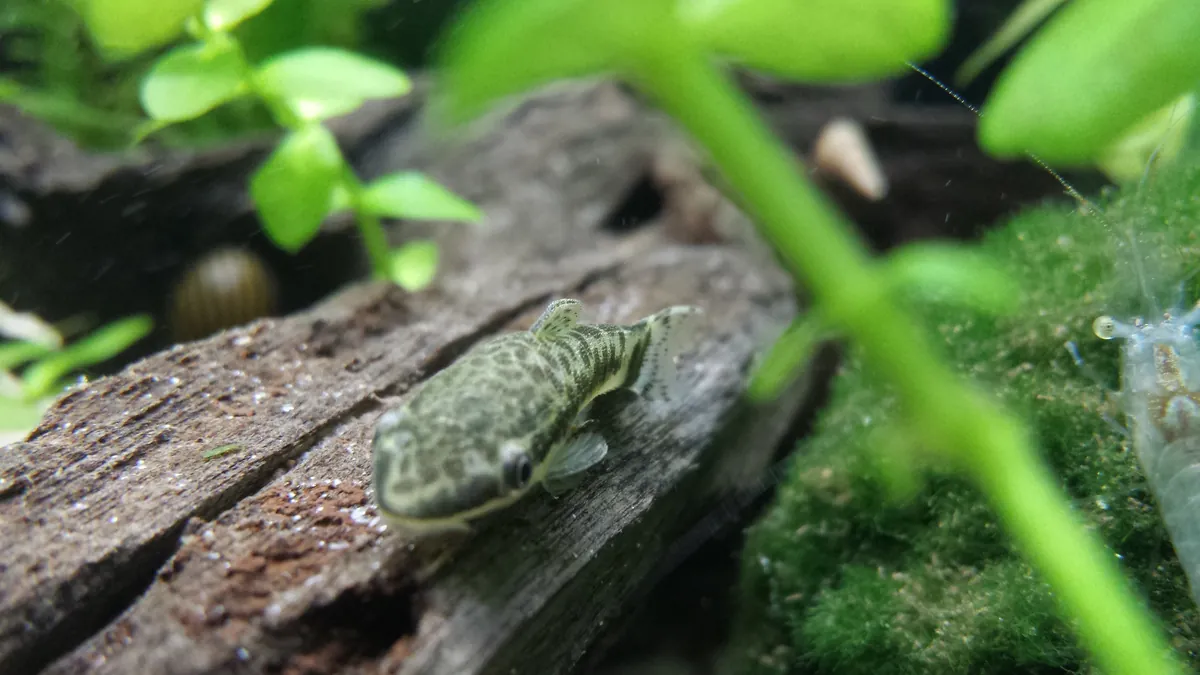
Freshwater · Intermediate
Otocinclus spp.
Otocinclus (Otocinclus spp., often O. vittatus in the trade mix) stay about 1.5–2 inches. A school of 6+ belongs in a 20-gallon that has been running months with algae and biofilm, not a new 10-gallon sucker hire.
Min. tank: 20 gal
Care notes →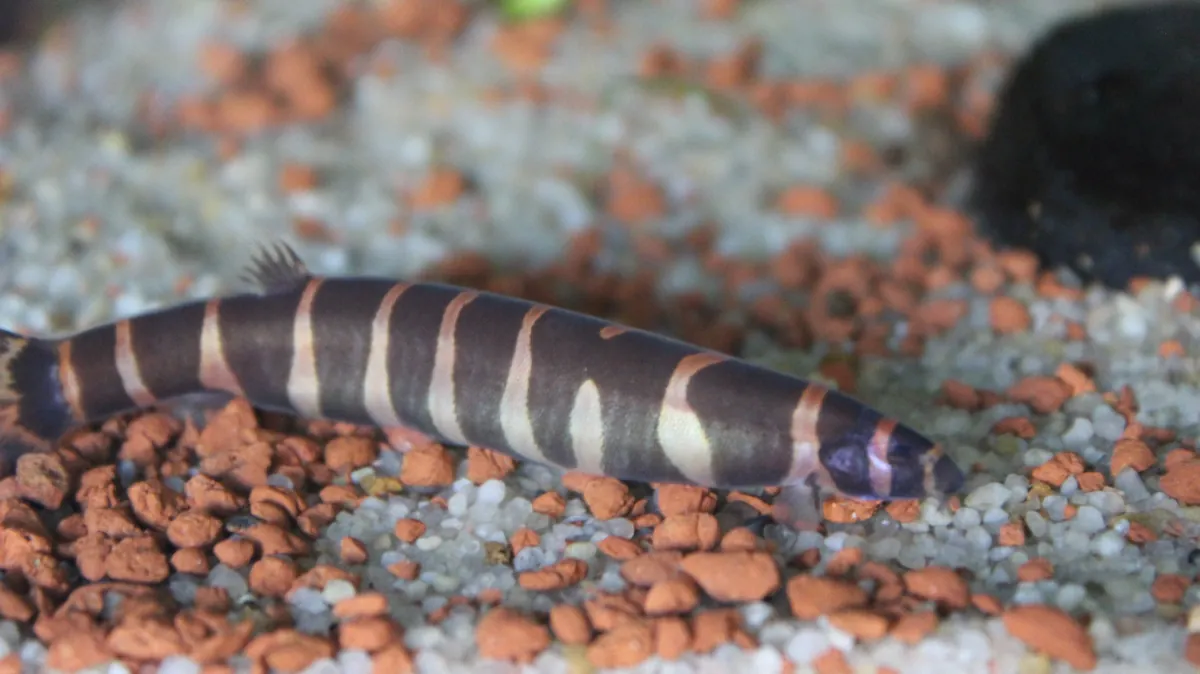
Freshwater · Beginner
Pangio spp.
Kuhli loaches (Pangio spp., usually a trade mix of P. kuhlii and P. semicincta) are banded, eel-shaped bottom fish. Adults reach 3–4 inches. Plan a group of 6+ in a 20-gallon on sand, with a lid and a sponge-safe intake.
Min. tank: 20 gal
Care notes →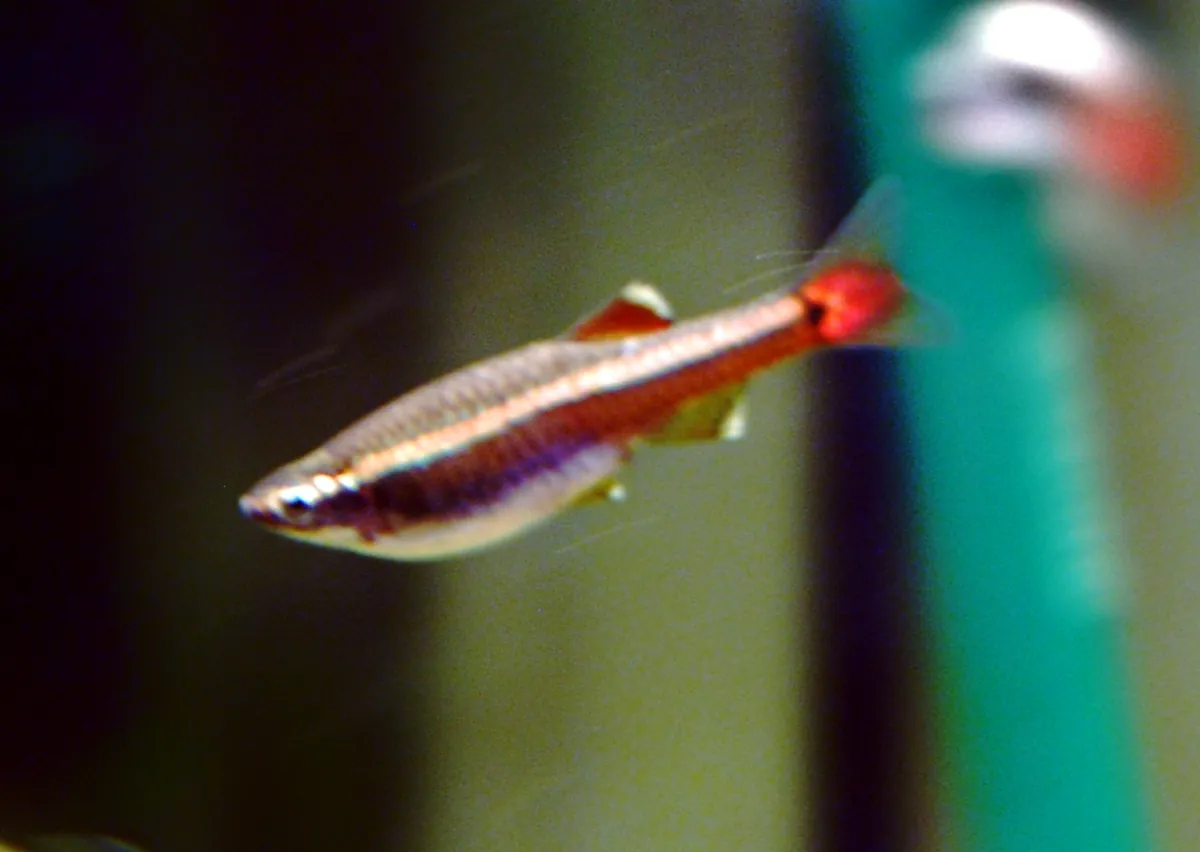
Freshwater · Beginner
Tanichthys albonubes
White cloud mountain minnows (Tanichthys albonubes) are small, hardy coolwater schoolers. Adults reach about 1.5 inches. Plan a group of 6+ in a 10–20 gallon. Best color and lifespan around 64–72°F, often without a heater in a cool room.
Min. tank: 10 gal
Care notes →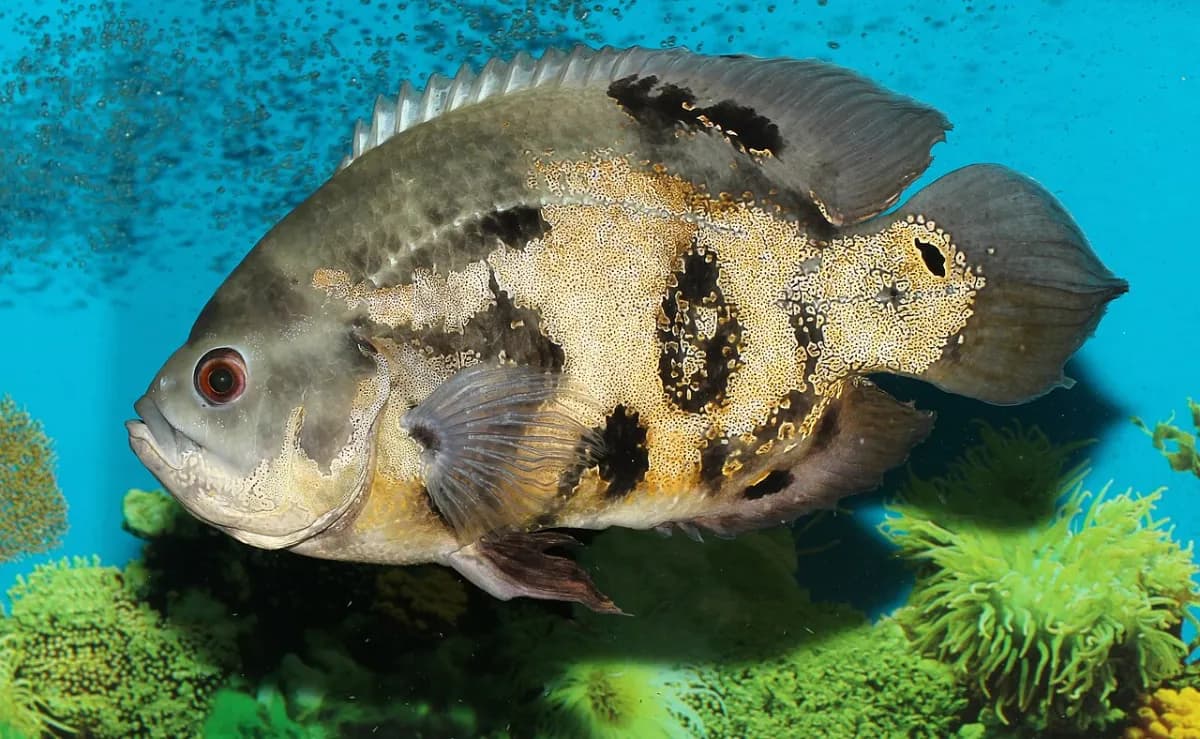
Freshwater · Advanced
Astronotus ocellatus
Oscars are large, messy cichlids for dedicated tanks. One adult needs about 75 gallons as a minimum, powerful filtration, and an owner ready for digging, waste, and a long-lived pet.
Min. tank: 75 gal
Care notes →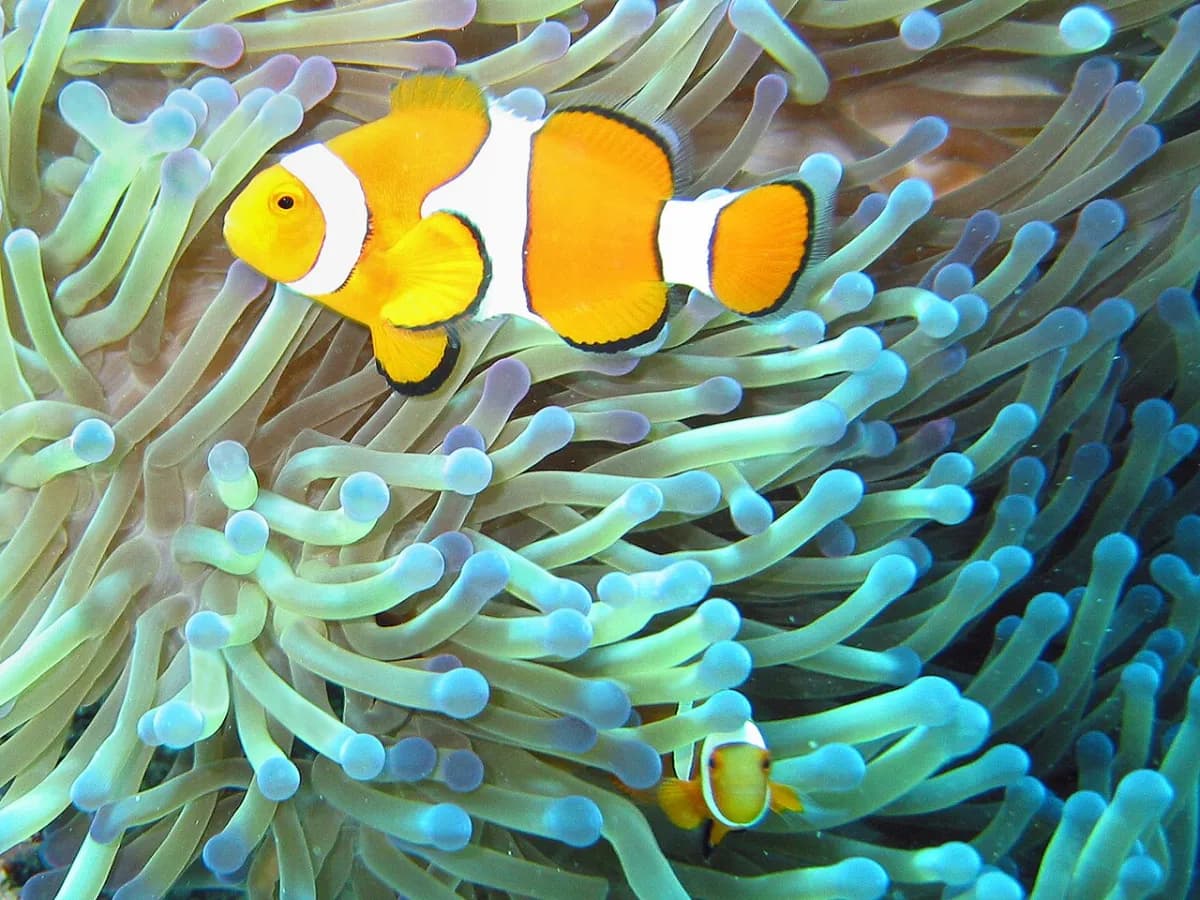
Saltwater · Intermediate
Amphiprion ocellaris
Ocellaris clownfish are among the more forgiving marine fish, but they still need a cycled saltwater tank, stable salinity, and marine-level testing. A 20-gallon tank can house a pair; 30 gallons is more comfortable.
Min. tank: 20 gal
Care notes →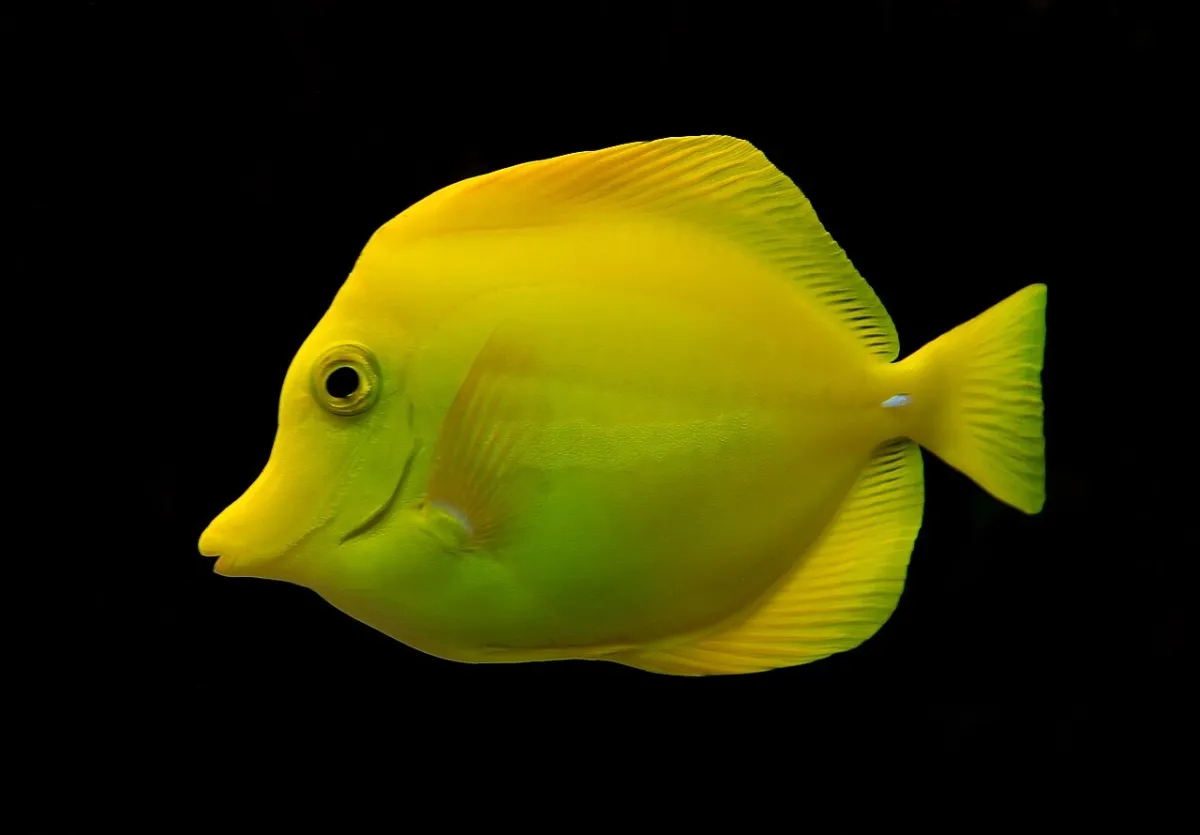
Saltwater · Intermediate
Zebrasoma flavescens
Yellow tangs are active Hawaiian surgeonfish that need swimming room, not a nano reef. A home-aquarium minimum is about 125 gallons with length to patrol and rock to graze.
Min. tank: 125 gal
Care notes →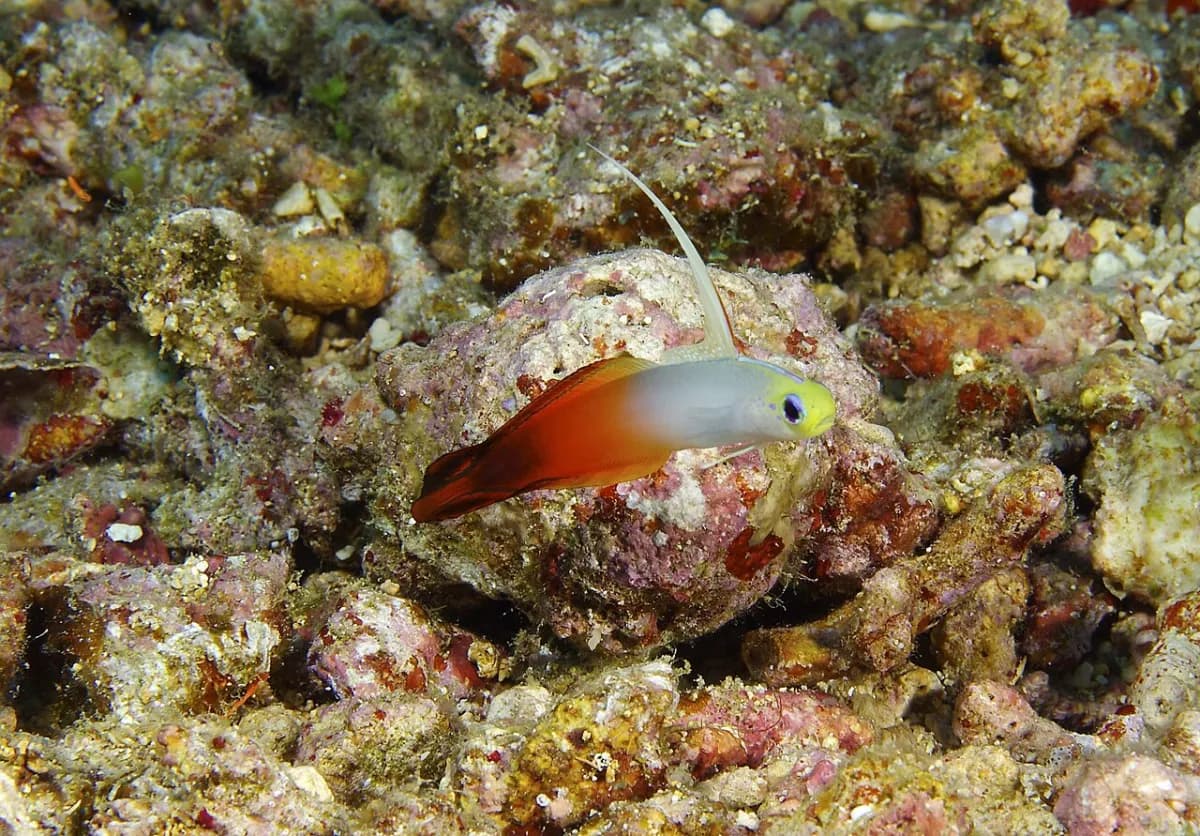
Saltwater · Intermediate
Nemateleotris magnifica
Firefish gobies are elegant, hovering dartfish for a covered saltwater tank. A 20-gallon reef can work for one. The lid is not optional. They jump.
Min. tank: 20 gal
Care notes →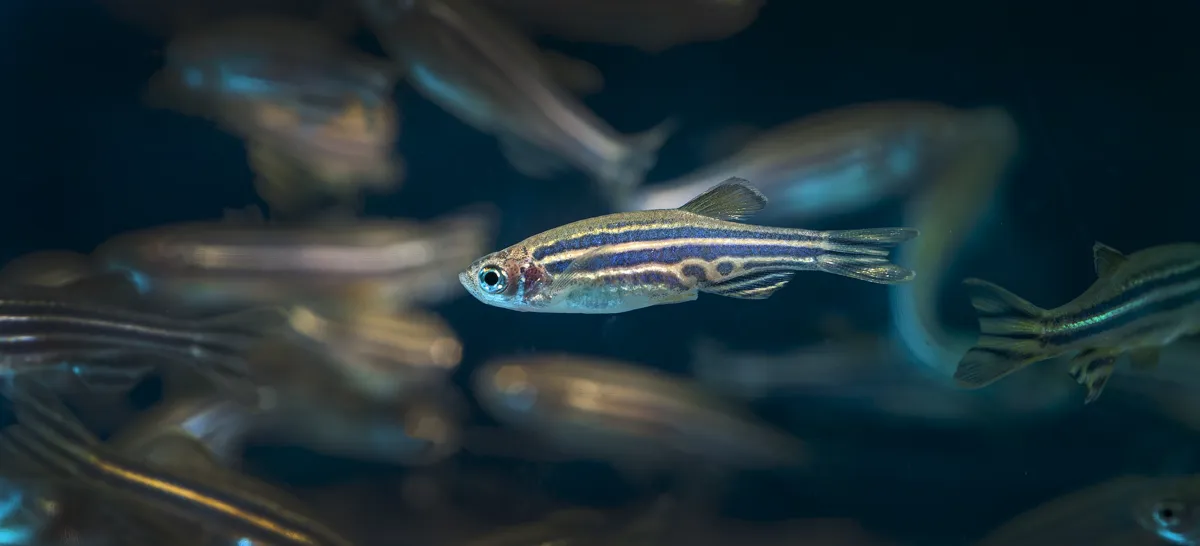
Freshwater · Beginner
Danio rerio
Zebra danios are hardy, fast-swimming beginners that want a school of six or more. Ten gallons is a tight floor. A 20-gallon long gives them the horizontal lane they actually use.
Min. tank: 10 gal
Care notes →