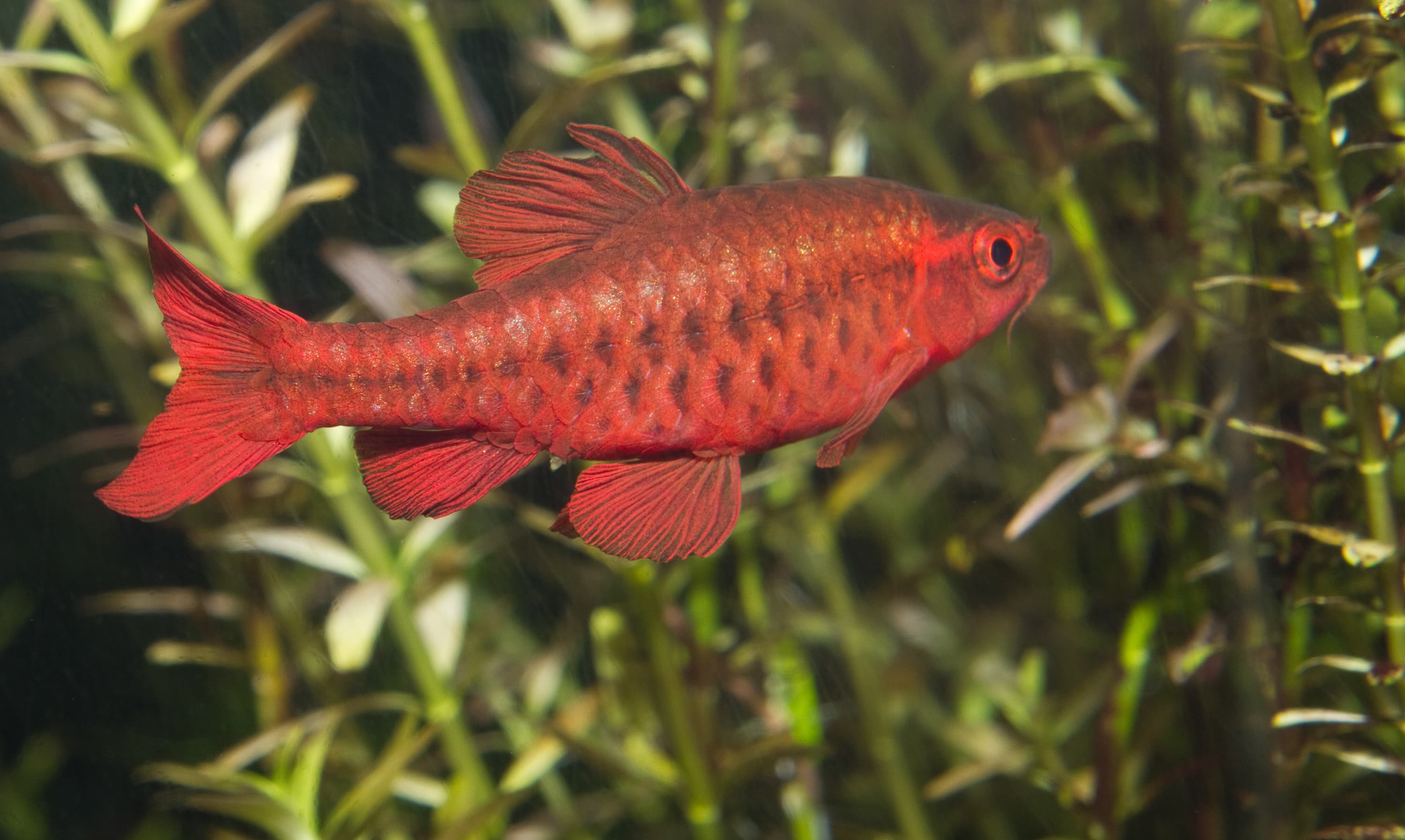
Cherry barbs (Rohanella titteya, still sold as Puntius titteya) are the peaceful Sri Lankan barb for a planted 20. Keep six or more so males color up deep red and any nipping stays in-group.
Peaceful for a barb when kept in a real school of six or more. Milder than tiger barbs. A tiny group or a lone male in a 10 often looks beige, bored, and more nippy toward long-fin neighbors.
Diet
Omnivore. Quality flake or micro pellets as a staple, plus frozen bloodworms or brine shrimp a few times a week and a bit of blanched veg or algae wafer. Small portions once or twice daily.
Temperature
72–79 °F
pH
6–7.5
Hardness / salinity
Soft to moderately soft water suits wild-type fish; most shop stock handle near-neutral community water. Stable chemistry and low nitrate matter more than chasing a perfect number.
The peaceful barb, not the tiger
Rohanella titteya (shops still print Puntius titteya on many bags) is a small Sri Lankan cyprinid sold as the cherry barb. Adults reach about 2 inches. Males turn a deep cherry red when they are comfortable, well fed, and sharing the tank with females; females stay plainer and more yellowish. This page is about cherry barbs, not tiger barbs, rosy barbs, or other Puntius cousins.
They are midwater fish that use plants for cover and display. A bare bright tank keeps them pale and edgy. Dense stems, a dark substrate, and a real school bring the red out more than any LED gimmick.
Twenty gallons and a group of six
Six or more in a planted 20-gallon is the honest starting point. A lone male in a 10-gallon stays beige and bored, and a trio often channels energy into nipping long-fin neighbors. Length beats a tall hex. They cruise horizontally. See stocking a 20-gallon tank for community layouts that leave midwater room.
A gentle hang-on-back or sponge filter is enough. Soften the outflow if they hug the plants. Temps in the 72–79°F band suit most shop fish. Soft to near-neutral water is preferred; hard alkaline livebearer tanks are a long-term mismatch. Finish the cycle before you buy the school. Quarantine when you can.
Food, plants, and tank mates
Feed flake or micro pellets they finish in a minute, then add frozen a few times a week and a scrap of blanched zucchini or spinach. Leftover food in a crowded 20 is how nitrate climbs. A low-tech planted layout with anubias and java fern on wood and crypts with root tabs is their natural habitat on this site; see the low-tech planted aquarium guide.
Tank mates that work: harlequin rasboras, a honey gourami, a cory group on sand, and adult cherry shrimp once nobody is still learning what a shrimp is. Skip male bettas and fancy long-fin guppies if your group is small or understocked. Tiger barbs are a different fish with a different reputation. Do not stock them as a substitute.
Tank mates
Harlequin rasboras or other calm midwater schoolers
Honey gourami in a planted 20
Peppered cories on sand
Adult cherry shrimp once the school is settled
Skip male bettas, fancy long-fin guppies in a small group, and tiger barbs
Gear for this fish
A few listings we would open for this species. Skip anything you already own that still works.
Hikari Tropical Micro Pellets, 0.77 oz
A school of six needs small food that reaches the back of the group. These semi-floating micro pellets were made for tetras and other small schoolers.
A pinch once or twice a day, not a pile. Skip this if you already use a quality micro pellet they finish in a minute. Frozen bloodworms a few times a week still help males color up.
A tropical 20-gallon school wants stable mid-70s F. The 100W Pro is the same size we open for other tropical 20s in a normal room.
Put a separate thermometer on the glass away from the heater. Skip stacking two heaters. Do not run them at the hot end just because a betta shares the stand.
A planted 20 with a school needs a hang-on-back you can stuff with extra sponge, not a sealed cartridge. Adjustable flow matters for midwater fish that hate being blasted.
Dial it down and baffle the outflow if they huddle in the plants. A seeded sponge filter as backup bio is fine. Confirm the 20-to-50 gallon AquaClear 50 listing.
A school of six or more in a 20-gallon is a solid start. Fewer than six usually means shy, pale fish and more interest in long-fin neighbors.
What size tank do cherry barbs need?+
Plan on 20 gallons for a real school. A 10-gallon is not a comfortable long-term home for six active midwater fish.
Why is my male cherry barb beige instead of red?+
Color is status and comfort. Too few tank mates, a bare tank, poor diet, or cold water keep males dull. Add females, plants, and a proper group before you blame genetics.
Are cherry barbs beginner fish?+
Yes, if the tank is cycled, you keep a real school in 20 gallons, and you treat weekly water changes as normal. They are peaceful and plant-safe when stocked honestly.
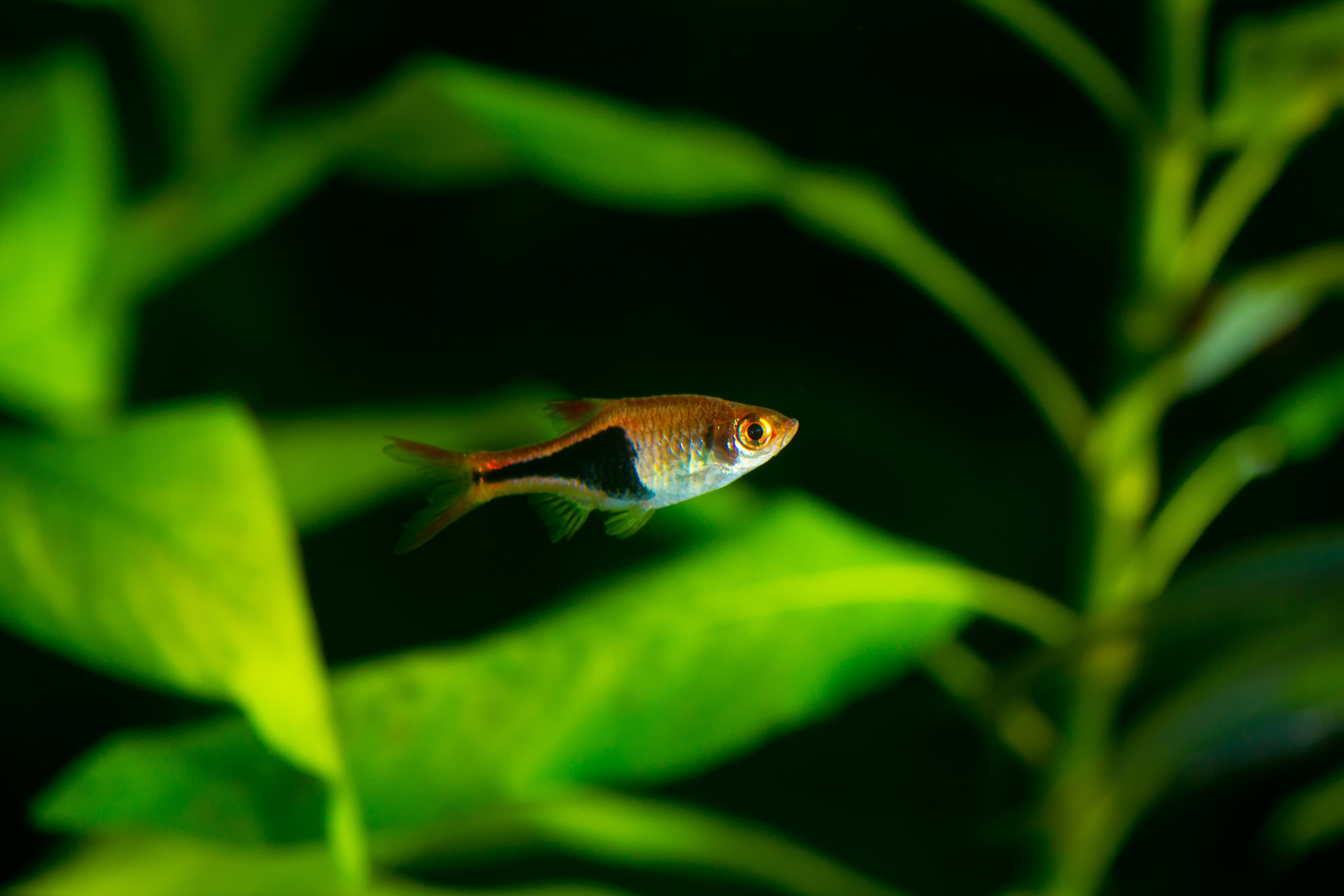
Harlequin rasboras (Trigonostigma heteromorpha) are peaceful midwater schoolers with a black triangle on the rear body. Plan six to ten in a planted 20-gallon; a 10 is a tight floor for six, not a comfortable home.
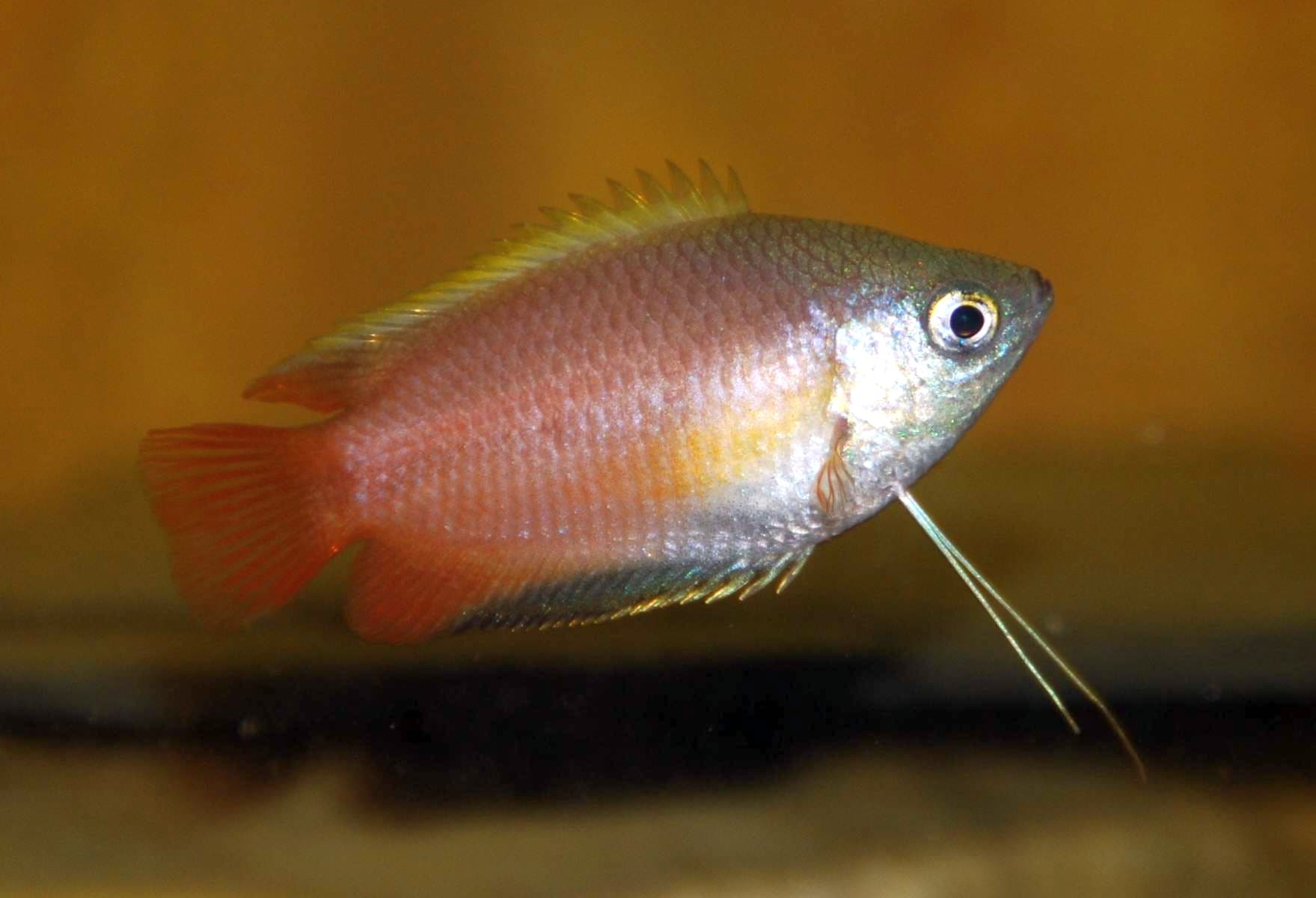
Honey gouramis (Trichogaster chuna) are small, peaceful labyrinth fish for a planted 10-gallon solo or a 20-gallon pair or community. They are not dwarf gouramis. Shops often mislabel orange dwarfs as honey.
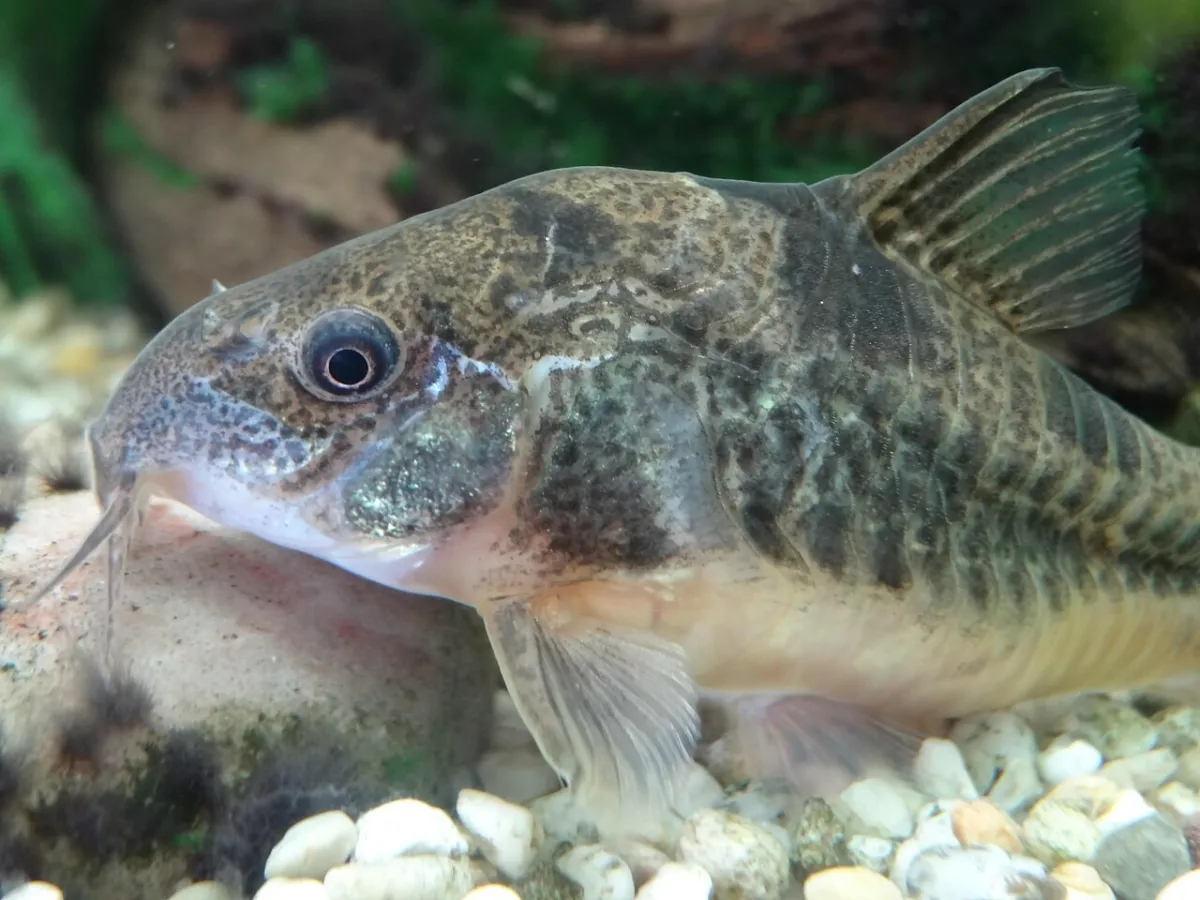
Peppered corydoras are social, sandy-bottom catfish. Keep a group of six or more in a 20-gallon tank with sand, not gravel that can nick their barbels.