

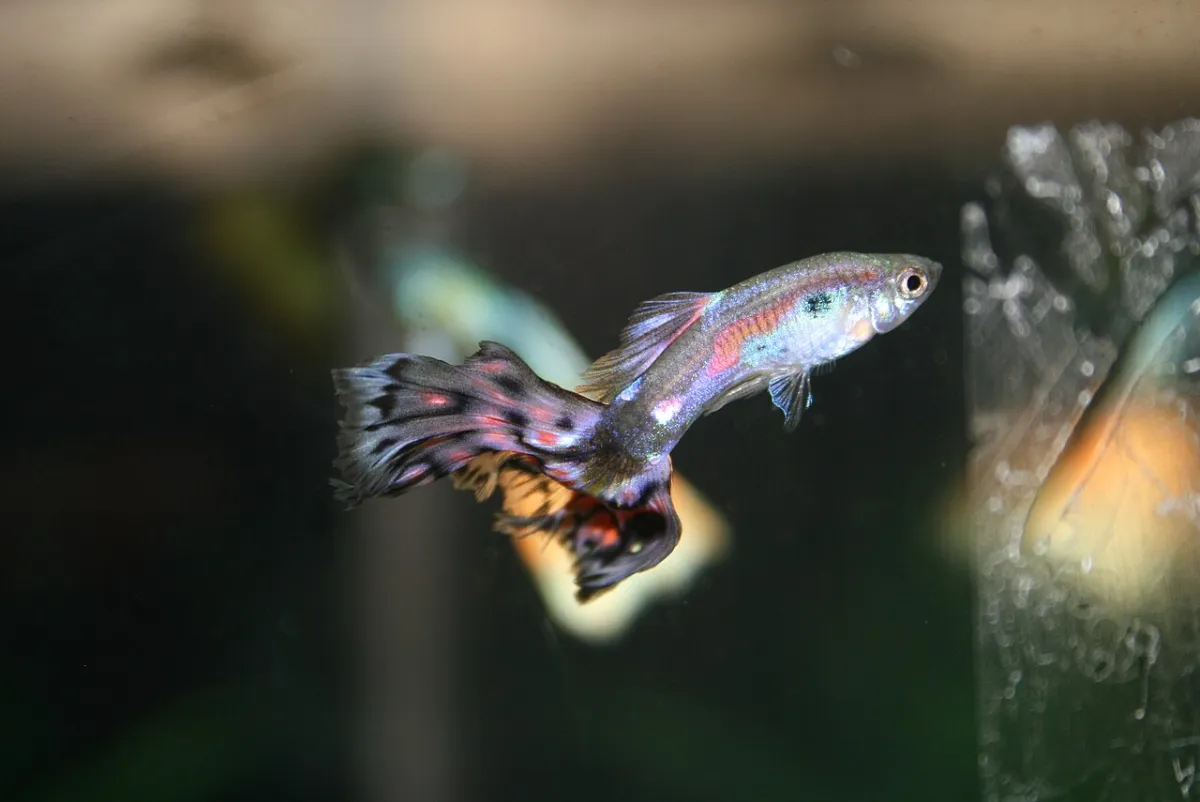
Freshwater · Beginner
Guppy
Poecilia reticulata
Guppies are colorful, active livebearers for a heated 10-gallon (or larger) community, with one caveat: mixed sexes will produce fry, often lots of them.
Min. tank: 10 gal
Care notes →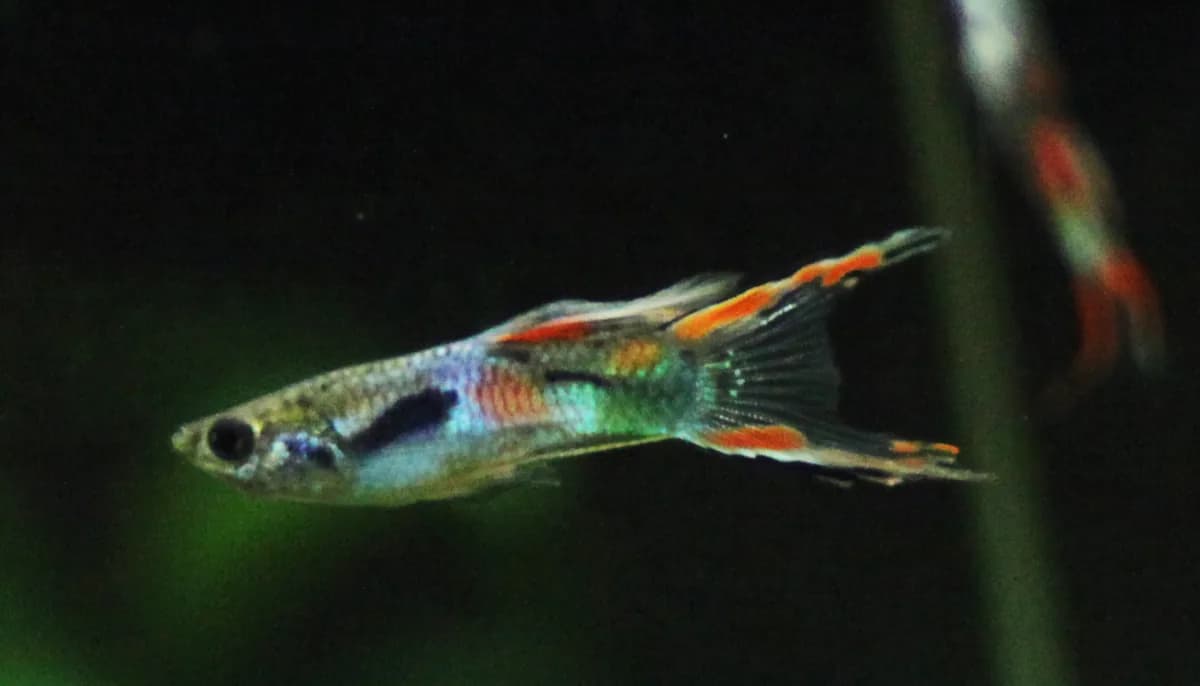
Photo: Marrabbio2 · CC BY-SA 3.0
Freshwater · Beginner · 10+ gal
Poecilia wingei
By Fishy Dave
Endler's livebearers (Poecilia wingei) are about one-inch males (females a bit larger) for a heated 10-gallon colony. Hard, alkaline water, gentle filtration, and micro foods. Mixed sexes mean fry. Keep them apart from fancy guppies if you care about strain purity.
| Water type | Freshwater |
|---|---|
| Care level | Beginner |
| Minimum tank | 10 gallons |
| Temperament | Peaceful nano livebearer. Start about one male to two or three females so chase stays manageable. Males flash color; females stay plainer. Skip bettas and nippy barbs. |
| Diet | Omnivore with a tiny mouth. Micro pellets or crushed flake as a staple, plus frozen baby brine or daphnia a few times a week. Small portions so leftover food does not foul a 10-gallon. |
| Temperature | 72–82 °F |
| pH | 7–8.2 |
| Hardness / salinity | Moderately hard to hard, alkaline water like guppies (roughly 8–20 dGH). Soft Amazonian tetra water is a poorer long-term match. |
Poecilia wingei comes from coastal Venezuela and shows up in shops as Endler's livebearer or Endler. Adult males stay around one inch with wild-type color and a short, pointed fin shape. Females are a bit larger and plainer. This page is about Endlers, not fancy Poecilia reticulata with big sails, and not a shop hybrid sold as "Endler's guppy" without a clear species label.
I like them as the livebearer you can actually keep as a small colony in a planted 10 without the bioload of a fancy guppy group. Same hard-water habits, smaller bodies, and less fin silk for nippers to grab. The husbandry below is the straight part.
Ten gallons is an honest floor for a small mixed colony. Start about one male to two or three females so chase stays spread out. A 20-gallon long is the kinder home once fry survive and the group grows. Length beats height. They cruise midwater and use plants for cover.
Temps roughly 72–82°F with a heater in most homes. Hard, alkaline water suits them. Soft acidic tanks built for chili rasboras or cardinals are a compromise, not their preference. Finish the cycle before you add fish. A lid helps. Small livebearers jump when startled.
Use a sponge filter or a hang-on-back with the outflow baffled. Strong current pins tiny males to the glass and shreds plants you planted for fry cover. Squeeze sponge media in old tank water only.
Feed micro pellets or crushed flake they finish in about a minute, then add frozen baby brine a few times a week. Leftover food in a 10-gallon is how nitrate climbs. Chili rasboras, ember tetras, and cherry shrimp adults are natural tank mates in a planted nano. Skip male bettas and nippy barbs. Dense plants give fry a chance if you want some to survive. Most community tanks eat many of them.
A few listings we would open for this species. Skip anything you already own that still works.
Hikari Tropical Micro Pellets, 0.77 oz
Endler mouths are small. These semi-floating micro pellets were made for small-mouthed tropicals and sink slowly enough that the back of a colony gets a turn.
Feed what they finish in about a minute. Skip this if you already crush a quality flake they clean up. Uneaten food fouls a 10-gallon fast.
See this listinghygger sponge filter, small
A livebearer nano wants gentle biofiltration without a current that pins one-inch males to the glass. An air-driven sponge sized for a 5–10 gallon is a calm default.
Air pump and tubing are sold separately. Squeeze the sponge in old tank water only. A baffled hang-on-back is fine if you already own one and can dial the flow down.
See this listingAqueon Adjustable Pro heater, 50W
Endlers are tropical livebearers in the 72–82°F band. Room temperature in most houses is not that. 50W covers a 10-gallon without cooking it.
Use a 100W Pro if you move the colony into a 20-gallon long. Keep a separate thermometer on the glass. Skip a heater only if you actually measure the mid-70s in winter.
See this listingOnly if you do not care about strain purity. Endlers and guppies hybridize freely, and the offspring are fertile. Keep them in separate tanks if you want clean Endler or clean guppy lines. Mixed "Endler's guppy" bags from shops are often already hybrids.
Ten gallons for a small colony with about one male and two or three females. Move to a 20-gallon long if the group will boom with surviving fry. Do not treat a five-gallon as a permanent mixed-sex home.
Yes, if you keep males and females together. Broods show up often. Keep males only, move newborns to a breeder box or separate tank if you want them to survive, or plan to rehome and bump water changes as the bioload grows.
No. They want hard, alkaline water in the same lane as guppies and platies. Soft Amazonian parameters are a poorer long-term match. Match fish to your tap when you can.
Next step
Plan on 10 gallons or more. Put your actual tank size into the stocking calculator and it shows what else can live alongside them.
Open the stocking calculatorBefore you buy
Keep your fishies swimming.
Freshwater · Beginner
Poecilia reticulata
Guppies are colorful, active livebearers for a heated 10-gallon (or larger) community, with one caveat: mixed sexes will produce fry, often lots of them.
Min. tank: 10 gal
Care notes →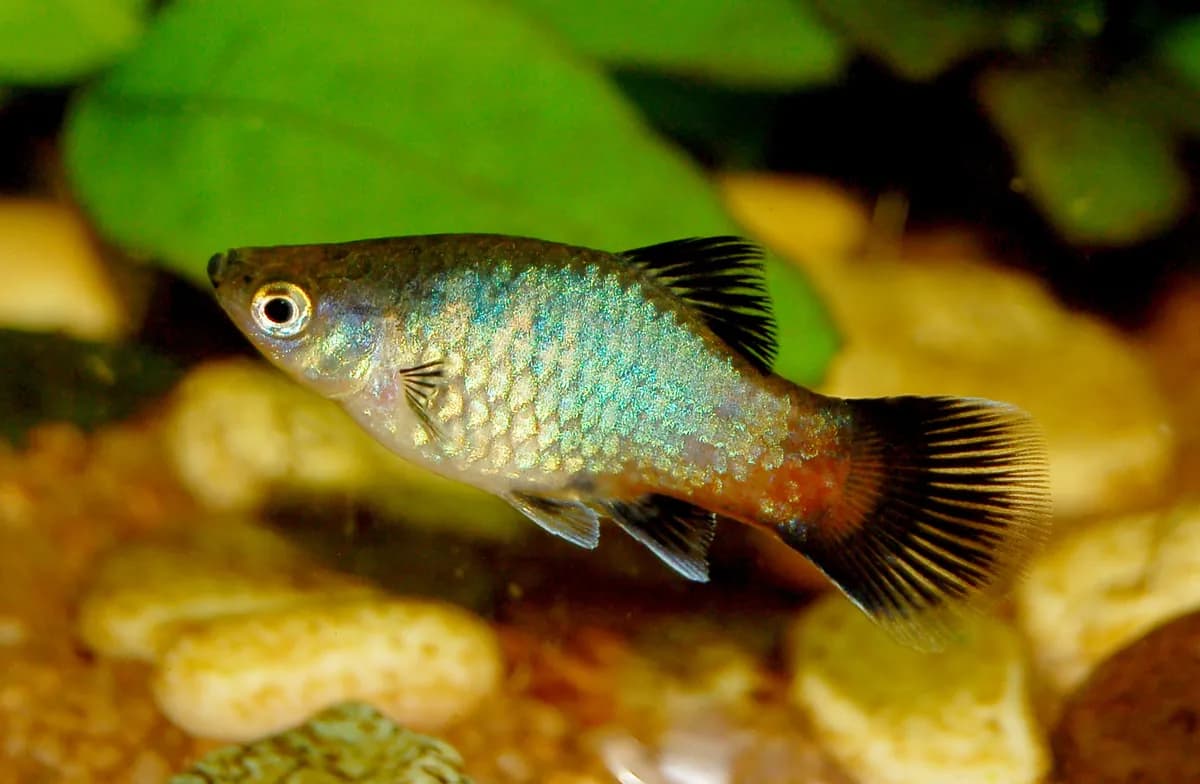
Freshwater · Beginner
Xiphophorus maculatus
Platies are hardy, hard-water livebearers for a heated 15-gallon (20 is easier). Mickey Mouse, wagtail, and sunset are color strains, not different care. Mixed sexes mean fry.
Min. tank: 15 gal
Care notes →
Freshwater · Beginner
Boraras brigittae
Chili rasboras (Boraras brigittae) are ~0.6-0.8 inch red nano schoolers for a densely planted 10-20 gallon. Keep 10-12 or more with soft acidic water, gentle flow, dark substrate, and micro foods. A 10-gallon is a species-only floor; use 20 gallons if you mix in other fish.
Min. tank: 10 gal
Care notes →