

Freshwater · Beginner
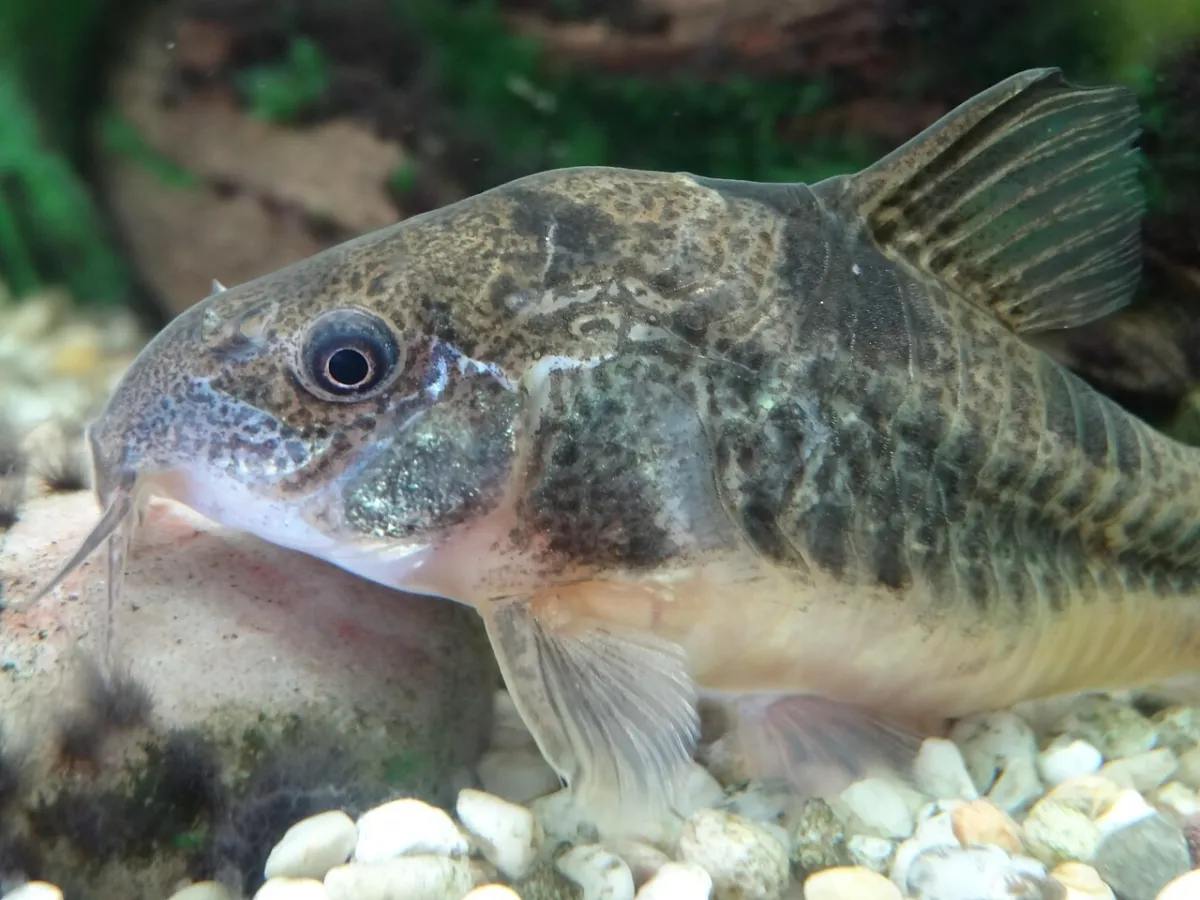
Peppered cory
Corydoras paleatus
Peppered corydoras are social, sandy-bottom catfish. Keep a group of six or more in a 20-gallon tank with sand, not gravel that can nick their barbels.
Min. tank: 20 gal
Care notes →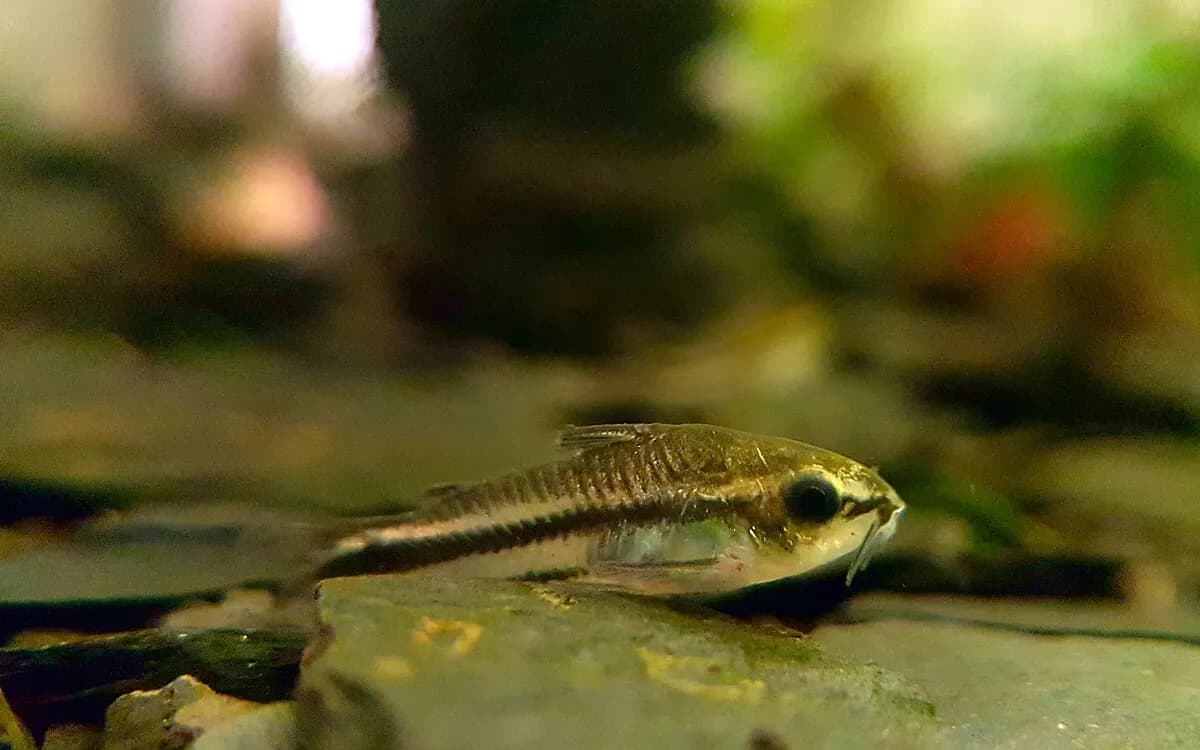
Photo: AquaTuer · CC BY-SA 4.0
Freshwater · Beginner · 10+ gal
Corydoras pygmaeus
By Fishy Dave
Pygmy corydoras (Corydoras pygmaeus) are one-inch catfish that school in midwater as often as they sift the bottom. Keep eight or more in a cycled 10-gallon or larger with fine sand, gentle flow, and food small enough for their mouths.
| Water type | Freshwater |
|---|---|
| Care level | Beginner |
| Minimum tank | 10 gallons |
| Temperament | Peaceful, shy shoaling catfish. Keep eight or more of their own species. They spend a lot of the day hovering in midwater as a group, which most cories never do. Small enough to be eaten by anything with a big mouth. |
| Diet | Omnivore with a tiny mouth. Micro pellets, slow-sinking granules, and crushed sinking wafers as a staple, plus frozen baby brine, daphnia, or cyclops a few times a week. Make sure some food reaches the bottom after the midwater fish are done. |
| Temperature | 72–79 °F |
| pH | 6–7.8 |
| Hardness / salinity | Soft to moderately hard (roughly 2–15 dGH). Stable water matters more to them than an exact number. |
Corydoras pygmaeus comes from the Amazon basin, including the Rio Madeira in Brazil, and tops out around an inch. Females run a little larger than males. Look for a single dark stripe from the snout to the base of the tail on a silvery body. Most cories live on the substrate. Pygmies spend much of the day hovering a few inches above it as a loose group, then drop down to sift for food.
The first time I saw a group of them parked in midwater, I went looking for a heater problem. There wasn't one. They just do that, and it's the best reason to keep a real group instead of three.
Ten gallons is a fair floor for eight to ten pygmies on their own or with a few shrimp. A 20-gallon long holds 12 to 20 of them, which is when the midwater schooling shows best, or eight of them plus a second small school. Keep at least eight. Two or three will hide behind the filter and you'll forget you own them.
Hold the water at 72–79°F, which means a heater in most homes. Soft to moderately hard water with a pH between 6.0 and 7.8 suits them. Add them to a tank that has finished its cycle and run for a few weeks. Fish this small don't bounce back well from ammonia or nitrite spikes, so keep up with water changes and keep nitrate low.
Fine sand lets them sift without wearing down their barbels. Smooth, rounded fine gravel is a second choice. Skip sharp or coarse gravel. A sponge filter, or a hang-on-back with a sponge prefilter over the intake, keeps a one-inch fish from getting pulled in and keeps the current gentle enough for them to hover.
Plants, leaf litter, and a piece of wood give the group places to rest. Like other cories, they dart to the surface for a gulp of air now and then. That's normal. Constant gasping at the top is not, so test the water if you see it.
Pygmies have small mouths and eat slowly. Feed micro pellets or slow-sinking granules and crushed wafers, with frozen baby brine, daphnia, or cyclops a few times a week. In a community tank, feed the midwater fish first, then drop sinking food near where the pygmies rest, or feed just after lights out. Give them what they clear in a few minutes. Leftovers in a 10-gallon turn into nitrate fast.
Good company is small and calm: chili rasboras, ember tetras, Endler's livebearers in harder water, cherry and Amano shrimp, and otocinclus in a mature planted tank. Skip angelfish, larger gouramis, and anything that can swallow a one-inch fish. Bigger, pushier fish also clean out the bottom before the pygmies get a turn.
A few listings we would open for this species. Skip anything you already own that still works.
Hikari Tropical Micro Pellets, 0.77 oz
Pellets this small fit a pygmy cory's mouth. They float for a bit, then sink slowly, so the group picks some off in midwater and finds the rest on the sand.
Feed a pinch they clear in a few minutes. Add frozen baby brine or daphnia a few times a week. Skip it if you already crush a sinking wafer they eat well.
See this listingCaribSea Super Naturals Moonlight Sand
Fine, smooth sand lets them sift with their barbels. It's inert, so it won't push your pH around.
Plan on about a pound per gallon for an inch-deep layer. Rinse it until the water runs mostly clear before it goes in.
See this listinghygger sponge filter, small
There's nothing for a one-inch fish to get pulled into, and the flow stays soft enough for the group to hover.
Air pump and tubing are sold separately. Squeeze the sponge in old tank water only. A hang-on-back works too if you put a sponge prefilter on the intake.
See this listingEight or more of the same species. Bigger groups school in midwater more and hide less. A few kept on their own tend to stay out of sight.
Corydoras pygmaeus has one clean dark stripe from the snout to the tail. Corydoras hastatus has a black spot at the base of the tail with a pale edge, and it hovers in midwater too. Corydoras habrosus, sold as the salt and pepper cory, has broken, blotchy markings and stays near the bottom. Shops mix up the names, so look at the fish before you buy.
Not as a long-term home. Eight fish in five gallons swing too fast on water quality, and a smaller group hides more. Plan on 10 gallons.
Often, in a planted 10-gallon or larger with a calm male. Run the tank toward 76–79°F so both are comfortable, and watch the first week. Because pygmies hover in midwater, they cross a betta's path more than bottom cories do. Have a backup tank or a divider if he starts chasing.
Next step
Plan on 10 gallons or more. Put your actual tank size into the stocking calculator and it shows what else can live alongside them.
Open the stocking calculatorBefore you buy
Keep your fishies swimming.
Freshwater · Beginner
Corydoras paleatus
Peppered corydoras are social, sandy-bottom catfish. Keep a group of six or more in a 20-gallon tank with sand, not gravel that can nick their barbels.
Min. tank: 20 gal
Care notes →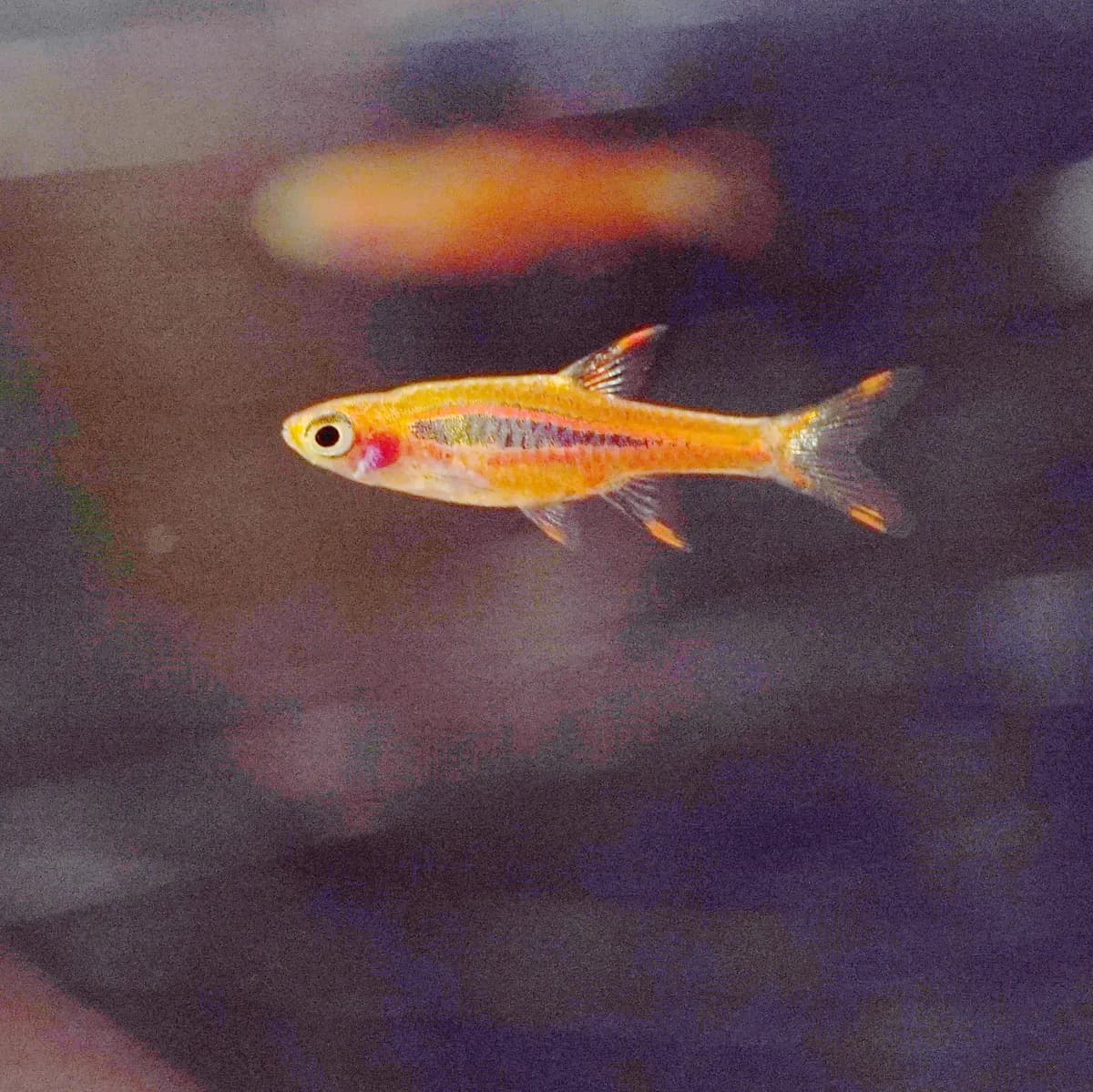
Freshwater · Beginner
Boraras brigittae
Chili rasboras (Boraras brigittae) are ~0.6-0.8 inch red nano schoolers for a densely planted 10-20 gallon. Keep 10-12 or more with soft acidic water, gentle flow, dark substrate, and micro foods. A 10-gallon is a species-only floor; use 20 gallons if you mix in other fish.
Min. tank: 10 gal
Care notes →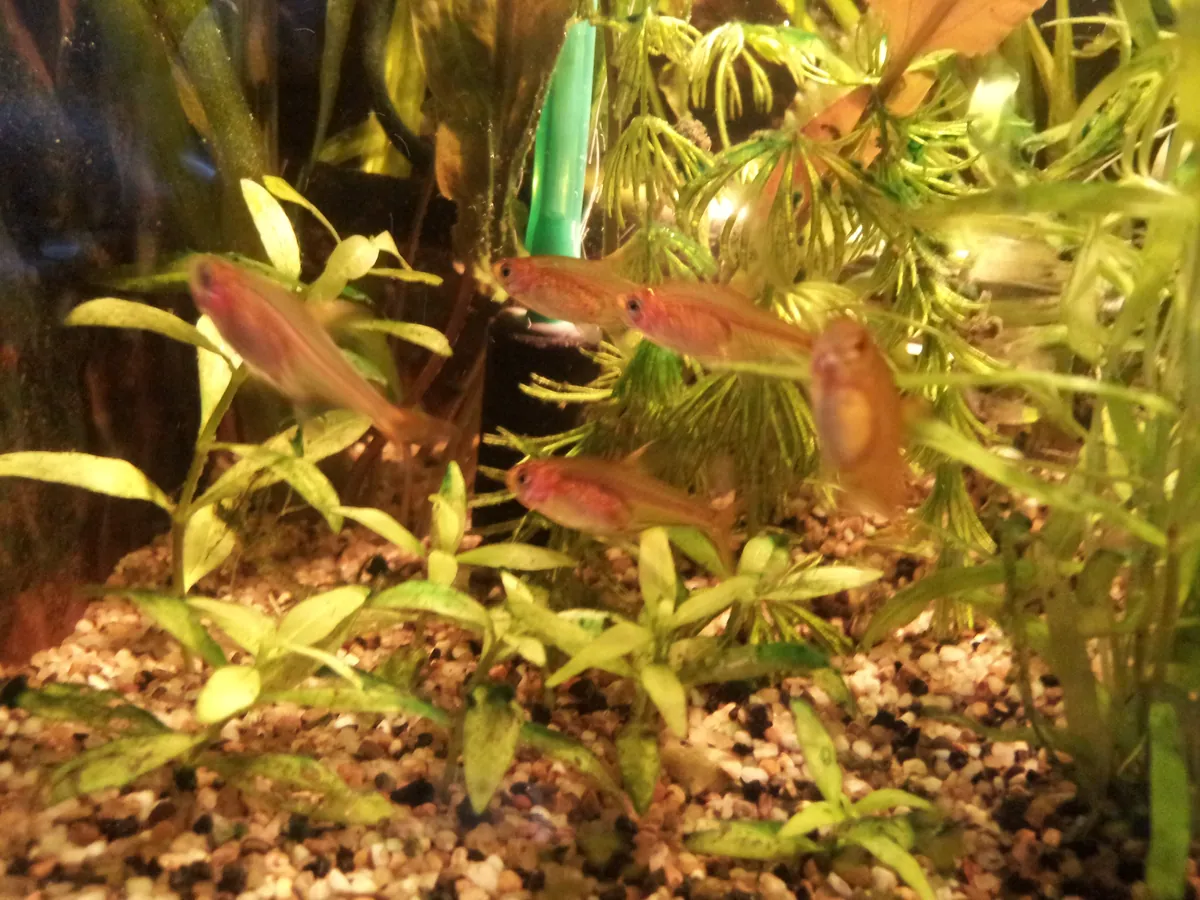
Freshwater · Beginner
Hyphessobrycon amandae
Ember tetras (Hyphessobrycon amandae) are ~0.7-1 inch orange nano schoolers for a planted 10-20 gallon. Keep 10 or more with gentle flow, plants, and micro foods. A 10-gallon works for a species school; use 20 gallons if you mix in other fish.
Min. tank: 10 gal
Care notes →