A stream barb sold as a cleaner
I bought three SAEs for a piece of driftwood covered in black beard algae. They cleaned it in about two weeks. Then they found the sinking wafers I was feeding the cories, and the wood started growing a little beard again.
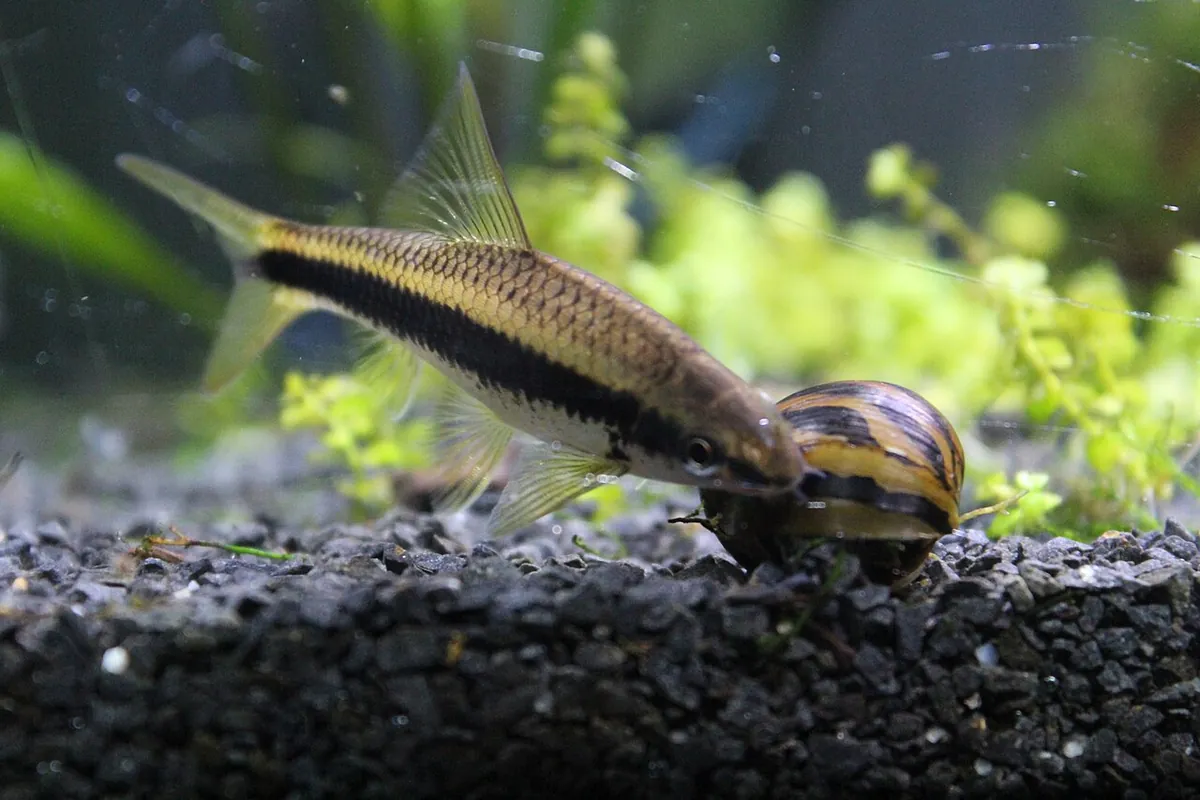
Crossocheilus oblongus is a barb from rivers and streams in Thailand and the Malay Peninsula. Shops still label it C. siamensis, an older name for the same fish, or just SAE. Stores sell them at 1.5 to 2 inches. Adults reach about 6 inches, and with good care they can live close to ten years.
How to tell a real one
Shops mix this fish up with a few look-alikes, so check two things before it goes in the bag. If either one is off, read the SAE vs Chinese algae eater guide first.
Two checks at the store tank| Check | Siamese algae eater | Probably something else |
|---|
| Black stripe | Runs all the way into the fork of the tail | Stops at the base of the tail or breaks into blotches |
| Mouth | Ordinary mouth under the snout | Round sucker that holds onto the glass |
Tank size and group size
An adult SAE swims fast laps along the front glass, so the tank needs length. One fish needs a tank at least 30 inches long. A standard 29 has that length and works for one. For a group of three, use a 40 breeder or a 55. A 55 or 75 can hold five.
Keep either one SAE or three or more. A pair usually chases each other all day. In a group of three, the chasing is spread out and nobody gets cornered.
SAEs jump, especially in the first weeks and when the lights come on. Use a lid that covers the filter and heater cutouts too. They come from moving water and like a filter that gives the tank some current and plenty of oxygen. A filter rated for the full tank size is enough, and a canister works well on a 40 or 55.
Keep the water at 75 to 79°F with a pH of 6.5 to 7.5. A 150W heater holds a 40 breeder in most rooms. Change 25 to 30 percent of the water every week.
Black beard algae and what adults eat
Young SAEs graze black beard algae, hair algae, and the film on wood, rock, and leaves. That habit is why they are sold as algae eaters. As they grow past 3 or 4 inches, most of them eat more fish food and less algae, and some stop eating black beard entirely.
Feed them anyway. Give the tank flakes or small pellets once a day, and make sure some reaches the SAEs. Two or three times a week, drop a veg wafer. The sinking wafers page covers how much to use with cories and plecos in the same tank. Once or twice a week, give them a slice of blanched zucchini or spinach. Starving an SAE so it eats more algae doesn't work. A hungry one picks at java moss and soft new leaves.
An SAE won't fix the cause of black beard algae. Cut the light to 6 to 8 hours, feed less, and keep up water changes. The algae guide covers each type of algae and what feeds it.
Tank mates and a 40-gallon plan
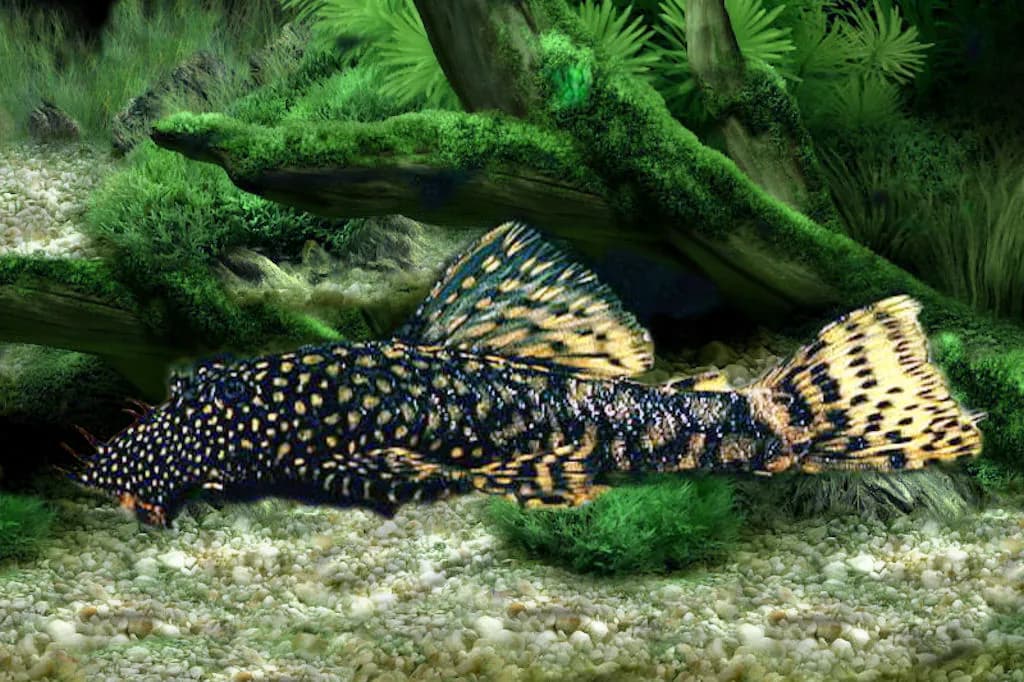
SAEs leave other fish alone and get along with tetras, rasboras, cories, gouramis, and plecos. The trouble shows up at feeding time. Adults are fast and pushy, and slow fish with long fins lose out or get nipped. Skip bettas and fancy long-finned guppies, especially in smaller tanks.
Adult amano shrimp and cherry shrimp usually get ignored. Baby cherry shrimp get eaten, so keep a breeding colony in its own tank.
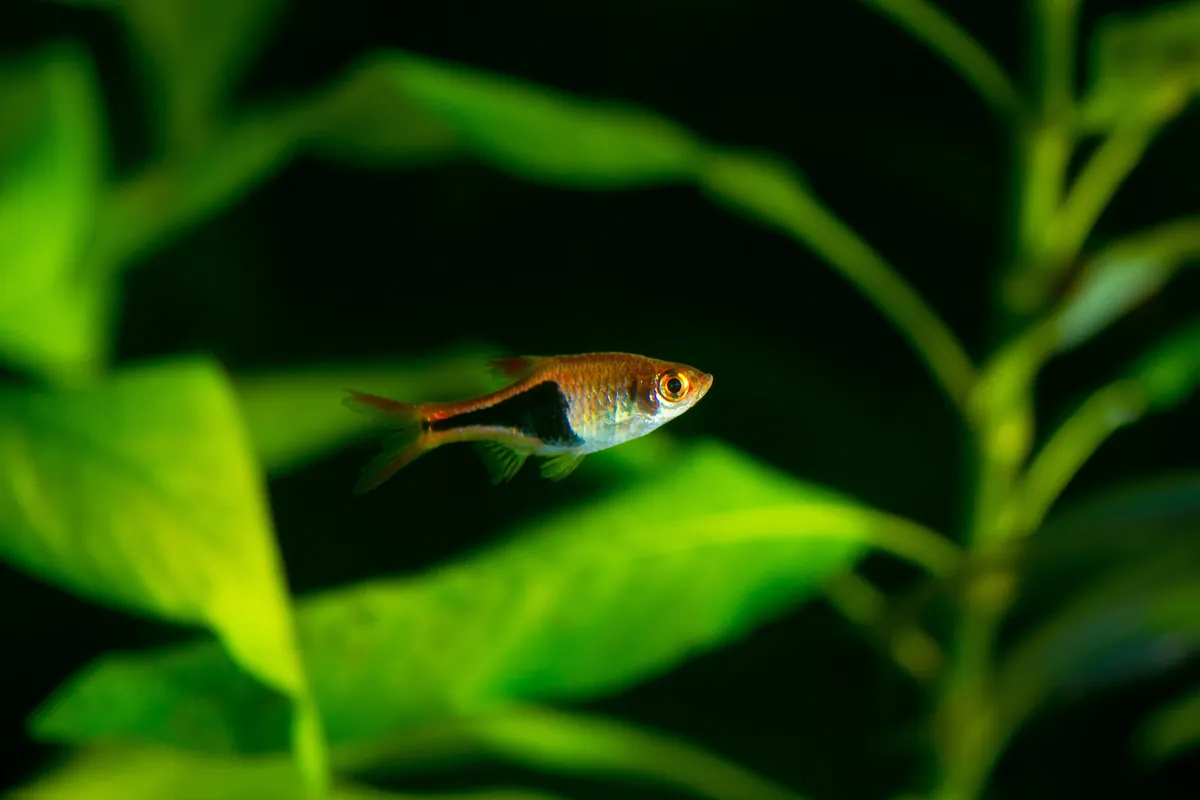
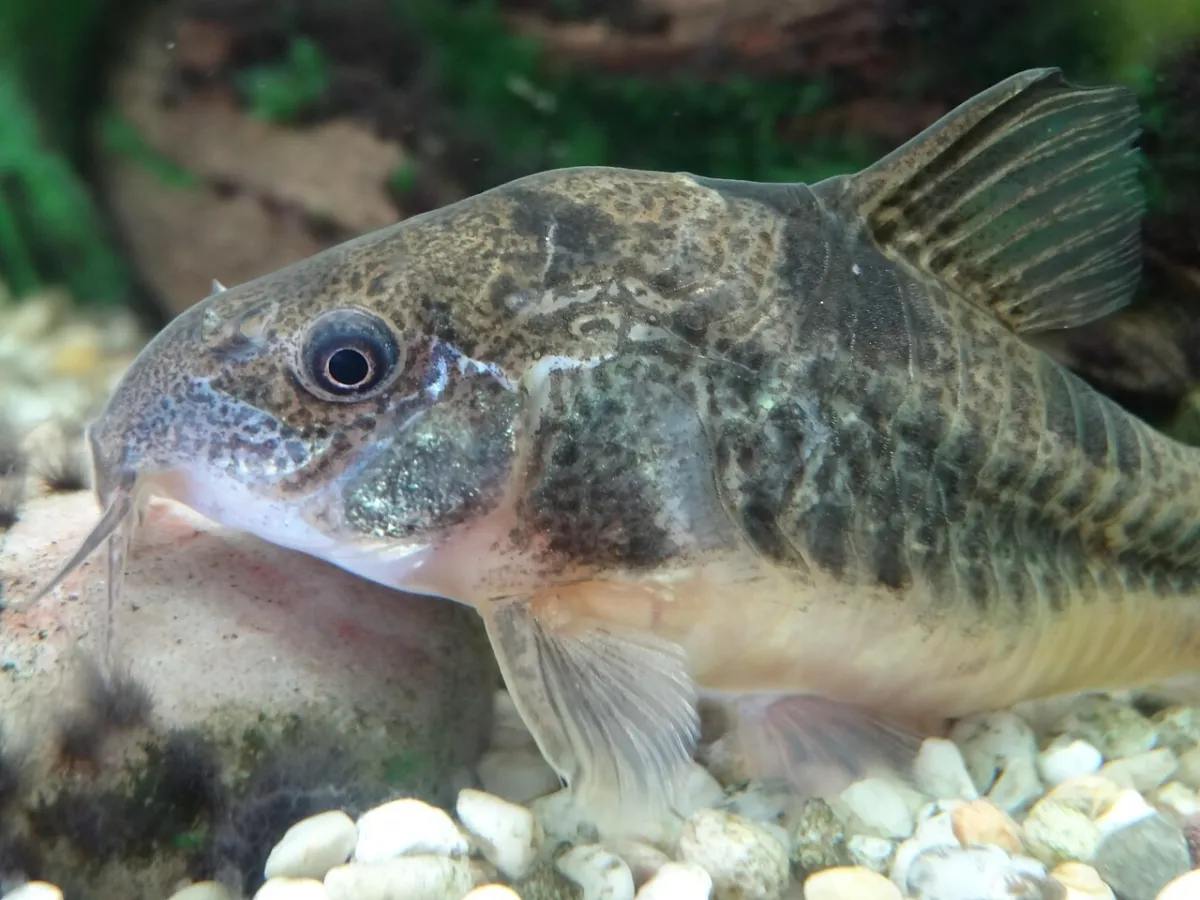
A plan that passes the stocking calculator at 40 gallons is three SAEs, 12 harlequin rasboras, and 6 peppered cories. Run it at 76 to 78°F, which suits all three. The 40-gallon breeder guide has three more plans for that tank.