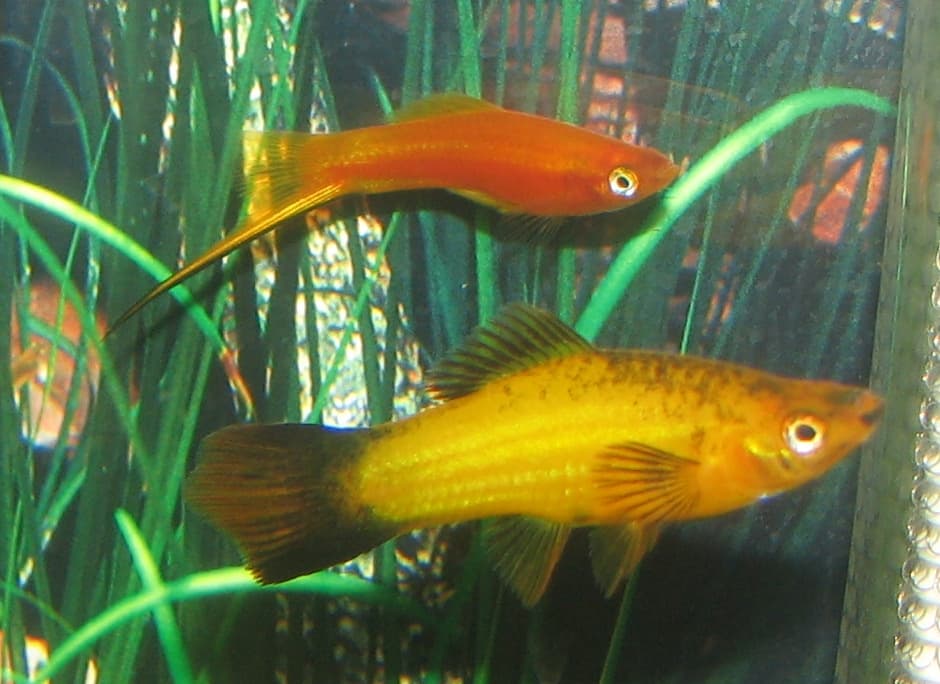
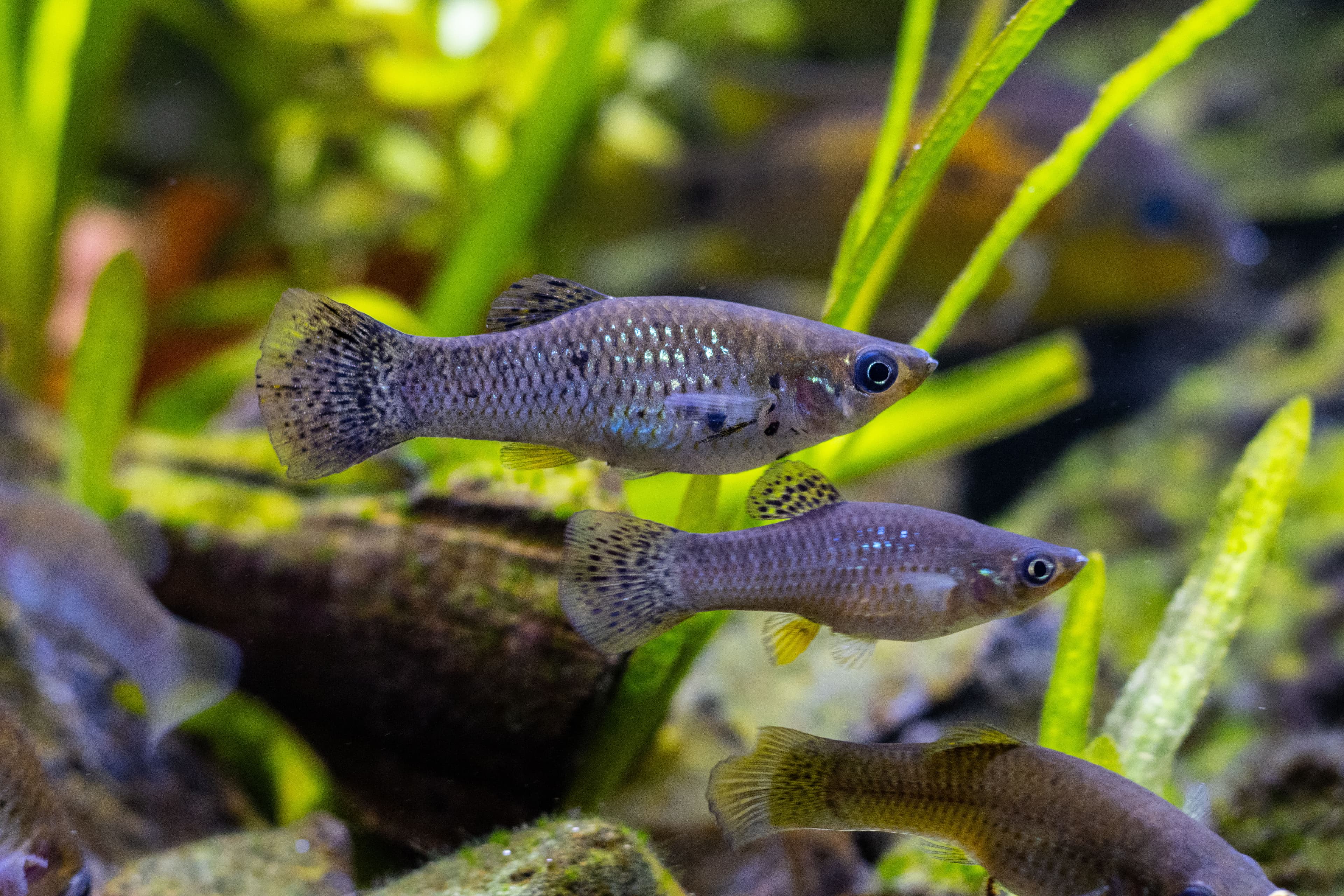
Swordtails (Xiphophorus hellerii) are hard-water livebearers that want swimming length. Plan about 29–30 gallons for a mixed group with one male. Males grow a caudal sword; they hybridize with platies if you mix them.
Peaceful livebearer with active midwater swimming. Males can chase each other; one male with several females is calmer than a bachelor pile. They rarely bother calm tank mates when the tank has swimming length.
Diet
Omnivore with a plant component. Tropical flakes or micro pellets as a staple, plus blanched zucchini, spinach, or spirulina flakes a few times a week. Occasional frozen brine or daphnia is fine. They are not a cleanup crew.
Temperature
72–82 °F
pH
7–8.2
Hardness / salinity
Moderately hard to hard, alkaline water (roughly 12–30 dGH). Same hard-water lane as platies and mollies. Soft Amazonian setups built for neon tetras are a poor long-term match.
Length first, then the sword
Xiphophorus hellerii is a Central American livebearer. Adult males run about 4 inches including the lower caudal sword; females are stockier without it. A 29–30 gallon tank is the honest home for a mixed group (one male, several females). A 20-gallon long is a tight floor for a small group, not a home for three sparring males.
They use horizontal space. A long footprint beats a tall hex. Hard, alkaline water in the low-to-upper 70s F suits captive stock. Soft RO topped with nothing will stress them the same way it stresses platies and mollies.
Males, hybrids, and fry
Males chase. Keep one male with a few females, or an odd number if you insist on more than one male and have the length. Two males in a short tank spend the day fencing. Dense plants give chased fish somewhere to peel off.
Swordtails hybridize with platies (Xiphophorus maculatus). If you care about strain purity, do not mix them. Shop fish are often already hybrid-leaning; buy from a clean tank and judge health before paint jobs.
Mixed sexes mean fry. A female can drop broods for months after a mating. Plan water changes and rehomes, or keep one sex. Plants help some fry survive; most community tanks eat many of them.
Food, filter, neighbors
Flake works if they finish it. Add plant matter a few times a week. Do not stock them as algae eaters and then skip feeding.
A hang-on-back filter rated for the tank with adjustable flow suits a livebearer 29 better than a clogging kit cartridge. Baffle or dial down the outflow if long-fin fish get pinned. Pair it with weekly water changes, not instead of them.
They mix with platies, mollies, guppies, danios, and a cory group in hard water. Skip nippy barbs and male bettas. Soft-water cardinal schools want different chemistry. Pick a lane.
Tank mates
Platies, mollies, and guppies in hard water
Zebra danios and other peaceful midwater schoolers
Peppered cories on sand
Avoid nippy barbs, male bettas, and large cichlids
Gear for this fish
A few listings we would open for this species. Skip anything you already own that still works.
Aqueon Pro adjustable heater, 100W
Swordtails are tropical livebearers in the 72–82 F range. A 29–30 gallon group wants a real adjustable heater. 100W suits a normal room; bump up if the basement sits cold.
Still put a separate thermometer on the glass. Skip stacking two heaters that fight each other.
About 29–30 gallons for a mixed group with one male. A 20-gallon long is a tight floor, not a three-male bachelor pad. Length matters more than height.
Will swordtails breed with platies?+
Yes. They are close cousins and hybridize readily. Keep them apart if you care about strains. Mixed sexes of either species still mean fry on their own.
Do swordtails need salt?+
No permanent salt dose. Captive-bred swordtails live in hard freshwater. Minerals (GH/KH) matter more than NaCl décor.
Why are my male swordtails chasing?+
Male sparring is normal. Use one male with several females, give swimming length, and add plants. Two males in a short tank will keep fencing.
Platies are hardy, hard-water livebearers for a heated 15-gallon (20 is easier). Mickey Mouse, wagtail, and sunset are color strains, not different care. Mixed sexes mean fry.
Common mollies (Poecilia sphenops) are hardy, hard-water livebearers for a heated 20-gallon. Sailfins want 30+. Mixed sexes mean fry. Captive-bred stock lives in freshwater. They need minerals, not a permanent NaCl bath.
Guppies are colorful, active livebearers for a heated 10-gallon (or larger) community, with one caveat: mixed sexes will produce fry, often lots of them.