Skip to content
Swimming FishiesSwimming Fishies
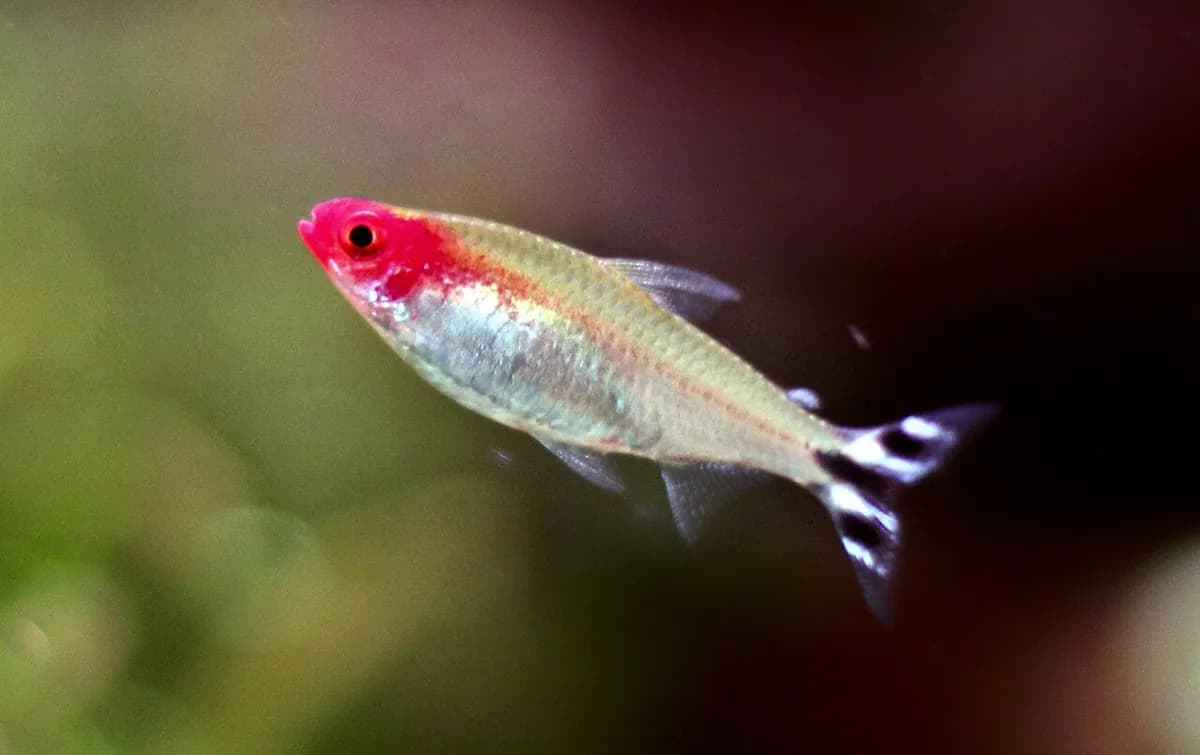
Rummy-nose tetra showing bright red snout and black-and-white striped caudal fin

Photo: Soulkeeper · CC BY-SA 3.0

Freshwater · Intermediate · 20+ gal

Rummy-nose tetra

Hemigrammus bleheri / H. rhodostomus / Petitella (trade mix)

By

Rummy-nose tetras sold in shops are a trade mix of Hemigrammus bleheri, H. rhodostomus, and Petitella names. Care is the same lane. Adults reach about 2 inches. How many fit in a 20-gallon? Eight to ten in a 20-gallon long, and ten still leaves room for six peppered cories on the bottom. Plant it well and keep the water soft to moderate and clean. A bright red nose and black-and-white striped tail are the ID. A pale nose often means stress, a new tank, or dirty water.

More freshwater care · Full directory

Care parameters for Rummy-nose tetra
Water typeFreshwater
Care levelIntermediate
Minimum tank20 gallons
TemperamentPeaceful schooler. Keep eight to ten or more so they cruise midwater instead of hiding. Plant-safe. Skip nippy barbs and anything large enough to eat a two-inch tetra.
DietOmnivore with a small mouth. Quality micro pellets or crushed flake as a staple, plus frozen baby brine, daphnia, or finely chopped bloodworms a few times a week. Small portions once or twice daily so the back of the school gets a turn.
Temperature74–82 °F
pH5.5–7.5
Hardness / salinitySoft to moderately soft water suits them. Most shop fish handle near-neutral community water if it stays stable and clean. Low nitrate matters more than chasing a perfect soft-water number. Big swings and new-tank ammonia wipe schools fast.

Trade names, same care lane

Shops label bags as rummy-nose, firehead, or red-nose tetra and bounce between Hemigrammus bleheri, H. rhodostomus, and Petitella. Taxonomy has moved some of these into Petitella, but the fish on the shelf share one care lane. Adults stay around 2 inches. The easy ID is a red snout plus a black-and-white striped tail. They are not neon tetras. They want a real school, more horizontal room, and cleaner water than a casual 10-gallon neon setup.

They are intermediate-leaning for beginners. Peaceful and plant-safe, but less forgiving of nitrate spikes and half-finished cycles than zebra danios or many livebearers. Finish the cycle before you buy the school. Quarantine when you can.

Twenty-gallon long for a real school

Eight to ten fish in a 20-gallon long is the honest starting point. A 10-gallon is too short for this school. They cruise horizontally through midwater, so length beats height. See stocking a 20-gallon tank for layouts that leave an open swim lane.

Plant the sides and back. Leave an open midwater path. Dense stems, a darker substrate, and a bit of driftwood bring the red nose out. Bright bare tanks leave them washed out and glued to cover. Gentle sponge or hang-on-back flow is enough. Put a lid on. Small tetras jump when startled.

Pale nose, soft water, and food

A bright red nose usually means the fish is settled and the water is in good shape. A pale or washed-out nose is a useful signal. New tanks, shipping stress, rising nitrate, and big parameter swings bleach the color first. Treat that as a water-quality cue, not a reason to dose random meds.

Set the heater in the 74-82 F band, which works for most shop fish. Soft to moderately soft, slightly acidic to near-neutral water with low nitrate is the lane. Hard alkaline setups built for swordtails and mollies are a poor long-term match. See aquarium GH, KH, and pH if you are still learning what soft water means on a test kit.

Feed micro pellets or crushed flake they finish in a minute, then add frozen a few times a week. Leftover food in a crowded 20 is how nitrate climbs and the school fades. Tank mates that work: cardinals if the chemistry overlaps, a cory group on sand, honey gourami in a planted long, and otos in a mature tank. Skip tiger barbs, other fin-nippers, and large cichlids.

Tank mates

  • Cardinal tetras if soft, clean water overlaps
  • Peppered cories on sand
  • Honey gourami in a planted 20-long
  • Otocinclus on a mature algae film
  • Ember tetras or other calm small schoolers that will not outcompete them at feeding
  • Skip nippy barbs, large cichlids, and hard-water livebearer tanks built for mollies

Gear for this fish

A few listings we would open for this species. Skip anything you already own that still works.

  • Hikari Tropical Micro Pellets, 0.77 oz

    Rummy-noses have small mouths and a whole school to feed. These semi-floating micro pellets were made for tetras. They sink slowly enough that the back of the group gets a shot.

    A pinch once or twice a day, not a pile. Skip this if you already use a quality micro pellet they finish in a minute. Frozen baby brine a few times a week still helps.

    See this listing
  • Aqueon Pro adjustable heater, 100W

    A 20-gallon school wants stable mid-to-upper 70s F into the low 80s. The 100W Pro is the size we open for other tropical 20s in a normal room.

    Put a separate thermometer on the glass away from the heater. Skip stacking two heaters. Confirm wattage matches your tank volume and room temperature.

    See this listing
  • Fluval AquaClear 50 Power Filter

    A 20-gallon school needs a hang-on-back you can stuff with extra sponge, not a sealed cartridge. Adjustable flow matters for small tetras that hate being blasted.

    Dial it down and baffle the outflow if they huddle in the corner. A seeded sponge filter as backup bio is fine. Confirm the 20-to-50 gallon AquaClear 50 listing.

    See this listing

Frequently asked questions

How many rummy-nose tetras should I keep?+

A school of eight to ten or more in a 20-gallon long is a solid start. Tiny groups stay shy and show less color.

How many rummy-nose tetras can go in a 20-gallon tank?+

Eight to ten in a 20-gallon long. Eight is the smallest school worth buying, and ten still leaves room for six peppered cories on sand.

What size tank do rummy-nose tetras need?+

Plan on a 20-gallon long for a real school. A 10-gallon is too short for eight to ten of these midwater cruisers.

Why is my rummy-nose tetra's nose pale?+

Pale or washed-out red often means stress, a new tank, or dirty water. Check ammonia, nitrite, and nitrate, and keep parameters stable. Color usually returns when the school settles and water quality improves.

Are rummy-nose tetras the same as neon tetras?+

No. Neons are smaller Paracheirodon with a blue and red stripe. Rummy-noses have a red snout and a striped black-and-white tail, want a larger school in a 20-long, and are pickier about clean, soft-to-moderate water.

Next step

Planning a tank for these?

Plan on 20 gallons or more. Put your actual tank size into the stocking calculator and it shows what else can live alongside them.

Open the stocking calculator

Before you buy

Keep your fishies swimming.

Related species

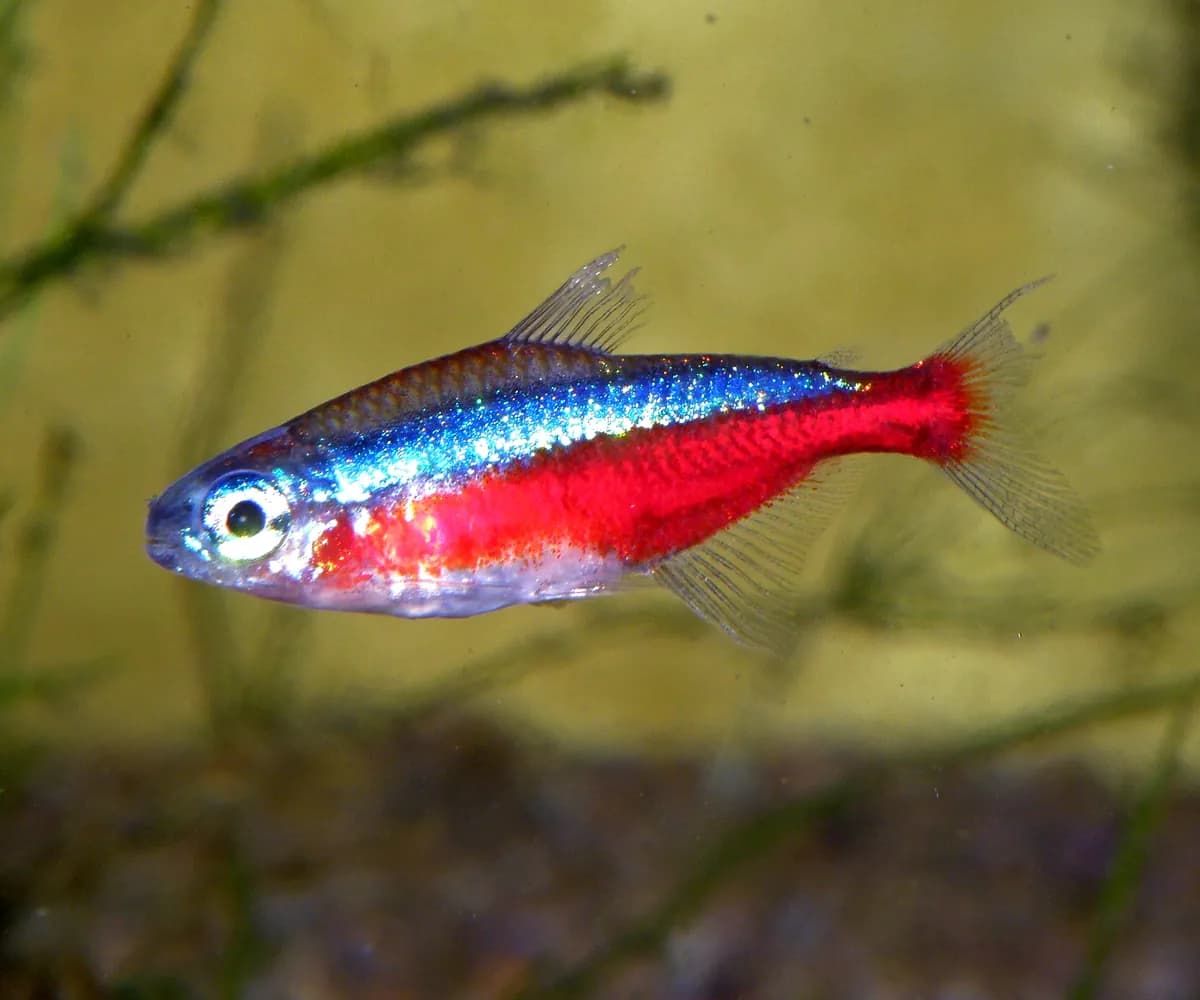
Cardinal tetra (Paracheirodon axelrodi) showing blue lateral stripe and red stripe running the full body length

Freshwater · Intermediate

Cardinal tetra

Paracheirodon axelrodi

Cardinal tetras (Paracheirodon axelrodi) are Amazon schoolers with a full red stripe from snout to tail. Plan a school of eight to ten in a planted 20-gallon with soft, clean water, not a neon-sized squeeze in a 10.

Min. tank: 20 gal

Care notes →
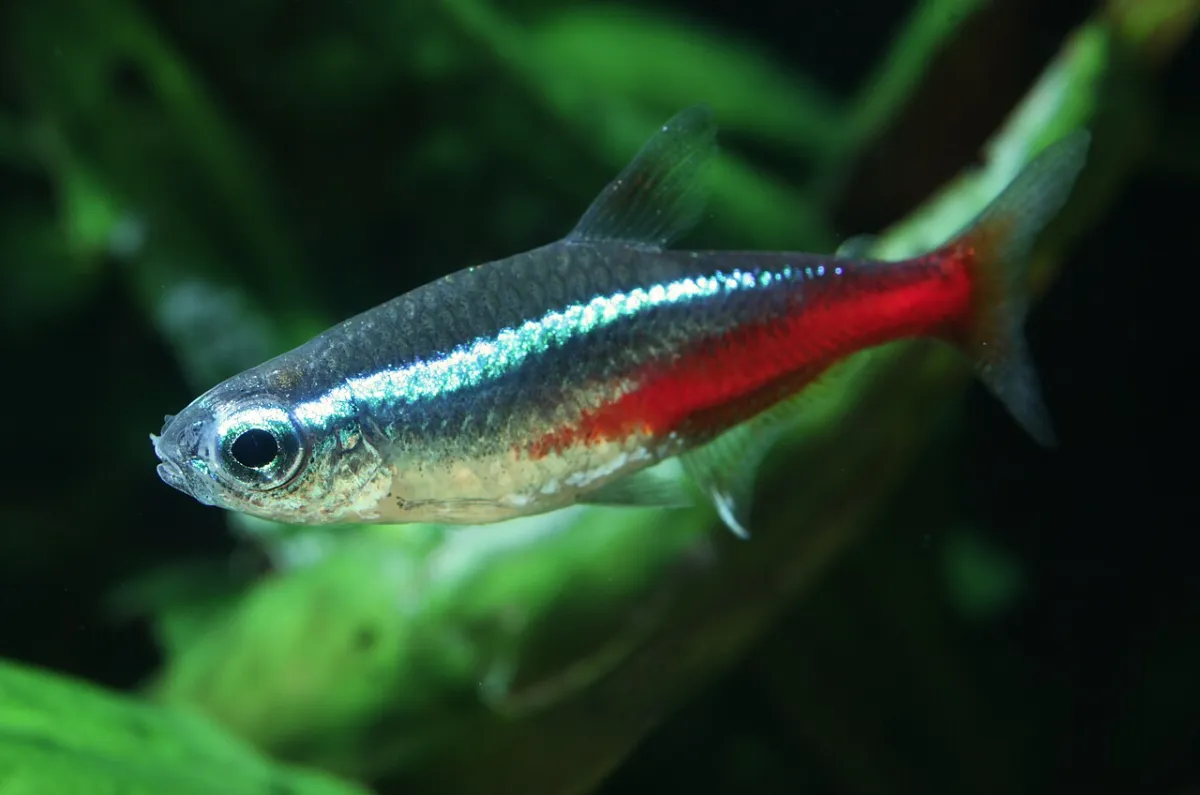
Neon tetra (Paracheirodon innesi) with blue and red lateral stripe in an aquarium

Freshwater · Beginner

Neon tetra

Paracheirodon innesi

Keep neon tetras in a school of at least 6, and plan on 8 to 12 in a 20-gallon tank. Adults stay under 1.5 inches. A 10-gallon is the minimum for a small school. Hold the water at 72 to 78°F, soft and slightly acidic (pH 5.5 to 7.0), with plants and dim light.

Min. tank: 10 gal

Care notes →
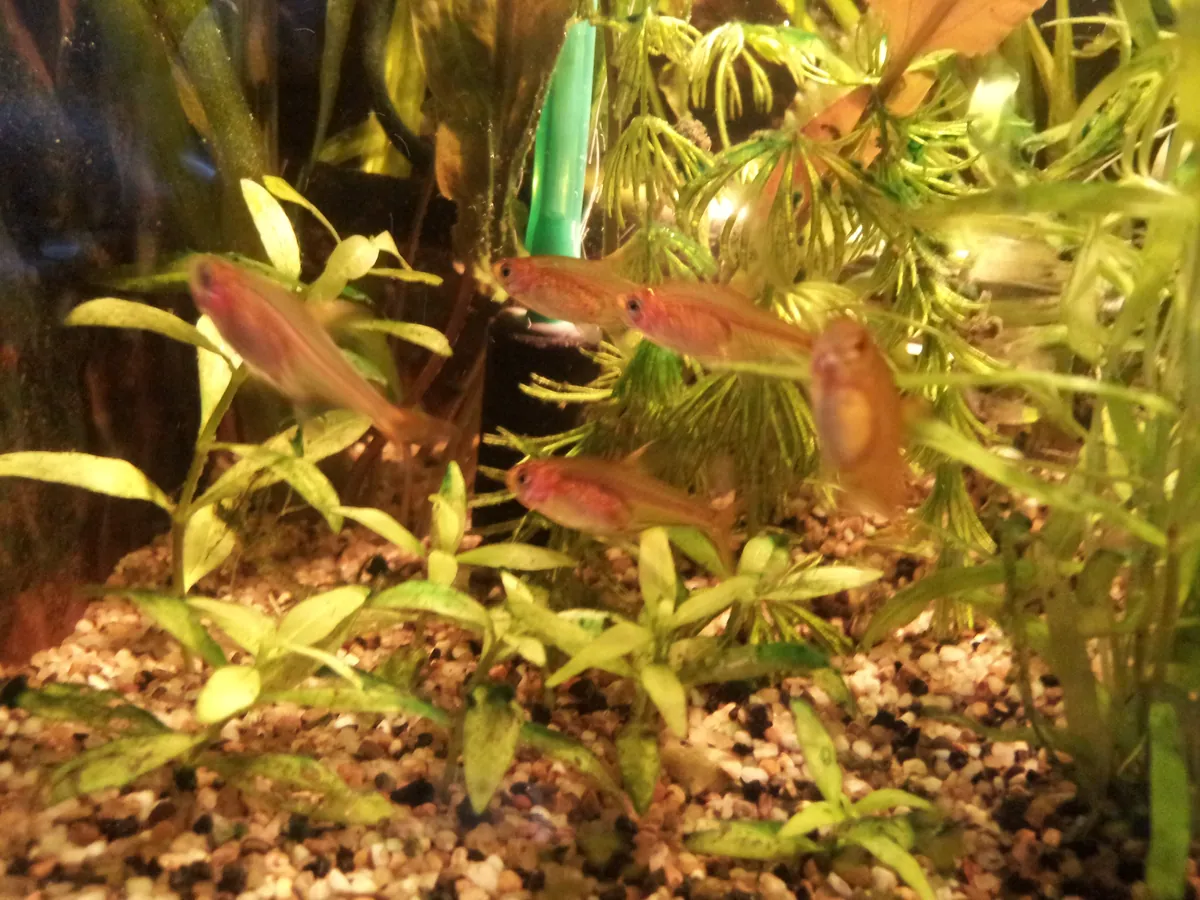
Ember tetra (Hyphessobrycon amandae) showing orange body among plants

Freshwater · Beginner

Ember tetra

Hyphessobrycon amandae

Ember tetras (Hyphessobrycon amandae) are ~0.7-1 inch orange nano schoolers for a planted 10-20 gallon. Keep 10 or more with gentle flow, plants, and micro foods. A 10-gallon works for a species school; use 20 gallons if you mix in other fish.

Min. tank: 10 gal

Care notes →