Skip to content
Swimming FishiesSwimming Fishies
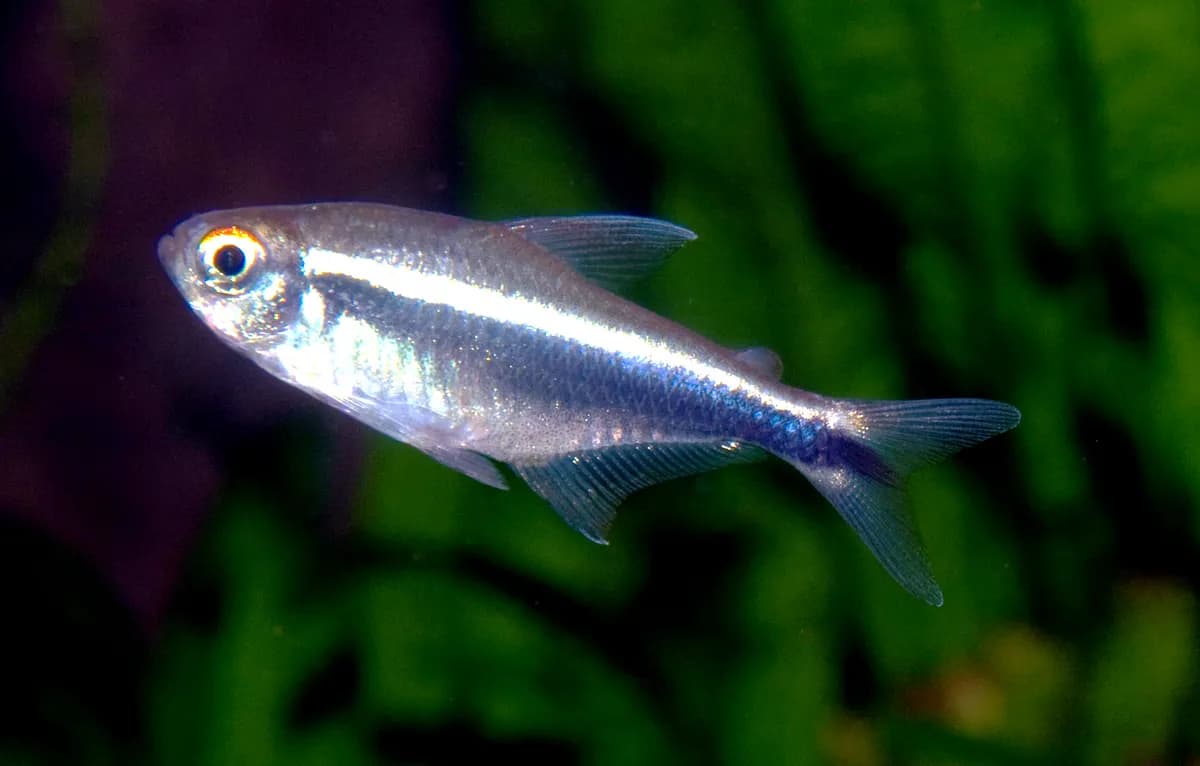
Black neon tetra (Hyphessobrycon herbertaxelrodi) with a white stripe above a dark lateral band, swimming in front of aquarium plants

Photo: Brian Gratwicke · CC BY 2.0

Freshwater · Beginner · 15+ gal

Black neon tetra

Hyphessobrycon herbertaxelrodi

By

Black neon tetras (Hyphessobrycon herbertaxelrodi) stay about 1.5 inches. Keep at least six in a cycled 15-gallon, or eight to ten in a 20, with plants, moderate flow, and water at 72 to 80°F. They handle ordinary tap water better than neons or cardinals do.

More freshwater care · Full directory

Care parameters for Black neon tetra
Water typeFreshwater
Care levelBeginner
Minimum tank15 gallons
TemperamentPeaceful midwater schooler. Keep six or more, and eight to ten if the tank allows. A group of three or four gets shy and hugs the plants. Plant-safe, and not a fin-nipper.
DietOmnivore. Crushed flake or micro pellets once or twice a day, plus frozen daphnia, baby brine, or a few chopped bloodworms a few times a week. Feed what the school finishes in about two minutes.
Temperature72–80 °F
pH5.5–7.5
Hardness / salinitySoft to moderately hard, up to about 12 dGH. Farm-raised fish take most tap water if it stays stable. Softer, slightly acidic water brings out more color.

A white stripe over a black one

Neon tetras sulk when the pH drifts. Black neons mostly keep swimming, which is why I send people to them after a school of neons has gone downhill on them.

Hyphessobrycon herbertaxelrodi comes from the upper Paraguay River basin in Brazil and is named for the fish-hobby author Herbert Axelrod. Nearly every fish in a shop is farm-raised. Adults reach about 1.5 inches. A white to silver stripe runs above a broad black stripe, and the top of the eye shows red over gold. Nothing on the body is blue. Females are rounder and fuller than males.

Penguin tetras (Thayeria) get sold next to them and look similar at first glance. A penguin swims tilted head-up, and its black stripe runs into the lower lobe of the tail. A black neon swims level, and the stripe ends at the base of the tail.

Fifteen gallons for six, twenty for a real school

Six black neons fit a cycled 15-gallon. Eight to ten look better in a 20-gallon, and a 20 long beats a 20 high because the school cruises lengthwise through the middle of the tank. A 10-gallon is too small for a full group. Add the school after the cycle finishes, not during it. See how to cycle a fish tank.

Set the heater near 76°F. They accept 72 to 80°F and pH 5.5 to 7.5, and they do fine in soft to moderately hard water, which covers a lot of tap water. Soft, slightly acidic water gives more color and is what breeders use for spawning. A dark substrate, floating plants, and dim light make the white stripe stand out. A sponge filter or a hang-on-back with the flow turned down is plenty. A lid matters, since startled tetras jump.

To see how a school fits with fish you already own, enter your tank size in the stocking calculator or add them to My tank.

What to feed and who shares the tank

They eat nearly anything that fits a small mouth. Crushed flake or micro pellets are the daily staple, and frozen foods a few times a week bring out color. Feed less than you think you need. The feeding guide covers the two-minute rule.

Good company is peaceful and about the same size. Harlequin rasboras, pygmy cories, peppered cories, otocinclus, and adult cherry shrimp all work in a planted 20. Black neons and neon tetras can share a tank, but each species needs its own school of six or more. Eight black neons with six peppered cories is an easy 20-gallon stocking by the calculator's waste math.

Buy from a shop with clean tanks and plump, active fish, and quarantine them anyway. Neon tetra disease can hit any tetra and has no reliable home cure, so prevention is the plan.

Tank mates

  • Harlequin rasboras and ember tetras in a planted 20-gallon
  • Pygmy cories or peppered cories on sand
  • Otocinclus in a mature tank
  • Adult cherry shrimp, though shrimplets get eaten
  • Neon tetras, each species in its own school of six or more
  • Skip adult angelfish, goldfish, and anything that can swallow a one-and-a-half-inch fish

Gear for this fish

A few listings we would open for this species. Skip anything you already own that still works.

  • Fluval Bug Bites Tropical, small granules 1.6 oz

    Small granules a 1.5-inch mouth can handle. They sink slowly, so the school feeds in midwater instead of fighting over the surface.

    Feed a pinch and watch for two minutes. Crush a few for the smallest fish. Skip it if you already feed a micro pellet they finish.

    See this listing
  • Aqueon Pro adjustable heater, 100W

    Holds a 20-gallon at 76°F in a normal room, which is the middle of the 72 to 80°F range they like.

    A 15-gallon does fine with a 50W heater. Put a separate thermometer at the far end of the tank to check the dial.

    See this listing
  • H2Pro 30-inch glass canopy for 20-long / 29-gallon tanks

    Startled tetras jump. This glass top fits the common 20-long rim.

    Measure your opening first, because it does not fit every brand. Skip it if your tank already has a hood that closes.

    See this listing

Frequently asked questions

How many black neon tetras should I keep?+

At least six. Eight to ten in a 20-gallon is better, and a bigger school stays tighter and bolder.

What size tank do black neon tetras need?+

Fifteen gallons for a school of six, and 20 gallons for eight to ten. A 10-gallon is too small for a real group.

Are black neon tetras the same as neon tetras?+

No. Neon tetras (Paracheirodon innesi) are blue and red, a bit smaller, and happiest in softer water. Black neons are black and white and handle harder tap water better.

Are black neon tetras good for beginners?+

Yes. They are among the easier tetras once the tank is cycled and you keep a school of six or more. They take a wider range of tap water than neons or cardinals.

How do I tell a black neon from a penguin tetra?+

Watch how it swims. A penguin tetra tilts head-up, and its black stripe runs into the lower tail lobe. A black neon swims level, and its black stripe stops at the base of the tail.

Next step

Planning a tank for these?

Plan on 15 gallons or more. Put your actual tank size into the stocking calculator and it shows what else can live alongside them.

Open the stocking calculator

Before you buy

Keep your fishies swimming.

Related species

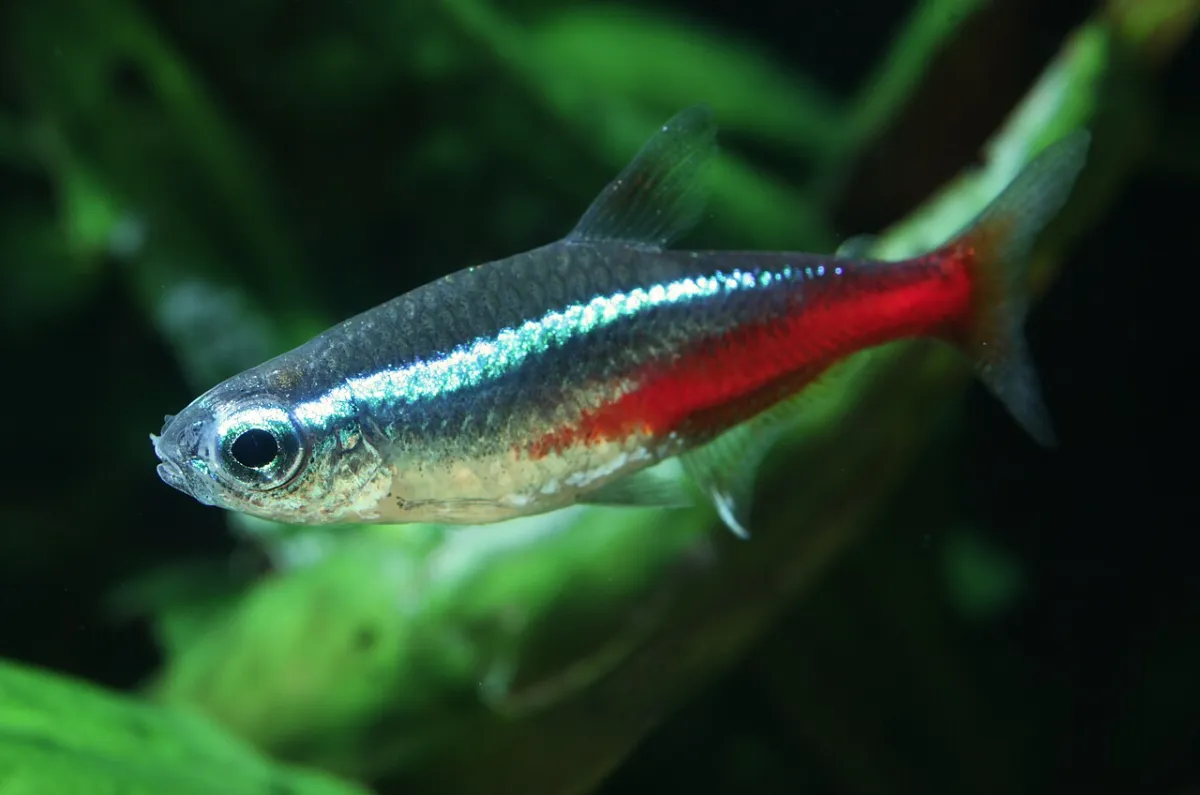
Neon tetra (Paracheirodon innesi) with blue and red lateral stripe in an aquarium

Freshwater · Beginner

Neon tetra

Paracheirodon innesi

Keep neon tetras in a school of at least 6, and plan on 8 to 12 in a 20-gallon tank. Adults stay under 1.5 inches. A 10-gallon is the minimum for a small school. Hold the water at 72 to 78°F, soft and slightly acidic (pH 5.5 to 7.0), with plants and dim light.

Min. tank: 10 gal

Care notes →
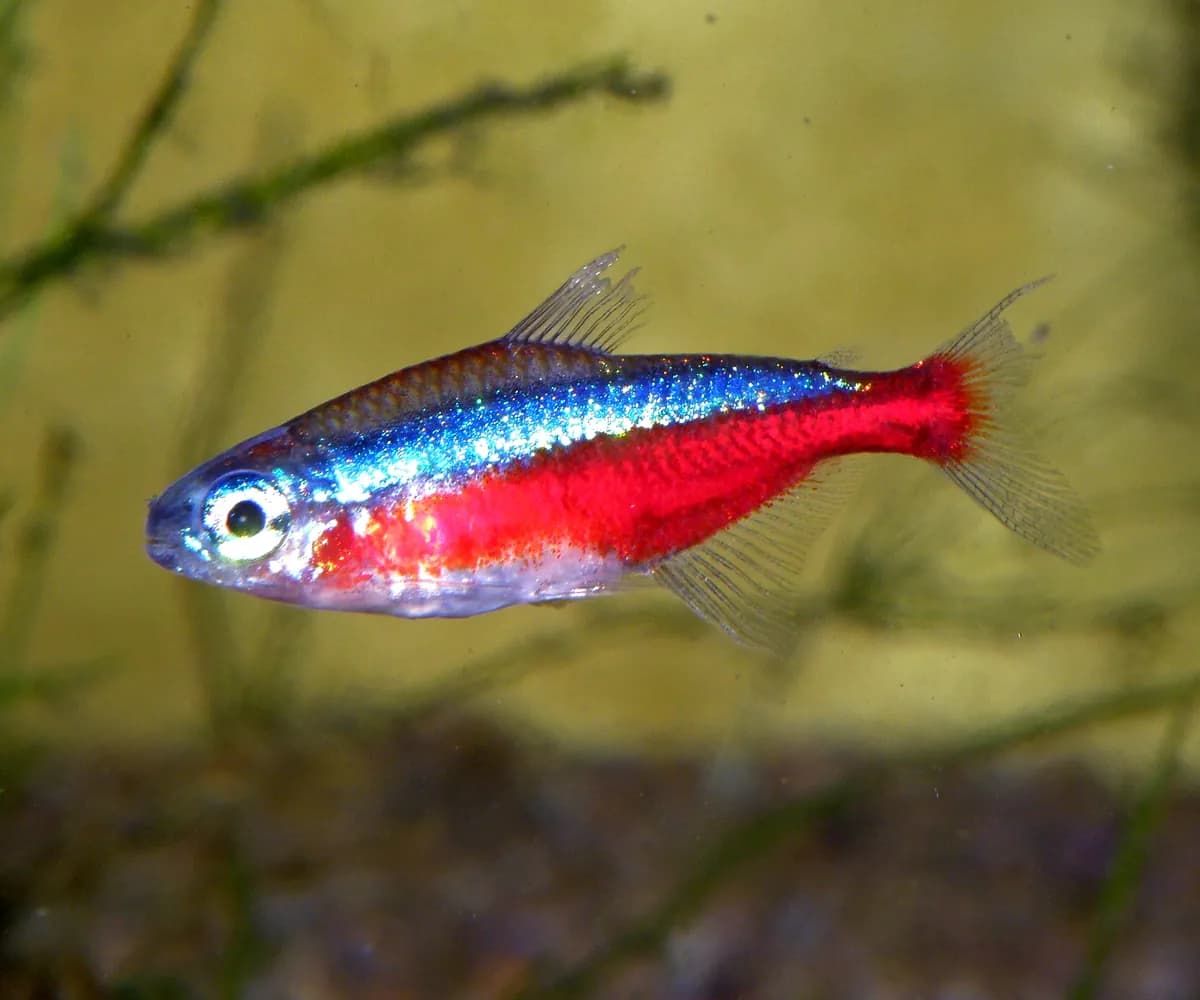
Cardinal tetra (Paracheirodon axelrodi) showing blue lateral stripe and red stripe running the full body length

Freshwater · Intermediate

Cardinal tetra

Paracheirodon axelrodi

Cardinal tetras (Paracheirodon axelrodi) are Amazon schoolers with a full red stripe from snout to tail. Plan a school of eight to ten in a planted 20-gallon with soft, clean water, not a neon-sized squeeze in a 10.

Min. tank: 20 gal

Care notes →
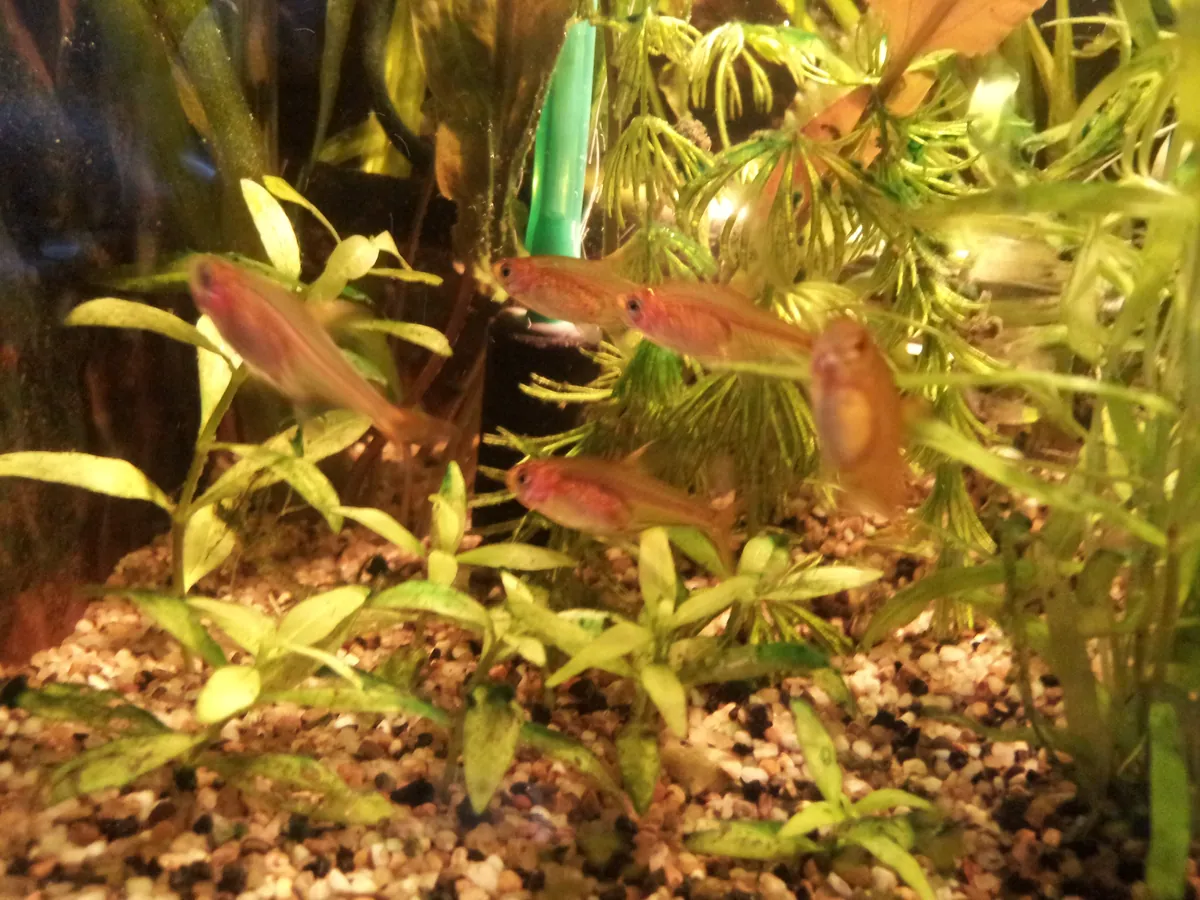
Ember tetra (Hyphessobrycon amandae) showing orange body among plants

Freshwater · Beginner

Ember tetra

Hyphessobrycon amandae

Ember tetras (Hyphessobrycon amandae) are ~0.7-1 inch orange nano schoolers for a planted 10-20 gallon. Keep 10 or more with gentle flow, plants, and micro foods. A 10-gallon works for a species school; use 20 gallons if you mix in other fish.

Min. tank: 10 gal

Care notes →