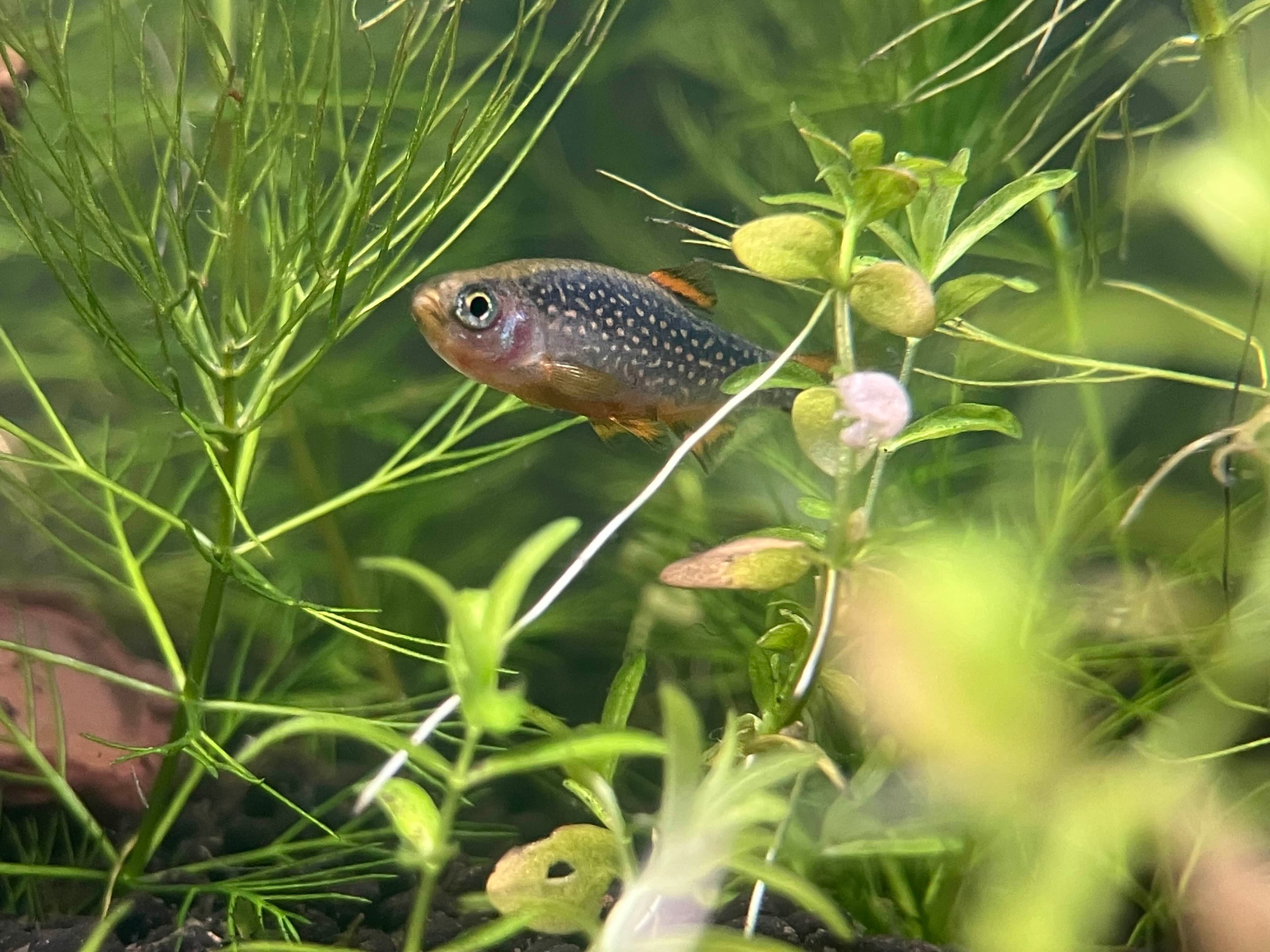
Celestial pearl danios (Danio margaritatus), also sold as galaxy rasboras, are ~1-inch nano schoolers for a planted 20-gallon. Keep 10-15 with gentle flow, dense plants, and dark substrate. A 10-12 gallon long is a tight species-only floor, not a comfortable community home.
Peaceful nano schooler. Males spar and flash color; a group of 10-15 spreads that pressure so it stays display, not a constant chase. Plant-safe. Skip boisterous danios that hog food.
Diet
Omnivore with tiny mouths. Micro pellets, crushed flake, and frozen baby brine or microworms. Small portions once or twice daily so the back of the school gets a turn.
Temperature
68–79 °F
pH
6.5–7.5
Hardness / salinity
Soft to moderately soft water suits them. Most shop fish handle near-neutral community water if it is stable and clean. Cooler mid-60s to mid-70s is fine; they often look better cooler than a neon tank.
Galaxy spots, not chili rasbora
Danio margaritatus is a Myanmar cyprinid sold as the celestial pearl danio or galaxy rasbora. Adults top out around one inch. Males show brighter red fins and denser pearl spots when they are comfortable and in a real group; females stay rounder and a bit plainer. This page is about CPDs, not chili rasboras or zebra danios.
They use the lower and middle levels of a planted tank. Dense stems, moss, and a dark substrate bring the spots out. A bright bare tank leaves them washed out and glued to cover. Put a lid on; they can jump when startled.
Twenty gallons for a real group
Ten to fifteen fish in a planted 20-gallon is the honest home. A 10-12 gallon long can hold a species-only group if filtration and weekly water changes are tight, but it is a floor, not a recommendation for a mixed community. Length beats height; they cruise horizontally through the plants. See stocking a 20-gallon tank for layouts that leave midwater room.
Gentle flow matters. A hang-on-back with the outflow baffled, or a seeded sponge filter, is enough. Soften anything that blasts the midwater. Temps in the 68-79 F band work for most shop fish; many keepers run them cooler than neon tanks and see better color. Finish the cycle before you buy the school. Quarantine when you can.
Tiny food, male sparring, tank mates
Feed micro pellets or crushed flake they finish in a minute, then add frozen baby brine a few times a week. Leftover food in a planted 20 is how nitrate climbs. Males will chase and flare; that is normal. Bigger groups spread the pressure so one fish is not constantly harassed.
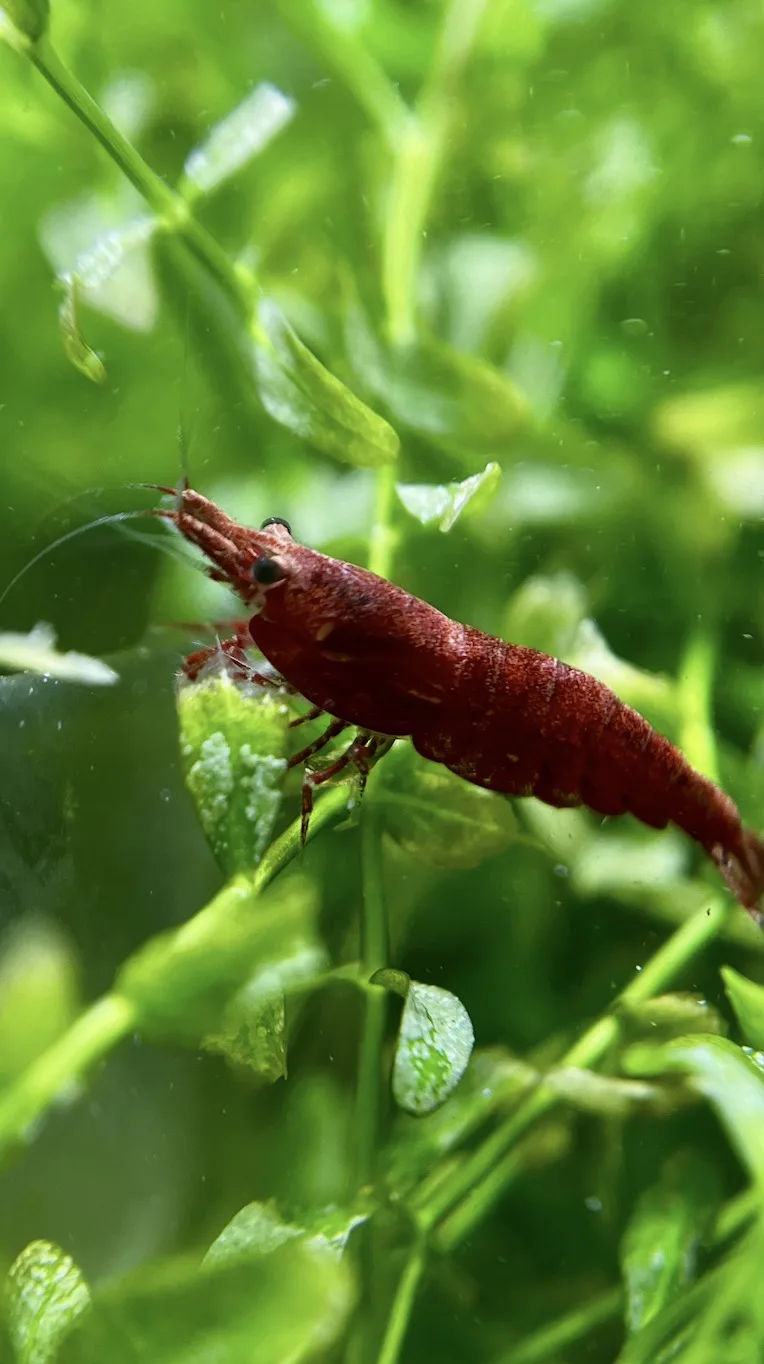
Tank mates that work: adult cherry shrimp, otos in a mature tank, harlequin rasboras, and white clouds if you keep the cooler end of the range. Skip zebra danios and other fast, greedy midwater fish that clean the surface before the CPDs get a shot. A low-tech planted layout with dark substrate is their natural habitat on this site; see the low-tech planted aquarium guide.
Tank mates
Cherry shrimp adults in a planted tank
Otocinclus on a mature algae film
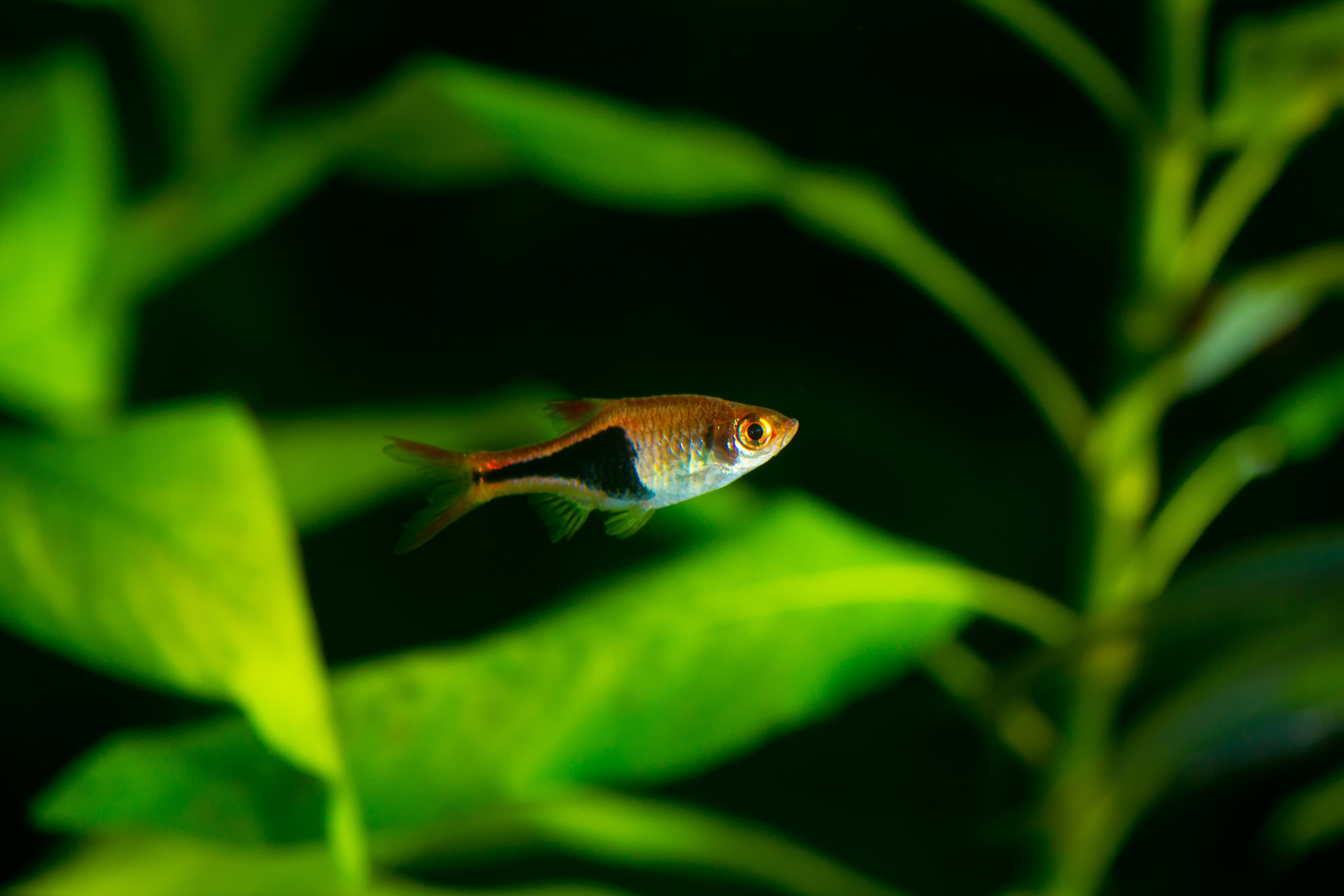
Harlequin rasboras or other calm small midwater schoolers
White cloud mountain minnows if you keep the cooler end of the band
Skip zebra danios and other fast feeders that outcompete them
Skip large cichlids and anything that treats a one-inch fish as a snack
Gear for this fish
A few listings we would open for this species. Skip anything you already own that still works.
Hikari Tropical Micro Pellets, 0.77 oz
CPDs have tiny mouths and a whole school to feed. These semi-floating micro pellets were made for small-mouthed tropicals; they sink slowly enough that the back of the group gets a shot.
A pinch once or twice a day, not a pile. Crush a few if the smallest fish still struggle. Frozen baby brine a few times a week still helps.
A tropical 20-gallon school wants stable mid-60s to high-70s F. The 100W Pro is the same size we open for other tropical 20s in a normal room.
CPDs often look better toward the cooler side of 68-79 F; do not crank them to neon-tank heat for convenience. Put a separate thermometer on the glass away from the heater.
A planted 20 with a nano school needs a hang-on-back you can stuff with extra sponge, not a sealed cartridge. Adjustable flow matters for fish that hate being blasted.
Dial it down and baffle the outflow if they hug the plants. A seeded sponge filter as backup bio is fine. Confirm the 20-to-50 gallon AquaClear 50 listing.
A school of 10-15 in a 20-gallon is a solid start. Fewer males in a tiny group means more one-on-one sparring and shyer fish.
What size tank do celestial pearl danios need?+
Plan on 20 gallons for a real school. A 10-12 gallon long is a tight species-only floor, not a comfortable long-term community home.
Are celestial pearl danios the same as galaxy rasboras?+
Yes. Danio margaritatus is sold under both names. Buy by scientific name when the bag label is vague.
Are celestial pearl danios beginner fish?+
Yes, if the tank is cycled, you keep a real group of 10-15 in a planted 20, and you feed food small enough for one-inch mouths. They are peaceful and plant-safe when stocked honestly.
Cherry shrimp (Neocaridina davidi) are beginner invertebrates if the tank is cycled and copper-free. A starter colony of 10+ needs about 5 gallons; 10 gallons is easier. They need minerals for molting, not a second fish-page clone.
Harlequin rasboras (Trigonostigma heteromorpha) are peaceful midwater schoolers with a black triangle on the rear body. Plan six to ten in a planted 20-gallon; a 10 is a tight floor for six, not a comfortable home.
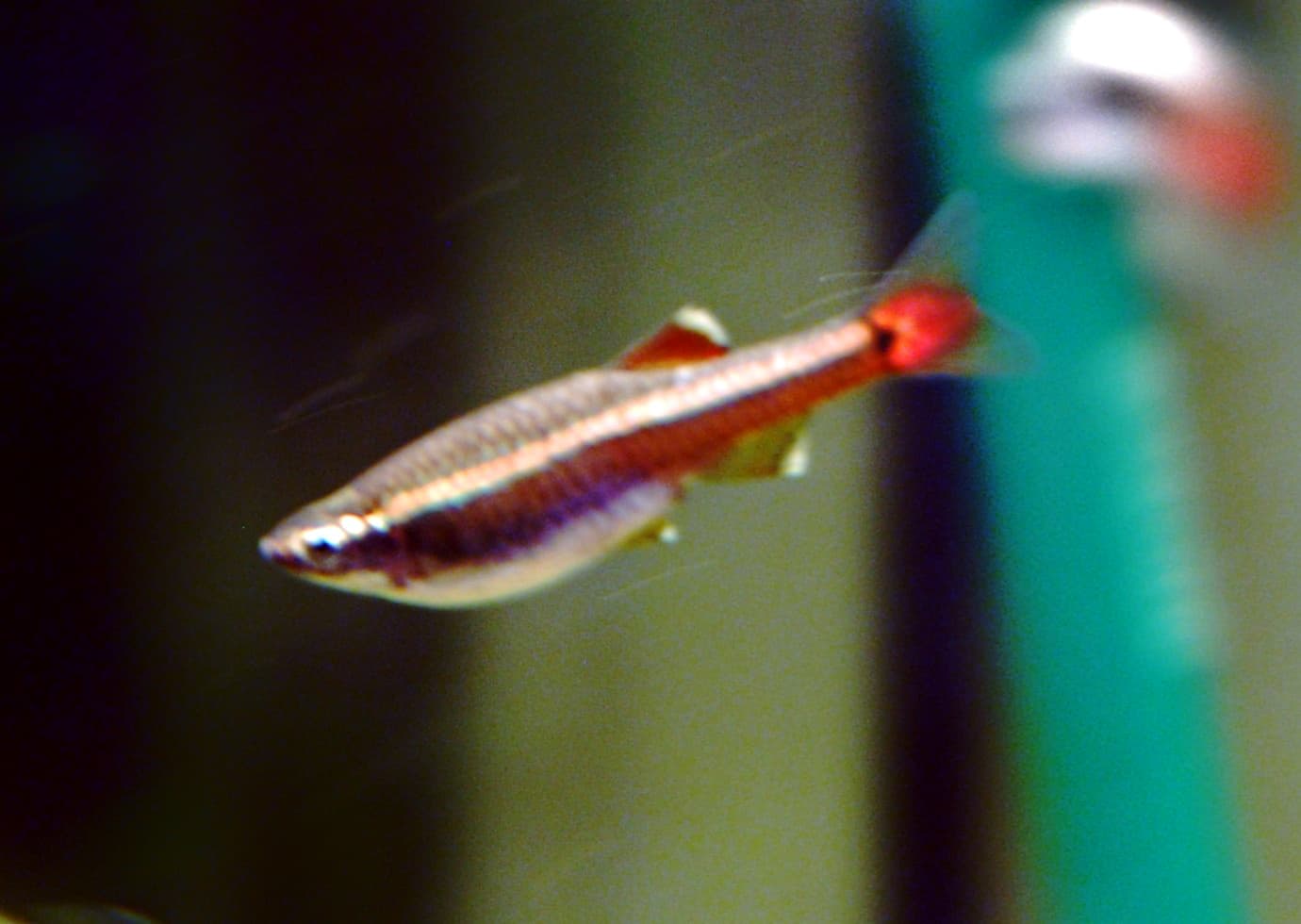
White cloud mountain minnows (Tanichthys albonubes) are small, hardy coolwater schoolers. Adults reach about 1.5 inches. Plan a group of 6+ in a 10–20 gallon. Best color and lifespan around 64–72°F, often without a heater in a cool room.