
Freshwater · Beginner
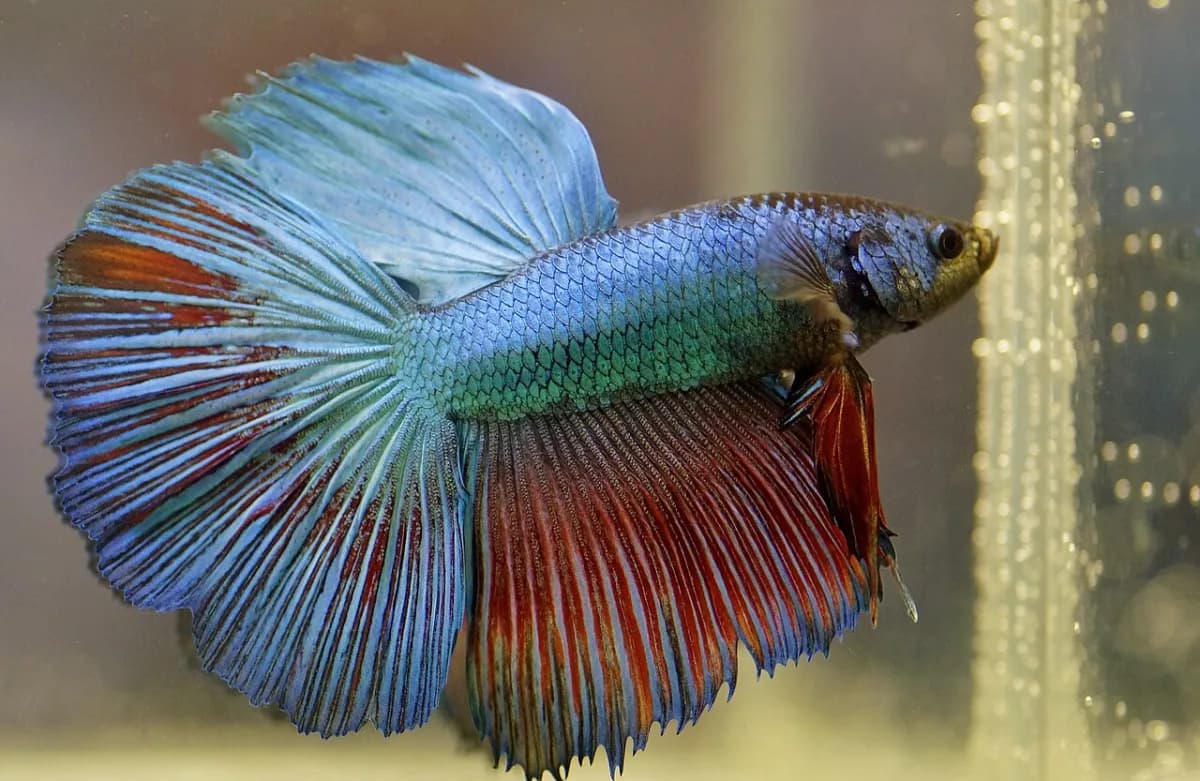
Betta
Betta splendens
Bettas are labyrinth fish that breathe from the surface, but they still need a heated, filtered aquarium, not a vase. A 5-gallon tank is a minimum for a single male.
Min. tank: 5 gal
Care notes →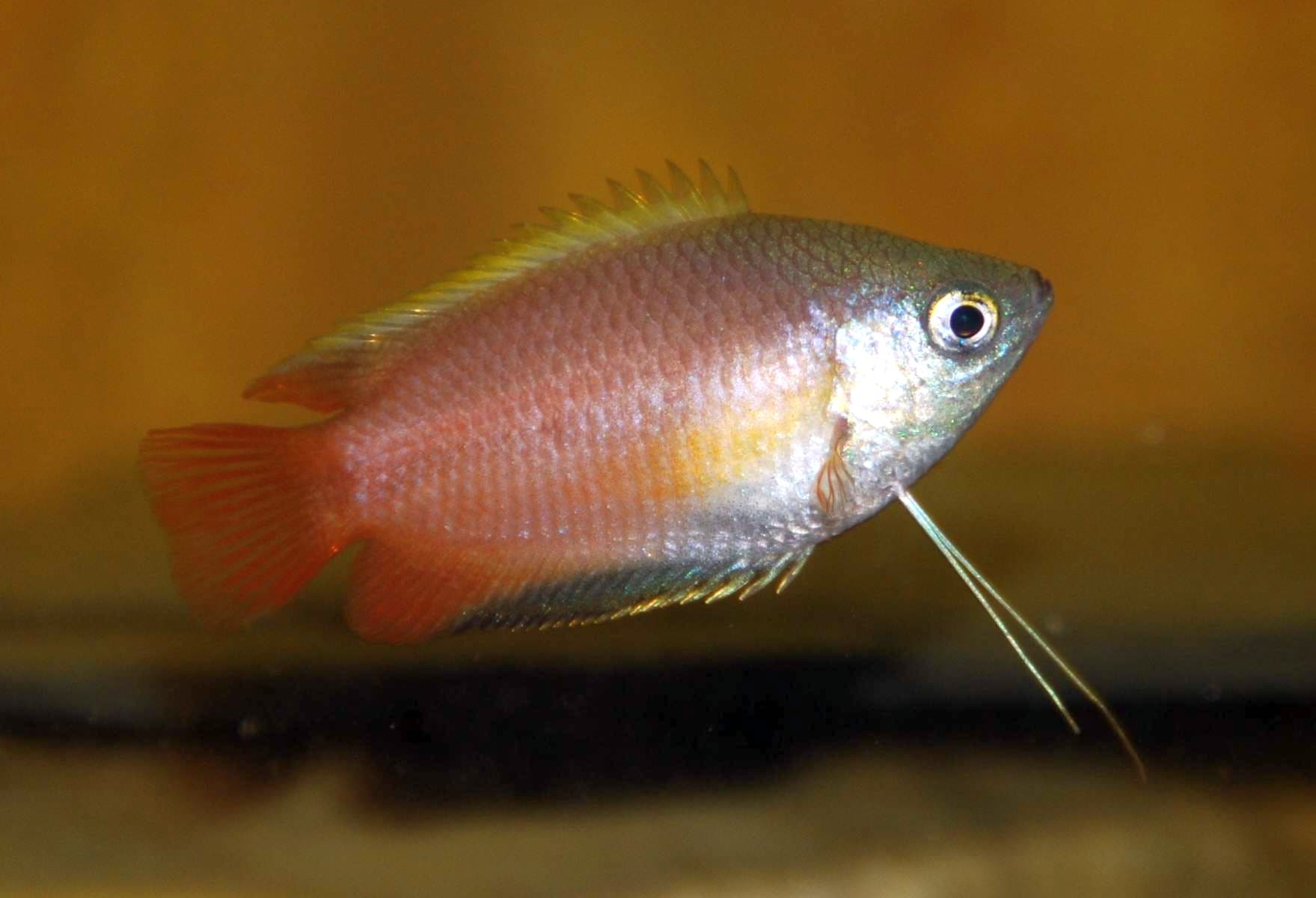
Photo: Marcus Cyron · CC BY-SA 3.0
Freshwater · Beginner · 10+ gal
Trichogaster chuna
Honey gouramis (Trichogaster chuna) are small, peaceful labyrinth fish for a planted 10-gallon solo or a 20-gallon pair or community. They are not dwarf gouramis. Shops often mislabel orange dwarfs as honey.
| Water type | Freshwater |
|---|---|
| Care level | Beginner |
| Minimum tank | 10 gallons |
| Temperament | Peaceful labyrinth fish. A single adult or a calm pair is community-safe in a planted tank. Skip stacking male gouramis in a 10-gallon, and do not house with a male betta. |
| Diet | Omnivore with a soft preference for small foods. Quality micro pellets or flakes as a staple, plus frozen baby brine, daphnia, or finely chopped bloodworms a few times a week. Small portions once or twice daily. |
| Temperature | 72–82 °F |
| pH | 6–7.5 |
| Hardness / salinity | Soft to moderately soft water suits wild-type fish; most shop stock tolerate near-neutral community water. Stable chemistry and low nitrate matter more than chasing a perfect number. |
Trichogaster chuna (still sold as Colisa chuna) is a Southeast Asian labyrinth fish that gulps air at the surface. Adults top out around 1.5–2 inches. Males color up gold to amber on the body and throat; females stay plainer. They are slower and less territorial than a male betta, which is why they work as a planted-community centerpiece instead of a solo fighter.
Keep the surface accessible. Floating plants are fine if they leave open pockets. They still need a heater and a filter. A vase or unheated bowl is not a home. Gentle flow (sponge filter or a baffled hang-on-back) matches their quiet swimming style.
One honey gourami is comfortable in a planted 10-gallon with a heater, lid, and soft cover. A pair or a real community wants a 20-gallon so each fish has room to ignore the other. Length and plants beat a tall hex. See stocking a 20-gallon tank for layouts that leave midwater space for rasboras and tetras.
Temps in the 72–82°F band work for most shop fish. Soft to near-neutral water is preferred; hard alkaline livebearer tanks are a long-term mismatch. Finish the cycle before you buy. Quarantine new fish when you can. Shop stock mixes, and gouramis are not immune to hitchhikers.
Dwarf gourami (Trichogaster lalius) is a different species. Farmed dwarfs are often sold as 'honey,' 'sunset,' or 'powder blue' color morphs. True honey gouramis stay smaller and calmer; dwarfs run larger, flashier, and more aggressive male-to-male. If the bag fish is powder blue or neon orange with a high, pointed look, you probably bought a dwarf.
Dwarf gourami iridovirus (DGIV) is common in mass-farmed dwarfs and has no cure. That is why this site recommends honey gourami for a peaceful labyrinth fish instead of writing a dwarf product page. Buy by scientific name when the label is vague, and quarantine anyway.
Feed micro pellets or flake they finish in a minute, then add frozen a few times a week. Leftover food in a planted 10 is how nitrate climbs. Tank mates that work: harlequin rasboras, cherry barbs in a planted 20, neons or cardinals if parameters overlap, a cory group on sand, and adult cherry shrimp. Skip male bettas, tiger barbs, and packing two male gouramis into a 10.
They are timid compared with danios. Dimmer light, stem plants, and a bit of hardscape help them show color. A male will sometimes build a bubble nest. That is normal breeding behavior, not a reason to panic-medicate.
A few listings we would open for this species. Skip anything you already own that still works.
hygger sponge filter, small
Honey gouramis like gentle flow and surface access. An air-driven sponge keeps ammonia down without blasting a timid midwater fish across a 10-gallon.
Air pump and tubing are sold separately. Squeeze the sponge under water so it sinks. Skip this if a baffled hang-on-back already holds ammonia at zero. Hide it behind plants if you hate the look.
See this listingAqueon Adjustable Pro heater, 50W
A 10-gallon desk tank in an air-conditioned room drops into the 60s without a heater. Fifty watts is the right class for most 10s; step to 100W on a 20.
Put a separate thermometer on the glass away from the heater. Skip stacking two heaters. Do not run the dial hot just because a betta shares the stand.
See this listingHikari Tropical Micro Pellets, 0.77 oz
Small mouths and a slow feeding style. Semi-floating micro pellets sized for tetras and other community fish work well for honey gouramis without leaving a pile on the sand.
A pinch once or twice a day, not a pile. Skip this if you already use a quality micro pellet they finish in a minute. Frozen baby brine a few times a week still helps.
See this listingTen gallons for one adult. Twenty gallons for a pair or a small community with schoolers. A heated, filtered, planted setup beats a tall nano with strong current.
No. Honey is Trichogaster chuna. Dwarf is Trichogaster lalius. Shops often relabel orange or powder-blue dwarfs as honey. Buy the scientific name when you can.
Usually no with a male betta. Both are labyrinth fish that claim surface territory. A calm female betta in a larger planted tank is sometimes attempted; treat it as a gamble, not a default.
Yes in almost every home. They are tropical. Room-temperature tanks in air-conditioned houses often sit too cool for reliable appetite and immune function.
Freshwater · Beginner
Betta splendens
Bettas are labyrinth fish that breathe from the surface, but they still need a heated, filtered aquarium, not a vase. A 5-gallon tank is a minimum for a single male.
Min. tank: 5 gal
Care notes →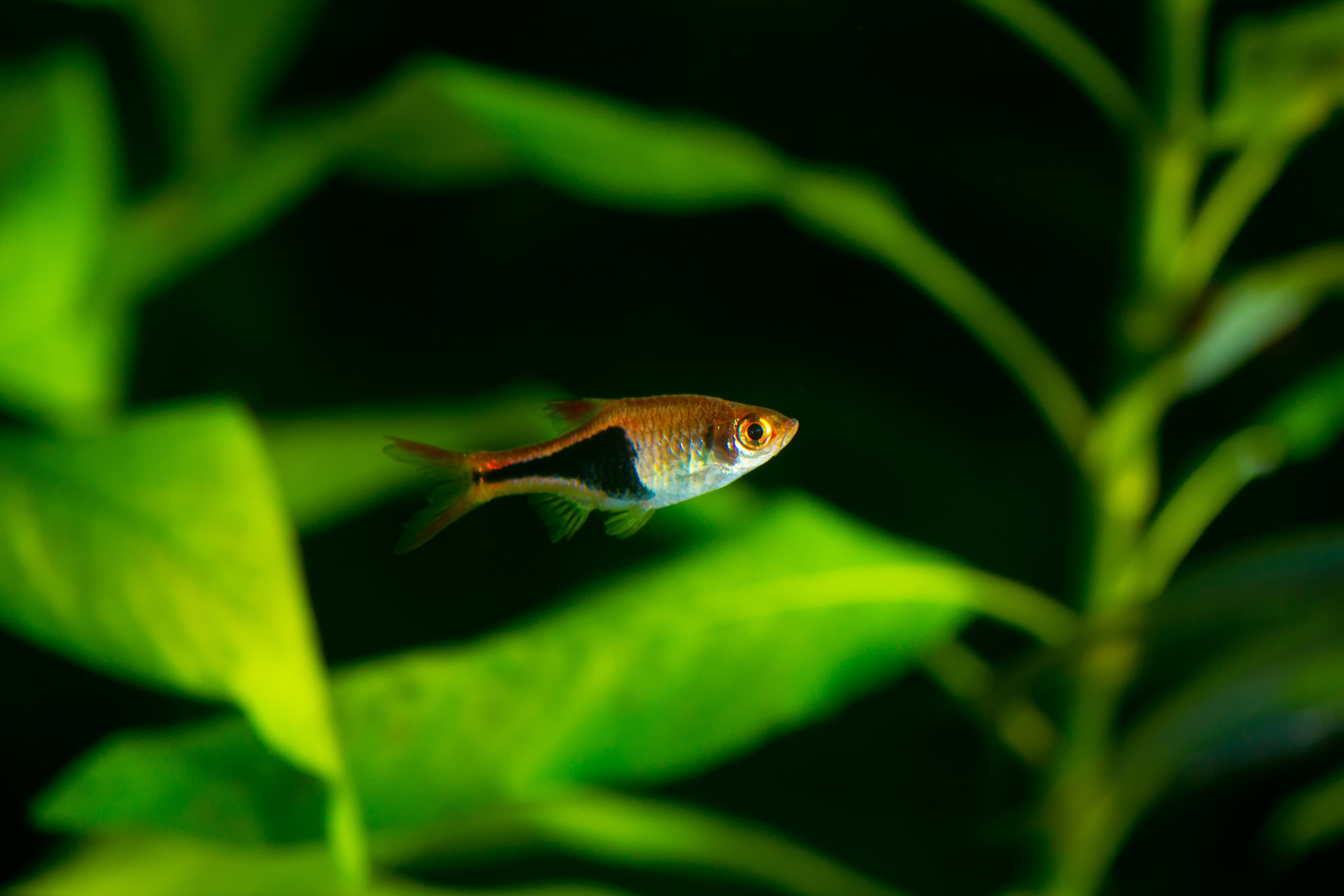
Freshwater · Beginner
Trigonostigma heteromorpha
Harlequin rasboras (Trigonostigma heteromorpha) are peaceful midwater schoolers with a black triangle on the rear body. Plan six to ten in a planted 20-gallon; a 10 is a tight floor for six, not a comfortable home.
Min. tank: 20 gal
Care notes →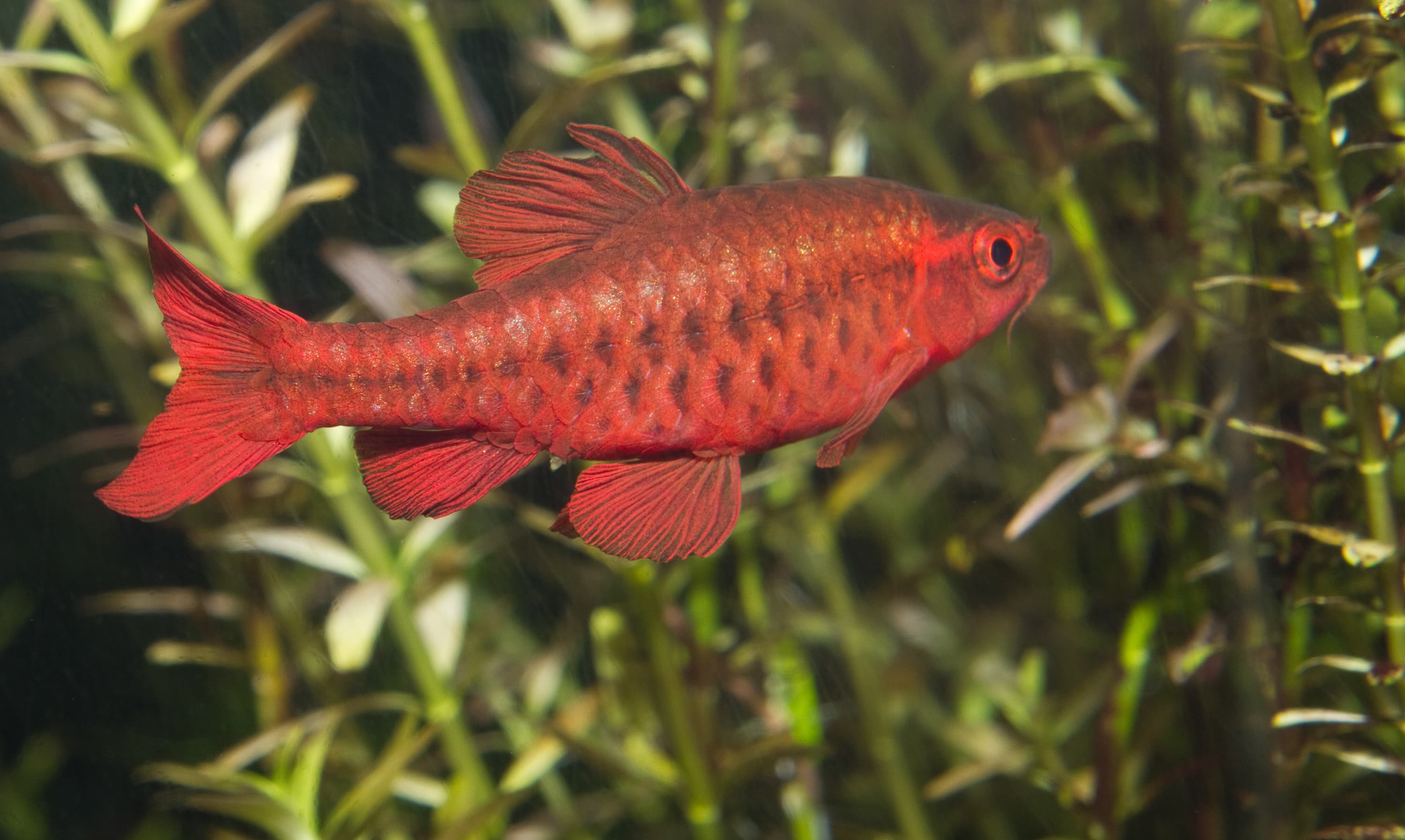
Freshwater · Beginner
Rohanella titteya
Cherry barbs (Rohanella titteya, still sold as Puntius titteya) are the peaceful Sri Lankan barb for a planted 20. Keep six or more so males color up deep red and any nipping stays in-group.
Min. tank: 20 gal
Care notes →