
Freshwater · Beginner
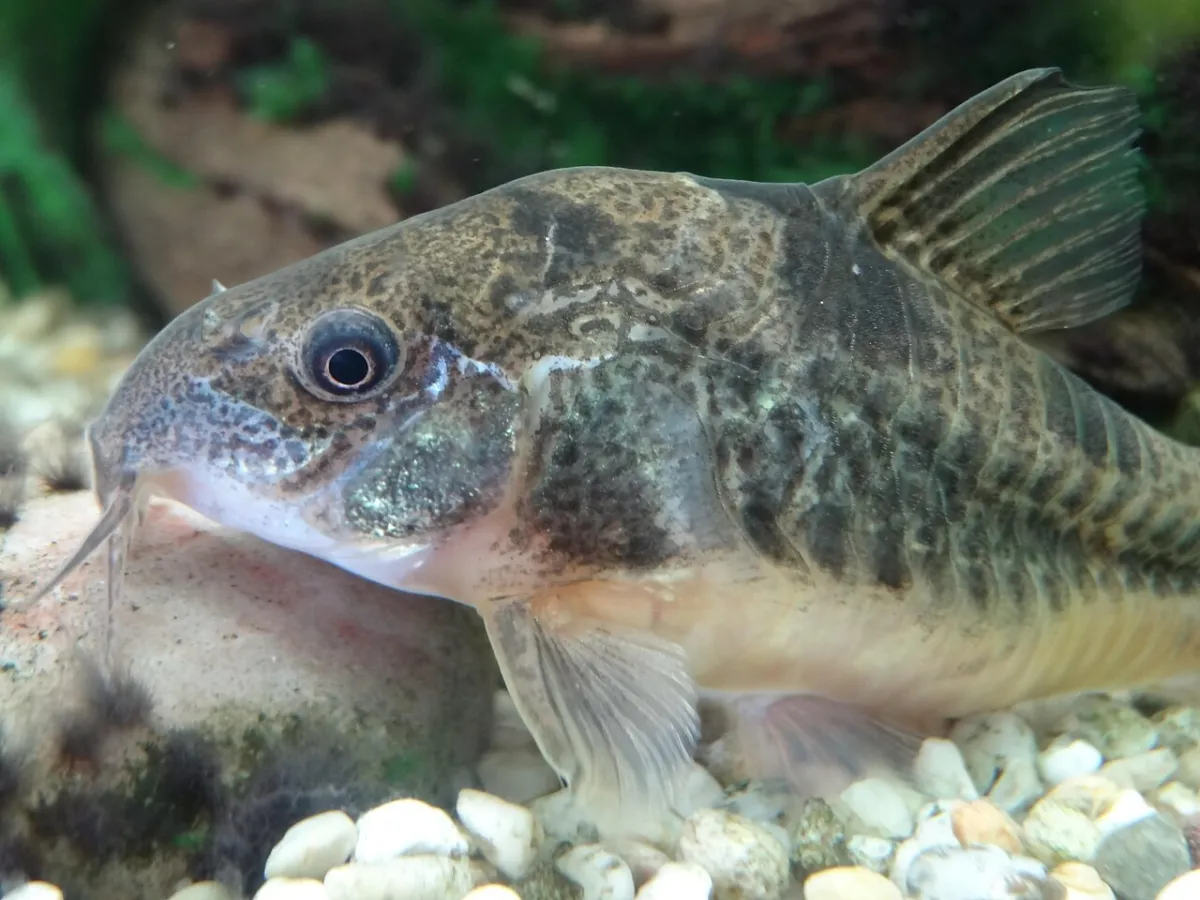
Peppered cory
Corydoras paleatus
Peppered corydoras are social, sandy-bottom catfish. Keep a group of six or more in a 20-gallon tank with sand, not gravel that can nick their barbels.
Min. tank: 20 gal
Care notes →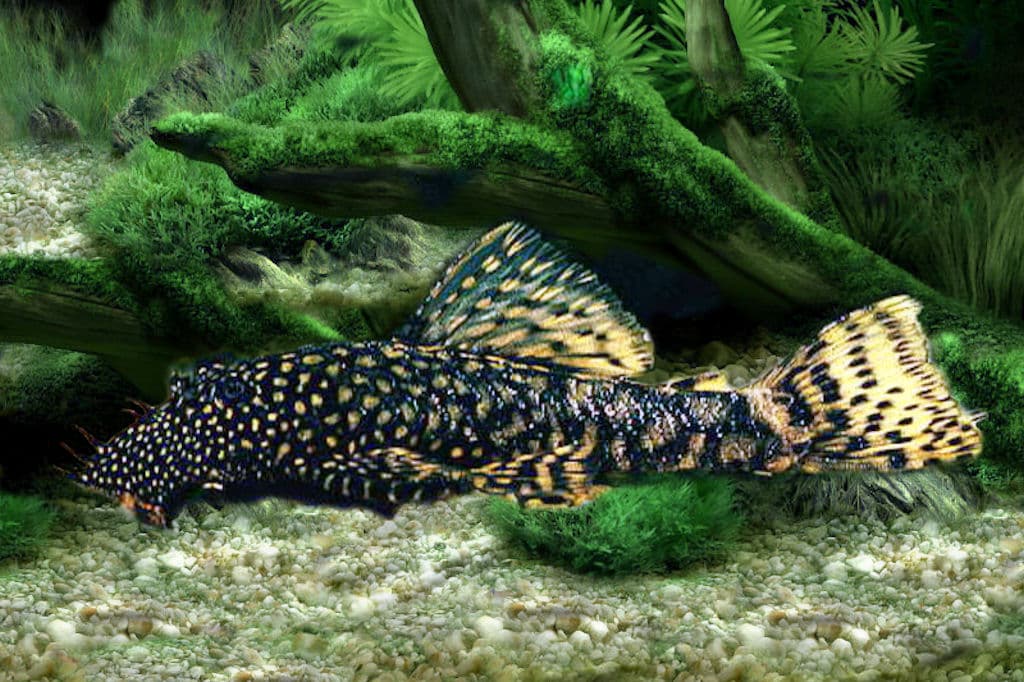
Photo: The Last 99 · CC BY-SA 3.0
Freshwater · Beginner · 20+ gal
Ancistrus spp.
Bristlenose plecos (Ancistrus) stay about 4–6 inches. A 20-gallon long is the floor for one adult; 29–30 gallons is the comfortable home. They need driftwood and wafers — they are not a common pleco and not a janitor.
| Water type | Freshwater |
|---|---|
| Care level | Beginner |
| Minimum tank | 20 gallons |
| Temperament | Peaceful with midwater fish. Adult males grow cheek odontodes and facial bristles and can spar with other male Ancistrus. One adult per 20–30 gallons is the usual plan. |
| Diet | Wood browser and omnivore. They rasp biofilm and soft driftwood, but they still need sinking veg wafers (or blanched zucchini) on a schedule. Leftover flake is not a diet. They are not a janitor that replaces water changes. |
| Temperature | 72–80 °F |
| pH | 6.5–7.8 |
| Hardness / salinity | Soft to moderately hard. Stable, clean water and real wood matter more than chasing a perfect pH. |
Shop stock sold as bristlenose, bushynose, or Ancistrus is a mix of species and line-bred forms. Treat the care as Ancistrus spp., not a single Latin name on the bag. Adults usually land around 4 to 6 inches — short, wide, and armored, not the foot-long fish people mean when they say 'pleco.'
Twenty gallons long is the honest floor for one adult. Twenty-nine or thirty gallons is the comfortable home once they are grown and pooping like a real suckermouth. A 20 is not a pair tank. Length beats a tall hex; they work the floor and wood, not the water column.
The unmarked 'plecostomus' or Hypostomus-type fish sold into 10- and 20-gallon kits is a different animal. Those common plecos commonly reach 18 to 24 inches and want something like 75 to 125+ gallons as adults. A bristlenose is the small Ancistrus that can live in a community 20–30. Do not buy the big unlabeled sucker expecting bristlenose math.
Males grow fleshy bristles on the snout and head; females may show a short fringe along the snout edge. Males can be territorial with other males — one adult, or a carefully set cave setup in a larger tank, beats a random pair in a 20.
They rasp soft driftwood and biofilm. Put real wood in the tank, not just plastic caves. They still need sinking veg wafers or blanched zucchini on a regular schedule. 'Algae eater' on the bag does not mean they erase algae so you can skip vacuuming and water changes — they add a solid bioload of their own.
A gentle sponge filter or a hang-on-back with room for sponge media both work. Soft sand or smooth substrate is kinder than sharp gravel on the belly. They are mostly peaceful with midwater community fish; they are a poor 'cleanup crew' hire for an oscar.
A few listings we would open for this species. Skip anything you already own that still works.
Fluval Malaysian Driftwood
Ancistrus rasp soft wood. A real piece of Malaysian driftwood gives them something to work and releases mild tannins. Plastic décor does not replace that.
Rinse and soak or boil before it goes in if you want less tea-stain on day one. Size the piece to the footprint — a 20-long wants wood that leaves open floor, not a log that fills the tank. Skip resin 'wood' as the only surface.
See this listingTetra PlecoWafers, 3.03 oz
Sinking veg wafers with zucchini and algae meal are the usual staple when the glass is clean. Feed what they finish in a few hours, then pull leftovers.
Blanched zucchini still belongs in the rotation. Skip dumping a pile 'for the algae eater' — uneaten wafers foul the tank. Same idea as any other prepared food: small, regular portions.
See this listingHikari Sinking Wafers, 1.76 oz
A second sinking wafer option that bottom feeders actually take. Useful if your bristlenose ignores one brand or you already keep cories on Hikari.
Not a wood substitute. Feed after lights dim so midwater fish steal less. Skip this if Tetra PlecoWafers already disappear cleanly every night.
See this listingAbout 4–6 inches for typical aquarium Ancistrus. That is not the 18–24 inch common pleco sold unlabeled at some chains.
A 20-gallon long is the floor for one adult. Twenty-nine or thirty gallons is the comfortable long-term tank. Do not stock a pair in a 20.
No. They graze biofilm and need wood plus wafers. They still produce waste. Test, vacuum, and change water like any other stocked tank.
Yes. Soft driftwood is part of how they feed and behave. Wafers alone are a weak substitute for wood plus a real diet.
Freshwater · Beginner
Corydoras paleatus
Peppered corydoras are social, sandy-bottom catfish. Keep a group of six or more in a 20-gallon tank with sand, not gravel that can nick their barbels.
Min. tank: 20 gal
Care notes →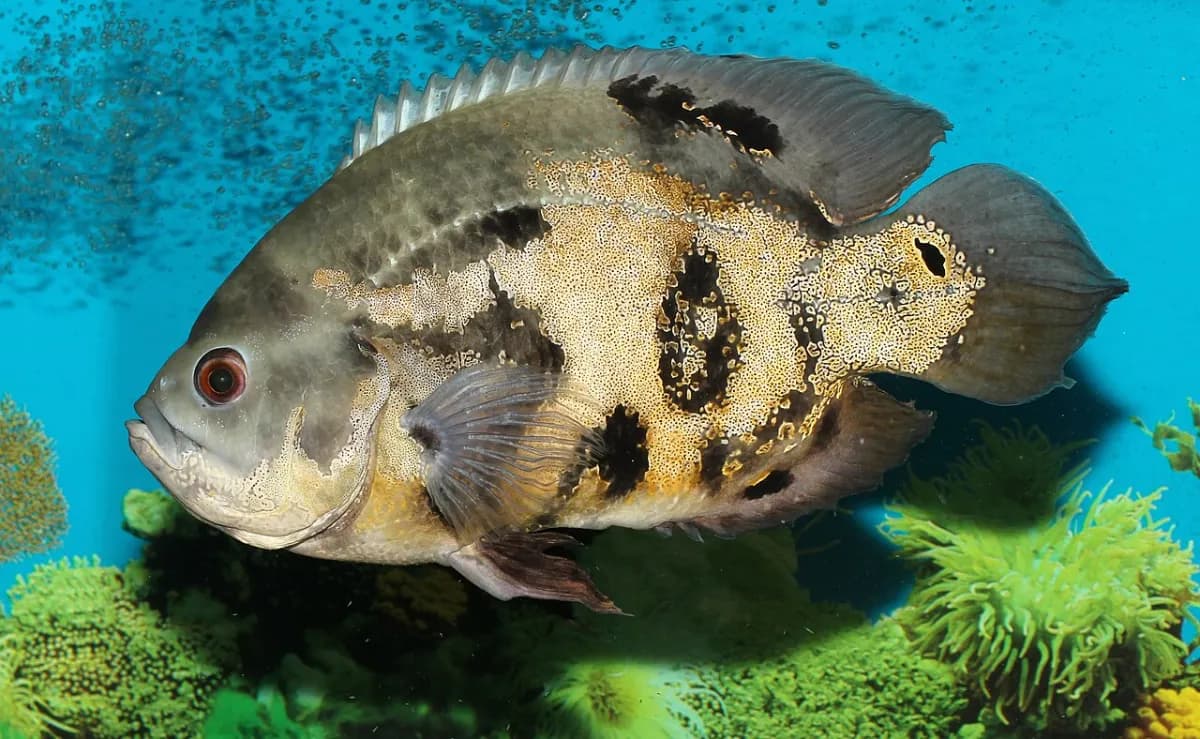
Freshwater · Advanced
Astronotus ocellatus
Oscars are large, messy cichlids for dedicated tanks. One adult needs about 75 gallons as a minimum, powerful filtration, and an owner ready for digging, waste, and a long-lived pet.
Min. tank: 75 gal
Care notes →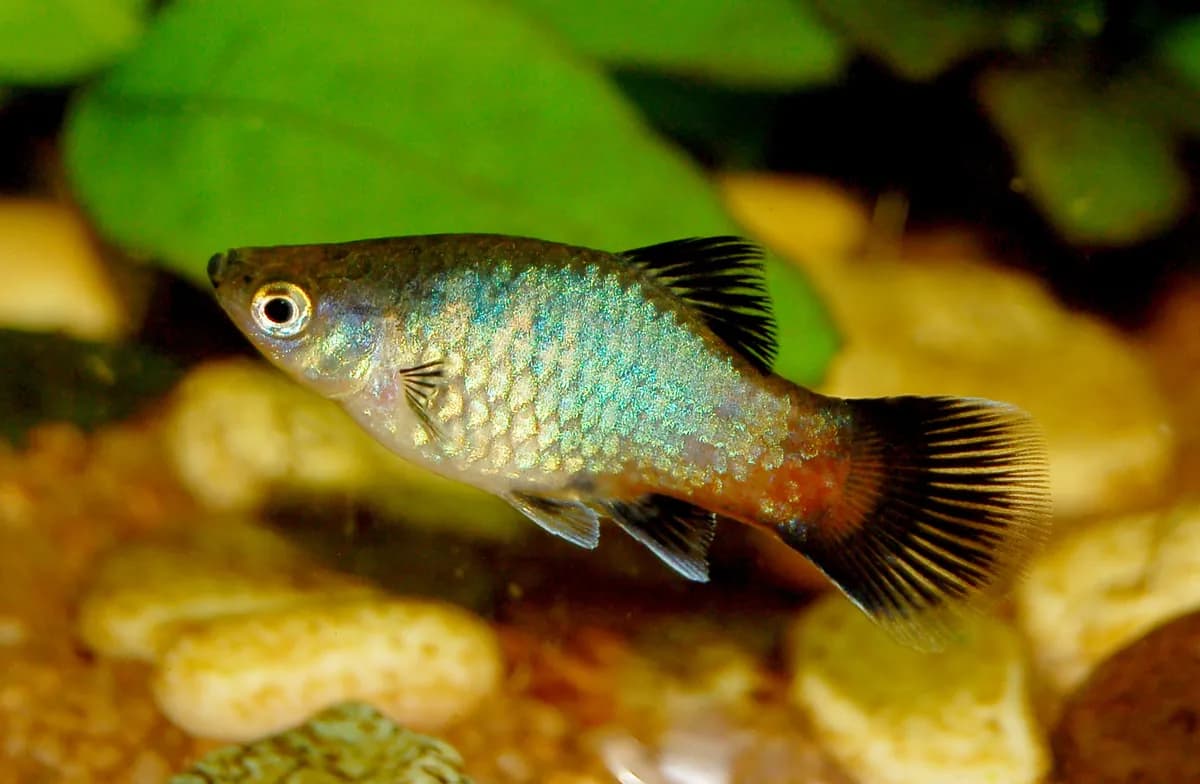
Freshwater · Beginner
Xiphophorus maculatus
Platies are hardy, hard-water livebearers for a heated 15-gallon (20 is easier). Mickey Mouse, wagtail, and sunset are color strains, not different care. Mixed sexes mean fry.
Min. tank: 15 gal
Care notes →