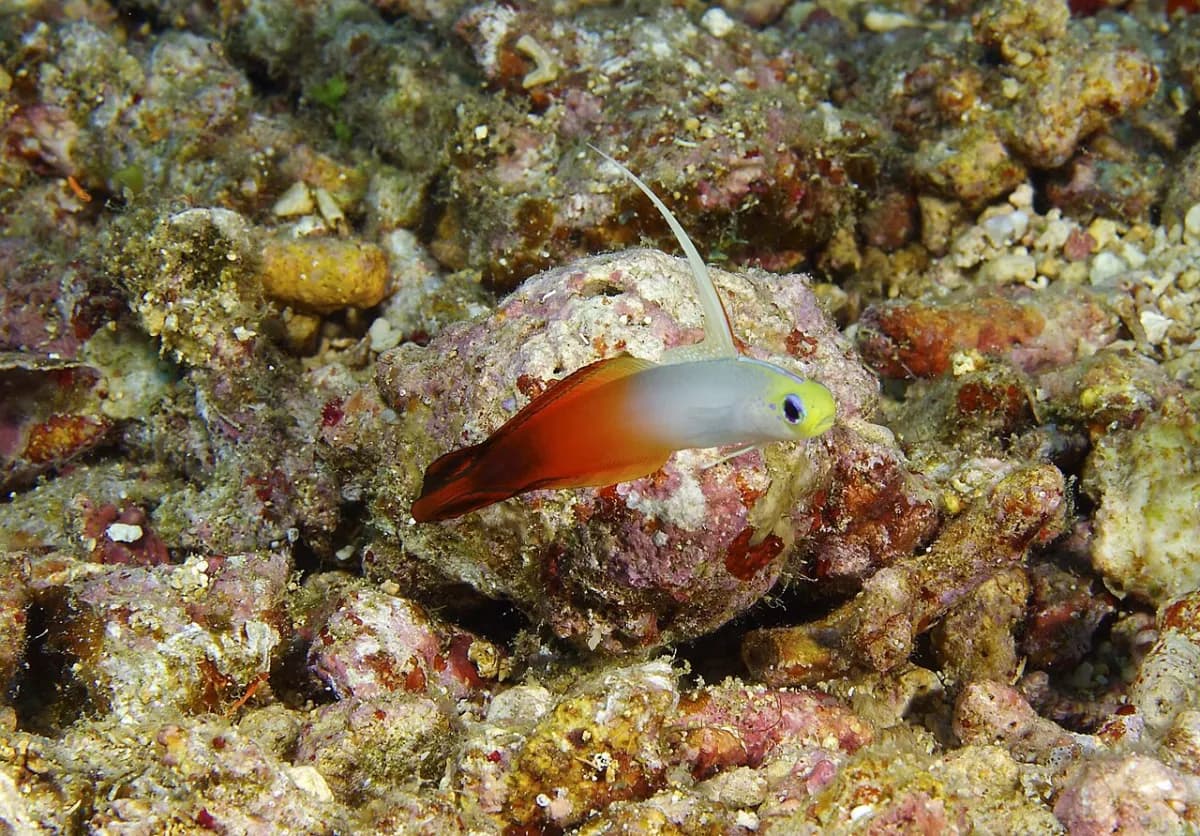
Shy, peaceful dartfish that hovers near a bolt-hole. Usually fine with clownfish and other calm community fish. May quarrel with other firefish in small tanks. A notorious jumper.
Diet
Carnivore leaning planktivore. Frozen mysis, enriched brine, finely chopped seafood, and small marine pellets. Feed small amounts that they can catch in the water column; they may be outcompeted by aggressive eaters.
Temperature
72–78 °F
pH
8–8.4
Hardness / salinity
Marine salinity around 1.024–1.026 specific gravity. Stable, mature saltwater is more important than chasing a freshwater-style hardness value.
Lid first, livestock second
Nemateleotris magnifica is a small Indo-Pacific dartfish that spends its time in open water near a cave. When startled it rockets into rockwork, or over the rim. Tight-fitting lids, mesh covers on overflow boxes, and no large gaps around equipment are part of keeping this species alive.
A 20-gallon tank can house a single firefish in a calm nano reef. Thirty gallons and up is easier if you want tank mates that also occupy the water column.
Shy eaters
They often refuse food for a day or two after shipping. Offer small frozen foods in the water column near their territory. If you keep them with aggressive eaters (some wrasses, large clownfish), the firefish may lose weight while the others gorge.
Give them a defined cave or rock overhang they can claim. A fish with no bolt-hole stays pale and glued to the corner.
Saltwater still applies
The species itself is not an advanced fish, but it is still a marine animal: cycle, salinity, quarantine, and a mature tank apply. They are often wild-caught. Expect parasites in mixed reef systems if you skip quarantine.
Do not add a firefish to an uncycled kit on impulse because it 'looks peaceful.' Peaceful and ready are not the same thing.
Tank mates
Ocellaris clownfish and other peaceful community marines
Gobies, small wrasses, and shrimp in a reef-safe setup
Pairs of firefish sometimes work in larger tanks; extras can fight
Avoid large, boisterous, or predatory fish that will bully a shy dartfish
Gear for this fish
A few listings we would open for this species. Skip anything you already own that still works.
Aqueon Versa Top, 30 in x 12 in
Firefish jump. A hinged glass top for a 30-by-12 footprint (the usual 20-long / 29-gallon opening) with a vinyl strip you can cut around equipment is the listing we would open first.
Measure the opening. Skip this if your tank is not 30 by 12. Mesh screen lids are better under hot reef lights. Cover overflow gaps and filter cutouts — that is how they leave.
They are shy planktivores. A small, soft marine pellet plus frozen mysis in the water column is how you keep weight on a fish that loses to aggressive eaters.
Feed near their cave, not as a blizzard at the other end. Skip this if they already take a quality small marine pellet. If tank mates outcompete them, the pellet will not fix that.
A 20-gallon nano still needs stable mid-70s F. 50W is the Pro size for that volume in a normal house.
Use 100W in a 30-gallon or a cold room. Skip a second heater if one already holds 74–78 F. The lid matters more than the heater for this species, but they still need both.
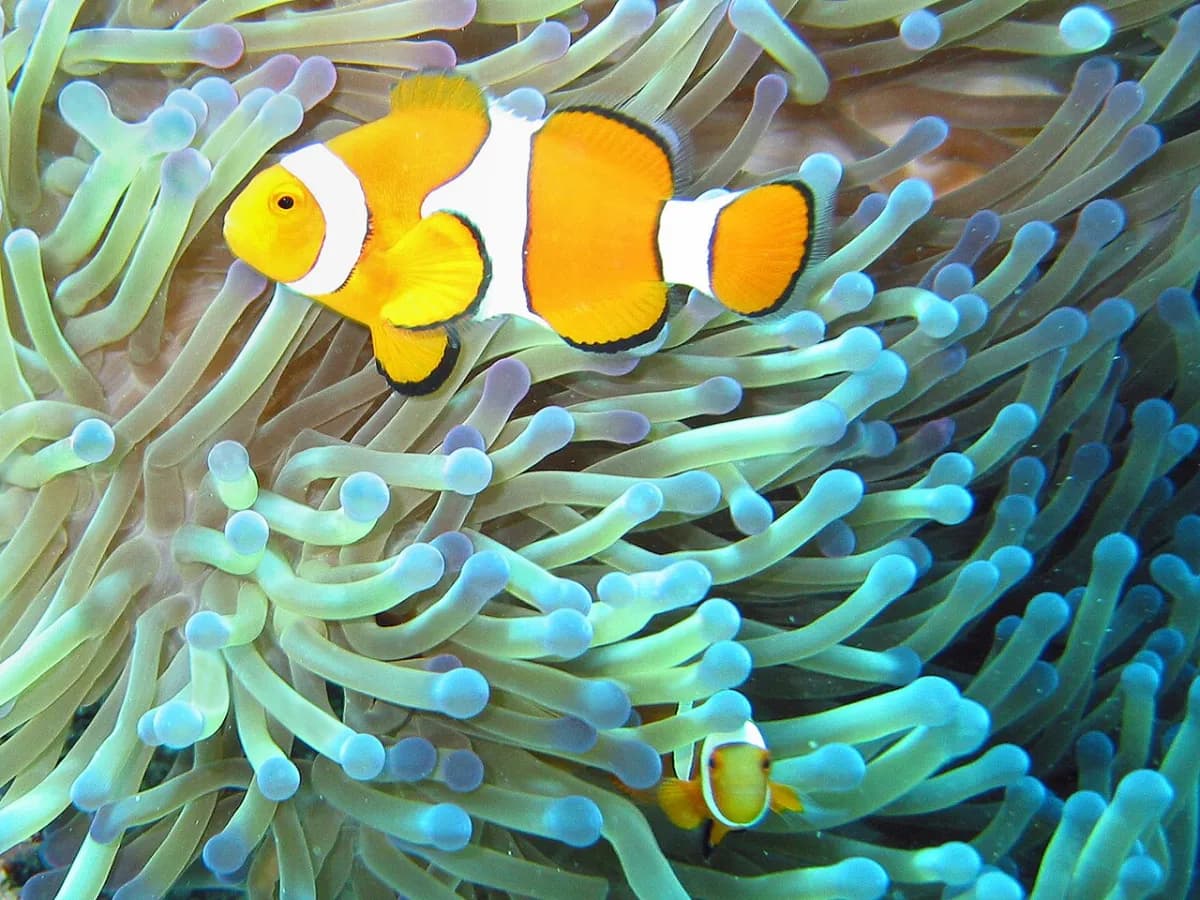
Ocellaris clownfish are among the more forgiving marine fish, but they still need a cycled saltwater tank, stable salinity, and marine-level testing. A 20-gallon tank can house a pair; 30 gallons is more comfortable.
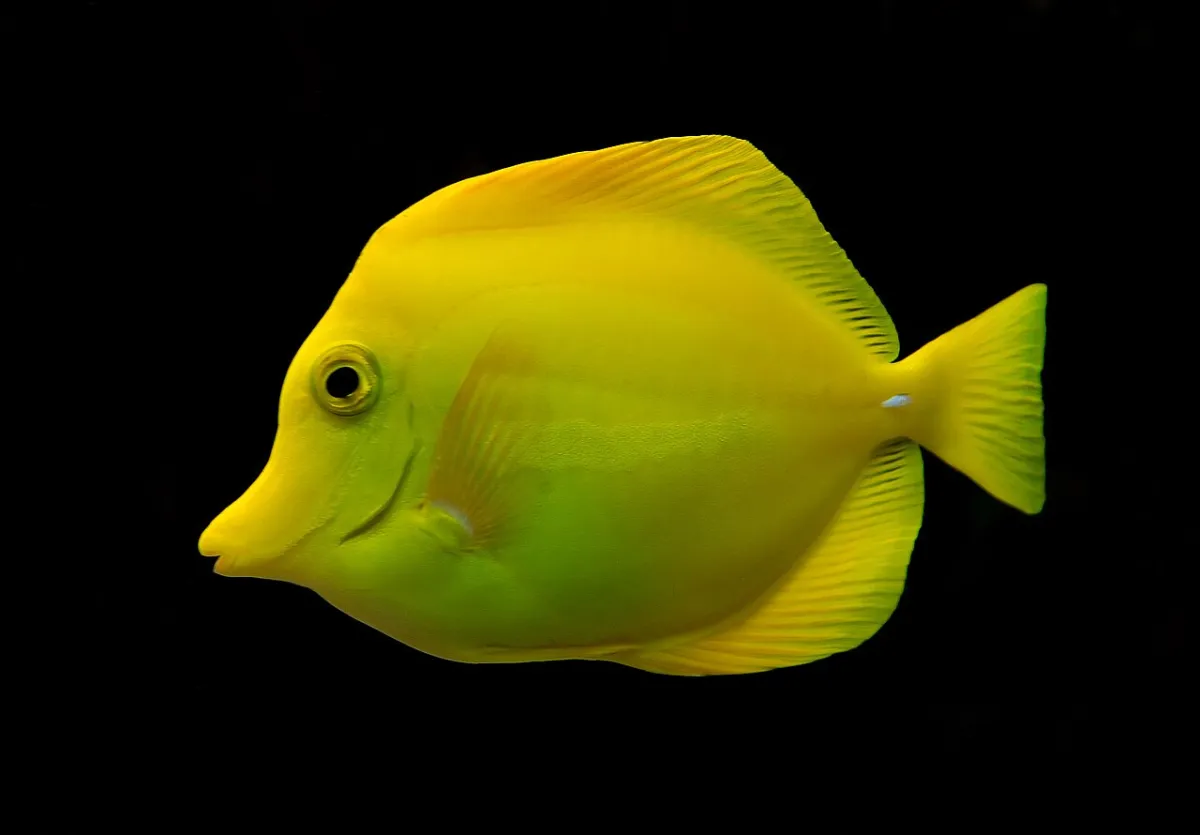
Yellow tangs are active Hawaiian surgeonfish that need swimming room, not a nano reef. A home-aquarium minimum is about 125 gallons with length to patrol and rock to graze.
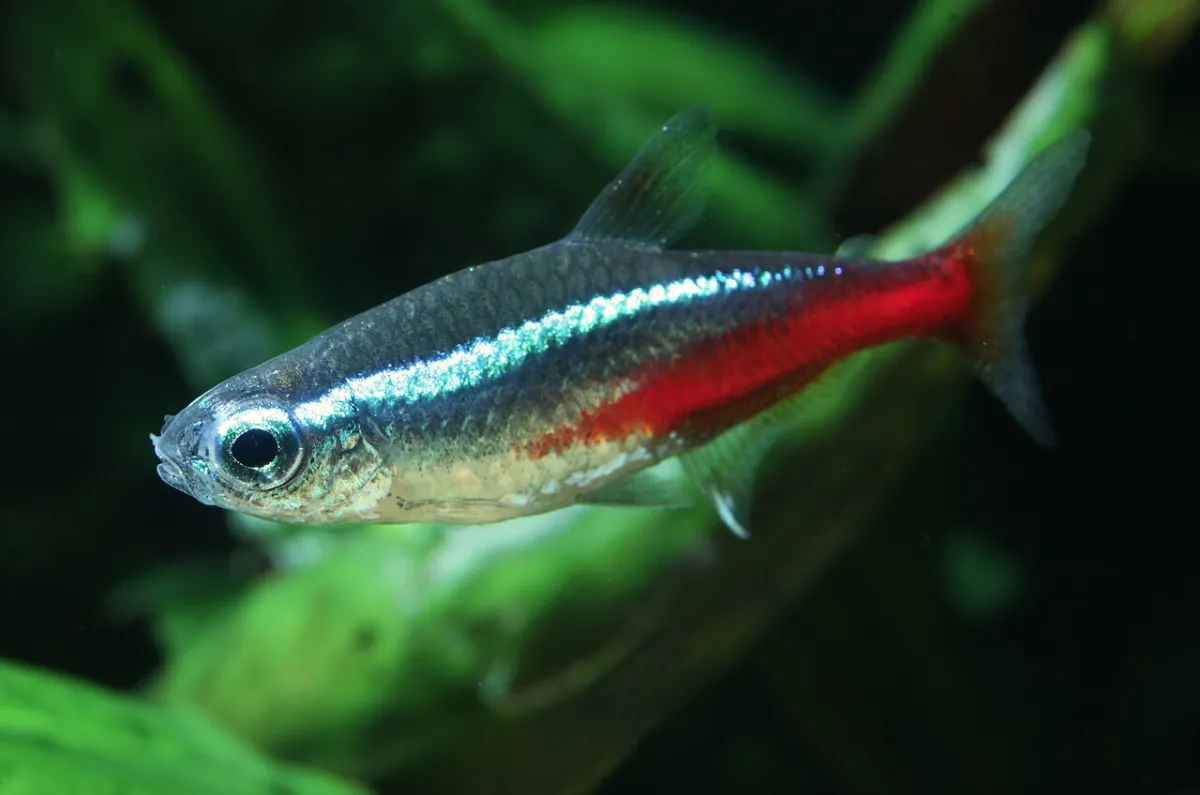
Neon tetras are small Amazonian schoolers that look their best in a planted 10-gallon (or larger) tank with a proper group, dimmer light, and stable, clean water.