Skip to content
Swimming FishiesSwimming Fishies
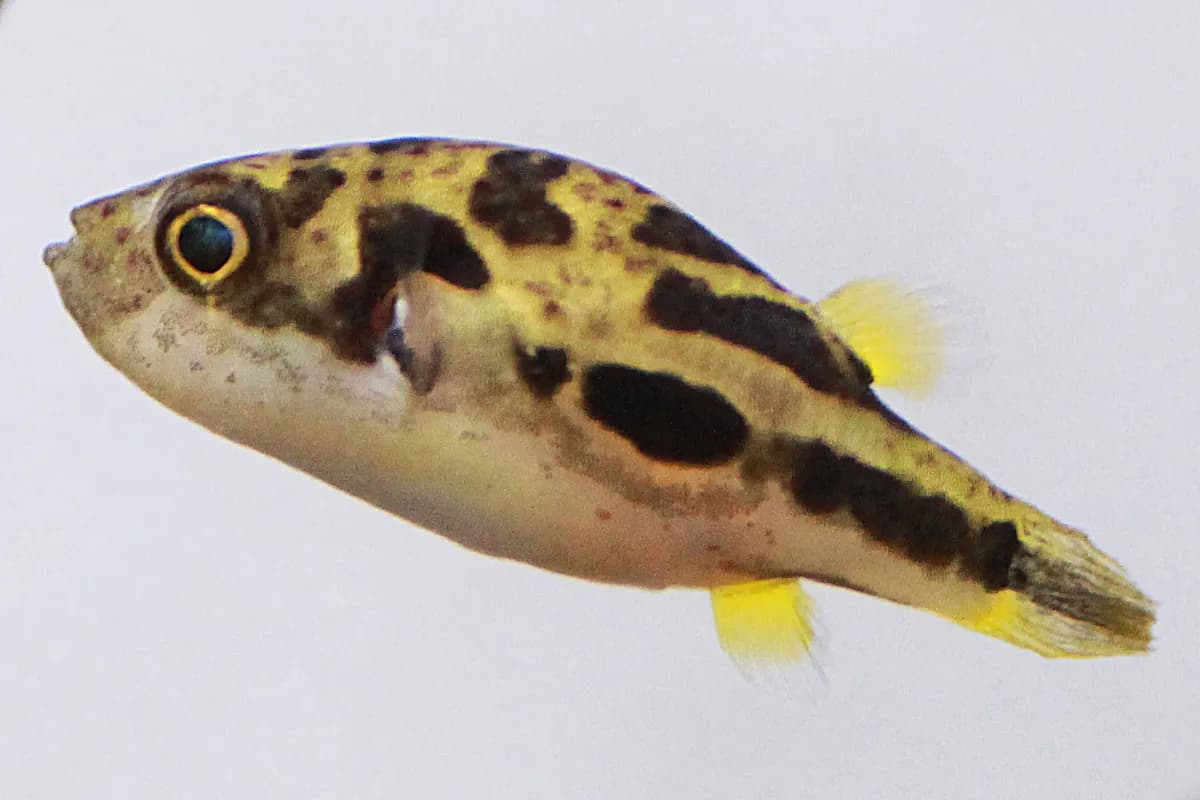
Pea puffer (Carinotetraodon travancoricus) with a yellow body, dark blotches along the back, and a large gold-ringed eye

Photo: Chunbin · CC BY-SA 4.0

Freshwater · Intermediate · 10+ gal

Pea puffer

Carinotetraodon travancoricus

By

Pea puffers (Carinotetraodon travancoricus) are freshwater puffers from southwest India that top out around an inch. One fits a heavily planted 10-gallon. A small group needs a 20 long or larger with plenty of plants. Keep them at 74 to 80°F on frozen foods and snails, in a tank with no shrimp or long-finned fish.

More freshwater care · Full directory

Care parameters for Pea puffer
Water typeFreshwater
Care levelIntermediate
Minimum tank10 gallons
TemperamentPea puffers are small hunters with a temper. They nip fins, chase each other, and eat shrimp and snails. Two males in a small tank fight constantly. Plan a species tank: one puffer, or a small group with dense plants to break sightlines.
DietCarnivore. Frozen bloodworms, brine shrimp, mysis, or daphnia, and small live snails a few times a week. Most refuse flakes and pellets. Feed once a day, a small amount, and skip one day a week.
Temperature74–80 °F
pH6.5–7.5
Hardness / salinitySoft to moderately hard. Pea puffers are a freshwater fish, so no salt. Stable, clean water matters more than hitting a number.

An inch-long fish with opinions

My pea puffer watched me from the front glass every time I walked past the tank. I told myself it was affection. It was waiting to see if I was holding bloodworms, and when I wasn't, it went back to staring down a ramshorn snail.

Carinotetraodon travancoricus is also sold as the dwarf puffer or Malabar puffer. It comes from slow, weedy rivers and backwaters in Kerala and Karnataka in southwest India, and it lives in fresh water its whole life. Some shops keep it next to brackish puffers, but it needs no salt. Adults reach about an inch. With good care they live four to five years.

Nearly every pea puffer for sale was caught in the wild, and the IUCN lists the species as Vulnerable because of collecting. Buy fish that are eating well in the shop, and don't buy more than your tank can hold.

One in a 10, a small group in a 20 long

One pea puffer is comfortable in a cycled, heavily planted 10-gallon. Finish the cycle first, because puffers have no scales and handle ammonia badly. That single fish is the whole stocking. The 10-gallon stocking guide covers the other ways to use that tank.

For a group, start with a 20 long. Three is a good number there, and four can work in a well-planted tank. Keep one male with two or three females, or all females. Males have a dark line along the belly and wrinkle-like lines behind the eyes, and they get brighter yellow when they display. Females are rounder and spotted, with no belly line.

Plant the tank thickly. Stems, java fern, moss, and a few pieces of driftwood give each puffer a place where it can't see the others. In a bare tank the dominant fish chases everyone all day. If one gets bitten up or stops eating, move it out.

Heat, flow, and water changes

Set the heater around 77°F. They take 74 to 80°F and pH 6.5 to 7.5. A 50W heater covers a 10 in most rooms. Puffers hover and steer with their fins and they swim poorly against current, so use a sponge filter or a low-flow filter with a covered intake.

Frozen food and snail shells make a mess fast in a small tank. Change 25 to 30 percent of the water every week, siphon leftovers the same day, and keep nitrate under about 20 ppm. A water test kit shows you when the cycle is done and when nitrate creeps up.

Frozen food and snails

Most pea puffers won't eat flakes or pellets. Feed thawed frozen bloodworms, brine shrimp, mysis, or daphnia once a day. Thaw a small piece of a cube in a cup of tank water and feed what they finish in a couple of minutes. A full puffer has a slightly round belly. A hard, swollen one has been overfed. Skip feeding one day a week. The feeding guide covers portions for the rest of your tanks.

Give them small snails a few times a week. Ramshorn and bladder snails are the easy ones to breed in a jar or spare tank with some plants and a little fish food. Hunting snails keeps a puffer busy, and crunching the shells helps wear down its teeth. Puffer teeth keep growing. A puffer that never eats anything hard can end up with an overgrown beak, and a diet with snails in it usually prevents that. Mystery and nerite snails are the wrong snails here. Puffers pick at their antennae and feet until the snail dies.

Quarantine and tank mates

Because they're wild-caught, new puffers often carry internal worms. Quarantine them for at least four weeks and watch the belly. A puffer that eats well but stays thin or sunken usually needs a dewormer. Use one made for fish in the quarantine tank and follow the label dose.

Treat it as a species tank. Puffers bite fins, so bettas, guppies, angelfish, and gouramis are out. Cherry shrimp and amano shrimp get eaten. Fast fish like danios can outrun them but still lose fin tips. If you want something else in there, a group of six otocinclus in a mature, planted 20 long or larger usually works, since they stay on leaves and glass and have no long fins to bite. Keep a spare tank ready in case a puffer starts nipping them.

Tank mates

  • Best kept alone, as one puffer or a small group of puffers
  • A group of otocinclus in a planted 20 long or larger is the one add-on that usually works
  • Skip shrimp, snails you want to keep, bettas, guppies, and anything with long fins

Gear for this fish

A few listings we would open for this species. Skip anything you already own that still works.

  • Aqueon Adjustable Pro heater, 50W

    Holds a 10-gallon near 77°F, the middle of a pea puffer's range.

    Check it with a separate thermometer. A 20 long in a cool room may need 100W.

    See this listing
  • hygger sponge filter, small

    Gentle flow for a fish that swims poorly against current, and an intake nothing can get stuck on.

    Run it from a small air pump with a check valve. Squeeze it out in old tank water during a water change.

    See this listing
  • Hikari Bio-Pure frozen bloodworms

    The staple most pea puffers accept on day one. Brine shrimp and mysis from the same line add variety.

    Break off a small piece and thaw it in tank water. Siphon out whatever is left after a few minutes.

    See this listing

Frequently asked questions

What size tank does a pea puffer need?+

A heavily planted 10-gallon for one puffer. For a group of three or four, use a 20 long or larger with dense plants so they can get out of each other's sight.

Do pea puffers need brackish water?+

No. Pea puffers are a freshwater species from rivers and backwaters in southwest India. Keep them in fresh water at 74 to 80°F with no added salt.

Can pea puffers live with shrimp?+

No. They hunt and eat cherry shrimp and will attack amano shrimp too. Keep shrimp in a separate tank.

Will pea puffers eat flakes?+

Most won't. Plan on frozen bloodworms, brine shrimp, mysis, or daphnia every day, plus small live snails a few times a week.

How many pea puffers can go in a 20-gallon?+

Three in a 20 long, or four if the tank is thickly planted. Keep one male with two or three females, or all females.

Next step

Planning a tank for these?

Plan on 10 gallons or more. Put your actual tank size into the stocking calculator and it shows what else can live alongside them.

Open the stocking calculator

Before you buy

Keep your fishies swimming.

Related species

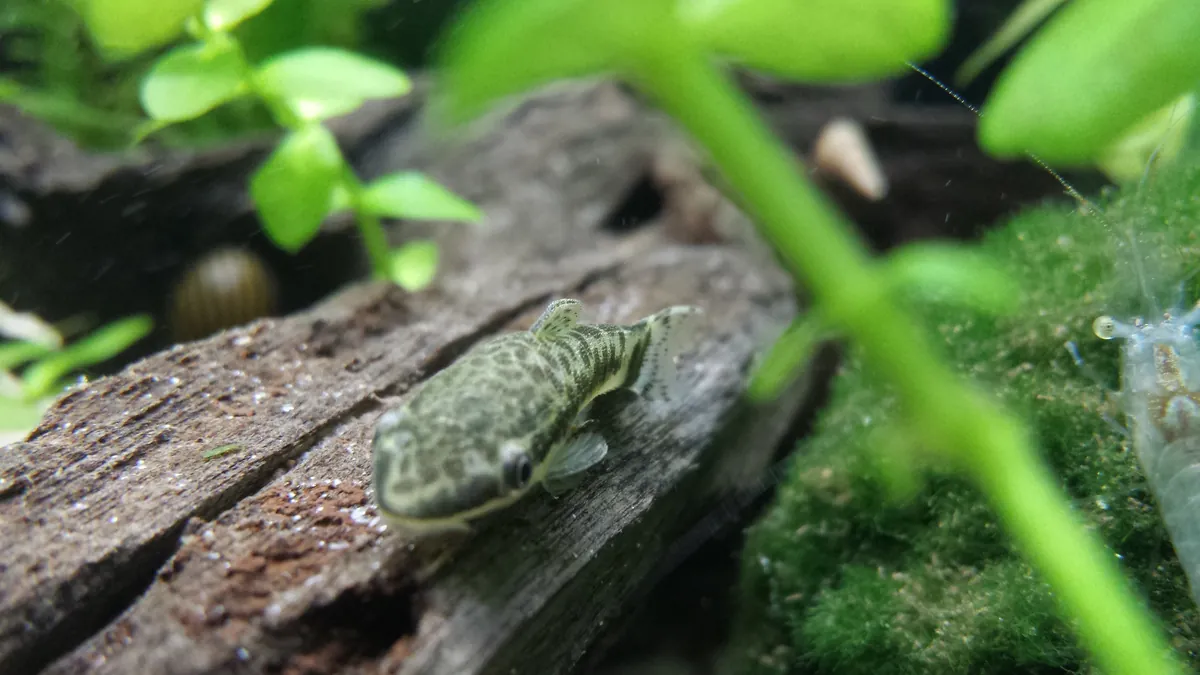
Otocinclus catfish (Otocinclus sp.) grazing on Malaysian driftwood in a planted aquarium

Freshwater · Intermediate

Otocinclus

Otocinclus spp.

Otocinclus (Otocinclus spp., often O. vittatus in the trade mix) stay about 1.5–2 inches. A school of 6+ belongs in a 20-gallon that has been running months with algae and biofilm, not a new 10-gallon sucker hire.

Min. tank: 20 gal

Care notes →
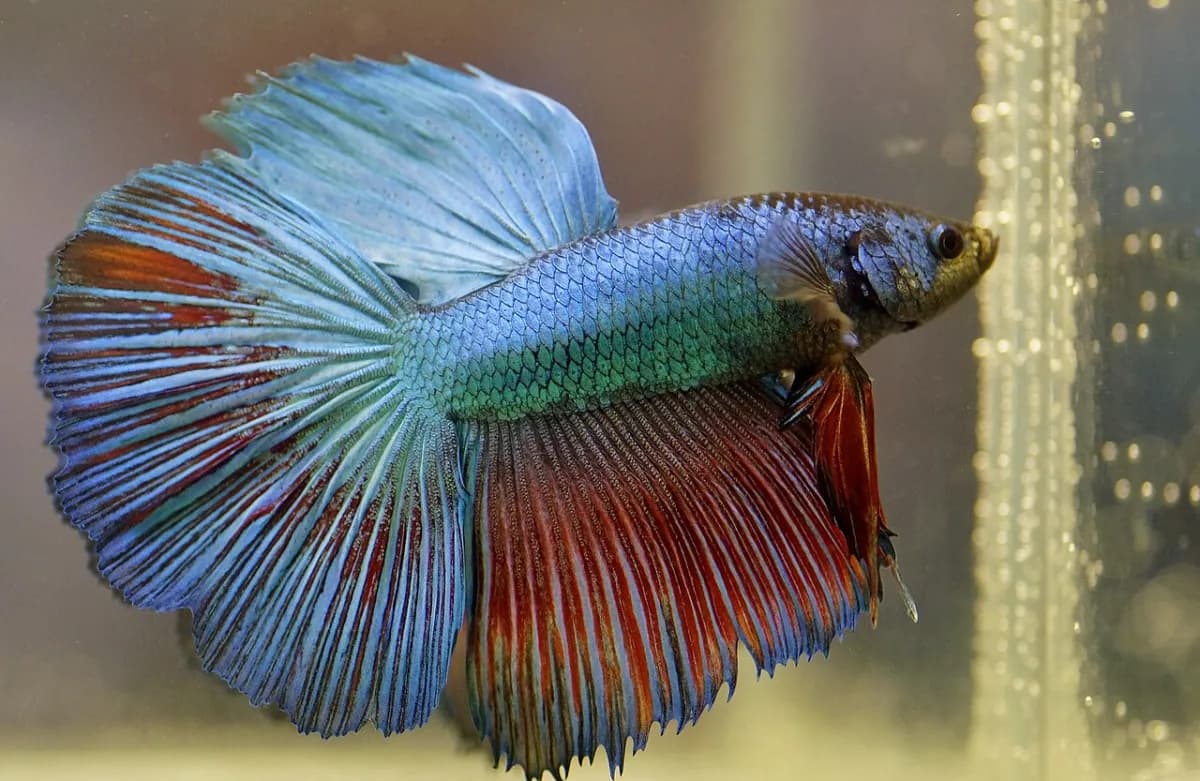
Male Betta splendens with blue and red veil fins swimming in an aquarium

Freshwater · Beginner

Betta

Betta splendens

Bettas are labyrinth fish that breathe from the surface, but they still need a heated, filtered aquarium, not a vase. A 5-gallon tank is a minimum for a single male.

Min. tank: 5 gal

Care notes →
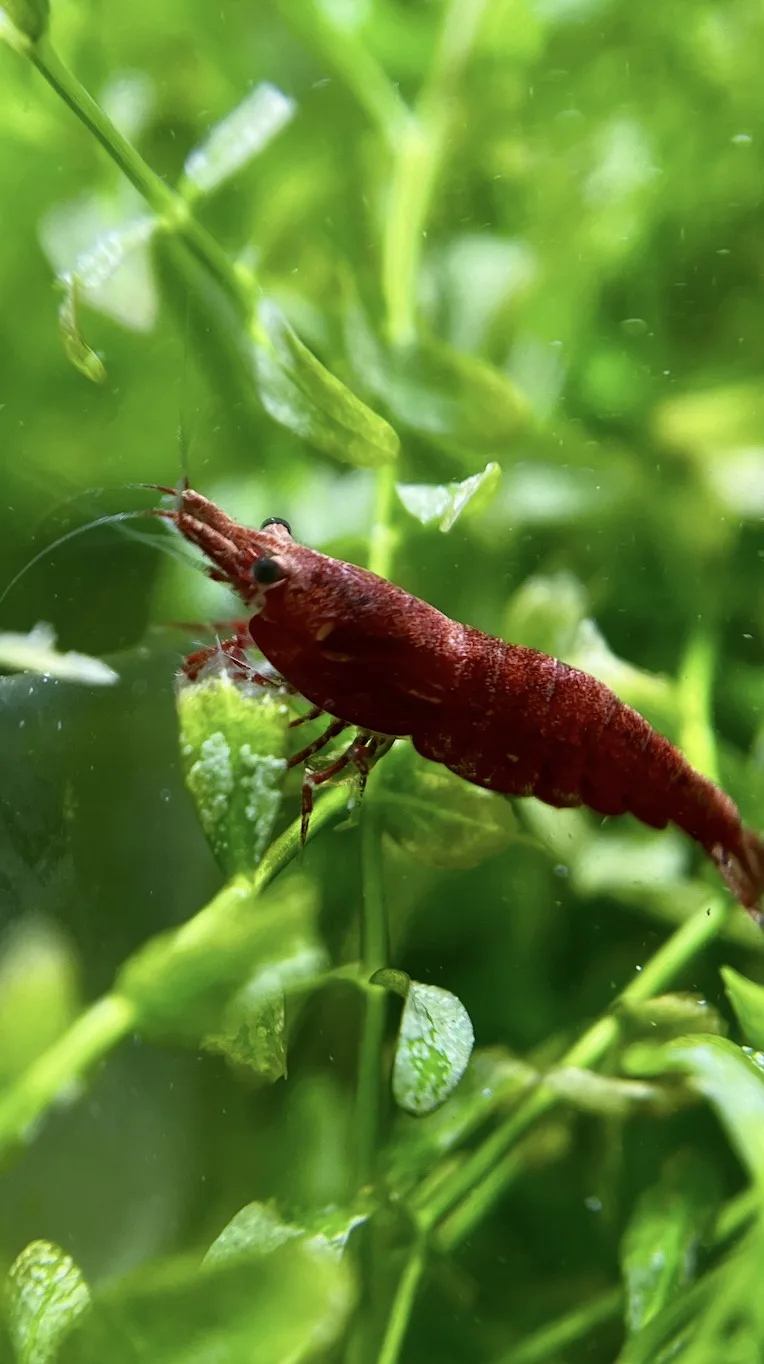
Red cherry shrimp (Neocaridina davidi) close-up showing bright red body and antennae

Freshwater · Beginner

Cherry shrimp

Neocaridina davidi

Cherry shrimp (Neocaridina davidi) are beginner invertebrates if the tank is cycled and copper-free. A starter colony of 10+ needs about 5 gallons; 10 gallons is easier. They need minerals for molting, not a second fish-page clone.

Min. tank: 5 gal

Care notes →