.jpg)
Freshwater · Beginner
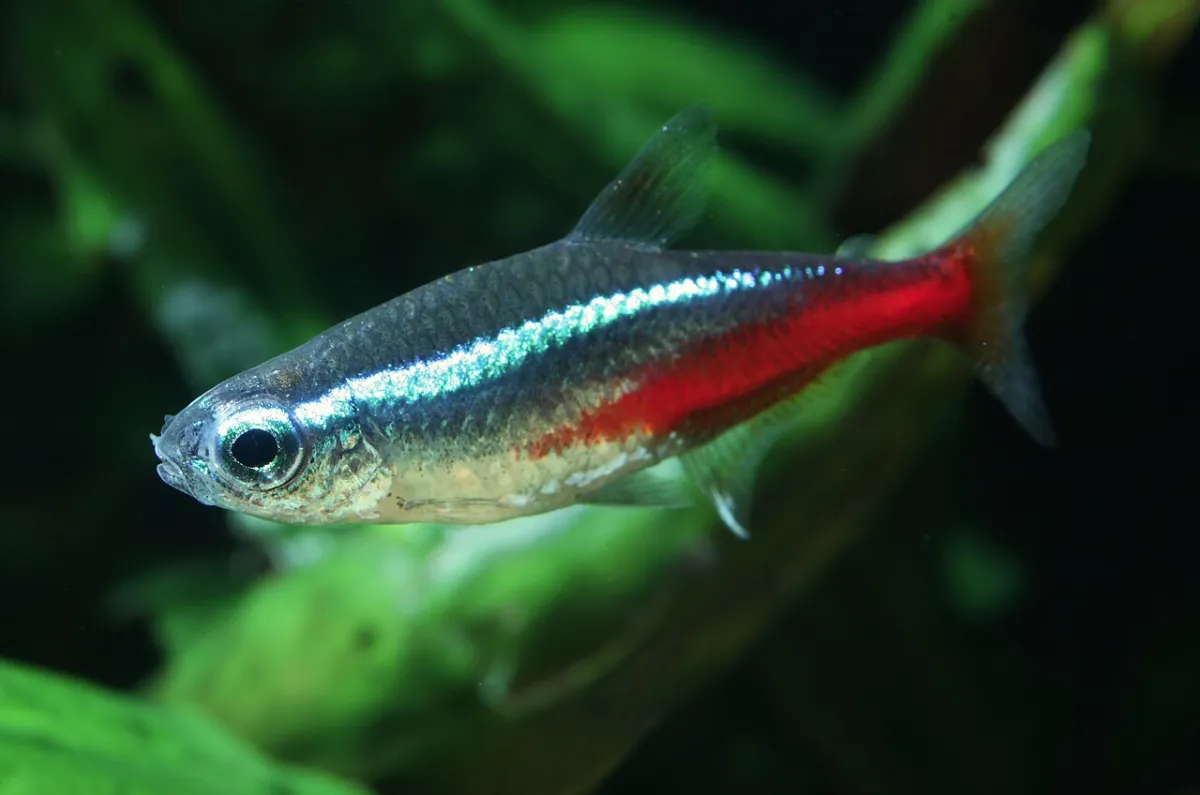
Neon tetra
Paracheirodon innesi
Neon tetras are small Amazonian schoolers that look their best in a planted 10-gallon (or larger) tank with a proper group, dimmer light, and stable, clean water.
Min. tank: 10 gal
Care notes →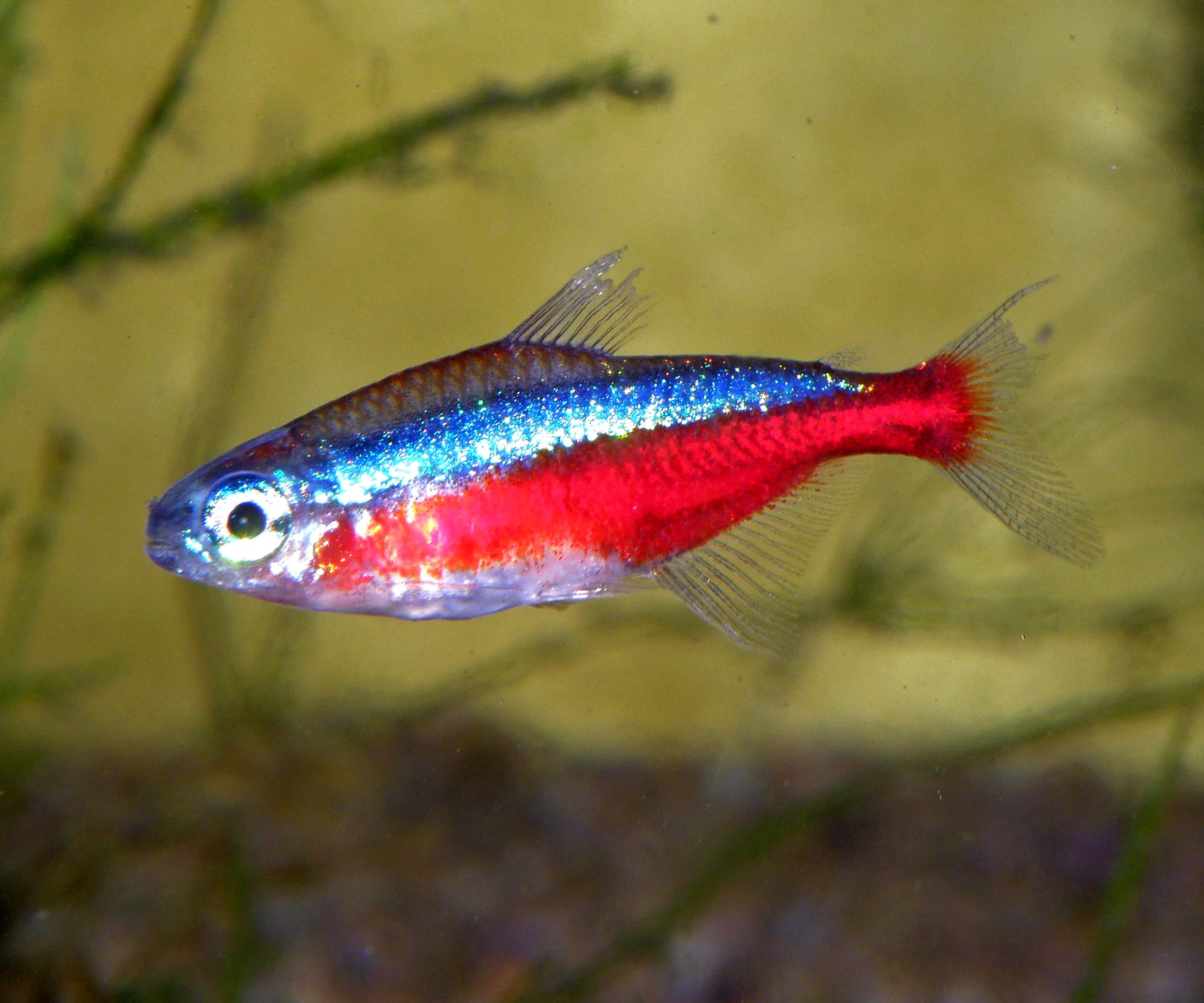
Photo: CHUCAO · CC BY-SA 3.0
Freshwater · Intermediate · 20+ gal
Paracheirodon axelrodi
Cardinal tetras (Paracheirodon axelrodi) are Amazon schoolers with a full red stripe from snout to tail. Plan a school of eight to ten in a planted 20-gallon with soft, clean water, not a neon-sized squeeze in a 10.
| Water type | Freshwater |
|---|---|
| Care level | Intermediate |
| Minimum tank | 20 gallons |
| Temperament | Peaceful schooling fish. Keep a real group of eight to ten; pairs and trios hide and fade. They are shy in bright, bare tanks. |
| Diet | Omnivore. Quality micro pellets or flakes sized for small mouths, plus frozen baby brine shrimp, daphnia, or finely chopped bloodworms a few times a week. Small portions twice daily. |
| Temperature | 73–80 °F |
| pH | 5.5–7 |
| Hardness / salinity | Soft, slightly acidic to near-neutral water (roughly 1–8 dGH). They want cleaner, more stable water than neon tetras. Keep nitrate low; big swings and new-tank ammonia wipe schools fast. |
Paracheirodon axelrodi is a blackwater characin from the upper Orinoco and Negro basins. The easy shop ID: the red band runs from the snout all the way through the caudal peduncle. On a neon (P. innesi) the red sits on the back half of the body. Once you know that, stop shopping by stripe color and start shopping by tank size and water quality.
Adults reach about 1.5–2 inches. They are often sold next to neons and treated like the same fish. They are not. Cardinals usually want a larger school, warmer mid-70s water, and less tolerance for nitrate and new-tank swings. Call them intermediate for that reason, not because the fish is exotic.
Eight to ten fish in a 20-gallon is the honest starting point. A 10-gallon can hold a tiny neon group if filtration and maintenance are tight; it is not a cardinal home. See stocking a 10-gallon tank for what actually belongs there.
They color up over a dark substrate with plants, driftwood, and some cover. Bright bare tanks make them hide and look washed out. Gentle sponge or hang-on-back flow is enough. Dimmer light and leaf litter or tannins help more than gadgets.
Soft, slightly acidic to near-neutral water with low nitrate is the lane. Hard alkaline setups built for swordtails and mollies are a poor long-term match. Cycle fully before you buy the school. Quarantine when you can; shipping stress plus a half-finished cycle is how whole bags die in week one.
Feed micro pellets or crushed flake they finish in a minute, then add frozen a few times a week. Leftover food plus a crowded 20 is how nitrate climbs and the school fades. Tank mates that work: a cory group on sand, calm rasboras or other small tetras if the chemistry overlaps, and later a honey gourami in a planted community. Skip large cichlids and nippy barbs.
A few listings we would open for this species. Skip anything you already own that still works.
Hikari Tropical Micro Pellets, 0.77 oz
Cardinals have small mouths and a whole school to feed. These semi-floating micro pellets were made for tetras; they sink slowly enough that the back of the group gets a shot.
A pinch twice a day, not a pile. Skip this if you already use a quality micro pellet they finish in a minute. Frozen baby brine a few times a week still helps.
See this listingAqueon Pro adjustable heater, 100W
A 20-gallon school wants stable mid-to-upper 70s F. The 100W Pro is the same size we open for other tropical 20s in a normal room.
Put a separate thermometer on the glass away from the heater. Skip stacking two heaters. Do not run them at the hot end of tropical just because a betta shares the stand.
See this listingFluval AquaClear 50 Power Filter
A 20-gallon school needs a hang-on-back you can stuff with extra sponge, not a sealed cartridge. Adjustable flow matters for small tetras that hate being blasted.
Dial it down and baffle the outflow if they huddle in the corner. A seeded sponge filter as backup bio is fine. Confirm the 20-to-50 gallon AquaClear 50 listing.
See this listingA school of eight to ten in a 20-gallon is a solid start. Fewer than six usually means shy, faded fish hugging the glass.
Plan on 20 gallons for a real school. A 10-gallon is a neon-sized squeeze, not a cardinal tank.
On a cardinal the red stripe runs the full length of the body. On a neon the red is only on the rear half. Care differs too: cardinals usually want a larger group and cleaner, softer water.
They are peaceful and small, but less forgiving of new tanks and nitrate than zebra danios or many livebearers. Finish the cycle, keep a proper school in 20 gallons, and treat water quality as the main skill.
Freshwater · Beginner
Paracheirodon innesi
Neon tetras are small Amazonian schoolers that look their best in a planted 10-gallon (or larger) tank with a proper group, dimmer light, and stable, clean water.
Min. tank: 10 gal
Care notes →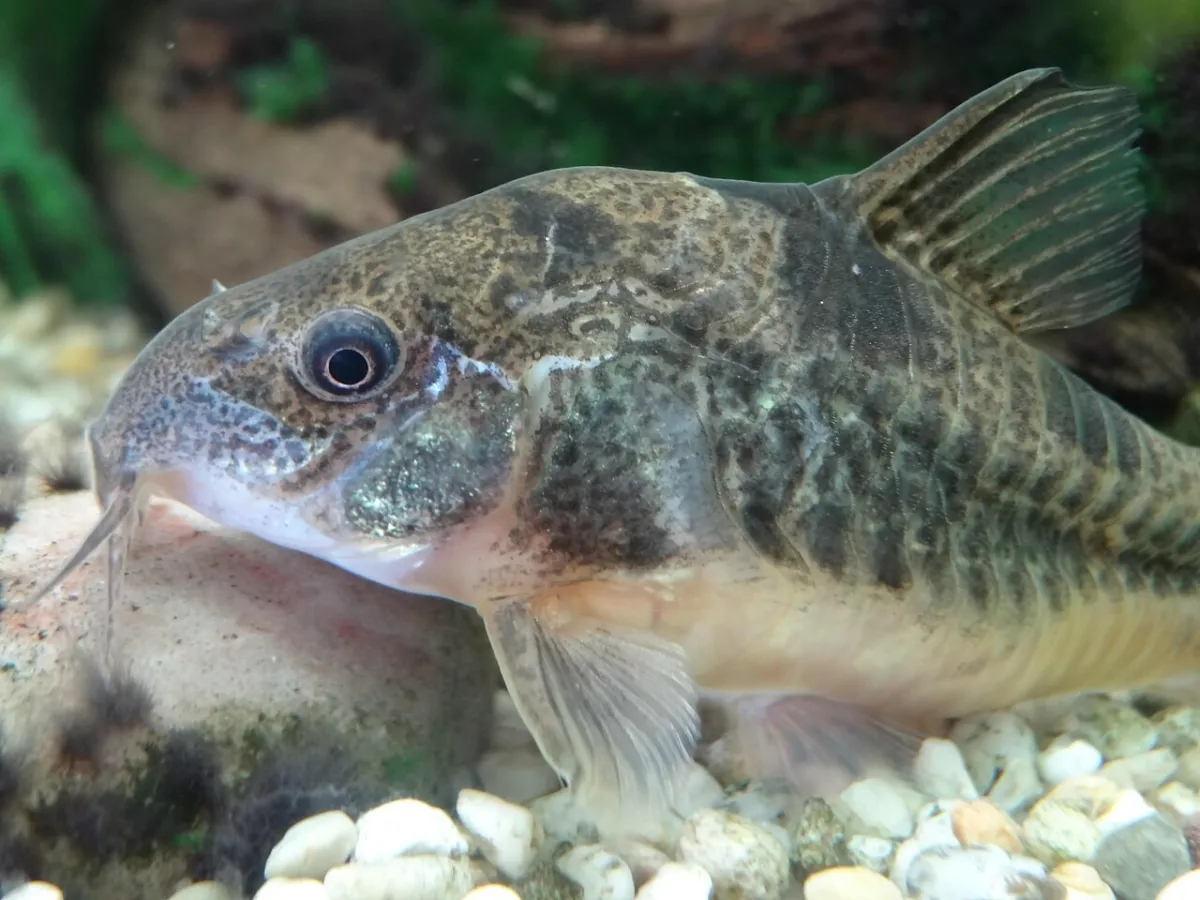
Freshwater · Beginner
Corydoras paleatus
Peppered corydoras are social, sandy-bottom catfish. Keep a group of six or more in a 20-gallon tank with sand, not gravel that can nick their barbels.
Min. tank: 20 gal
Care notes →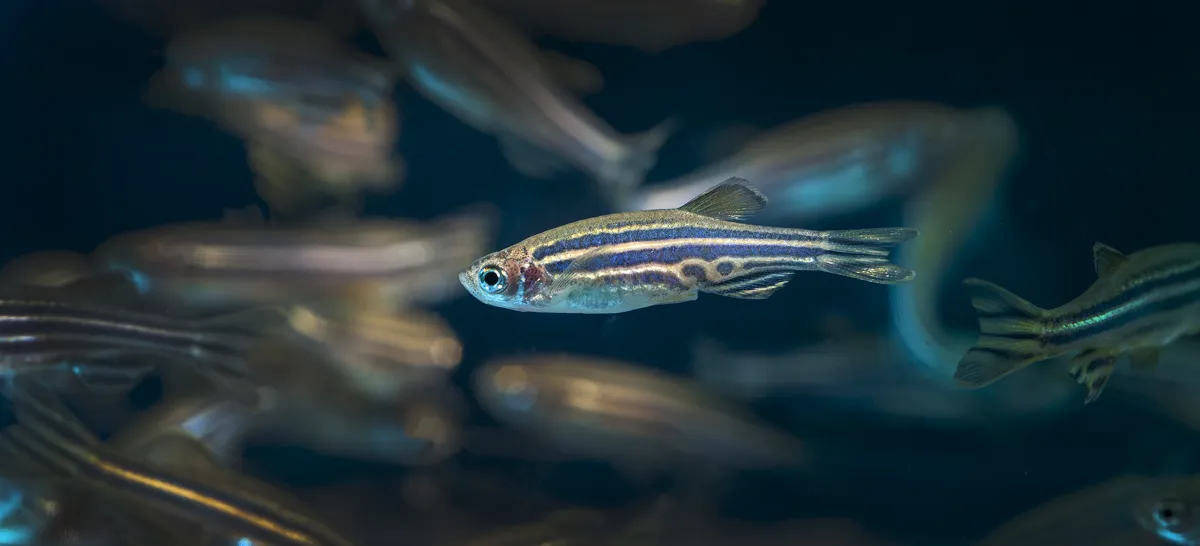
Freshwater · Beginner
Danio rerio
Zebra danios are hardy, fast-swimming beginners that want a school of six or more. Ten gallons is a tight floor. A 20-gallon long gives them the horizontal lane they actually use.
Min. tank: 10 gal
Care notes →