
Freshwater · Beginner
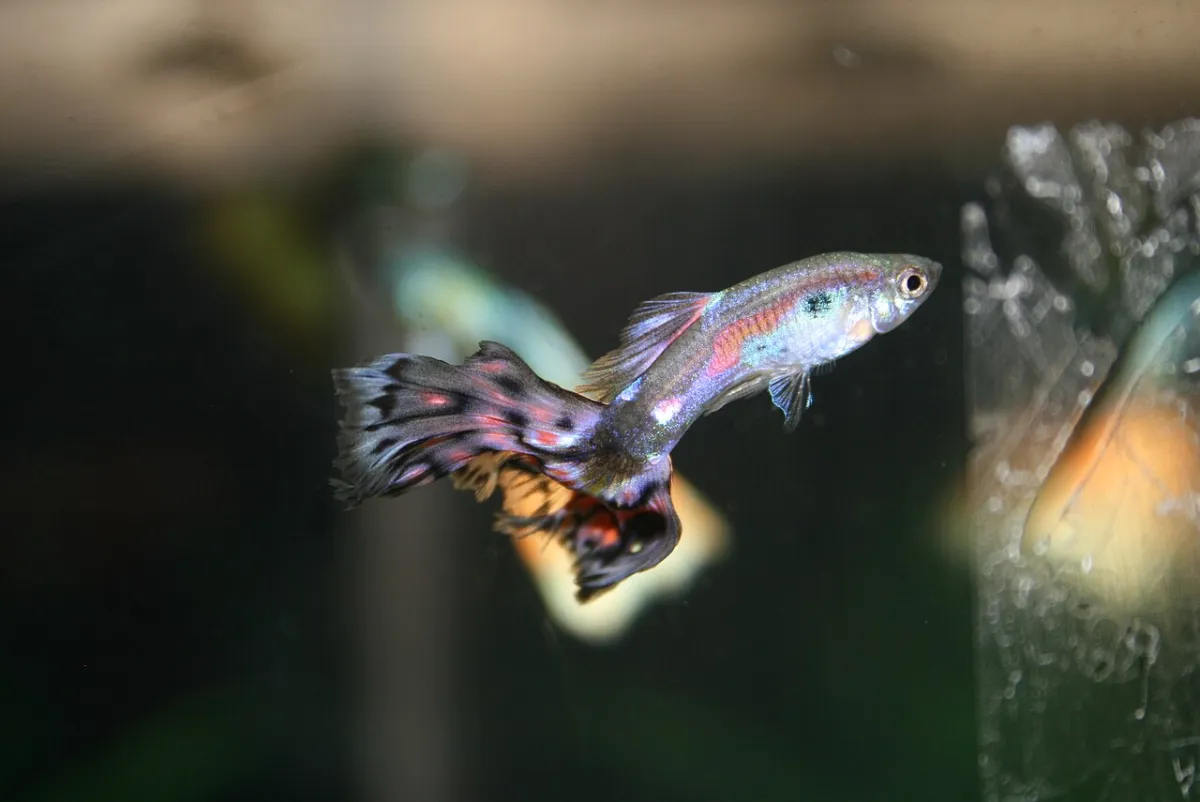
Guppy
Poecilia reticulata
Guppies are colorful, active livebearers for a heated 10-gallon (or larger) community — with one caveat: mixed sexes will produce fry, often lots of them.
Min. tank: 10 gal
Care notes →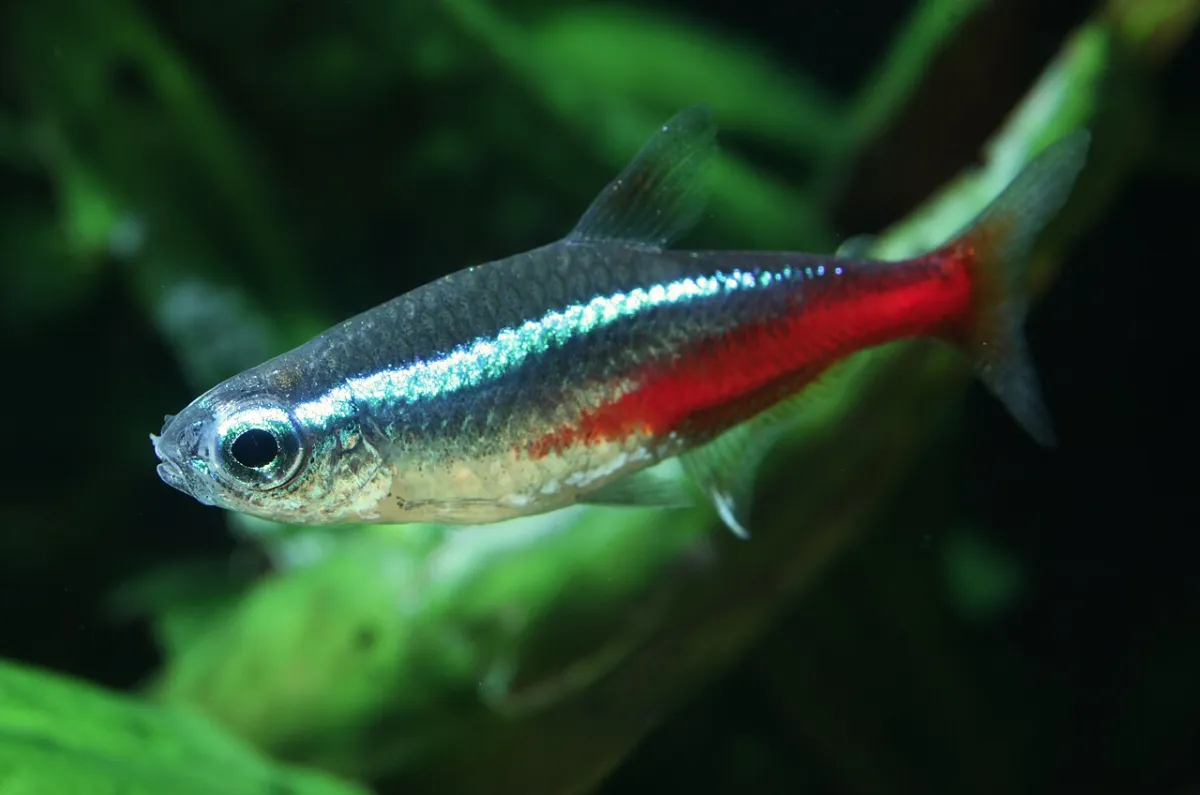
Photo: Holger Krisp · CC BY 3.0
Freshwater · Beginner · 10+ gal
Paracheirodon innesi
Neon tetras are small Amazonian schoolers that look their best in a planted 10-gallon (or larger) tank with a proper group, dimmer light, and stable, clean water.
| Water type | Freshwater |
|---|---|
| Care level | Beginner |
| Minimum tank | 10 gallons |
| Temperament | Peaceful schooling fish. Keep in groups of six or more; tens are better. They are shy when kept in ones and twos. |
| Diet | Omnivore. Quality micro pellets or flakes, plus frozen or live baby brine shrimp, daphnia, and finely chopped bloodworms. Feed small amounts twice daily. |
| Temperature | 72–78 °F |
| pH | 5.5–7 |
| Hardness / salinity | Soft, slightly acidic water is ideal (around 1–10 dGH). They adapt to moderate hardness if changes are slow and the tank is stable. |
Paracheirodon innesi is a tight-schooling characin from blackwater-influenced streams. A pair in a bright, bare tank will hide and fade. Six is a commonly cited minimum; eight to twelve in 20 gallons is a more natural look and spreads stress.
They stay under about 1.5 inches. The limiting factor is group size and water quality, not the length of a single fish.
Ten gallons can house a small school if filtration and maintenance are solid. Twenty gallons is more forgiving and leaves room for corydoras or shrimp in a peaceful community.
They color up over a dark substrate, with plants, driftwood, and leaf litter or tannins. Bright, open water with nowhere to hide is a common reason neons 'never look like the picture.' A gentle sponge or hang-on-back filter is enough.
Neon tetras are sensitive to poor cycling, big parameter swings, and crowding. 'Neon tetra disease' (Pleistophora) shows as cysts, fading color, and restlessness; there is no reliable home cure, so prevention — quarantine, quality sources, and clean water — is the plan.
They prefer cooler tropical temperatures than discus or some bettas. Do not keep them long-term at the hot end of the tropical range.
At least six, and more is better. A school of eight to twelve in a 20-gallon tank is a comfortable community starting point.
A 10-gallon tank can work for a small school. A 20-gallon is easier to keep stable and looks more natural.
Sometimes, in 10 gallons or larger, if the betta is not a hunter and the neons have cover. Watch the first days closely and have a backup plan.
Freshwater · Beginner
Poecilia reticulata
Guppies are colorful, active livebearers for a heated 10-gallon (or larger) community — with one caveat: mixed sexes will produce fry, often lots of them.
Min. tank: 10 gal
Care notes →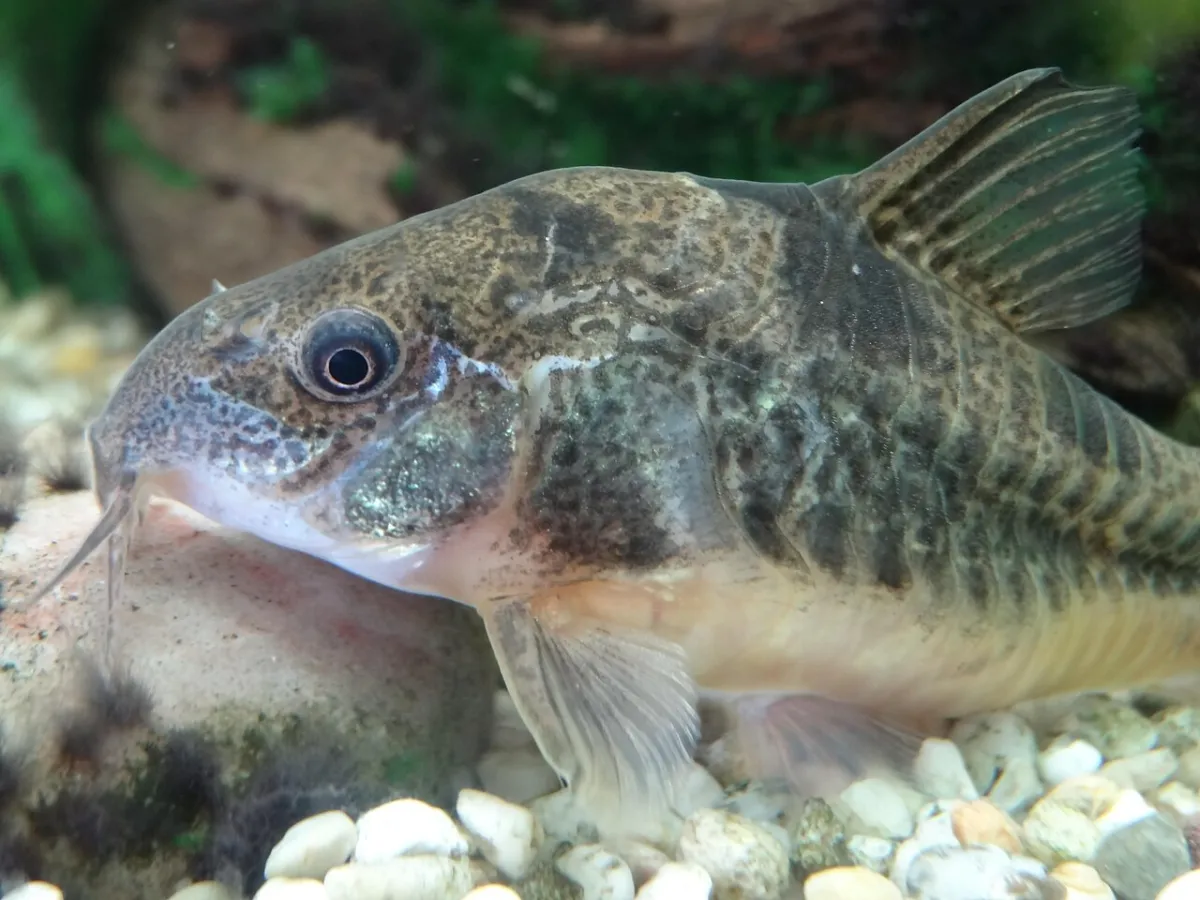
Freshwater · Beginner
Corydoras paleatus
Peppered corydoras are social, sandy-bottom catfish. Keep a group of six or more in a 20-gallon tank with sand, not gravel that can nick their barbels.
Min. tank: 20 gal
Care notes →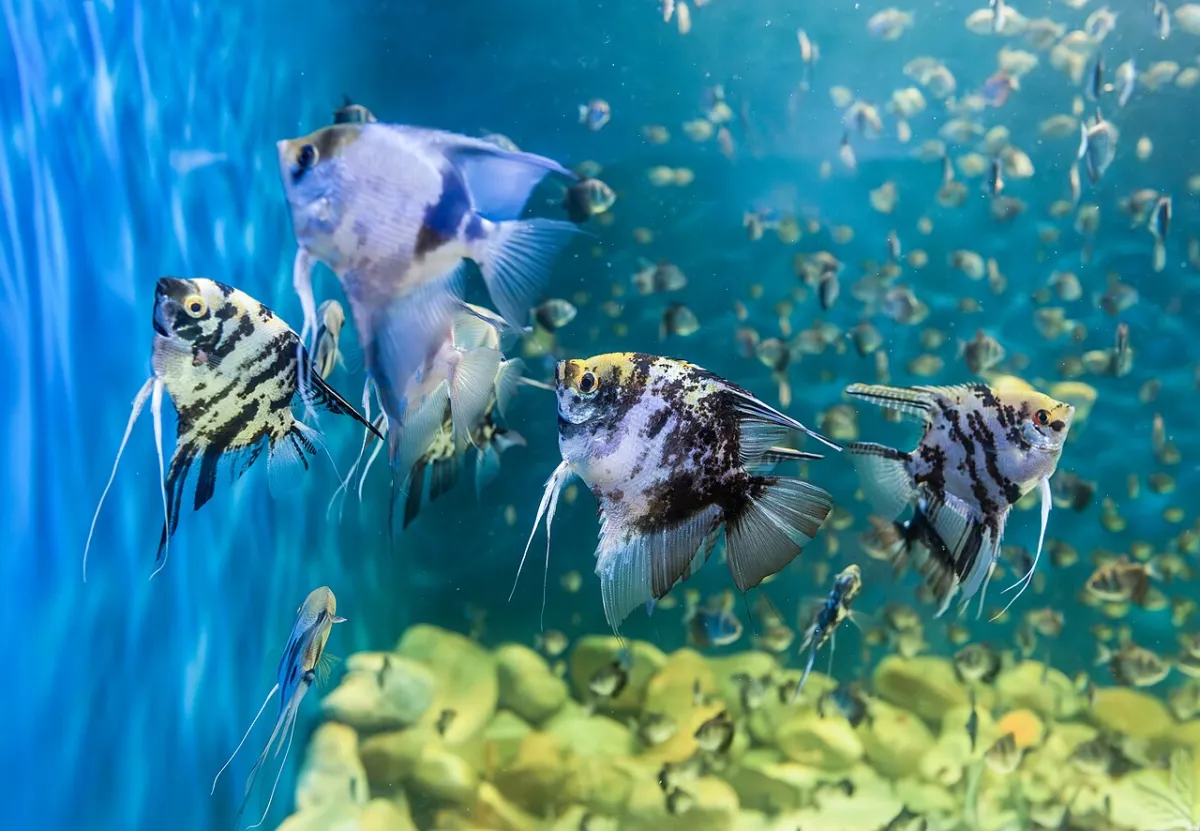
Freshwater · Intermediate
Pterophyllum scalare
Freshwater angelfish are tall Amazonian cichlids. They need height more than a long, low tank — about 30 gallons and 18+ inches of height for a pair is a practical indoor start.
Min. tank: 30 gal
Care notes →