
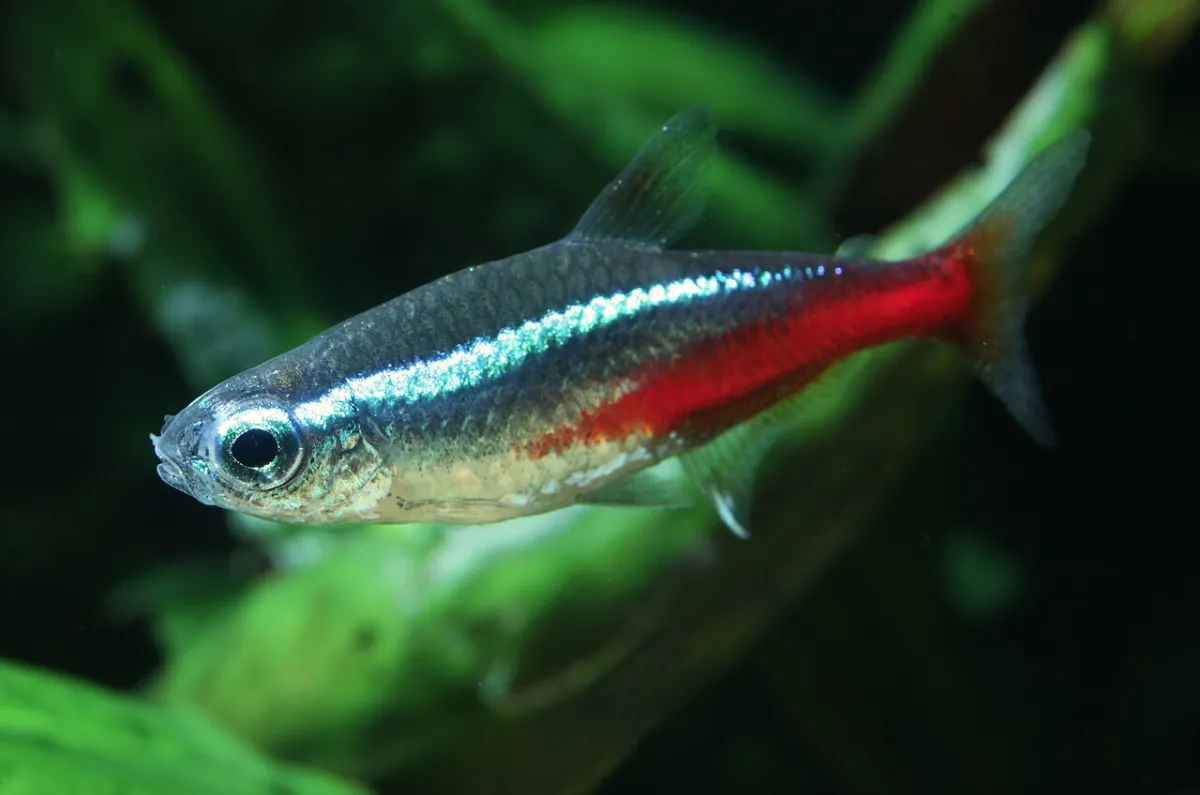
Freshwater · Beginner
Neon tetra
Paracheirodon innesi
Neon tetras are small Amazonian schoolers that look their best in a planted 10-gallon (or larger) tank with a proper group, dimmer light, and stable, clean water.
Min. tank: 10 gal
Care notes →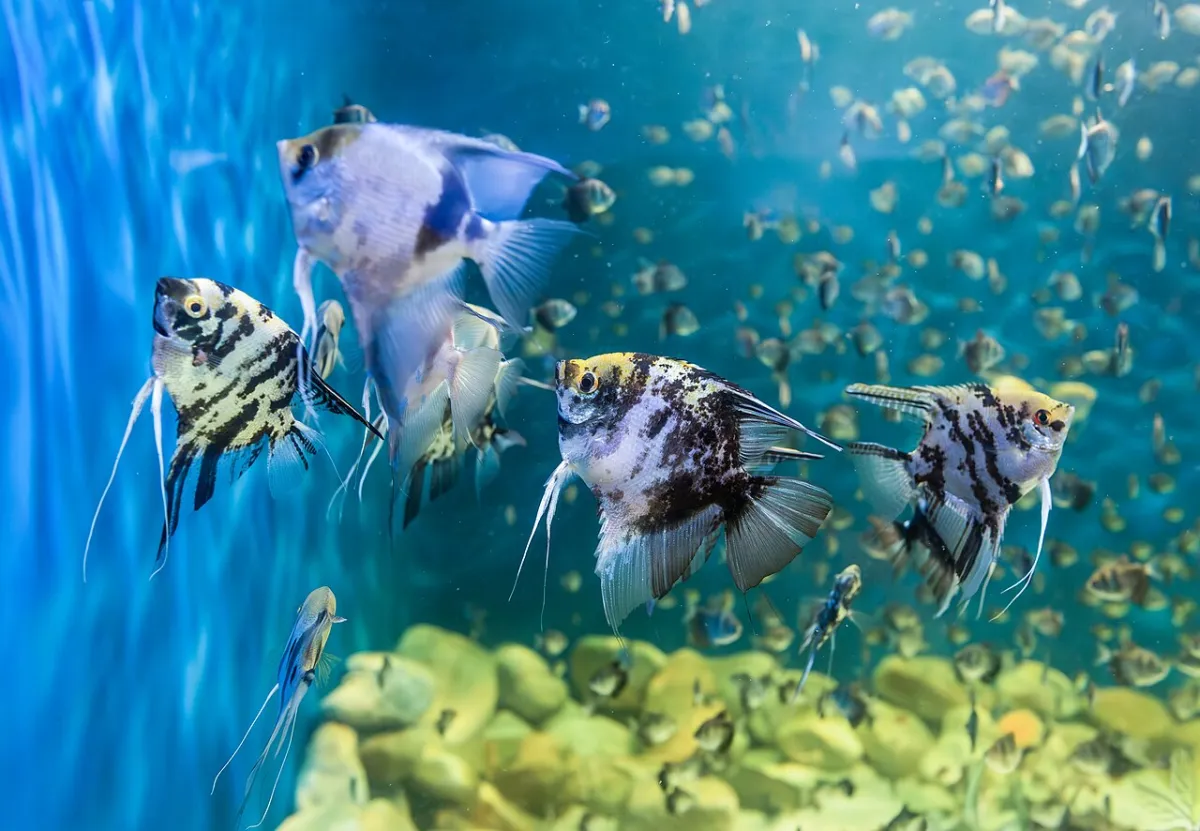
Photo: Rjcastillo · CC BY 4.0
Freshwater · Intermediate · 30+ gal
Pterophyllum scalare
Freshwater angelfish are tall Amazonian cichlids. They need height more than a long, low tank. About 30 gallons and 18+ inches of height for a pair is an indoor start.
| Water type | Freshwater |
|---|---|
| Care level | Intermediate |
| Minimum tank | 30 gallons |
| Temperament | Semi-aggressive cichlid. Peaceful enough for some community tanks when young, but adults may eat small tetras, harass dither fish, and become territorial when spawning. |
| Diet | Omnivore leaning carnivore. Quality cichlid or angelfish pellets, plus frozen brine shrimp, mysis, and bloodworms. Avoid a flake-only diet. |
| Temperature | 76–82 °F |
| pH | 6.5–7.5 |
| Hardness / salinity | Soft to moderately hard (around 3–15 dGH). They adapt if stability is good; wild-type fish prefer softer, warmer water than many livebearers. |
Pterophyllum scalare is a laterally compressed cichlid built to hover among roots and plants. A standard 20-gallon long is the wrong shape: angels need vertical space for their fins. A 29- or 30-gallon 'tall' tank is a common minimum for a pair; 40 gallons and up is easier for a small group or a community.
Juveniles sold in cups look like they belong in a 10-gallon. Adults do not.
A pair that bonds can be beautiful and also territorial, especially at spawning. Buying a group of juveniles and letting a pair form works in a large tank; leftover fish may need new homes. Two unbonded adults in 30 gallons often means bullying.
They may pick off neon tetras as they grow. If you want a community, choose tank mates that stay too large to swallow and are not chronic fin-nippers (serpae tetras and some barbs are a poor match for veil-tail angels).
Warm, clean, low-nitrate water with a complete cycle is the baseline. They are more sensitive to poor shipping and dirty water than many livebearers. Hexamita and hole-in-the-head show up in chronically stressed, poorly fed cichlids. Prevention is diet and maintenance, not a miracle additive.
Soft, acidic water is a plus for breeding, but a stable tap-water community in the mid 70s pH can work if you are not chasing wild-type spawning.
A few listings we would open for this species. Skip anything you already own that still works.
Aqueon Adjustable Pro heater, 100W
Angels want warm, stable water in the upper 70s F. A 29- or 30-gallon tall tank is the usual indoor start for a pair, and 100W is the right Pro size for that volume.
Skip 100W if a working heater already holds 78 F. In a cold basement, step up a size rather than running one unit wide open.
See this listingHikari Cichlid Gold, sinking medium, 2.2 lb
Angels are cichlids. A sinking pellet beats a flake-only diet and is the same staple an oscar can grow into. Medium pellets suit adults; juveniles need a smaller size.
Skip the 2.2 lb sack if you only keep a pair of juveniles — look for mini pellets or a smaller jar. Frozen brine and mysis still belong in the rotation.
See this listingFluval AquaClear 50 Power Filter
A 30-gallon tall pair needs a hang-on-back with a real media basket, not the cartridge that shipped with a 20-high kit. Adjustable flow helps when they pair up and get twitchy.
A 20-gallon long is the wrong shape for angels even with this filter. Skip a second hang-on-back if a canister already turns the tank over.
See this listingAbout 30 gallons with real height for a pair is a minimum. Bigger is better, and a 20-gallon long is the wrong shape.
Sometimes when all are small. Adult angels often eat neon-sized fish. Plan on larger tetras if you want a lasting community.
They are intermediate: not fragile if water is good, but they grow, pair up, and do not belong in a starter 10-gallon kit.
Freshwater · Beginner
Paracheirodon innesi
Neon tetras are small Amazonian schoolers that look their best in a planted 10-gallon (or larger) tank with a proper group, dimmer light, and stable, clean water.
Min. tank: 10 gal
Care notes →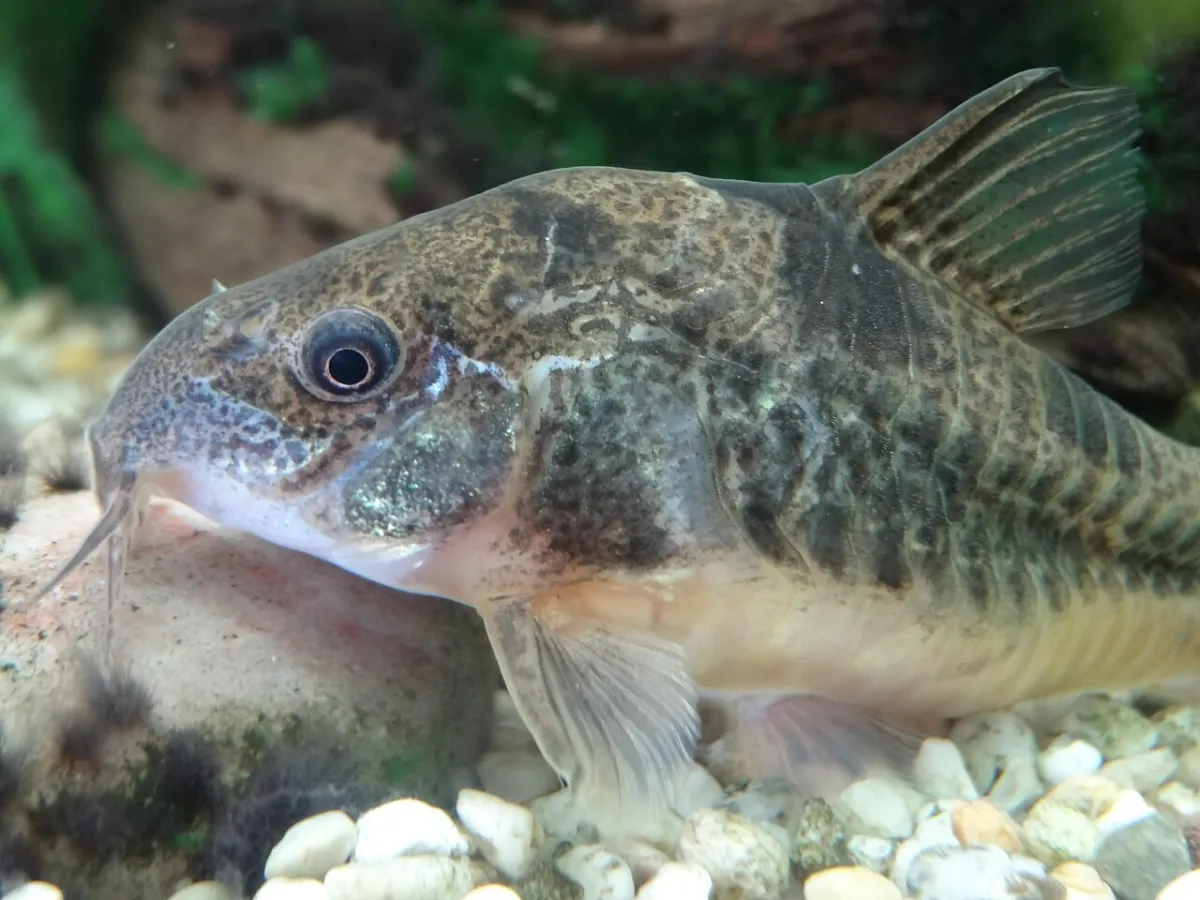
Freshwater · Beginner
Corydoras paleatus
Peppered corydoras are social, sandy-bottom catfish. Keep a group of six or more in a 20-gallon tank with sand, not gravel that can nick their barbels.
Min. tank: 20 gal
Care notes →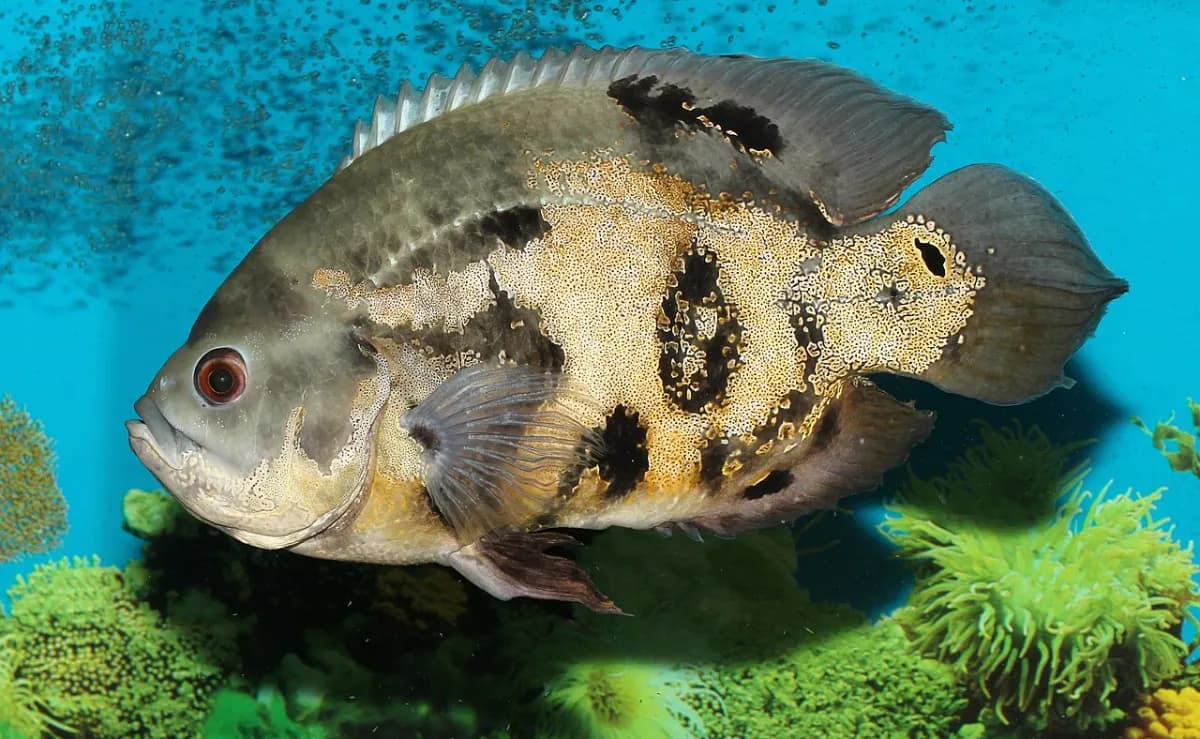
Freshwater · Advanced
Astronotus ocellatus
Oscars are large, messy cichlids for dedicated tanks. One adult needs about 75 gallons as a minimum, powerful filtration, and an owner ready for digging, waste, and a long-lived pet.
Min. tank: 75 gal
Care notes →