Skip to content
Swimming FishiesSwimming Fishies
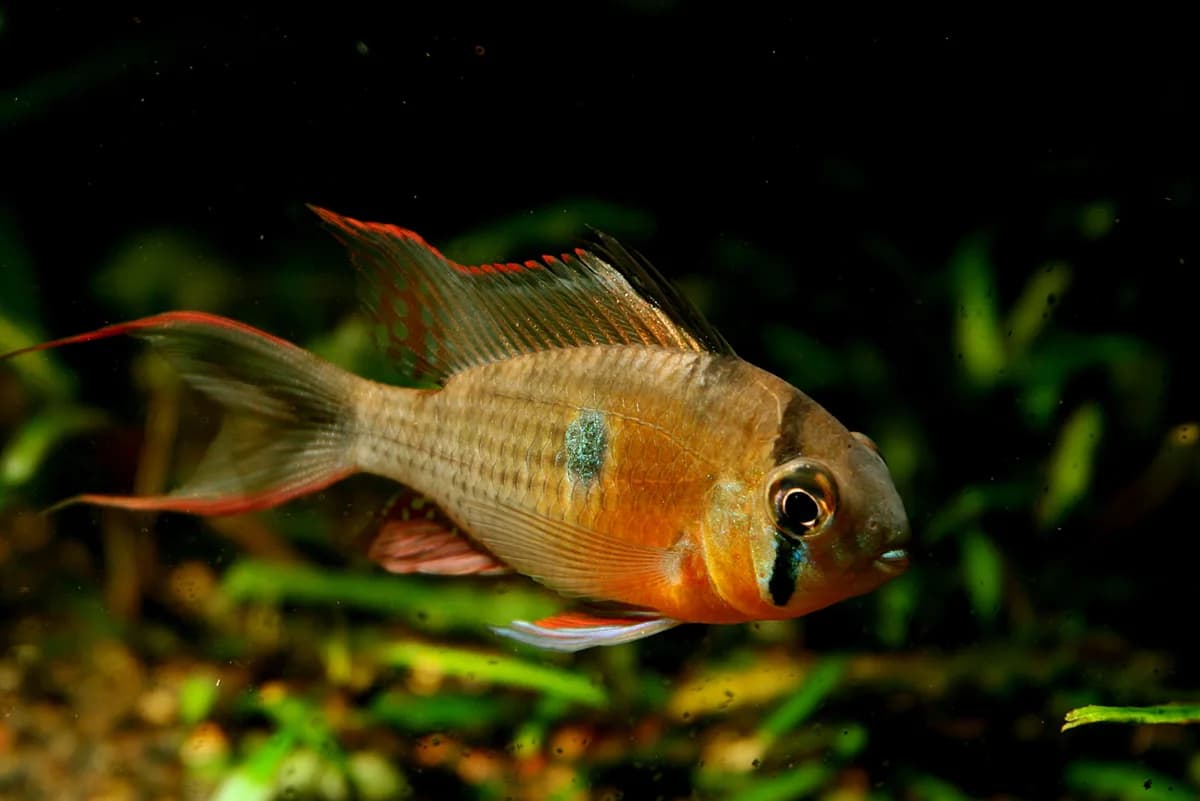
Male Bolivian ram (Mikrogeophagus altispinosus) with a gold body, a dark side spot, red-edged fins, and a black bar through the eye

Photo: Elma · CC BY 2.0

Freshwater · Beginner · 29+ gal

Bolivian ram

Mikrogeophagus altispinosus

By

Bolivian rams (Mikrogeophagus altispinosus) are dwarf cichlids that grow to about 3 inches. One or a pair is comfortable in a 29-gallon or a 40 breeder, and a 20-gallon long works for one or a pair if the rest of the stocking stays light. Keep them at 73 to 79°F on fine sand, with gentle flow, some cover, and a school of small fish to make them feel safe.

More freshwater care · Full directory

Care parameters for Bolivian ram
Water typeFreshwater
Care levelBeginner
Minimum tank29 gallons
TemperamentCalm for a cichlid. Keep one or a bonded pair. A pair guards a patch of floor when it spawns and chases anything that wanders in, then settles down once the fry are gone. Two males in a 29 will spar all day.
DietOmnivore that eats off the bottom. Small sinking pellets or micro pellets once or twice a day, plus frozen bloodworms, brine shrimp, or daphnia a few times a week. Food has to reach the sand, since rams rarely chase it at the surface.
Temperature73–79 °F
pH6–7.5
Hardness / salinitySoft to moderately hard. Shop fish are farm-raised and handle most stable tap water. Steady parameters matter more than chasing a low number.

A calm dwarf cichlid from Bolivia

I bought my first Bolivian ram as a placeholder while I decided what the 29 was going to be. Three years later he was still the fish people asked about. He spent his days working the sand a mouthful at a time and ignored the tetras unless one swam right into his face.

Mikrogeophagus altispinosus comes from the Mamoré and Guaporé river basins in Bolivia and western Brazil. Adults reach about 3 inches. The body is gold to tan with a dark spot in the middle of the side and a black bar through the eye. Males show red edges on the fins, and the front of the dorsal fin is dark. Expect four to six years with good care.

It is a different fish from the German blue ram, Mikrogeophagus ramirezi. The German blue is smaller, brighter, and wants water in the mid 80s, and a lot of farm stock is weak. The Bolivian takes normal tropical temperatures and tap water that a German blue would not, which is why it makes a better first cichlid.

A 29 for a pair, a 20 long only if you keep it light

A cycled 29-gallon or a 40 breeder is the comfortable home for one ram or a pair. Floor space matters more than height, because rams spend their lives in the bottom few inches. A 20-gallon long works for one or a pair with a small school and nothing else big. Skip a 20 high. Finish the cycle before they go in.

Two worked plans that pass the stocking calculator: a pair with 10 cardinal tetras and six peppered cories in a 29, or a pair with 12 rummy-nose tetras, six peppered cories, and one bristlenose pleco in a 40 breeder. Don't mix rams with other dwarf cichlids in anything under a 40, and don't add a second male. A group of five or six can work in a 75, but at that point you are building the tank around them.

Sexing young rams is hard, so buying a pair usually means buying one that the shop has seen spawn, or growing out four or five juveniles and rehoming the extras once two pair off. Males grow a little larger and get longer points on the dorsal and tail fins. Females are rounder through the belly.

Sand, cover, and slow water

Use fine sand. Rams take a mouthful, chew through it for food, and spit the grains out through their gills, and coarse or sharp gravel stops that. The substrate page and the sand vs gravel guide cover how much to buy. An inch to an inch and a half is enough.

Give them a few places to break line of sight: a piece of driftwood, some rocks, and plants around the edges with open sand in front. A flat stone in the open is where a pair will lay eggs. Leaf litter and tannins from wood are welcome but not needed.

Set the heater around 76°F. They take 73 to 79°F and pH 6.0 to 7.5. A 100W heater covers a 29 in most rooms. Keep the flow gentle. A hang-on-back filter on a low setting or a pair of sponge filters works. Change 25 to 30 percent of the water every week and keep nitrate under about 20 ppm, because rams lose color and appetite in dirty water long before they look sick.

Dither fish, food, and breeding

Rams are bolder with a school of small fish swimming above them. Hobbyists call these dither fish. A calm school overhead means no predator is around, so the ram comes out more. Cardinal tetras, rummy-nose tetras, and harlequin rasboras all suit the temperature. Peppered cories share the sand without trouble. A ram in a tank with no other fish often hides.

Feed small sinking pellets once or twice a day, and frozen bloodworms, brine shrimp, or daphnia a few times a week. Fast midwater fish can grab everything before it lands, so feed the school first at one end and drop the ram's food at the other. The feeding guide covers portions.

A settled pair cleans a flat stone, lays 50 to 200 eggs on it, and both parents guard the eggs and fry. During that week they will push cories and tetras away from the spot. That is normal and it passes. Fry in a community tank rarely survive past a few days unless you move them out. Cherry shrimp babies get eaten the same way, so a shrimp colony and a ram don't mix well.

Tank mates

  • A school of cardinal tetras, rummy-nose tetras, or harlequin rasboras as dither fish
  • Peppered cories on the sand
  • One bristlenose pleco in a 29 or larger
  • Otocinclus in a mature planted tank
  • Kuhli loaches in a tank with a tight lid
  • Skip oscars, goldfish, and fin-nippers. Cherry shrimp colonies are a gamble, because rams eat the babies

Gear for this fish

A few listings we would open for this species. Skip anything you already own that still works.

  • CaribSea Super Naturals Moonlight Sand, 20 lb

    Fine, smooth sand that a ram can sift through its gills, the same sand the cory and substrate pages use.

    A 29 takes about two 20 lb bags for an inch and a half of sand. Rinse until the water runs mostly clear.

    See this listing
  • Hikari Tropical Micro Pellets, 0.77 oz

    Small pellets that sink slowly, so some reach the sand where the ram feeds before the tetras clear them.

    Feed the school first at one end, then drop a pinch for the ram at the other. Add frozen bloodworms or brine shrimp a few times a week.

    See this listing
  • Aqueon Pro adjustable heater, 100W

    Holds a 29 near 76°F in a normal room, the middle of a Bolivian ram's range.

    Check it with a separate thermometer at the other end of the tank. A 40 breeder in a cool room may need 150W.

    See this listing

Frequently asked questions

What size tank does a Bolivian ram need?+

A 29-gallon or a 40 breeder is comfortable for one or a pair. A 20-gallon long works for one or a pair if the rest of the stocking is a small school and nothing large.

How big do Bolivian rams get?+

About 3 inches as adults. Males are a little larger than females and have longer points on the dorsal and tail fins.

Can you keep a single Bolivian ram?+

Yes. One ram with a school of dither fish is a complete setup. A pair will spawn and guard a territory, which is fun to watch, but one ram does fine on its own.

What is the difference between a Bolivian ram and a German blue ram?+

They are different species. The Bolivian ram (Mikrogeophagus altispinosus) is larger, plainer, and takes 73 to 79°F. The German blue ram (Mikrogeophagus ramirezi) is smaller and brighter, wants water in the mid 80s, and is more delicate.

Will a Bolivian ram eat shrimp?+

It eats baby shrimp and may pick off small adults. Adult amano shrimp usually do fine. Keep cherry shrimp colonies in their own tank.

Next step

Planning a tank for these?

Plan on 29 gallons or more. Put your actual tank size into the stocking calculator and it shows what else can live alongside them.

Open the stocking calculator

Before you buy

Keep your fishies swimming.

Related species

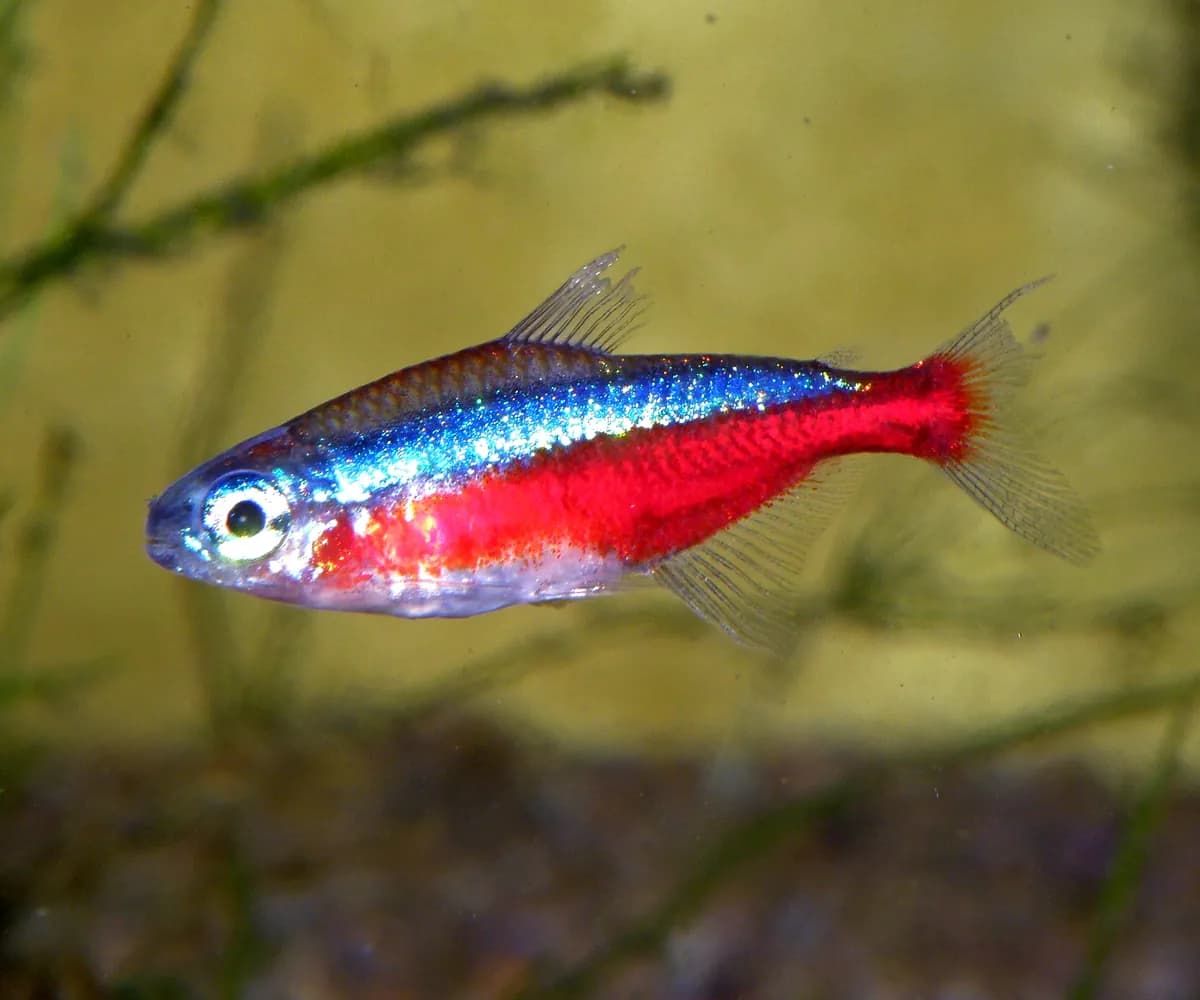
Cardinal tetra (Paracheirodon axelrodi) showing blue lateral stripe and red stripe running the full body length

Freshwater · Intermediate

Cardinal tetra

Paracheirodon axelrodi

Cardinal tetras (Paracheirodon axelrodi) are Amazon schoolers with a full red stripe from snout to tail. Plan a school of eight to ten in a planted 20-gallon with soft, clean water, not a neon-sized squeeze in a 10.

Min. tank: 20 gal

Care notes →
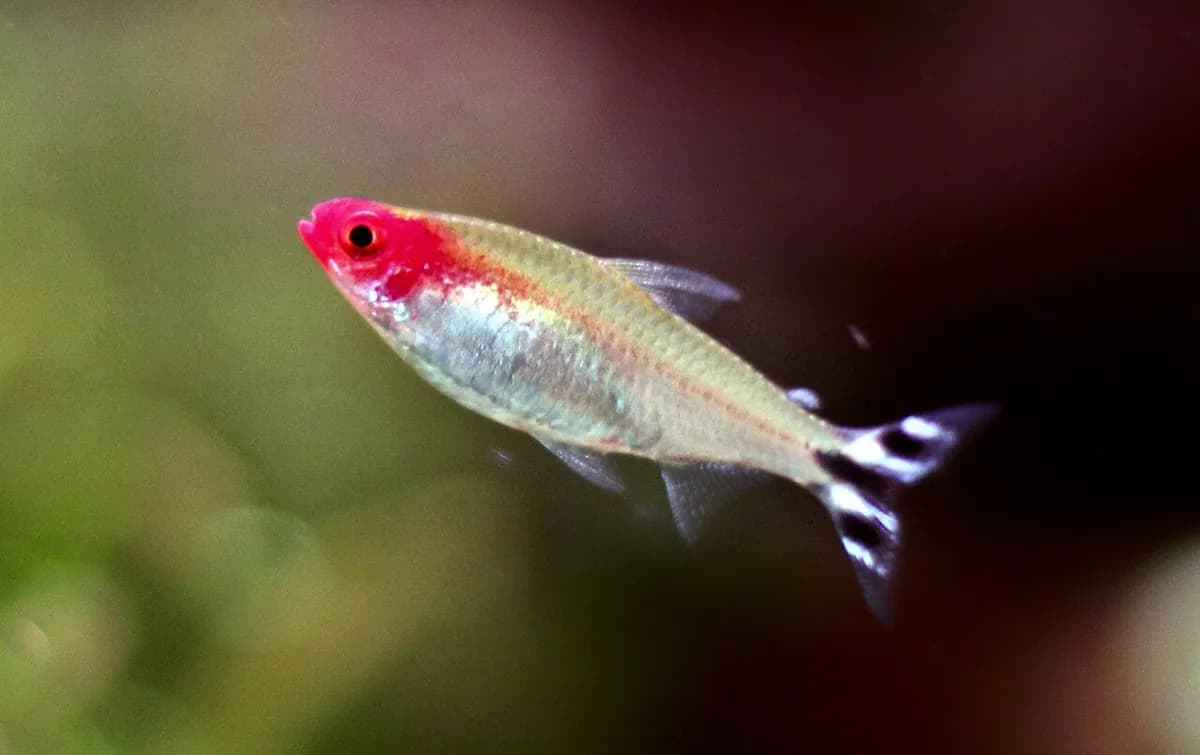
Rummy-nose tetra showing bright red snout and black-and-white striped caudal fin

Freshwater · Intermediate

Rummy-nose tetra

Hemigrammus bleheri / H. rhodostomus / Petitella (trade mix)

Rummy-nose tetras sold in shops are a trade mix of Hemigrammus bleheri, H. rhodostomus, and Petitella names. Care is the same lane. Adults reach about 2 inches. How many fit in a 20-gallon? Eight to ten in a 20-gallon long, and ten still leaves room for six peppered cories on the bottom. Plant it well and keep the water soft to moderate and clean. A bright red nose and black-and-white striped tail are the ID. A pale nose often means stress, a new tank, or dirty water.

Min. tank: 20 gal

Care notes →
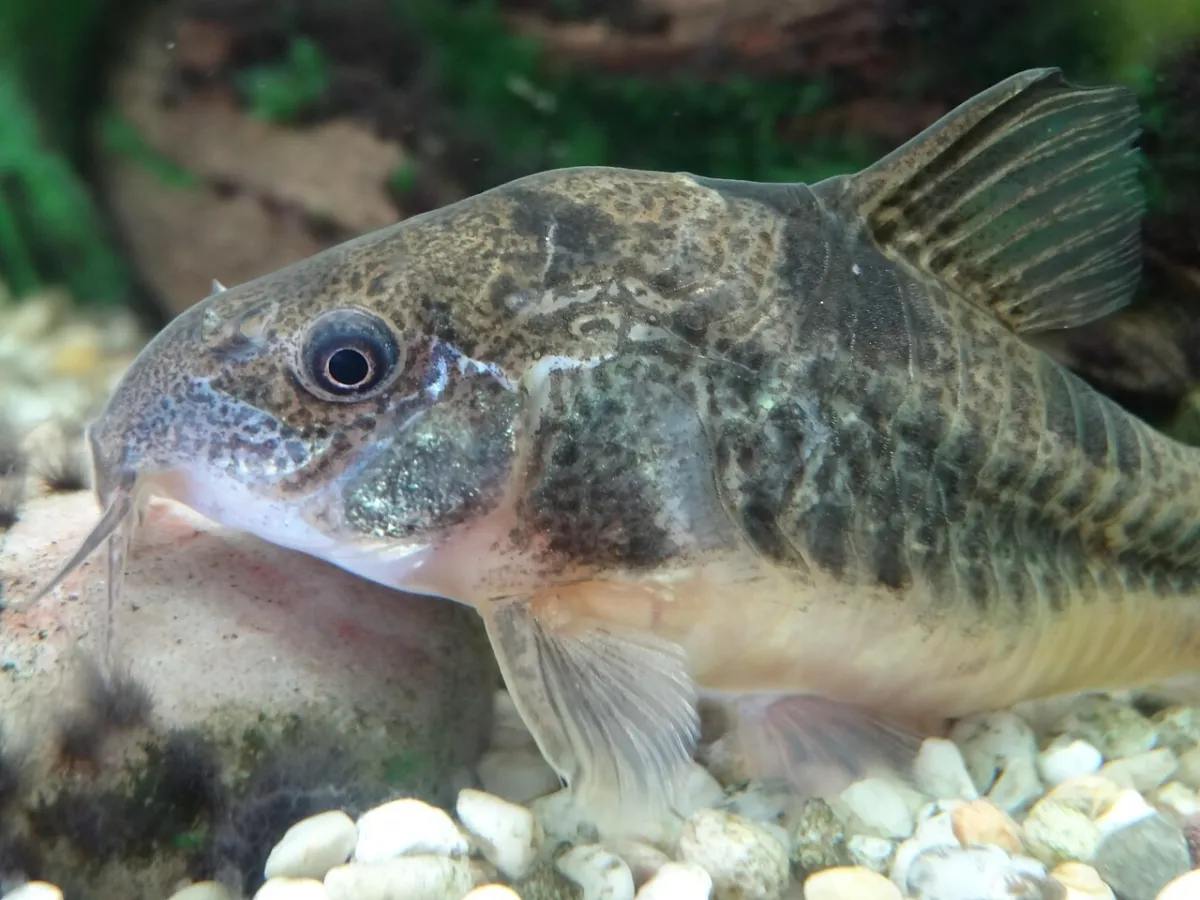
Peppered cory (Corydoras paleatus) resting on aquarium substrate

Freshwater · Beginner

Peppered cory

Corydoras paleatus

Peppered corydoras are social, sandy-bottom catfish. Keep a group of six or more in a 20-gallon tank with sand, not gravel that can nick their barbels.

Min. tank: 20 gal

Care notes →