
Freshwater · Beginner
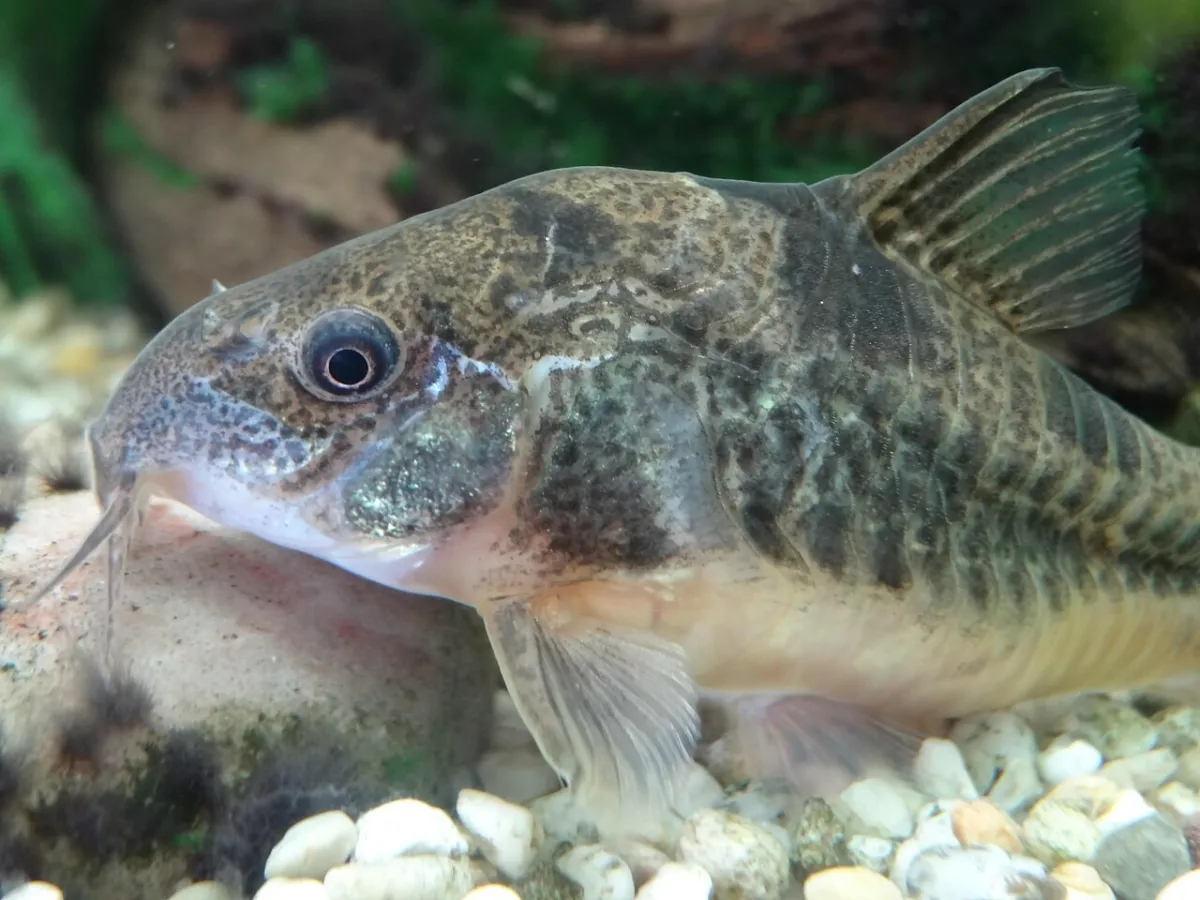
Peppered cory
Corydoras paleatus
Peppered corydoras are social, sandy-bottom catfish. Keep a group of six or more in a 20-gallon tank with sand, not gravel that can nick their barbels.
Min. tank: 20 gal
Care notes →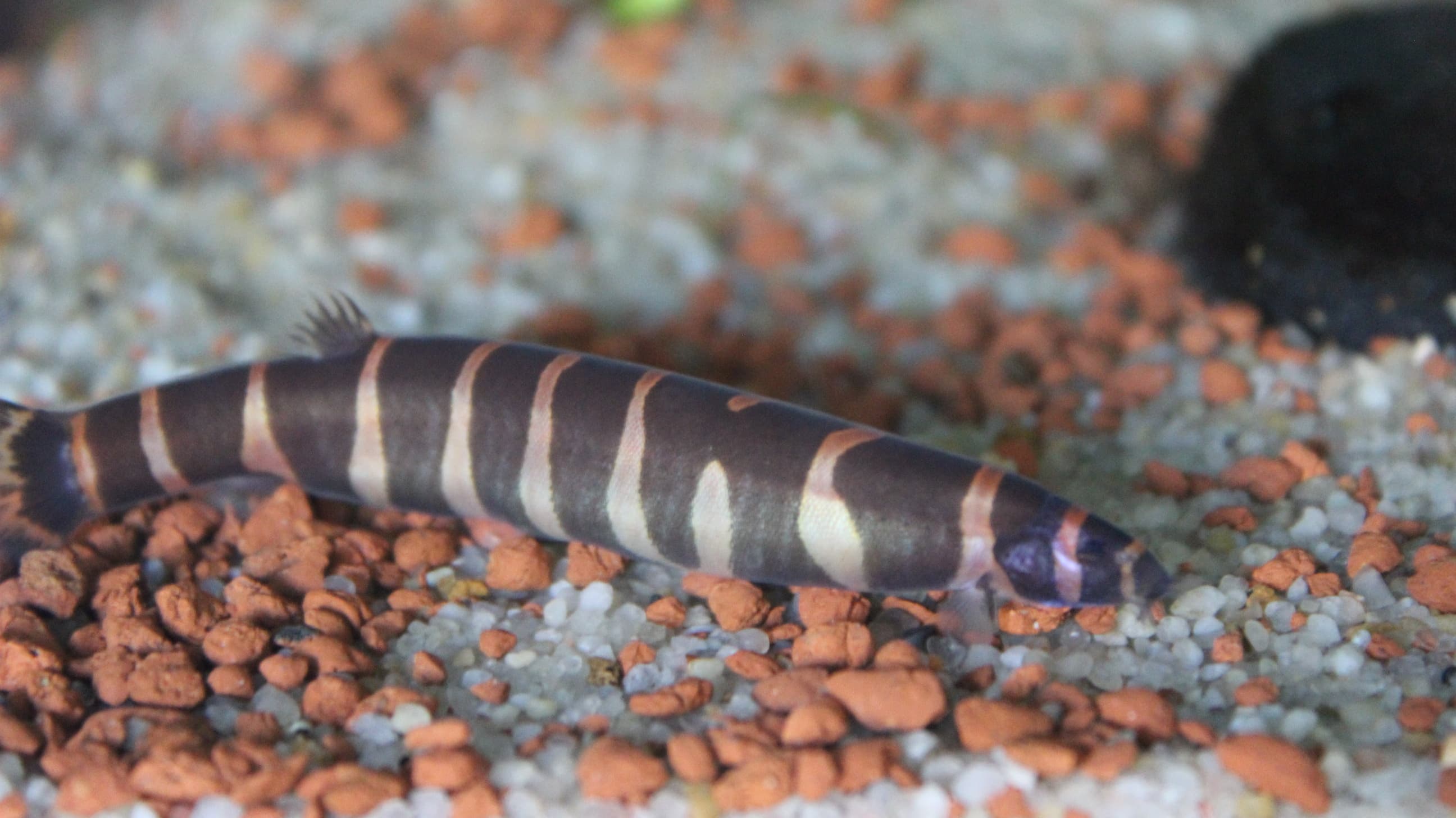
Photo: Iidkk · CC BY-SA 4.0
Freshwater · Beginner · 20+ gal
Pangio spp.
Kuhli loaches (Pangio spp., usually a trade mix of P. kuhlii and P. semicincta) are banded, eel-shaped bottom fish. Adults reach 3–4 inches. Plan a group of 6+ in a 20-gallon on sand, with a lid and a sponge-safe intake.
| Water type | Freshwater |
|---|---|
| Care level | Beginner |
| Minimum tank | 20 gallons |
| Temperament | Peaceful nocturnal bottom dwellers. Keep a group of 6+ so they come out and forage together. Soft bodies and a habit of wedging into intakes: sponge prefilter or sponge filter, and a tight lid. |
| Diet | Omnivore scavengers. Sinking wafers as a staple after lights out, plus frozen bloodworms a few times a week. Leftover flake that never reaches the sand is not a diet. |
| Temperature | 75–85 °F |
| pH | 5.5–7 |
| Hardness / salinity | Soft to moderate. Match your tap rather than chasing Amazon numbers; see the GH, KH, and pH guide. Stable, warm water matters more than a perfect reading. |
Shop bags labeled kuhli, coolie, or Pangio kuhlii are usually a mix. True P. kuhlii is a Java endemic that rarely shows up in the trade; most banded fish in stores are P. semicincta or related Pangio. Say so on the label when you can, and do not invent a species from one photo. Adults top out around 3–4 inches: long and slim, not a clown loach and not a worm you keep alone.
They are social. A group of six or more settles, forages, and shows color. One or two in a 10-gallon often vanish into the décor and stay thin. Twenty gallons with sand and plants is the honest floor for that group plus a small midwater school.
Kuhlis wedge under wood, into plant roots, and into open filter intakes. Sharp gravel nicks their soft skin. Fine aquarium sand is the usual substrate, for the same reason peppered cories want sand. Cover HOB intakes with a sponge prefilter, or run a sponge filter, so nobody gets stuck overnight.
They are escape artists. A tight-fitting lid or mesh cover matters as much as the heater. Temps in the mid-70s to mid-80s °F suit most shop stock. Soft to moderately soft water with a finished cycle is enough; leave ammonia and nitrite at zero before you add the group.
Expect them to hide most of the day and work the sand after lights out. Drop sinking wafers once the room is dark, and add frozen bloodworms a few times a week. Pull what is left after a short feed so the 20 does not foul.
Peaceful with tetras, rasboras, and honey gouramis. They are a poor match for a shrimp-breeding tank: nocturnal hunting takes shrimplets and sometimes adults. If you want a growing Neocaridina colony, pick a different bottom crew. For hardness and soft-water choices that also fit kuhlis, read GH, KH, and pH.
A few listings we would open for this species. Skip anything you already own that still works.
CaribSea Super Naturals Moonlight Sand, 20 lb
Kuhlis burrow and rest on the bottom. Fine, smooth sand will not nick soft skin the way cheap sharp gravel does. A 20-gallon wants a real bag, not a sample pouch.
Rinse until the water runs clearer before it goes in. Skip play sand unless you know it is aquarium-safe and dust-free. Same substrate logic as peppered cories.
See this listinghygger sponge filter, small
Kuhlis wedge into open intakes. An air-driven sponge (or a sponge prefilter on an HOB) keeps soft bodies out of the impeller while holding gentle flow in a 20.
Needs an air pump, airline, and a check valve. Squeeze the sponge in old tank water only. Skip this if a baffled hang-on-back already has a foam intake guard and ammonia stays at zero.
See this listingHikari Sinking Wafers, 1.76 oz
Made for cories, loaches, and other bottom feeders. Drop wafers after lights out so midwater fish do not steal the meal before it hits the sand.
Feed what the group finishes in about 20 minutes, then pull leftovers. Frozen bloodworms a few times a week still help. Skip algae wafers as the only food.
See this listingA group of at least six. Singles and pairs spend more time buried and miss meals. Plan the bioload for the group, not for one 'cleanup loach' on the bag.
A 20-gallon with sand is the practical minimum for six or more plus a small midwater school. A 10 is a squeeze once they hit adult length.
Yes. Fine sand lets them burrow and forage without scraping skin. Sharp gravel is a common cause of nicks and infection. Smooth rounded gravel is a distant second choice.
They usually leave adult cherry shrimp alone in a heavily planted tank, but shrimplets disappear. Do not stock them in a tank you are trying to breed shrimp in.
Freshwater · Beginner
Corydoras paleatus
Peppered corydoras are social, sandy-bottom catfish. Keep a group of six or more in a 20-gallon tank with sand, not gravel that can nick their barbels.
Min. tank: 20 gal
Care notes →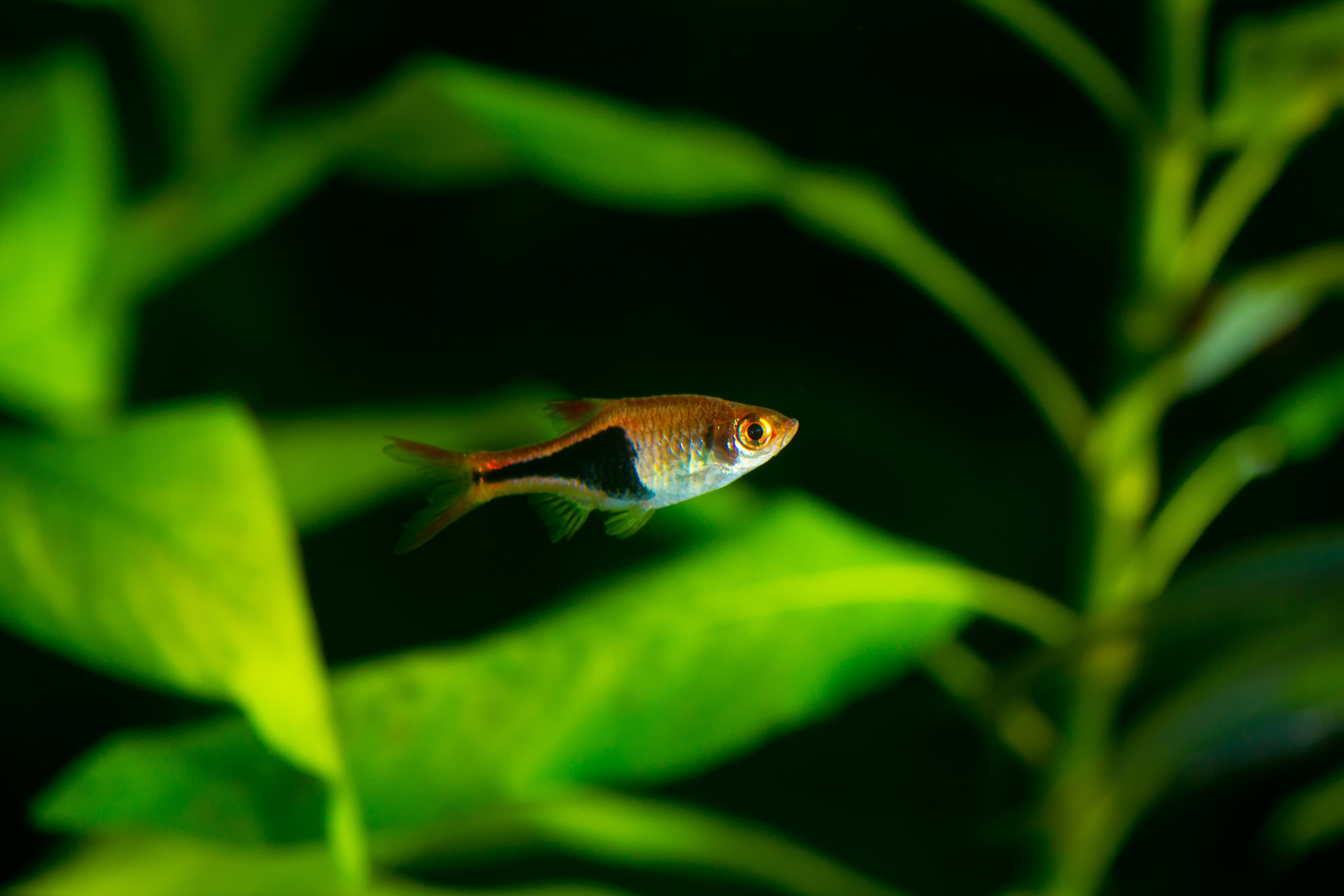
Freshwater · Beginner
Trigonostigma heteromorpha
Harlequin rasboras (Trigonostigma heteromorpha) are peaceful midwater schoolers with a black triangle on the rear body. Plan six to ten in a planted 20-gallon; a 10 is a tight floor for six, not a comfortable home.
Min. tank: 20 gal
Care notes →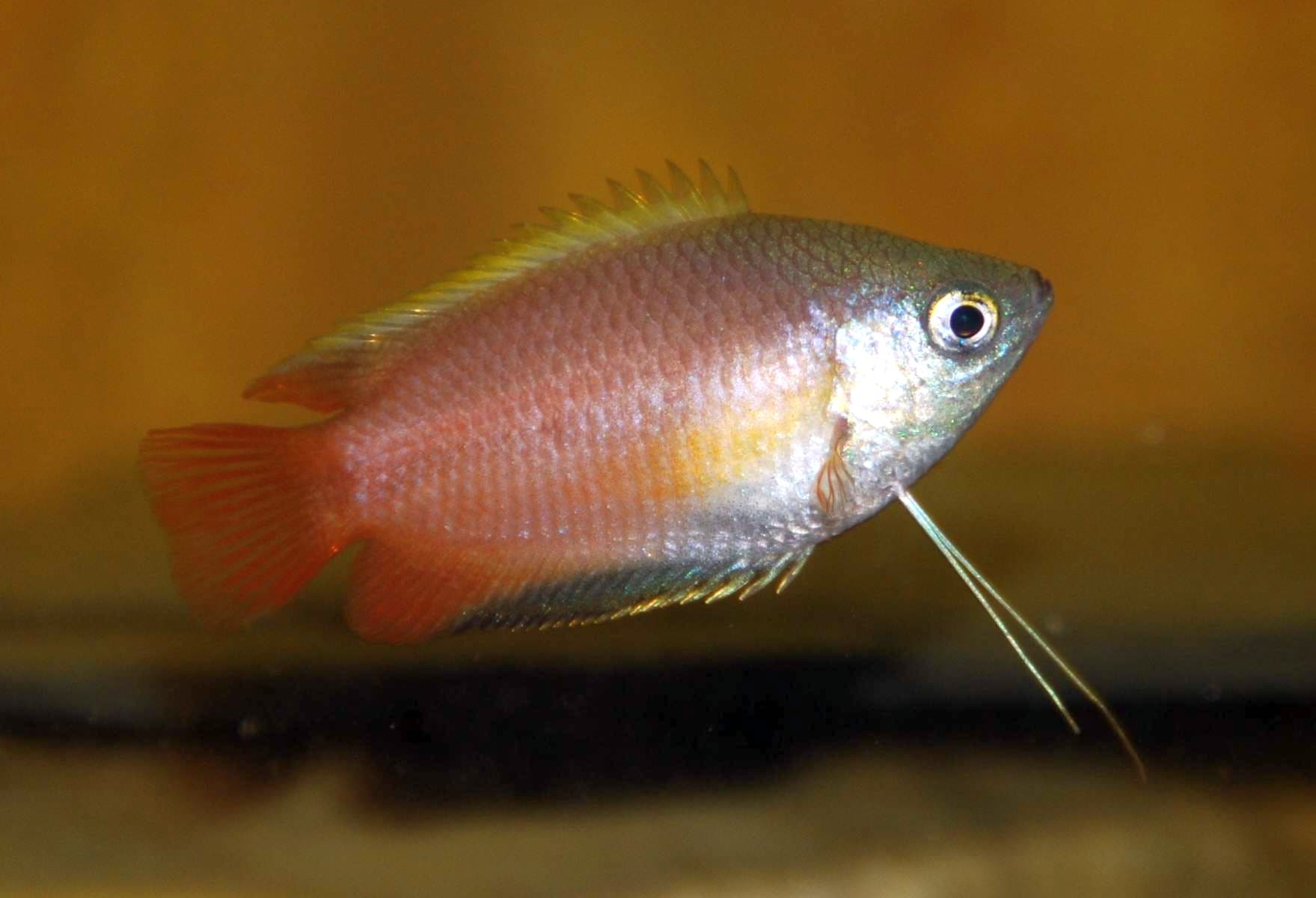
Freshwater · Beginner
Trichogaster chuna
Honey gouramis (Trichogaster chuna) are small, peaceful labyrinth fish for a planted 10-gallon solo or a 20-gallon pair or community. They are not dwarf gouramis. Shops often mislabel orange dwarfs as honey.
Min. tank: 10 gal
Care notes →