Easy to walk past in the store
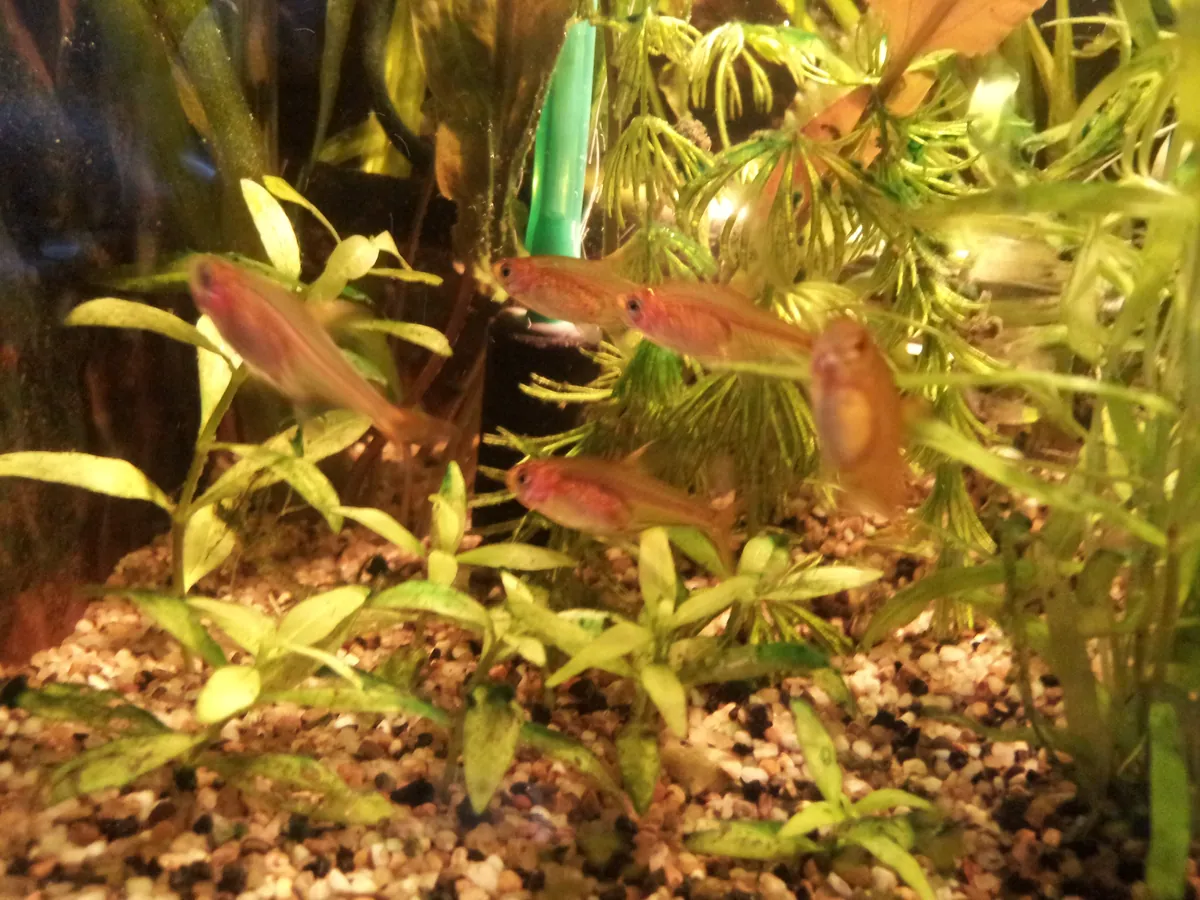
In a bright, bare shop tank, glowlights look like see-through minnows with a faint pink line. I have watched people walk right past them on the way to the neons. Put the same fish over dark sand under a few floating plants and that line turns into a glowing orange filament.
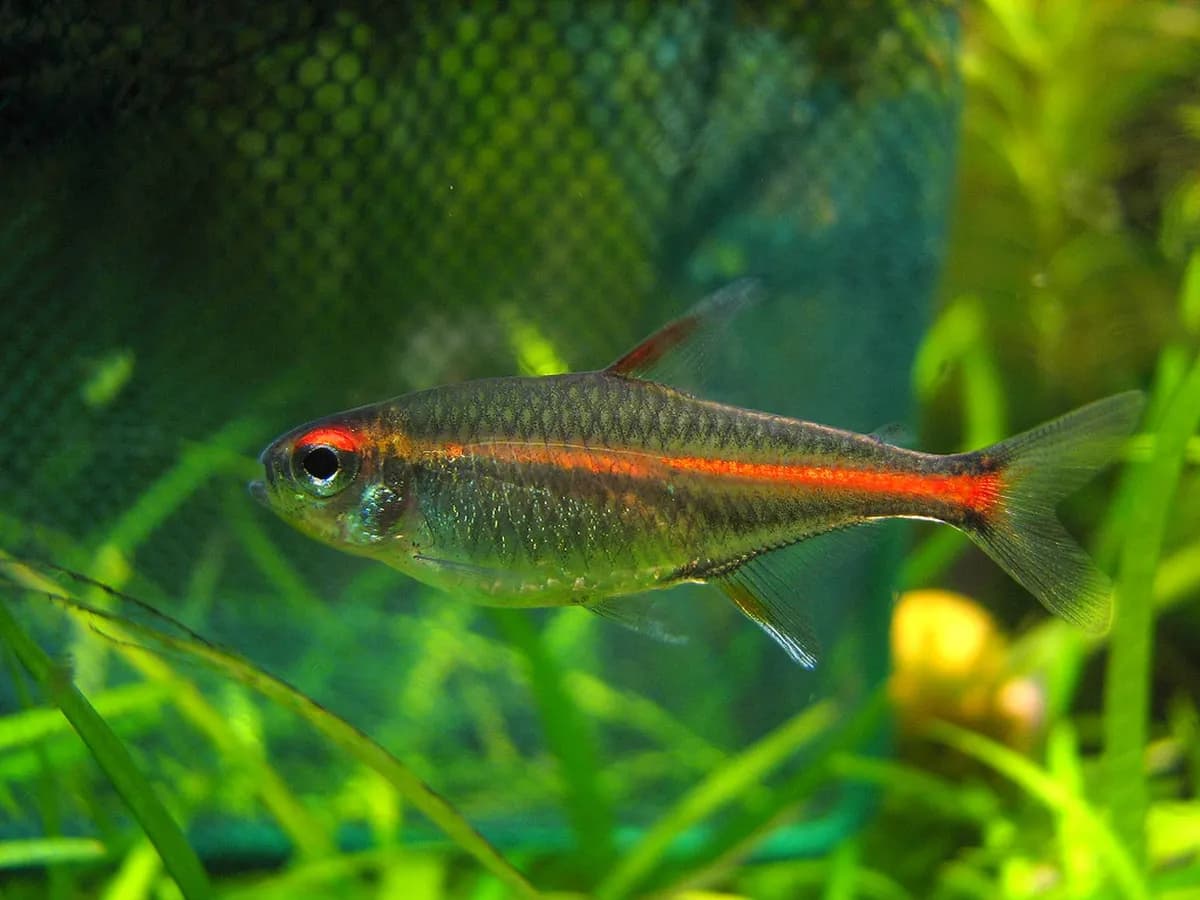
Hemigrammus erythrozonus comes from the Essequibo River basin in Guyana, but the fish you buy were bred on farms. Adults reach about 1.5 inches and can live around five years. The body is clear to silvery. An orange-red stripe runs from the snout, through the eye, to the base of the tail, and the top of the eye is red as well. The front of the dorsal fin is red, and the dorsal, anal, and pelvic fins have small white tips. Females are rounder through the belly.
Two other fish share the name. The glowlight rasbora (Trigonostigma hengeli) has a dark wedge on its side under the orange line, like a small harlequin. An ember tetra is orange all over and smaller. If the fish in the bag has a clear body with one bright line, it is a glowlight tetra.
Tank size, water, and setup
Six glowlights fit a cycled 15-gallon. Eight to ten in a 20-gallon is where they start to swim as a school, and a 20 long gives them more front-to-back room than a 20 high. A 10-gallon is too small for a proper group. Wait until the cycle is done before you buy, because a young tank is hard on any tetra. How to cycle a fish tank walks through it.
Keep the heater around 76 to 78°F. They take 74 to 82°F, pH 6.0 to 7.5, and soft to moderately hard water, so most tap water works as long as it stays steady from week to week. That makes them easier to keep healthy than neon tetras in hard tap water. You don't need to chase low pH.
Light and decor matter more for this fish than water chemistry. Use dark sand or gravel, add floating plants or tall stems along the back, and pick a modest light. Moderate flow from a sponge filter or a turned-down hang-on-back is plenty. A lid is worth having, since a startled tetra can clear the rim.
Food, tank mates, and getting them home
Their mouths are small. Micro pellets or crushed flake make a good daily food, and frozen baby brine or daphnia a few times a week fills them out. Feed a little at a time so food doesn't sink into the gravel and rot. The feeding guide explains the two-minute rule.
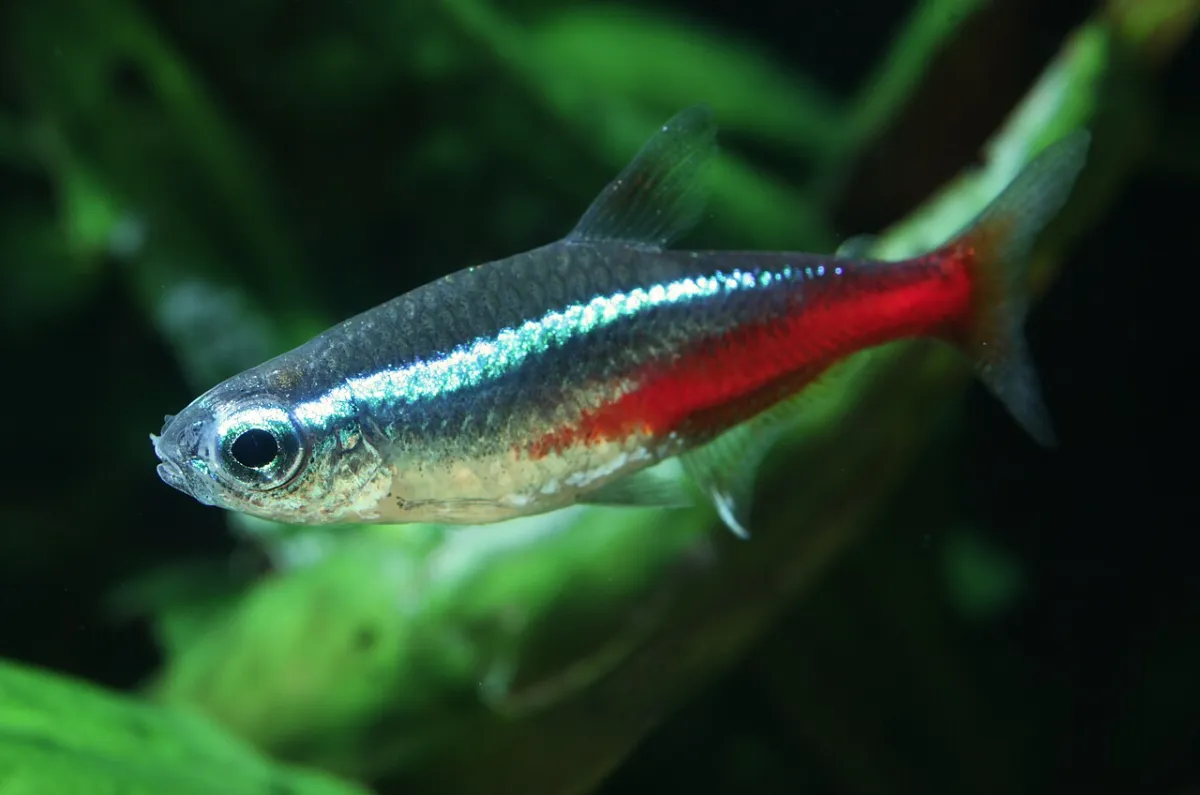
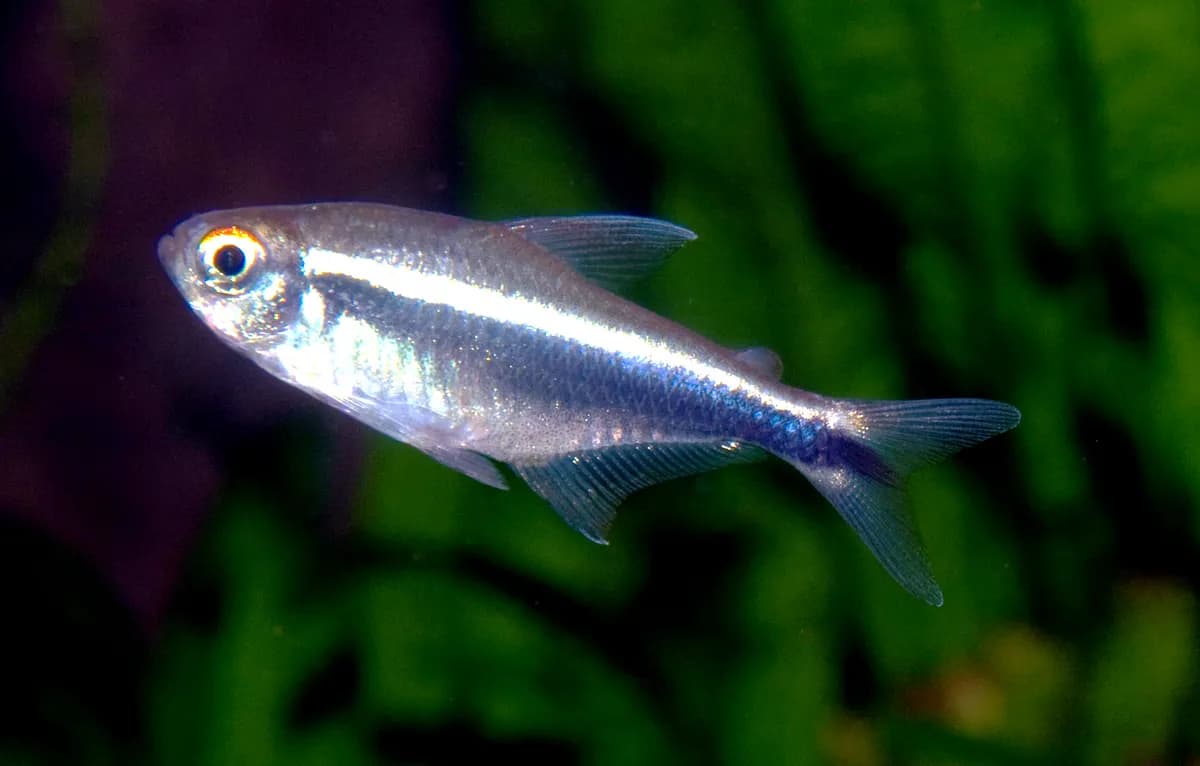
Pick tank mates that are calm and small. Harlequin rasboras, ember tetras, pygmy or peppered cories, otocinclus, and adult shrimp all mix well. A honey gourami makes a good centerpiece in a 20, and a pearl gourami works in a 29. Glowlights can share a tank with neon or black neon tetras if each species has its own group of six or more. Eight glowlights, a honey gourami, and six pygmy cories in a planted 20 sits comfortably inside the stocking calculator's waste budget.
Glowlights often look washed out in the shop and for their first week at home, so wait a week or two before you judge the color. Float the bag to match temperature and net them in. See how to acclimate new fish. If you run a quarantine tank, use it. Neon tetra disease can hit glowlights too, and there is no dependable cure.