Nerite snails sold in shops are a trade mix of Neritina, Clithon, and Vittina. Zebra, olive, horn, and tiger are shell patterns with the same care. Beginner livestock if the water is hard enough. Adults reach about 0.75–1 inch. Plan one snail per 5–10 gallons, starting at 5 gallons. They graze algae and biofilm, lay eggs that do not hatch in freshwater, and need a lid.
Peaceful algae grazers. One snail per about 5–10 gallons. They ignore fish and shrimp. Escape artists need a tight lid. Copper meds kill them.
Diet
Algae and biofilm first. In a spotless tank they starve unless you add a sinking veg wafer or blanched zucchini on a schedule. They are hired algae help, not a water-change replacement.
Temperature
72–78 °F
pH
7–8.5
Hardness / salinity
GH roughly 6+ (°dGH) with calcium available. Soft, acidic water pits shells. Add cuttlebone or crushed coral if tap is soft. Stable hardness beats chasing a perfect pH number.
Trade mix, same care
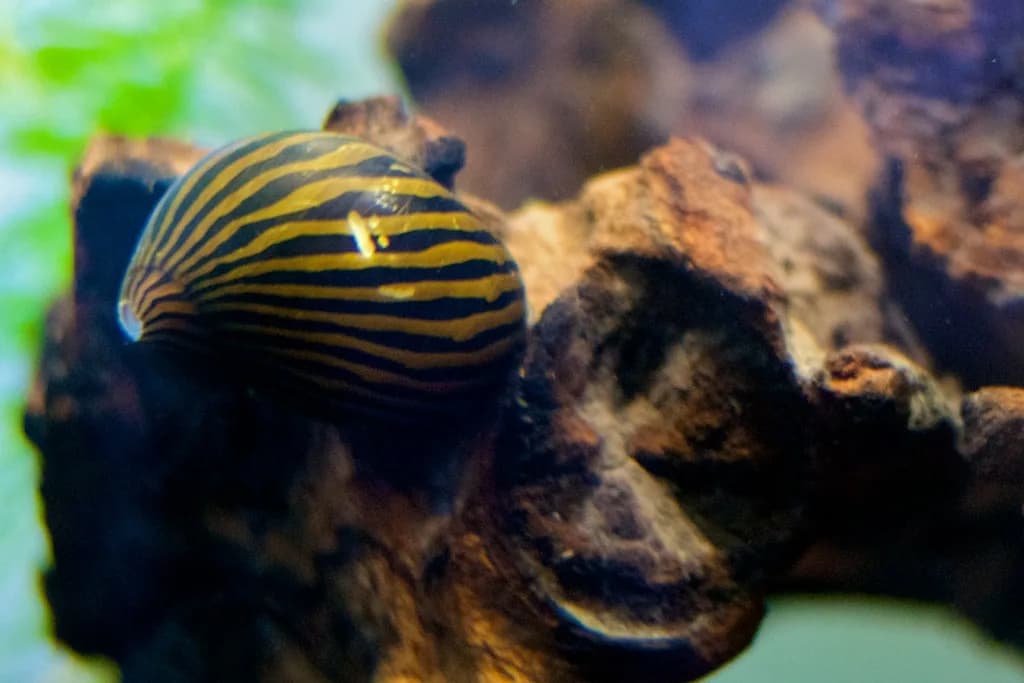
Shops label zebra, olive, horn, and tiger nerites as if they were different species. Most of those names are shell patterns across Neritina, Clithon, and Vittina. The photo on this page is a zebra nerite, often sold as Neritina natalensis. Treat the care notes as one trade group, not a species catalog.
Adults stay small, about 0.75 to 1 inch. Five gallons is the floor for one snail. Stock roughly one snail per 5–10 gallons so each has enough algae film. A crew of three in a 20-gallon planted tank does more useful glass work than one lonely snail in a nano that you wipe clean every day.
Hard water and calcium for the shell
Nerites do best around 72–78°F, so set the heater in that range. Keep pH roughly 7.0–8.5 and GH around 6 or higher. Soft, acidic water eats the shell over weeks. White pitting and a thin leading edge are early signs. If your tap is soft or you run RO, remineralize and keep a calcium source in the tank.
A piece of cuttlebone or a bag of crushed coral in the filter raises hardness slowly and gives snails something to rasp. Test GH and KH with a test kit so you know whether tap water already covers them. Finish the cycle before you buy. Ammonia spikes kill invertebrates as fast as they kill fish.
Algae diet, lids, and copper
Soft green film and biofilm are the staple. A brand-new kit with crystal-clear glass has almost nothing for them. Leave some film on the glass and wood. When the glass goes clean, break off a sinking veg wafer or offer blanched zucchini, then pull leftovers after a few hours. They are not a reason to skip vacuuming and weekly water changes.
Nerites climb. A snug lid or glass canopy keeps them in the tank overnight. Copper meds, some plant fertilizers, and old copper plumbing kill them. Read labels and keep copper chemistry out of this tank. Pair them with cherry shrimp, Amanos, or otos if you want more grazing without stacking three of the same animal.
Tank mates
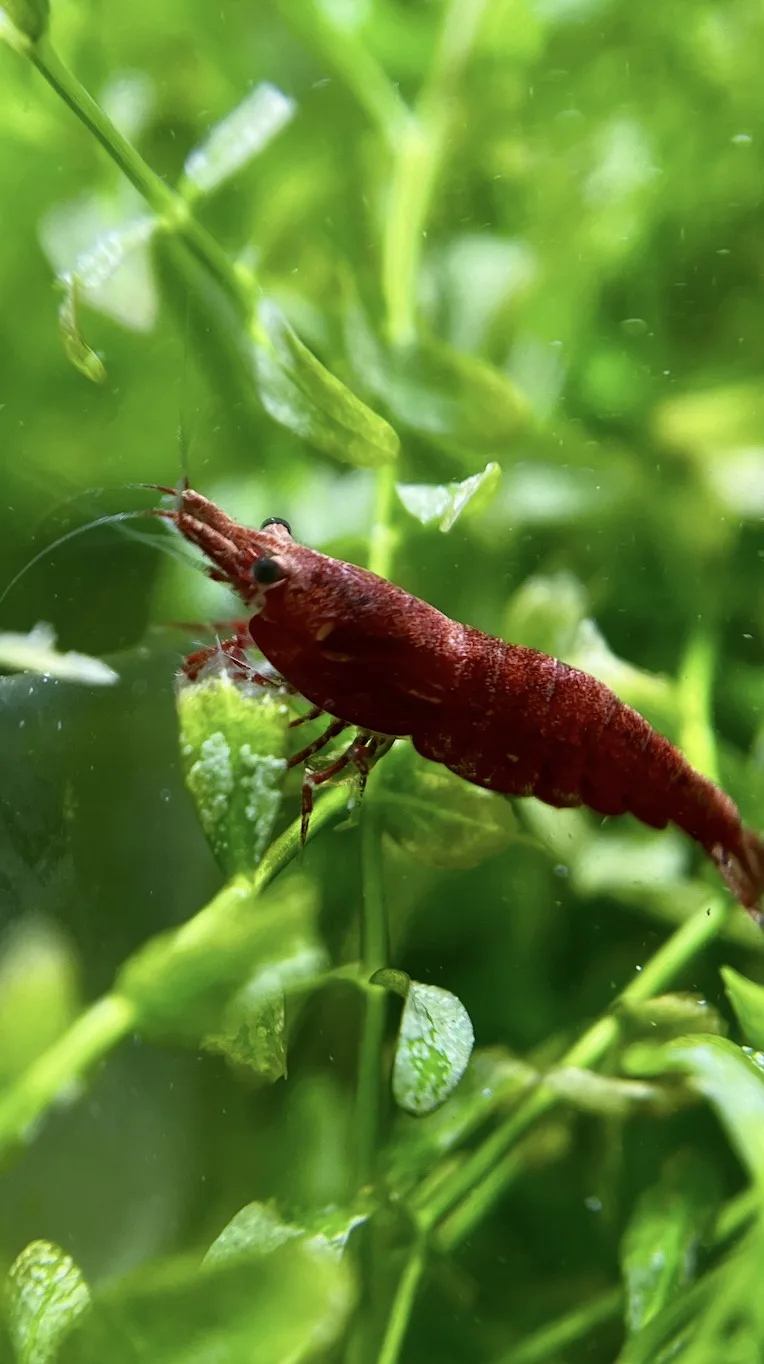
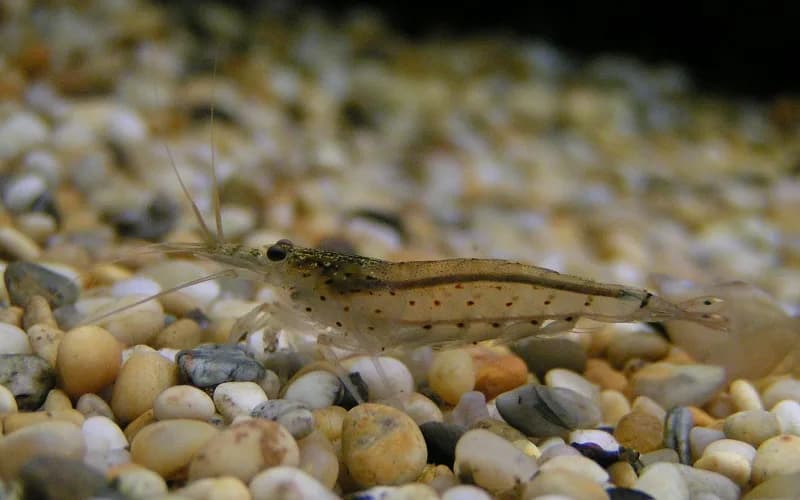
Cherry shrimp and Amano shrimp in a copper-free planted tank
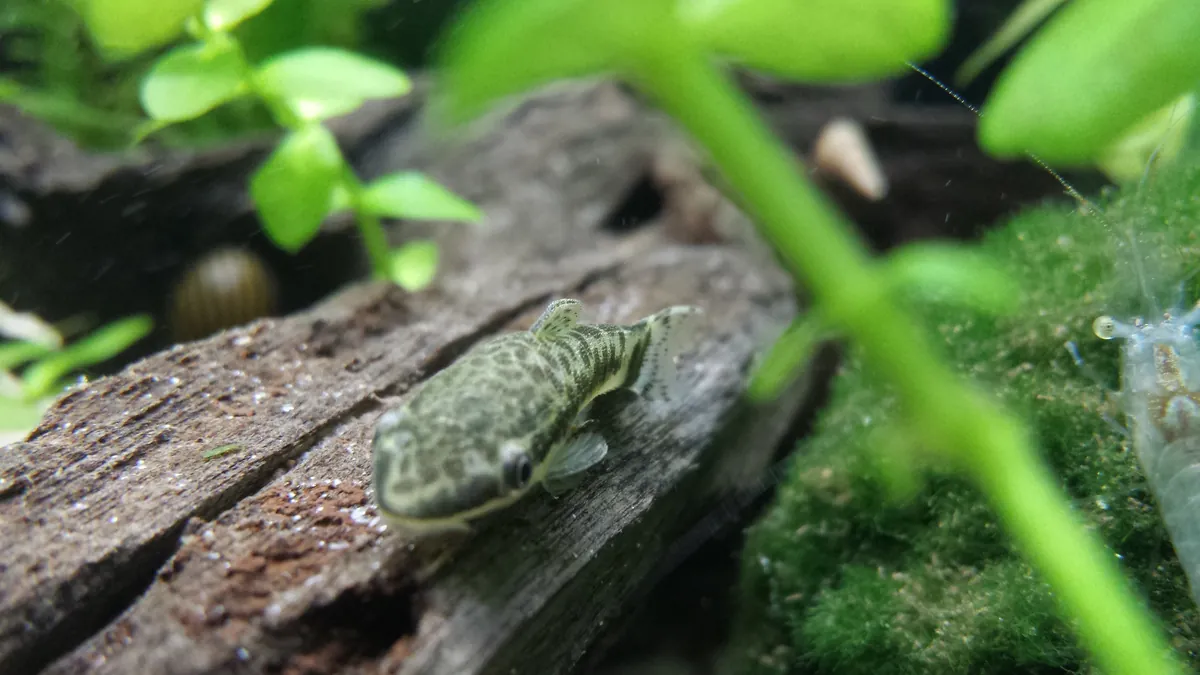
Otocinclus sharing soft algae without crowding the same glass
Small community tetras and rasboras
Skip copper meds, and skip fish that crush snails for snacks
Gear for this fish
A few listings we would open for this species. Skip anything you already own that still works.
Tetra PlecoWafers, 3.03 oz
Sinking veg wafers fill the gap when the glass is clean. Break off a small piece a few times a week and pull what is left after a few hours.
Blanched zucchini still belongs in the rotation. Skip dumping a whole wafer into a lightly stocked 5-gallon. Uneaten food fouls the tank faster than it feeds snails.
Calcium for shell growth in soft tap water. Boil a piece so it sinks, or tuck it in the filter for grazing.
Two pieces last a long time in a small tank. Skip this if your GH already sits above about 6 and shells look solid. Pair with the GH/KH kit so you are not guessing.
Shells need minerals. This liquid kit measures general and carbonate hardness so you know whether tap water supports nerites or needs help.
Freshwater ranges on the card matter most here. If you already own an in-date GH/KH kit, you do not need another. Pair with the freshwater master kit for ammonia and nitrite.
Will nerite snail eggs hatch in my freshwater tank?+
No. Females lay hard white sesame-seed dots on glass, wood, and equipment. Those eggs do not hatch in freshwater. The larvae need brackish water most home tanks never provide. Scrape eggs off if you dislike the look. They do not turn into a snail plague.
What size tank do nerite snails need?+
Five gallons for one snail. Plan about one snail per 5–10 gallons so each has enough algae. Smaller bowls are harder to keep hard enough for healthy shells.
Why is my nerite snail's shell pitting?+
Soft or acidic water dissolves calcium from the shell. Raise GH with remineralizer or crushed coral, keep pH out of the acidic range, and add cuttlebone. Old damage does not grow back, but new growth can look healthier.
Do nerite snails clean the tank so I can skip water changes?+
No. They graze algae and biofilm and still produce waste. Test, vacuum, and change water like any other stocked aquarium. Feed wafers when the glass is clean so they do not starve.
Next step
Planning a tank for these?
Plan on 5 gallons or more. Put your actual tank size into the stocking calculator and it shows what else can live alongside them.
Cherry shrimp (Neocaridina davidi) are beginner invertebrates if the tank is cycled and copper-free. A starter colony of 10+ needs about 5 gallons; 10 gallons is easier. They need minerals for molting, not a second fish-page clone.
Amano shrimp (Caridina multidentata) are beginner invertebrates in a cycled, copper-free tank. Plan a crew of 3–6 in a 20-gallon planted setup. Adults reach about 1.5–2 inches. Feed biofilm plus wafers. Do not expect a freshwater breeding colony.
Otocinclus (Otocinclus spp., often O. vittatus in the trade mix) stay about 1.5–2 inches. A school of 6+ belongs in a 20-gallon that has been running months with algae and biofilm, not a new 10-gallon sucker hire.