Dots, feelers, and an orange throat
My first pearl gourami spent his first week behind the heater. By the end of the month he parked at the front glass and begged every time someone walked past. Most pearls follow that pattern. They hide at first and then turn into one of the calmest big fish you can put in a community tank.
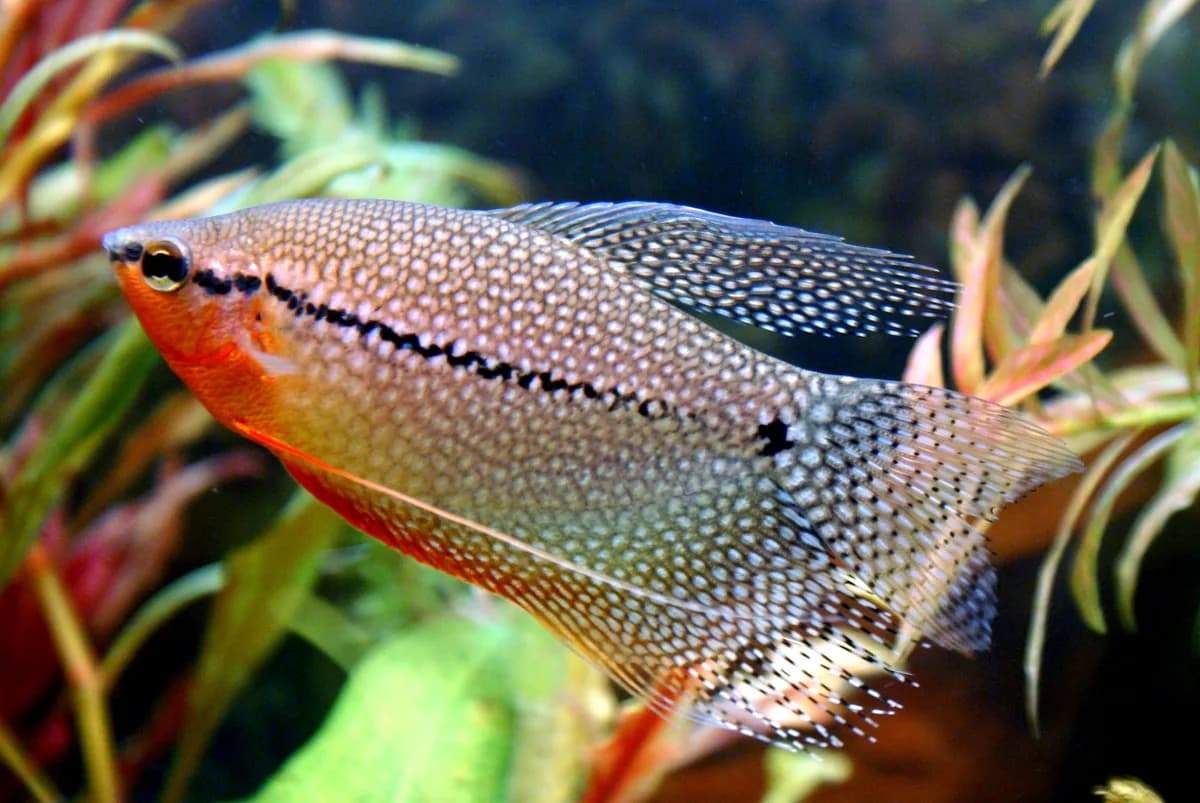
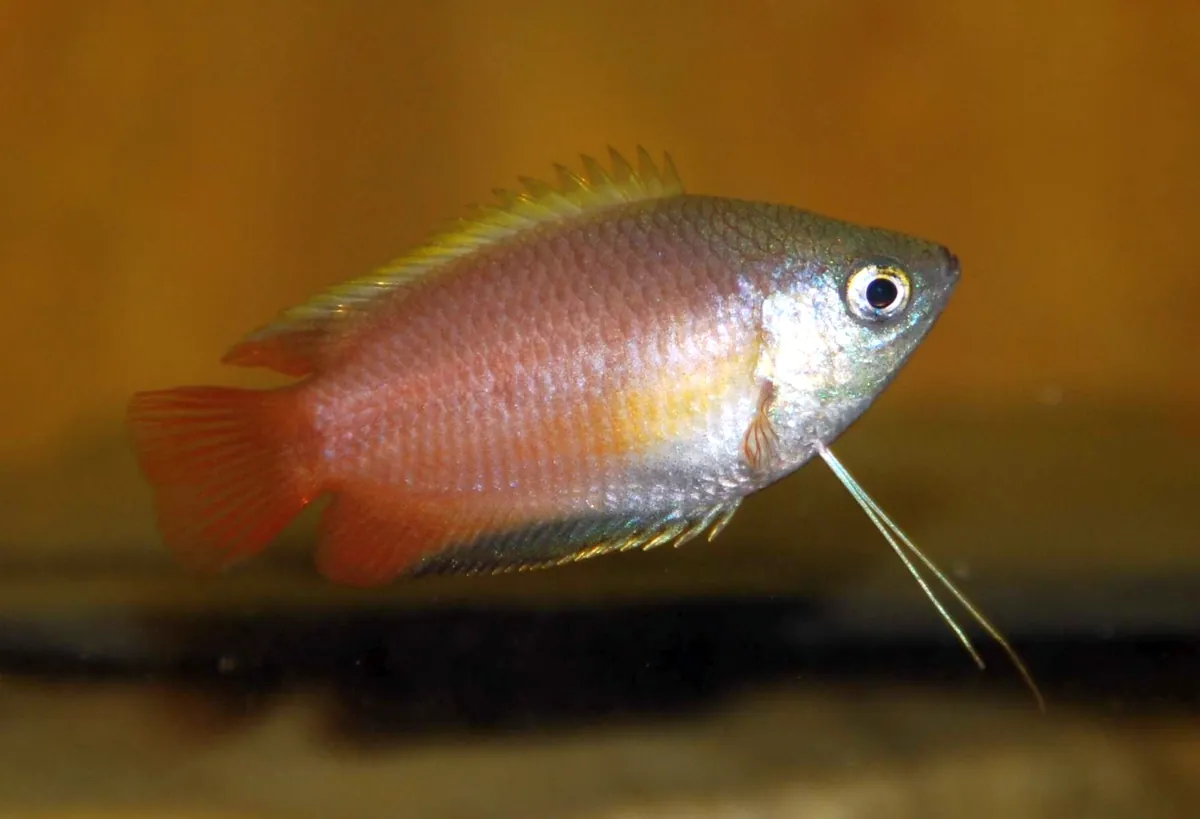
Older books call it Trichogaster leerii. Trichopodus leerii comes from lowland swamps and slow, plant-choked water in Thailand, Malaysia, Sumatra, and Borneo. Shop fish are farm-raised. Adults reach 4 to 5 inches. Pale pearly spots cover a brown-silver body, and a dark line runs from the snout toward the tail. The long threads under the belly are modified pelvic fins. They use them to touch and taste, so a pearl poking a leaf or a tank mate is only checking it out.
Adults are easy to sex. A male has a longer, pointed dorsal fin, a fringed anal fin, and a throat and chest that turn orange to red, brightest when he is ready to spawn. Females stay silver underneath and have a short, rounded dorsal.
A 20 long for one, a 29 for company
One pearl gourami fits a cycled 20-gallon long. Length matters more than height for a fish this size, so skip the 20 high. In a 20 long you can add a bottom group such as eight pygmy cories, but leave the midwater mostly to the gourami. Finish the cycle before it goes in.
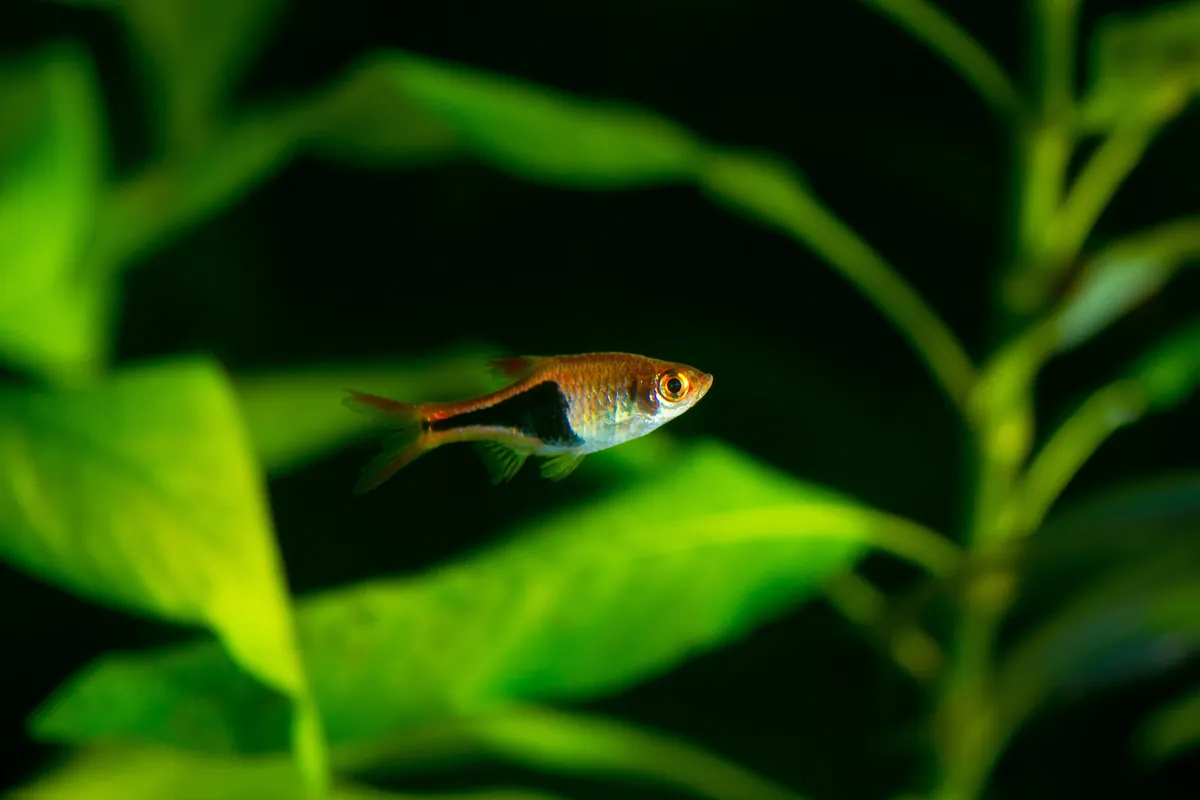
A 29-gallon takes a male and female pair, or one pearl with a school. One pearl with 8 to 10 harlequin rasboras and six peppered cories fits a 29 by the calculator's waste math. A trio of one male and two females wants a 40 breeder or more. Two males in anything smaller usually means one fish chasing the other into a corner. Run your own mix through the stocking calculator or add the fish to My tank before you buy.
Warm air, a close lid, and slow water
Pearls are labyrinth fish. They gulp air at the surface as well as breathing through their gills, so they need open water at the top and warm air above it. Keep a lid on with the water a little below the rim, so the air they breathe stays close to tank temperature. The lid also stops the occasional jump when a fish gets startled.
Set the heater around 78°F. They take 77 to 82°F and pH 6.0 to 7.5. A 100W heater covers a 20 long or a 29 in most rooms. Keep the flow gentle. A sponge filter works, or a hang-on-back turned down so the surface ripples without churning. Floating plants such as frogbit or salvinia give them cover, and a low-tech planted tank with stem plants is close to the water they come from. A male may build a bubble nest under the floaters. That is breeding behavior, not a sign of trouble.
Food, tank mates, and who to skip
Feed small pellets or crushed flake once or twice a day, and frozen bloodworms, brine shrimp, or daphnia a few times a week. Pearls eat slowly. In a tank with fast eaters the gourami can end up with the leftovers, so drop food in two spots if you see that. The feeding guide covers how much.
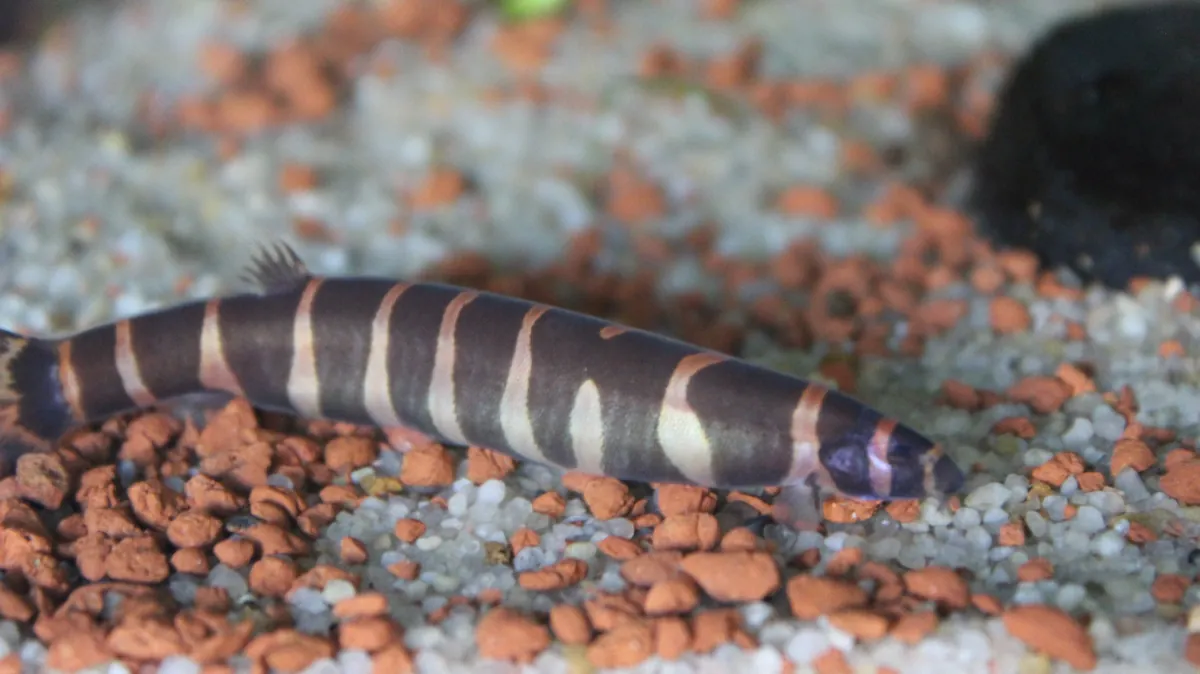
Good company is peaceful and leaves fins alone: harlequin rasboras, ember tetras, black neons, peppered or pygmy cories, kuhli loaches, otocinclus, and a single bristlenose in a 29. Skip bettas, tiger barbs, and anything else that picks at long fins, because the feelers get nipped first. Shrimp are a gamble. A 4-inch gourami eats baby shrimp and sometimes small adults.
If you are here after a dwarf gourami died, a pearl is the easier buy. Mass-farmed dwarf gouramis often carry dwarf gourami iridovirus, which has no cure, and pearls do not have that reputation. Quarantine new fish anyway, and buy from a tank where the fish are eating and the water is clear.