
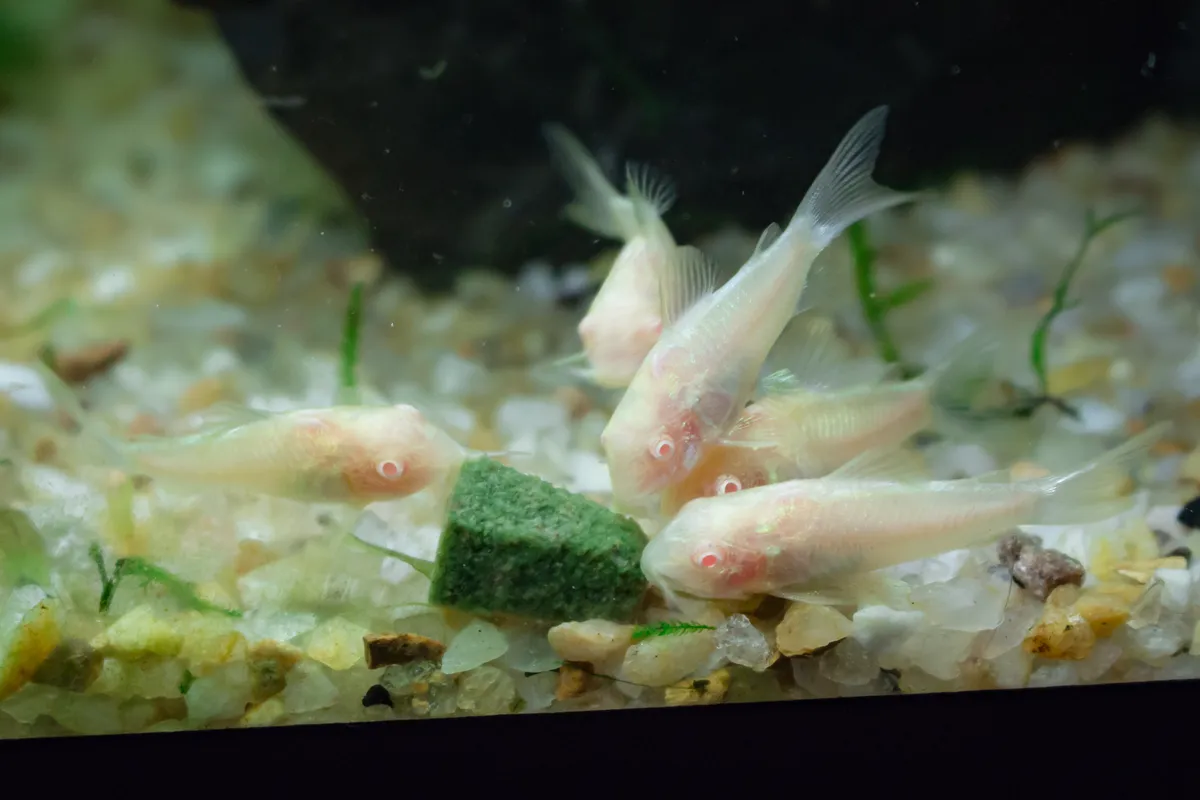
Photo: Gabriel Resende Veiga · CC BY-SA 4.0

Gear
Sinking wafers and pellets for bottom feeders
By Fishy Dave
Bristlenose plecos and otos want veg wafers and blanched zucchini. Corys and kuhli loaches need a protein wafer of their own, dropped after the midwater fish eat or after the lights go off. Start small, then cut back if crumbs are still on the sand later.
Nearly every cory, pleco, and loach page on this site tells you to make sure food reaches the bottom. Below is what to drop for each fish, how much, and when to take the leftovers back out.
My peppered corys know the click of the light timer better than they know me. A few seconds after the room goes dark, all six are lined up at the front glass, waiting for the wafers they think they are owed.
Leftover flake does not feed bottom fish. In a busy community tank the tetras and gouramis eat almost everything before it sinks, and the corys get crumbs. Bottom fish need their own food, sized for their mouths and dropped where they eat.
Starting amounts by fish
These are starting points for healthy adults in a cycled tank. Adjust them by what is left over. If crumbs are still on the sand two or three hours later, cut the amount. If the corys look thin through the belly and the food is gone in ten minutes, add a wafer.
| Fish | Main food | Starting amount | How often |
|---|---|---|---|
| Bristlenose pleco, adult | Veg wafer and blanched zucchini | 1 wafer or 1 zucchini slice | Wafer 3 or 4 nights a week, zucchini 1 or 2 nights |
| Otocinclus, group of 6 | Biofilm, then veg wafer or zucchini | Half a veg wafer for the group | Every other day once the glass runs clean |
| Peppered corys, group of 6 | Protein sinking wafer | 3 or 4 Hikari Sinking Wafers | Once a day, frozen bloodworms 2 or 3 times a week |
| Pygmy corys, group of 8 | Small sinking granules or crushed wafer | A small pinch they clear in about 5 minutes | Once or twice a day |
| Kuhli loaches, group of 6 | Protein sinking wafer or granules | 2 or 3 wafers after dark | Once a day |
| Cherry shrimp, 10-gallon colony | Biofilm, then veg wafer | About a quarter of a veg wafer | 2 or 3 times a week |
| Mystery or nerite snail | Algae and biofilm, then veg wafer | A small piece per snail | A few times a week when the glass is clean |
Feed the midwater fish first
In a community tank, feed the top of the tank first. Give the tetras or rasboras their flake or micro pellets, wait until they are busy, then drop the wafers at the front glass where you can see them land.
The other option is to wait until the lights go off. Bristlenose plecos and kuhli loaches do most of their eating after dark, and corys eat with less competition when the light is low. Drop food in the same spot each night.
If you keep more than six corys or a bristlenose, drop wafers in two places. A bristlenose will sit on a wafer and keep the corys off it.
A glass feeding dish on the sand helps in a shrimp tank or over gravel. Food stays in one spot, and the leftovers come out in one lift. Over coarse gravel, crumbs fall into the gaps and rot where the gravel vacuum misses them.
Plecos and otos eat vegetables
Bristlenose plecos and otocinclus live mostly on plant matter and biofilm. A veg wafer like Tetra PlecoWafers, made with zucchini and algae meal, fills the gap when the glass and wood run clean. An adult bristlenose gets one wafer three or four nights a week, with blanched zucchini on one or two of the other nights. Keep real driftwood in the tank for it to rasp as well.
To blanch zucchini, cut a slice about half an inch thick and drop it in boiling water for about a minute. Let it cool, then weigh it down with a stainless steel fork or a veggie clip. Pull what is left the next morning.
Otocinclus are slower and shyer. For a group of six, break a wafer in half and set it near where they graze. Check it two or three hours later. If it is still mostly whole, they are finding enough algae, and you can skip the next feeding.
Siamese algae eaters take flakes in midwater, but adults still want a veg wafer two or three nights a week. One or two wafers cover a group of three. Drop them at the opposite end from the cory wafers so both groups get some.
Corys and kuhlis need protein
Corys are omnivores that dig through sand for worms, insect larvae, and tiny crustaceans. They pick up dropped flake, but that is a snack, and they do not clean the tank. Feed them a protein sinking wafer. Hikari Sinking Wafers are about 7 mm across, small enough for a few corys to share one. Six peppered corys start at three or four wafers once a day. Hikari's label says to feed what they finish in 20 minutes.
Swap the wafers for frozen bloodworms two or three times a week. Thaw a cube in a cup of tank water and pour it near the front glass. Half a cube is plenty for six corys.
Kuhli loaches eat the same foods after dark. Drop two or three wafers for a group of six once the room lights are off, or use a pinch of sinking granules. Remove what is left after about 20 minutes, the same as for corys.
Algae wafers alone do not feed corys or kuhlis. They will eat them, but they need the protein.
Pygmy corys, shrimp, and snails
A 7 mm wafer is too big for a one-inch pygmy cory. Crush a wafer between two spoons, or use a small sinking granule. Fluval Bug Bites Bottom Feeder granules are 1.4 to 2 mm and sink fast, so most of them get past the midwater fish. Drop a small pinch near where the group rests and look again after five minutes. If granules are still on the sand, use fewer next time.
Cherry shrimp and snails graze biofilm most of the day. Add a piece of veg wafer two or three times a week, about a quarter of a wafer for a 10-gallon colony. Shrimp swarm it within minutes. Take out what is left after two or three hours.
A mystery snail can finish a quarter wafer by itself. A hungry one starts eating soft plants, so feed it on a schedule even in a planted tank.
Taking out the leftovers
An uneaten wafer goes soft, then grows a white fuzz within a day or two, and the rotting food adds ammonia. A turkey baster lifts crumbs off sand without stirring it up. On gravel, get them during the weekly vacuum.
If you keep finding leftovers, cut the amount before you change anything else. Cloudy water, a film on the sand, and nitrate that climbs faster than usual between water changes are the usual signs of overfeeding. The feeding guide covers the rest of the tank.
For a weekend away, a drum automatic feeder can drop sinking granules on a timer. Most drum feeders handle flake and granules, not whole wafers. Healthy adult bottom fish in a planted tank with some biofilm also go two or three days without food.
What we would buy
Most tanks need two of these. One is a veg wafer for the plecos, otos, shrimp, and snails. The other is a protein food for corys or loaches. We may earn a commission if you buy. See the affiliate disclosure.
Tetra PlecoWafers, 3.03 oz
A veg wafer made with zucchini and algae meal. It holds together for a few hours, so a slow bristlenose or a group of otos can finish it before it falls apart.
Give one wafer to an adult bristlenose a few nights a week. Break wafers into halves or quarters for otos, shrimp, and snails. One tub lasts a single pleco for months.
See this listingHikari Sinking Wafers, 1.76 oz
Small protein wafers, about 7 mm across, made for corys and loaches. They soften without crumbling, so several corys can work on one wafer at the same time.
Start with three or four wafers for six corys, once a day, and remove what is left after 20 minutes. Swap in frozen bloodworms two or three times a week. These are not a full diet for a bristlenose, which needs the veg wafer.
See this listingFluval Bug Bites Bottom Feeder granules, 1.6 oz
Sinking granules 1.4 to 2 mm across, with black soldier fly larvae as the first ingredient. They are small enough for pygmy corys and shrimp, and they sink fast enough to get past the tetras.
Fluval's label says to feed what the fish eat in two minutes, two or three times a day. Bottom fish eat slower than that, so give a small pinch once or twice a day and check after five minutes. Granules work in a drum feeder better than wafers do.
See this listing
Frequently asked questions
Do corydoras eat algae wafers?+
They will, but algae wafers are mostly plant matter and corys need more protein than that. Use a protein sinking wafer such as Hikari Sinking Wafers as the staple, with frozen bloodworms two or three times a week. An algae wafer now and then is fine as an extra.
How many wafers should I feed a bristlenose pleco?+
One veg wafer for an adult, three or four nights a week, and blanched zucchini on one or two of the other nights. A young bristlenose under 2 inches gets half a wafer. Check the spot two or three hours later and take out what is left.
How long can a wafer stay in the tank?+
A few hours. Hikari says to remove what corys leave after 20 minutes, and Tetra says to feed only what your fish eat within a few hours. A zucchini slice for a pleco can stay overnight. Anything older than that goes soft, grows a white fuzz, and adds to the ammonia.
Can bottom feeders find food in the dark?+
Yes. Corys and loaches find food with their barbels and by smell, not by sight. Drop the food in the same spot each night and they learn where to look.
Is the copper in fish food a problem for shrimp?+
No. Many fish foods, Bug Bites included, list copper sulfate as a trace mineral, and shrimp need a little copper for their blood. The copper that kills shrimp comes from medications and old copper pipes. A small amount of normal fish food is fine.