
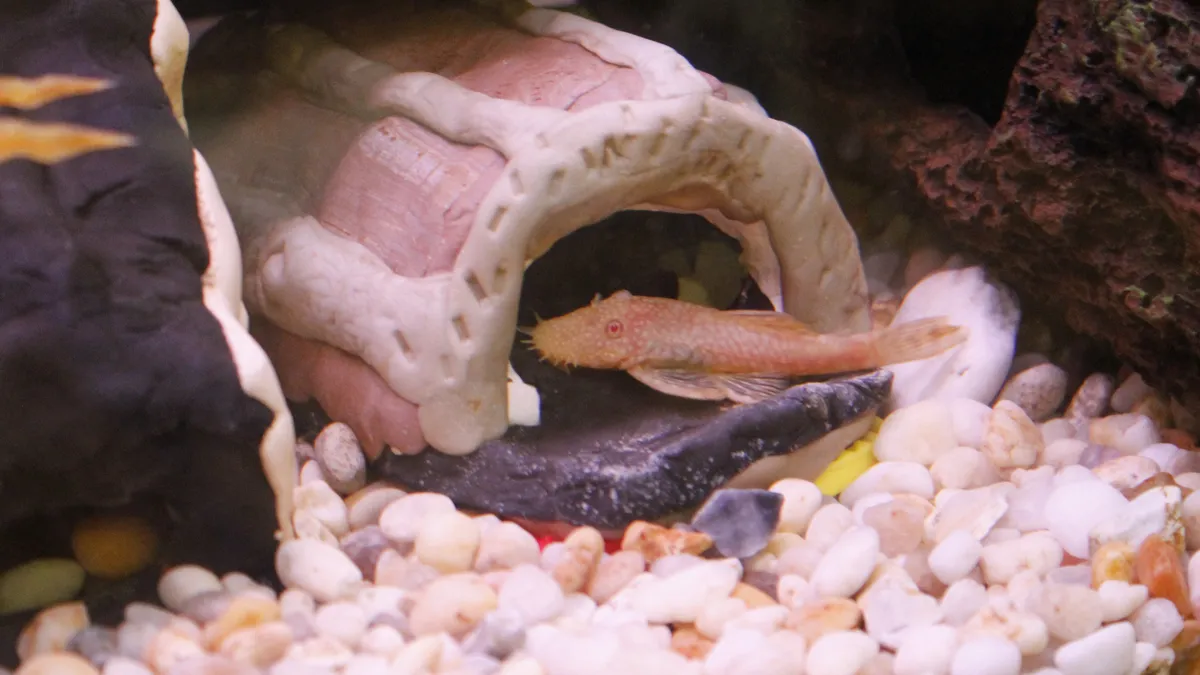
Photo: Anthony Corda · CC BY-SA 3.0

Gear
Aquarium driftwood and caves for a freshwater tank
By Fishy Dave
Malaysian wood and mopani sink after a soak. Spider wood floats for a week or two. Boil small pieces, soak big ones, and expect tea-colored water for a while. A bristlenose cave wants an opening about 1.5 to 2 inches across.
Wood and caves are where bottom fish spend most of the day. A bristlenose pleco without wood or a cave sits on the glass looking unemployed. A kuhli loach without cover just disappears and you wonder if it died.
The first spider wood I ever bought floated for nine days. I weighed it down with a coffee mug, and the fish liked the mug better. The steps below are how to skip the mug stage.
Malaysian, mopani, or spider wood
Malaysian driftwood is dense and dark brown. It usually sinks after a soak or a boil, and it leaches a lot of tannin for the first month. It is the common choice for bristlenose tanks.
Mopani is two-tone, tan and dark brown, and very hard. Most pieces sink right away. It can stain the water for months, and plecos rasp it less than softer wood.
Spider wood is light, branching root wood. It floats until it waterlogs, which can take a week or two, and it grows the most white fuzz at first. It is the easiest wood to tie moss and anubias onto. Shrimp keepers also like cholla, the hollow skeleton of a cactus, because it grows biofilm fast and softens over a few months.
For size, one main piece about 12 to 16 inches long is plenty for a 20 long. A 29 can take two pieces or one bigger branch. Leave open floor in front so cories can dig and food lands where you can see it.
How to prep driftwood
Scrub the piece under plain water with a stiff brush. Use no soap and no bleach. Knock off loose bark and anything soft.
If it fits in a stock pot, boil it for 1 to 2 hours. Boiling pushes air out of the grain so it sinks sooner, kills whatever came in on it, and pulls out the first round of tannin. Let it cool in the water.
If it is too big to boil, soak it in a clean tub or bucket for one to two weeks. Change the water every few days. Pouring a kettle of boiling water over it a few times speeds things up.
If it still floats, tie it to a flat piece of slate with cotton thread or fishing line, or screw it to the slate with a stainless steel screw from underneath. You can also wedge it under a rock. Sand alone will not hold a buoyant piece. It pops up overnight and takes your plants with it.
Tannins, pH, and the white fuzz
Tannins turn the water the color of weak tea. They do not hurt fish, and many soft-water fish, like cardinal tetras, color up better in tinted water.
Tannins can also lower pH, but only when there is little KH to buffer it. In soft water a big piece of wood can drop pH a few tenths over the first weeks. In hard tap water with a KH around 8 or higher you mostly get the color. The GH, KH, and pH guide explains how to read your own tap.
If you want clear water, change water as usual and run a bag of activated carbon in the filter for a couple of weeks. The filter media page covers where carbon goes. The color fades as the wood ages either way.
In the first one to three weeks, new wood often grows a white or gray slime. It is fungus and bacteria feeding on sugars left in the wood. Otos, nerite snails, Amano shrimp, and bristlenose plecos eat it. Siphon off what you can reach and it fades once the wood is used up.
Caves and how big to make them
Size a cave to the fish that will use it. A male bristlenose picks a cave just big enough for his body so he can block the doorway while he guards eggs. A big, roomy cave usually sits empty.
Give each male bristlenose his own cave and add one spare. Put them at opposite ends, or behind wood, so two males are not staring at each other's doorway. Face the opening away from the front glass. Fish use a dark cave more than a bright one.
Kuhli loaches use any gap they can squeeze into, so wood with tight spaces underneath works as well as a tube. Cherry shrimp do not need a cave. They hide in moss, cholla, and leaf litter after a molt.
Clay and ceramic caves, unglazed terracotta pots, slate stacks, and coconut shells all work. Boil a coconut shell and scrape out the fibers first. Skip painted resin caves if the paint is chipping.
| Fish | Opening | Notes |
|---|---|---|
| Bristlenose pleco | 1.5 to 2 inches across, 5 to 6 inches deep | Closed at the back. One per male plus a spare. |
| Kuhli loach | About 1/2 to 1 inch | Gaps under wood or stone work. A group shares them. |
| Apistogramma, female | About 1 inch | Small enough that the larger male cannot follow her in. |
| Cherry or Amano shrimp | No cave needed | Moss, cholla, and leaf litter for hiding after a molt. |
| Firefish goby, saltwater | A rock gap a bit wider than the fish | Built from rock, not wood. |
Rocks and the vinegar test
Before a rock goes in, scrub it and test it. Put the rock on a plate and drip plain white vinegar on a clean, dry spot. If it fizzes or bubbles in the first minute, the rock contains carbonate and will raise GH, KH, and pH over time. Scrape a fresh spot and test again if the surface is dirty.
Limestone, marble, Texas holey rock, seiryu stone, and anything made of shell or coral fizz. That is fine, even helpful, in a tank of mollies, platies, or snails that want hard water. It is the wrong rock for chili rasboras or cardinals you are keeping soft.
Slate, granite, quartz, lava rock, and dragon stone usually pass. A rock that does not fizz is still not automatically safe. Skip rocks with metal flecks, rust streaks, paint, or sealer.
Stack rock caves on the bare glass before you add sand or gravel. Bristlenose plecos and loaches dig, and a stack built on top of the substrate can tip once they tunnel underneath. A dab of gel super glue or aquarium-safe silicone holds a stack together. Let silicone cure for a full day before the tank fills.
Saltwater tanks
Most saltwater keepers leave wood out because it stains the water and adds organics as it breaks down. Caves in a marine tank come from rock. A firefish goby needs a gap or overhang in the rockwork it can dart into, and a tight lid, because a startled firefish goes either into the rock or over the rim. The saltwater setup guide covers dry rock and live rock.
What we would buy
Most tanks need one good piece of wood and, if you keep bristlenose plecos, one cave per male. Rocks you can often find or reuse. We may earn a commission if you buy. See the affiliate disclosure.
Canton Aquatics Malaysian Driftwood
Dense, dark wood that sinks after a soak and stays put. It is the usual pick for a bristlenose tank because they rasp it and graze the film that grows on it. It also gives anubias and java fern something to sit on.
Expect a lot of tannin for the first month. Boil or soak it first. Size it to the floor so open sand stays in front. A 20 long wants a piece about 12 to 16 inches long.
See this listingSpider wood, medium branch
Light, twisty root wood with thin branches that look good in a planted 10 or 20. Moss ties onto it easily, and shrimp and otos pick at the biofilm on every twig.
It floats until it waterlogs, often a week or two. Soak it, or tie it to a flat stone until it sinks. It grows more white fuzz than Malaysian wood in the first weeks and breaks down faster.
See this listingCeramic pleco breeding cave
A clay tube closed at one end, sized for a male bristlenose. It gives each male a spot to claim, and it is where he will guard eggs if you have a female.
Look for an opening about 1.5 to 2 inches wide and 5 to 6 inches long. Bigger caves sit empty. Rinse it in plain water and lay it on the glass or the substrate with the opening facing away from the front glass.
See this listing
Frequently asked questions
How long should I soak driftwood before it goes in the tank?+
Boil a piece that fits in a stock pot for 1 to 2 hours, then let it cool in clean water. Soak a bigger piece in a tub for one to two weeks and change the water every few days. It is ready when it sinks on its own and the soak water comes out pale tea instead of dark coffee. Spider wood can take the full two weeks.
Will driftwood lower my pH?+
A little, and only if your KH is low. In soft water a big piece of Malaysian wood or mopani can drop pH a few tenths over the first weeks. In hard tap water with a KH around 8 or higher you will see the brown tint and very little pH change. Test KH before you worry about it.
Is the white fuzz on new driftwood dangerous?+
No. New wood often grows a white or gray slimy coat in the first one to three weeks. It is fungus and bacteria eating sugars left in the wood. Bristlenose plecos, otos, nerite snails, and Amano shrimp eat it. Siphon off what you can see and it stops coming back once the wood is used up.
What size cave does a bristlenose pleco need?+
An opening about 1.5 to 2 inches across and 5 to 6 inches deep, closed at the back. The male wants a cave that fits him snugly so he can block the doorway with his body while he guards eggs. Put in one cave per male plus a spare.
Can I use rocks or wood from outside?+
Rocks, often yes, after a scrub and a vinegar test. Wood is riskier. A dead, dry hardwood branch with the bark off can work, but skip pine, cedar, soft or rotten wood, painted or treated lumber, and anything from a ditch that drains a road or a farm field. Store wood costs more and you know what it is.