
Photo: Haplochromis · Public domain

Gear
Automatic fish feeder for weekends and short trips
By Fishy Dave
A battery drum feeder drops a set portion while you are gone. Programmable units suit a week away. Simpler timers cover a weekend. Skip them for fry, picky eaters, and long trips with no backup plan.
An automatic feeder is for the days you cannot stand over the tank with a pinch of food. The good ones drop a set dry portion on a timer. The bad ones jam, dump three days of flake at once, or dissolve a plaster block that fouls the water while you are gone.
I learned that the hard way on a four-day trip. The dissolving block I trusted turned a clear 20 gallon into pea soup. The fish were fine. The water was not. A drum feeder with a tested portion would have left the water clear.
What a feeder can and cannot do
A feeder replaces the hand that drops food. It does not replace water changes, filter checks, or noticing a sick fish. Use it for weekends, work travel, and short vacations on a stable community tank. Pair it with the how much to feed habits you already trust, especially the two-minute rule.
It will not save fry that need many tiny feeds you can watch, and it will not thaw frozen food or catch a heater failure. For anything past about a week, a person who can look at the tank beats a larger hopper.
Battery drum feeders vs dissolving blocks
Most hobby feeders are a battery drum with a timer and a portion slider. You load dry food, set one or two drops a day, and mount the unit over a hole in the lid or on a rim clamp. Batteries keep running if the power blinks. That is the design to buy for a real trip.
Dissolving vacation blocks are the other aisle. They sit in the water and leach food for days. Fish often ignore half of it, and the rest becomes ammonia and cloud. Our feeding guide already pushes a short fast over a block for a few days away. Keep a block as a last resort only.
Portion control and a dry hopper
Overfeeding is the usual failure mode. Set the slider small, run a full day at home, and watch whether food hits the sand after two minutes. One or two feeds a day covers most community tanks. Adults do not need eight snacks while you are out of town.
Keep the food dry. Humidity cakes flake into a brick that jams the drum, then frees a clump later. Pellets and small granules travel better than flake for trips longer than a weekend. Fill the hopper most of the way so less moist air sits inside, and leave a clear path from the spout into the water so food does not pile on the lid.
When to skip the feeder
Skip it for fry and for fish that only take frozen or live food. Skip it if the tank is already fighting cloudy water or a fresh cycle. Skip a long trip with no human check-in, even with a full hopper.
Before you leave, do a normal water change, confirm the heater and filter are running, load fresh batteries, and run one manual dump so you see food hit the water. The picks below are a programmable Eheim for longer schedules, a simpler Fish Mate for weekends, and a dissolving block only if you have no other option. We may earn a commission if you buy. See the affiliate disclosure.
What we would buy
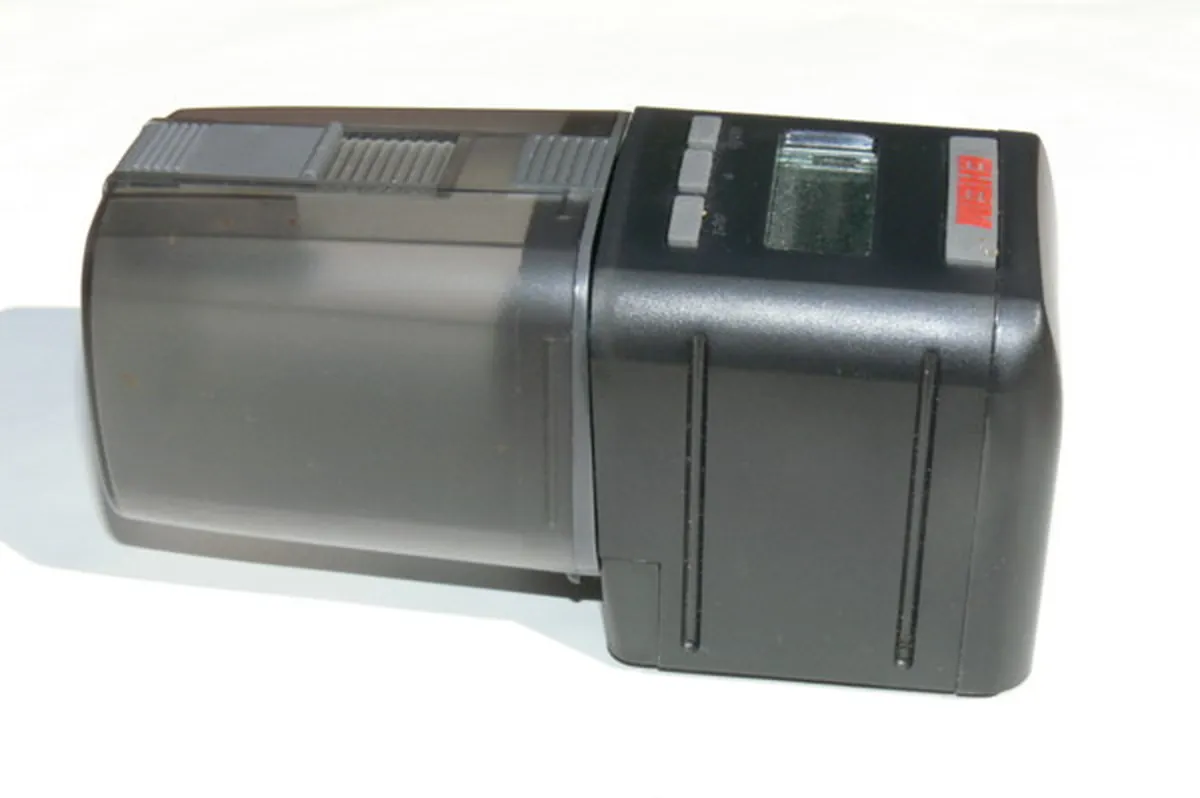
Eheim Everyday Fish Feeder
A battery drum feeder with an LCD schedule, adjustable portion slider, and up to eight feeds a day. The drum stops upright so leftover food does not sit open to splash. A solid pick when you want one unit for both work weeks and a week away.
Runs on AA batteries. Test the schedule for a full day before you leave. Flake can clump in humid rooms, so load pellets or granules for longer trips. Needs a lid cutout or rim clamp with a clear drop path into the water.
See this listingFish Mate F14 Aquarium Fish Feeder
A simpler battery feeder with up to 14 timed portions and one to four meals a day. Enough for a weekend or a short work trip on a community tank that already eats once or twice daily.
Runs on one AA battery, not included. Load pellets or granules for trips longer than a weekend so humidity does not cake the chambers. If you need an LCD schedule with more than four feeds a day, step up to the Eheim instead.
See this listingDissolving vacation feeder block
The cheap weekend option people grab at the big-box store. It sits in the tank and dissolves on its own. Useful only as a last resort when you have no drum feeder and no fish-sitter for two or three days.
These blocks keep releasing food whether the fish are hungry or not, and they often cloud the water. Prefer a water change, a light meal the day before, and a short fast for healthy adults. If you buy one anyway, pick the smallest block for your gallon range and remove any leftover when you get home.
See this listing
Frequently asked questions
Do healthy adult fish need a feeder for a weekend?+
Often no. Healthy adult community fish handle a two or three day fast after a normal water change and a light meal the day before you leave. Use a feeder when you will be gone longer, when you keep goldfish or other fish that do poorly on long fasts, or when you simply want a small daily portion while you are at work.
Battery feeder or plug-in?+
Battery units keep working through a power cut, which matters more than the wall plug for a short trip. Most hobby feeders run on AA cells for weeks. Plug-in models are fine if the tank already has a reliable outlet, but a dead outlet mid-vacation means zero food. Check batteries before you leave, and put fresh ones in for any trip over a few days.
What food works in an automatic feeder?+
Dry flakes, small pellets, and granules that stay free-flowing. Humidity is the enemy. Clumped flake jams the drum and then dumps a clump later. Prefer pellets or granules for trips longer than a weekend, keep the hopper nearly full so less moist air sits in the empty space, and run a test day at home so you see what actually lands in the water.
When should I not use an automatic feeder?+
Skip it for fry and very young fish that need many tiny feeds you can watch. Skip it for picky fish that only take frozen or live food. Skip dissolving vacation blocks as your only plan on a planted or lightly filtered tank, because they keep leaching food and often cloud the water. For trips longer than about a week, arrange a person who knows the two-minute rule, or combine a tested feeder with a check-in.
How do I set the portion?+
Fill the drum, set one small drop, and watch a normal feeding at home for two minutes. Adjust the slider until the fish clear the food without leftovers on the sand. Program one or two feeds a day for most community tanks. More feeds rarely help adults and raise the chance of leftover ammonia while you are away.