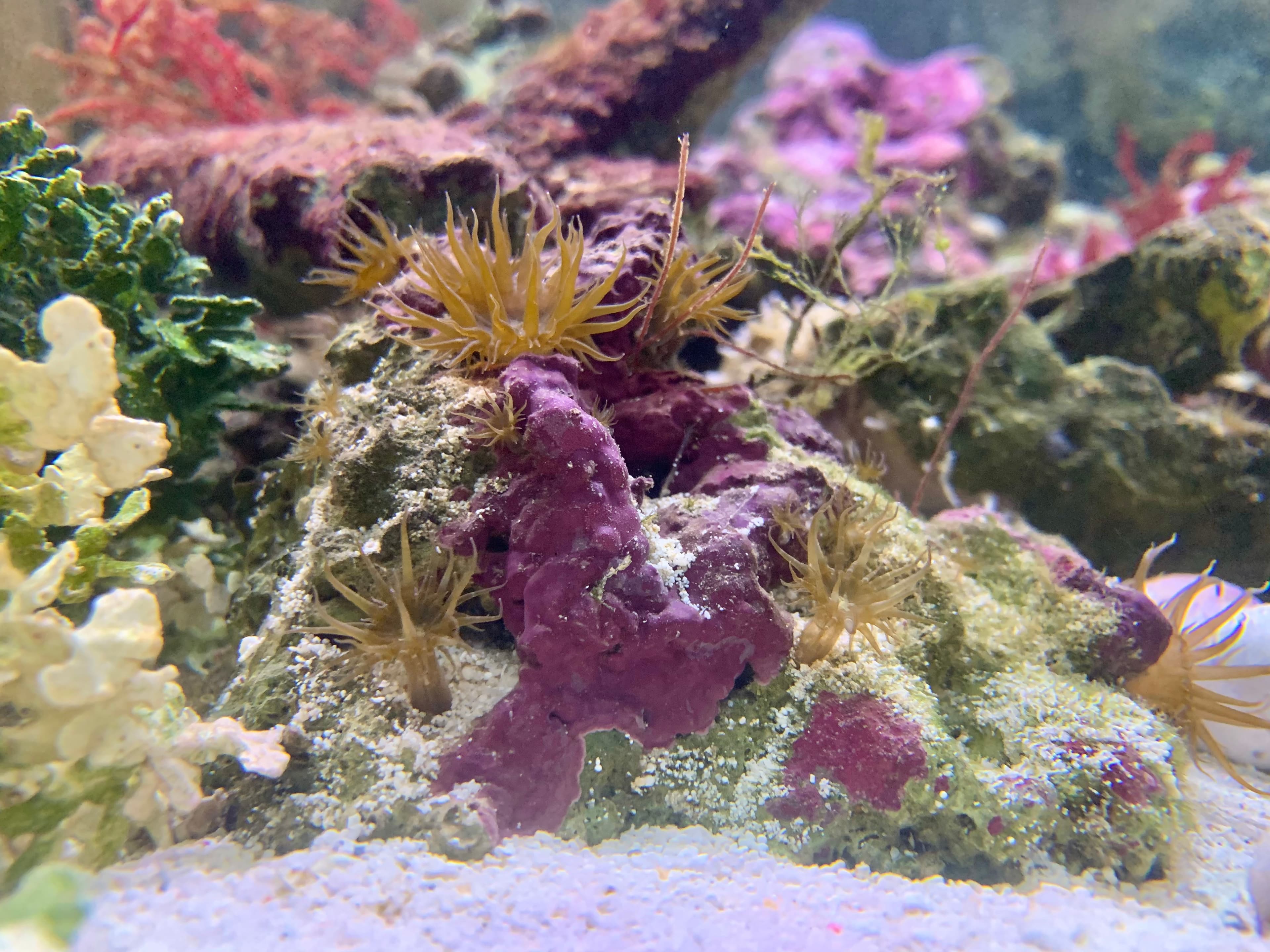
Photo: Coughdrop12 · CC BY-SA 4.0

setup · saltwater
Beginner saltwater aquarium setup
A 20–30 gallon FOWLR tank is an honest floor for a clownfish pair. Same nitrogen cycle as freshwater, plus mixed salt, stable salinity, cured rock, and no livestock until the tank is ready.
Published 2026-09-12
FOWLR first, not a 10-gallon reef kit
A beginner saltwater aquarium is still a box of water that must cycle. The difference from freshwater is mixed salt, a stable specific gravity, and usually cured live rock (or dry rock that you seed and wait on) as the biological filter. Fish-only with live rock, FOWLR, is the honest first lane.
A 20–30 gallon tank is a workable floor for a pair of ocellaris clownfish. Add a firefish goby only if the lid is tight; they jump. A yellow tang is not a beginner tank. That fish wants about 125 gallons with length to swim and rock to graze. Read the yellow tang page before the pet-store impulse wins.
Same nitrogen cycle, plus salt and salinity
Ammonia still becomes nitrite, then nitrate. Beneficial bacteria still live on surfaces. How to cycle a fish tank applies here: fishless if you can wait, liquid tests until ammonia and nitrite read zero and nitrate shows up, then add livestock slowly.
The extras are mixing marine salt to a target of about 1.023–1.026 specific gravity (roughly 32–35 ppt) for a FOWLR clown or firefish tank, and checking that number with a refractometer (or a careful hydrometer) every time you mix. Patience is not optional. Adding clownfish on fill day is still the fastest way to kill a first marine tank.
Day-one equipment that actually matters
Heater into the mid-70s °F with a thermometer you trust. A filter or hang-on-back / canister rated for the tank's bioload. Live rock carries a lot of the biology, but flow and mechanical polish still help. A refractometer with automatic temperature compensation. A bag of marine salt mix. A liquid saltwater nitrogen test kit. Cured rock, or dry rock you are willing to season before fish. A tight lid if anything in the stocking plan jumps.
Do not buy coral, a reef PAR light, or a skimmer package as the reason the tank will work. A skimmer becomes useful as volume and waste grow; it is not the secret behind a stable 20-gallon clown pair. No livestock until the cycle is done.
Mix salt offline, stock slowly
Mix saltwater in a clean bucket with dechlorinated or RO water, heat it, aerate it, and measure salinity before it goes in the display. Never pour dry salt onto fish. When evaporation drops the water line, top off with freshwater, not saltwater, otherwise salinity creeps up.
After the cycle, start with the hardy captive-bred fish you actually planned for. Quarantine when you can. Leave the yellow tang, the anemone, and the coral shopping list for a later, larger, mature system. The aquarium refractometer notes cover calibration and why an uncalibrated meter lies just as loudly as a bubbly hydrometer.
Day-one gear for a FOWLR start
A few listings we would open for this job. Skip anything you already own that still works.
Dual-scale salinity refractometer with ATC
Saltwater needs a salinity number freshwater kits will not give you. An ATC refractometer with dual ppt and specific-gravity scales is the instrument most FOWLR keepers actually use once they leave the swing-arm hydrometer behind.
Calibrate with the manufacturer's solution (often 35 ppt fluid), not a hopeful drop of RO. Full buying notes live on the aquarium refractometer page. Skip a second meter if you already own a calibrated one.
See this listingInstant Ocean Sea Salt, 50 gallons
Mix marine salt in a clean bucket to your target salinity before it touches the display. Instant Ocean is the standard fish-only mix; you do not need reef-enriched crystals for a clown pair on live rock.
Never dump dry salt on livestock. Match temperature and salinity before water changes. Seal the bag so it does not clump. Skip Reef Crystals unless you are deliberately chasing coral numbers.
See this listingAPI Saltwater Master Test Kit
Ammonia, nitrite, nitrate, and high-range pH still decide whether the cycle is real. Liquid reagents beat strips when the answer matters.
Saltwater kit, not the freshwater master kit. Check bottle dates. You still need a separate salinity tool. Skip a duplicate if your saltwater bottles are in date.
See this listing
Frequently asked questions
What size tank for a first saltwater setup?+
A 20–30 gallon FOWLR tank is a workable floor for a clownfish pair. Firefish also fit that footprint if the lid is tight. Yellow tangs are not beginner nano fish. Plan on about 125 gallons.
Do I need a protein skimmer on day one?+
Useful as tanks and bioload grow. It is not why a well-stocked 20-gallon clown tank succeeds. Cycle, salinity, and cured rock matter first.
Can I start a nano reef in a 10-gallon?+
Not as the default first build. Corals add lighting, flow, and chemistry you do not need for a FOWLR clown pair. Learn salt, salinity, and the nitrogen cycle in a fish-only rock tank first.
Is the saltwater cycle different from freshwater?+
Same bacteria, same ammonia → nitrite → nitrate path. You still wait for zero ammonia and nitrite with measurable nitrate before livestock. Mixing salt and holding salinity are the extra jobs.