
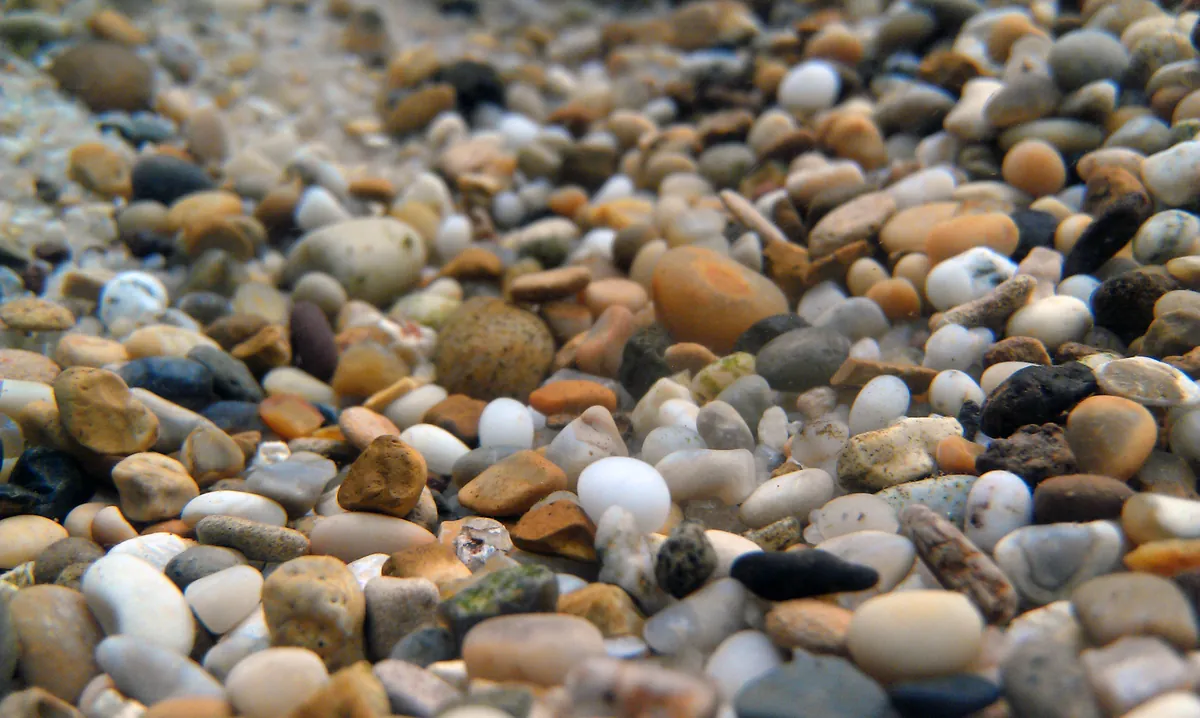
Photo: Green Yoshi · CC BY 3.0

setup · freshwater
Aquarium sand vs gravel
Gravel for easy siphoning and visible debris. Fine aquarium sand for cories, kuhlis, and other diggers. Either works for low-tech plants with root tabs. Skip play sand and blasting sand.
By Fishy Dave · Published 2026-09-18
Pick gravel when you want easy siphoning and waste you can see. Pick fine aquarium sand when you keep cories, kuhlis, or other diggers that sift the floor. Low-tech plants grow in either with root tabs. Skip play sand, blasting sand, and sharp hardware-store bags.
Is sand or gravel better for a freshwater aquarium?
There is no universal winner. Gravel wins on cleaning simplicity. Sand wins on soft barbels and digging fish. Midwater community fish (tetras, livebearers, rasboras) tolerate either. Diggers tip the scale toward sand. If you are still learning the siphon, start on gravel and swap later if you add a cory or kuhli group.
This page sits next to the beginner freshwater setup guide and the low-tech planted guide. Those pages get water moving and plants rooted. Here you decide what covers the glass before livestock goes in.
When gravel is the practical pick
Smooth aquarium gravel (roughly pea-sized or a little finer) lets debris sit in the gaps where you can see it. A standard gravel vacuum plunges in, waste lifts, gravel falls back. Root tabs stay put under crypts and Amazon swords. Most community tetras, livebearers, and rasboras do fine on it.
Rinse until the rinse water clears. Aim for about 1.5–2 inches so plants can anchor. Sharp, jagged decorative rock sold as gravel is a poor match for anything that rests on the bottom. Smooth natural tones beat neon dyed chips that flake or leach.
When sand is the kinder pick
Fine aquarium sand suits peppered cories, kuhli loaches, bristlenose diggers, and other fish that root for food. Soft grains do not shred barbels the way coarse, angular rock can. Keep depth modest, about 1–1.5 inches, so you can still clean it.
Cleaning technique changes. Hover the siphon just above the sand. Do not drive the tube in like you would in gravel. Stir packed corners during water changes so the bed does not cement into a slab. A narrow nano siphon helps in planted 10s and 20s.
Buy sand sold for aquariums, or rounded pool filter sand that hobbyists already trust. Skip play sand, masonry sand, and blasting sand. Those bags are for construction, not barbels.
Sand or gravel for planted tanks
A first low-tech planted tank does not need aqua soil. Inert gravel or fine sand plus root tabs under crypts and swords is enough. Gravel makes tabs easy to bury and lets you plunge a vac between stems. Sand looks cleaner under short plants, but you hover-clean and keep depth shallow.
Nutrient-rich planted aqua soil grows root feeders well and can leach ammonia in the first weeks. Test. Do water changes. Do not tear the tank down because a new soil bed bumped ammonia for a few days while you are watching it.
Bare-bottom tanks are tools for quarantine and hospital duty. They make waste obvious and meds easier to dose. They are not the default for a living-room community. If you want plants and diggers, put a real substrate under them.
Two 20-gallon setups that work
Community 20 on smooth gravel: a rinsed natural gravel bed about 1.5–2 inches deep, root tabs under a few crypts, midwater schoolers from the stocking guides, and a normal bulb-start gravel vac on water-change day. You see the mulm, you remove it, you move on.
Cory and kuhli 20 on fine sand: CaribSea-style moonlight or similar fine sand about 1–1.5 inches deep, soft edges on wood and rock, hover cleaning with a narrow tube, and a group of peppered cories or kuhlis that actually use the floor. Read the kuhli and peppered cory pages for group size before you buy the bag so the substrate matches the fish you already chose.
Substrate and a siphon that match the choice
A few listings we would open for this job. Skip anything you already own that still works.
CaribSea Moonlight Sand, 20 lb
Fine, smooth aquarium sand sized for cories, kuhlis, and other diggers. pH-neutral bag meant for tanks, not a hardware-store substitute.
Rinse until the water runs clearer before it goes in. A 20-gallon long usually wants most of a 20 lb bag for about 1–1.5 inches. Hover the siphon. Skip play sand, blasting sand, and sharp silica that cuts barbels.
See this listingCaribSea SuperNaturals Peace River, 20 lb
Smooth, natural-tone substrate that behaves like fine gravel for a community tank. Easy to plant into with root tabs, and debris stays where you can see it.
Rinse well. Aim for roughly 1.5–2 inches so crypts and swords can root. A standard gravel vac works here. Buy a second bag if you want deeper front-to-back depth on a 20 long.
See this listingFluval EasyVac Compact gravel cleaner, Mini
Narrow tube for sand and small planted tanks where a fat 10-inch vac empties the water too fast or sucks substrate by accident.
Hover just above sand so mulm lifts and grains fall back. Stir packed spots gently with a finger during water changes. On a coarse gravel community 20, the larger bulb siphon on the gravel-vacuum page is enough.
See this listing
Frequently asked questions
Is sand or gravel better for a freshwater aquarium?+
Neither wins for every tank. Gravel is easier to vacuum and shows waste clearly. Fine aquarium sand is better when you keep diggers like cories or kuhlis. Match the floor to the fish, then clean to match the substrate.
Is sand or gravel better for planted tanks?+
Both work in a low-tech planted tank with root tabs under crypts and swords. Gravel holds tabs and lets you plunge a vac. Fine sand works too if you keep depth modest and hover-clean. Nutrient aqua soil is optional, not required for a first planted setup.
Is sand or gravel better for beginners?+
Gravel is usually easier on day one. Waste sits where you can see it, and a normal gravel vac works without a special hover technique. Switch to sand when you add diggers that need soft substrate.
Can I use play sand or blasting sand?+
No. Play sand and blasting sand can be sharp, dusty, or the wrong grain. Use aquarium sand or pool filter sand sold as rounded and fish-safe. Rinse either option hard before it goes in.
Will sand compact and go anaerobic?+
Deep, untouched sand can. Keep it about 1–1.5 inches, hover-clean weekly, and stir dead spots with a finger or let cories and snails do some of the work. Do not bury a thick inert layer and ignore it for months.
Do I need aqua soil for plants?+
Not for a first low-tech tank. Inert gravel or sand plus root tabs under crypts works. Nutrient-rich aqua soil can leach ammonia early. Test, do water changes, and do not panic-cycle the whole tank over a short spike.