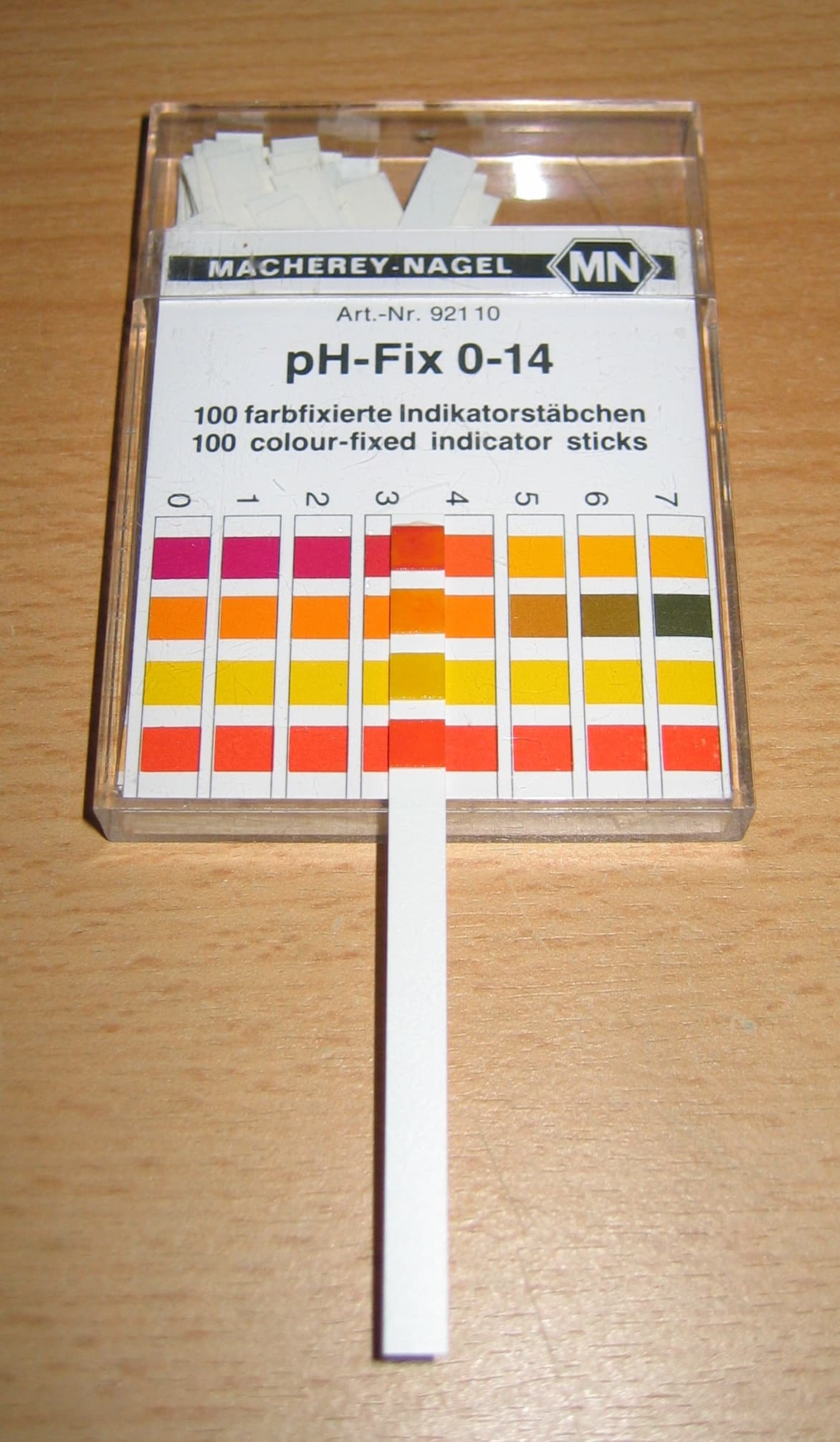
Photo: Michael Krahe · CC BY-SA 3.0

husbandry · freshwater
GH, KH, and pH in the aquarium
GH is calcium and magnesium. KH is the carbonate buffer that stops pH from crashing overnight. Match fish to your tap; do not acid-dose a molly tank toward Amazon numbers.
Published 2026-09-13
Three numbers, three jobs
GH is general hardness: mostly calcium and magnesium. Fish use those minerals for osmoregulation; shrimp and snails need them to molt and build shell. KH is carbonate hardness, the buffer. It resists acids so pH does not swing from dusk to dawn. pH is the acidity reading everyone argues about. In practice, KH is usually why pH moves.
A master kit gives you pH (and nitrogen). A separate GH/KH liquid kit gives you the hardness story. Strips are a rough glance; drops are what you trust when stocking decisions hang on the answer.
Match fish to your tap
Test the tap you will actually use, after the dechlorinator you already own. Hard municipal water (high GH and KH) suits livebearers (mollies, platies, swordtails) and many community mixes that tolerate alkaline water. Soft or RO-blended water suits cardinal tetras, many rasboras, and kuhli loaches. Cherry shrimp want usable GH for molts even when pH sits near neutral.
Do not acid-dose a molly tank toward Amazon blackwater numbers. Do not dump baking soda into a soft-water cardinal tank every night to hit a chart. Pick livestock that already matches the water, or plan a controlled remineralized RO mix before you buy the fish.
Two worked examples
Hard municipal tap: GH 12, KH 10, pH 7.8 out of the faucet. Stock mollies or platies, keep weekly water changes, and leave the pH bottles on the shelf. The high KH holds pH steady. Chasing 6.5 with acid in that water fights the buffer and usually loses overnight.
Soft well or RO-blend: GH 3, KH 2, pH 6.4. Cardinals, harlequins, and a kuhli group fit better than livebearers. Watch KH: wood and botanicals nudge pH down slowly and safely when some buffer remains. A bottle of pH Down in water this low in KH can crash the tank overnight. If you run straight RO, remineralize to a known GH (and add KH separately if needed) before livestock goes in.
What moves pH, and what not to do
Driftwood, leaves, and botanicals lower pH gradually when KH is modest. That is usually fine for soft-water fish. CO2 injection in planted tanks also pulls pH down while the gas is on, another reason to know KH, not only the pH chart at noon.
Skip panic chemistry. Do not bleach the tank to reset numbers. Do not stack pH Up and pH Down against each other. Measure GH and KH, name the tap you have, then either keep fish that fit or rebuild the water on purpose. For the nitrogen side of the same testing habit, see the aquarium water test kit notes and the cycling guide.
Gear for measuring hardness and pH
A few listings we would open for this job. Skip anything you already own that still works.
API GH & KH test kit
Liquid drops for general and carbonate hardness. This is the kit that tells you whether tap water is hard livebearer water or soft tetra water before you buy livestock.
Freshwater ranges on the card matter most here. Count drops to the color change. If you already own an in-date GH/KH kit, you do not need another.
See this listingAPI Freshwater Master Test Kit
Ammonia, nitrite, nitrate, and pH. Pair it with the GH/KH kit so you see nitrogen and the buffer side of the story, not pH alone.
Freshwater only. Skip strips as your only tool. If the bottles you already own are in date, you do not need another master kit.
See this listingSeachem Equilibrium, 300 g
For RO or very soft mineral-poor water that needs GH before shrimp molt or soft-water fish settle. Raises general hardness without a sodium-chloride dump.
Only if you are remineralizing RO/DI or known-soft water: measure first. This is not a KH buffer and not a reason to rebuild hard municipal tap. Skip it if your tap already has usable GH.
See this listing
Frequently asked questions
What is the difference between GH and KH?+
GH (general hardness) is mostly dissolved calcium and magnesium. KH (carbonate hardness) is the carbonate/bicarbonate buffer. GH supports osmoregulation and molts; KH resists pH swings.
Why does my pH keep crashing overnight?+
Usually low KH. With little buffer, acids from respiration, wood, and waste move pH fast. Test KH before you buy another bottle of pH Down.
Should I aim for pH 7.0 for every fish?+
No. Mollies and platies want harder, often alkaline water. Cardinals, many rasboras, and kuhli loaches prefer softer water. Match the fish to your tap instead of chasing a universal number.
Do I need RO water?+
Only if your tap is a poor match and you will remineralize to a known GH/KH. Straight RO with no minerals is a bad long-term home for fish and shrimp.