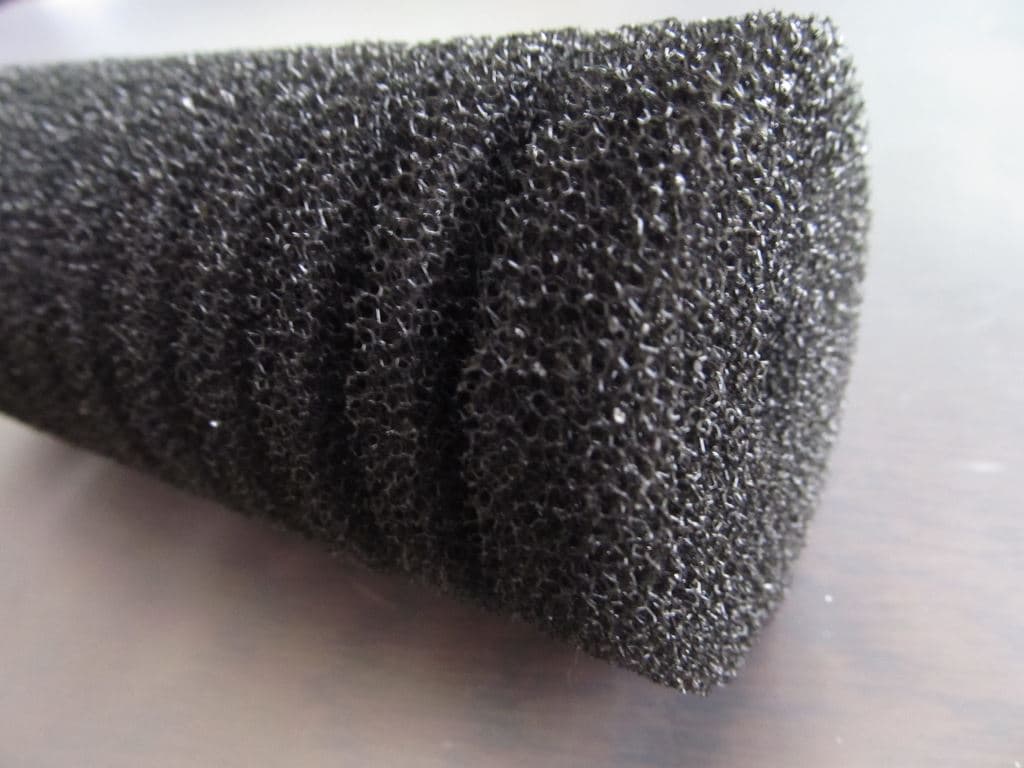
Photo: Ofkun · CC BY-SA 4.0

filtration
Sponge filter for small aquariums
A sponge, an air pump, and a check valve. Gentle filtration for bettas, fry, shrimp-safe intakes, and backup bio on a 10–20 gallon — not a ranked HOB shootout.
Sponge, air pump, check valve
An air-driven sponge filter is three parts working together. The foam is mechanical and biological media. An air pump pushes air down the lift tube so bubbles rise and pull water through the sponge. A check valve in the airline stops a power failure from siphoning tank water back into the pump and onto the floor.
There are no cartridges to buy every month. There is also no magic: a clogged sponge or a dead pump is just an ornament. Size the foam to the tank, keep the pump running, and clean the sponge in old tank water.
Where a sponge belongs
Bettas, fry boxes, shrimp tanks, and quarantine tubs like the soft flow and the closed foam intake. A 5–10 gallon often runs sponge-only without drama. A 20-gallon community with real bioload — livebearers, a bristlenose, a cory group — may want a hang-on-back for turnover and a sponge as seeded backup or prefilter, not sponge as the only filter.
The foam is ugly to some people. Hide it behind plants or hardscape. Noise usually comes from the air pump or a rattling valve, not from the sponge itself. Put the pump on a soft pad, keep the airline from tapping the stand, and use a check valve oriented the right way.
Cleaning and cycling
Squeeze the sponge in a bucket of tank water when flow slows or the foam looks packed — often every few weeks. Never tap water. When you upgrade tanks, move the old sponge into the new filter path for a few weeks so you do not throw away the cycle.
The picks below are a small sponge for nanos, a larger double sponge for 20-ish gallons, and a quiet air pump in the 20–40 class. Airline and a check valve are cheap add-ons if your kit skips them. We may earn a commission if you buy. See the affiliate disclosure.
What we would buy
hygger sponge filter, small
Air-driven foam sized for a 5–10 gallon betta, hospital, or nano tank. Gentle flow, fry- and shrimp-safer than an open HOB intake, and the same small sponge we already point to on the betta page.
Air pump and tubing are sold separately. Squeeze the sponge under water so it sinks. Hide it behind plants if you hate the look. Skip this if a baffled hang-on-back already keeps ammonia at zero.
See this listinghygger double sponge filter, small
Two foam columns plus ceramic media for roughly 10–40 gallon duty. Better surface area for a 20-gallon that wants sponge bio without jumping to a canister.
Still needs an air pump strong enough for the depth. Use as primary on a light load, or as seeded backup beside a hang-on-back. Squeeze in tank water only. Confirm the small (S) listing, not the medium, if the tank is a 20.
See this listingTetra Whisper air pump, 20–40 gallons
A quiet, widely available pump in the size that actually drives a sponge on a 10–20 without wheezing. Dome body and rubber feet cut the desk buzz.
Add airline and a check valve if the box does not include them. Place the pump above the water line when you can. A 10-gallon-only Whisper is undersized for a deep 20 with a double sponge — step up rather than running a tiny pump wide open.
See this listing
Frequently asked questions
Do I need an air pump for a sponge filter?+
Yes for the usual air-driven design. The rising bubbles lift water through the foam. Buy a pump sized for the tank depth, airline tubing, and a check valve so a power cut does not siphon the tank onto the floor.
What size sponge filter for a 10-gallon tank?+
A small single sponge rated around 5–10 gallons is the usual betta or nano pick. A lightly stocked 10 can run sponge-only; a messy community may want a hang-on-back with the sponge as backup bio.
Can a sponge filter run a 20-gallon by itself?+
Sometimes, for a light bioload. A real 20-gallon community with a bristlenose or livebearer group often wants a hang-on-back plus a sponge, not sponge-only. Match filtration to waste, not to the label on the box.
How do I clean a sponge filter?+
Squeeze it in a bucket of old tank water during a water change. Never rinse the foam under the tap — chlorine kills the bacteria you are trying to keep.