Photo: Ewkaa · CC BY-SA 3.0

other
Aquarium heater for 10- and 20-gallon tanks
Most tropical 10s want about 50W. Most 20s want about 100W in a normal room. Buy an adjustable submersible, then read temperature with a separate thermometer.
Wattage first, brand second
Tropical fish in a 10- or 20-gallon tank need stable mid-70s °F in most homes. Room-temperature water in an air-conditioned house is usually too cold. The simple sizing rule is about 3–5 watts per gallon: 50W for most 10s, 100W for most 20s when the room sits near 70°F. Cold rooms need more watts. Warm rooms can get by with less, but only if a thermometer says so.
Starter kits often skip a heater or include a small preset unit. Budget for a real adjustable heater even if the box looked complete. Goldfish are the common exception; they want cooler water and a much larger tank than this page is about.
Adjustable, submersible, and a separate thermometer
Buy a fully submersible heater you can set, not a sealed preset if you can help it. Mount it near filter outflow so heat mixes. Leave it in the water for a half hour before you plug it in the first time, and keep a drip loop in the cord so water cannot run into the outlet.
Do not trust the printed dial alone. Put an independent thermometer on the glass away from the heater. If the dial says 78 and the thermometer says 72, believe the thermometer and nudge the dial, then wait. Two heaters in a small tank is how people cook livestock when both turn on at once.
Shatter risk and dry-run shutoff
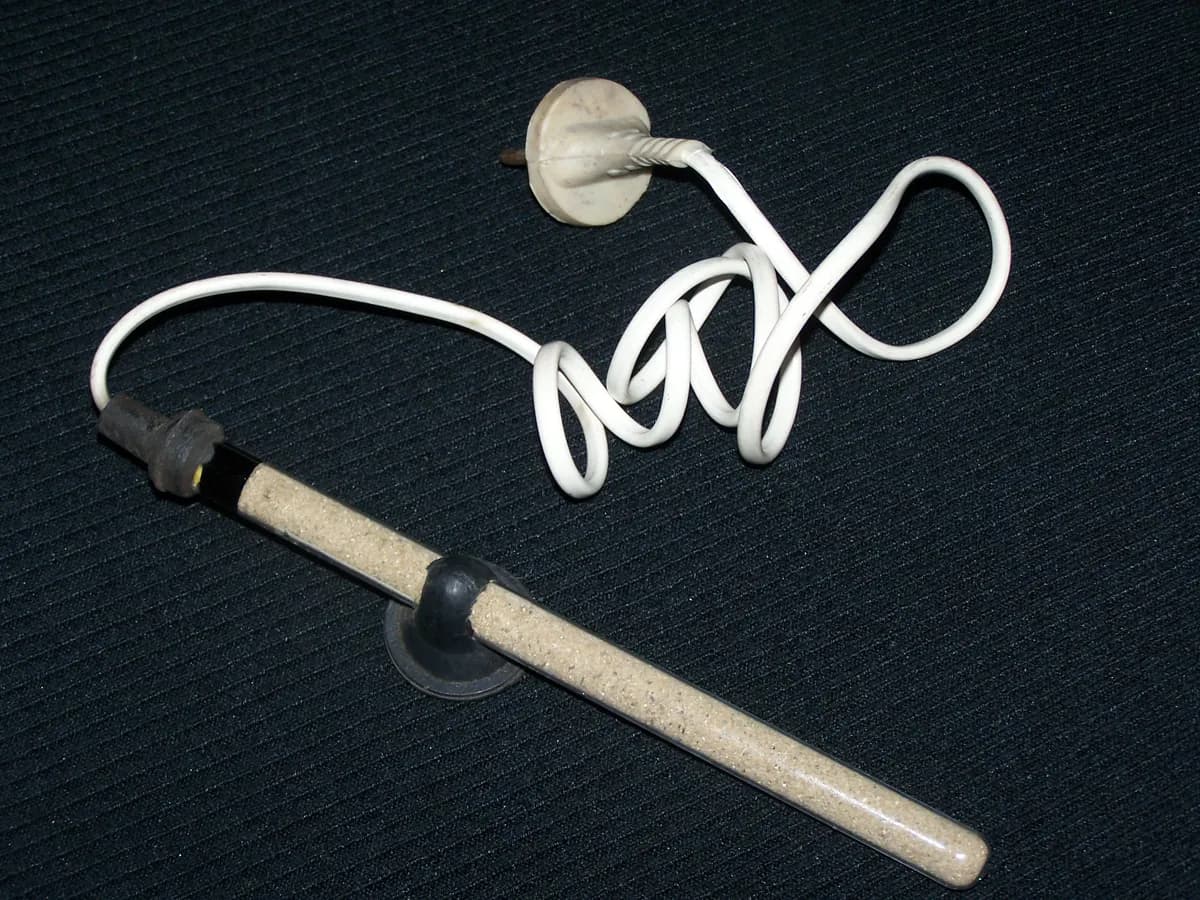
Old glass tubes can crack if you unplug a hot heater and lift it into cooler air, or if gravel jams against the glass. Newer plastic-shell heaters (including the Pro line in the picks) are much less likely to shatter. Either way, unplug before a large water change if the water line will fall below the heater's minimum mark.
Dry-run shutoff means the heater cuts power when it overheats or tips so the sensor thinks it is out of water. That is a safety net, not a reason to leave a heater hanging half-exposed while you scrub gravel. Read the min-water line. Plug it back in only when the tank is refilled and the heater is submerged again.
After it is in the tank
Set the heater during setup, before the cycle finishes. Bettas, guppies, and neon tetras all assume mid-70s heat. Our beginner freshwater setup walkthrough covers the rest of the equipment stack. Once fish are in, glance at the thermometer when you feed. A sudden drop after a filter cleaning or a winter cold snap is easier to catch early than after fins clamp.
The picks below are the listings we would open first for a 10, a 20, and a cheap separate thermometer. A broader search sits under that if you need another wattage. We may earn a commission if you buy. See the affiliate disclosure.
What we would buy
Aqueon Adjustable Pro heater, 50W
Fully submersible, adjustable, shatterproof plastic shell. This is the size for most 10-gallon tropical tanks in a ~70°F room. Same Pro line we already use on the betta and guppy pages.
Aqueon rates 50W up to 20 gallons. We still size closer to 3–5 W/gal, so treat 50W as a 10-gallon pick unless your room is warm and a thermometer proves the mid-70s. Skip a second heater if one unit already holds temperature.
See this listingAqueon Pro adjustable heater, 100W
Same adjustable Pro design, sized for a tropical 20-gallon in a normal room. Fully submersible with overheat shutoff and a tilt/dry-run cutout. Still put a thermometer on the opposite end of the tank.
In a warm house the 50W Pro can hold a 20. Do not stack two heaters that fight each other. If the basement sits in the low 60s, step up rather than running one unit wide open.
See this listingPAIZOO stick-on digital thermometer
Reads through the glass from outside. No probe clutter. Cheap insurance that the heater dial is not lying.
Stick it below the water line and away from the heater. A clip-on glass thermometer is fine if you already have one. Skip extras that need an app.
See this listing
Frequently asked questions
What size heater for a 10-gallon tank?+
About 50W for most tropical 10s in a room near 70°F. That is the 3–5 watts-per-gallon rule. A cold basement may need the next size up.
What size heater for a 20-gallon tank?+
About 100W for most tropical 20s in a normal room. A warm house can sometimes hold mid-70s with 50W, but 100W is the safer default when the room sits near 70°F.
Do I still need a thermometer if the heater has a dial?+
Yes. The dial is a rough target. Stick a separate thermometer on the glass away from the heater and trust that reading.
Can a heater shatter or burn dry?+
Glass tubes can crack if you unplug a hot heater and lift it into cool air, or if it runs with the water line below the minimum mark. Prefer a shatterproof body when you can. Look for auto shutoff when the unit overheats or tips out of water, and unplug before a big water change if the water will drop past the heater.