
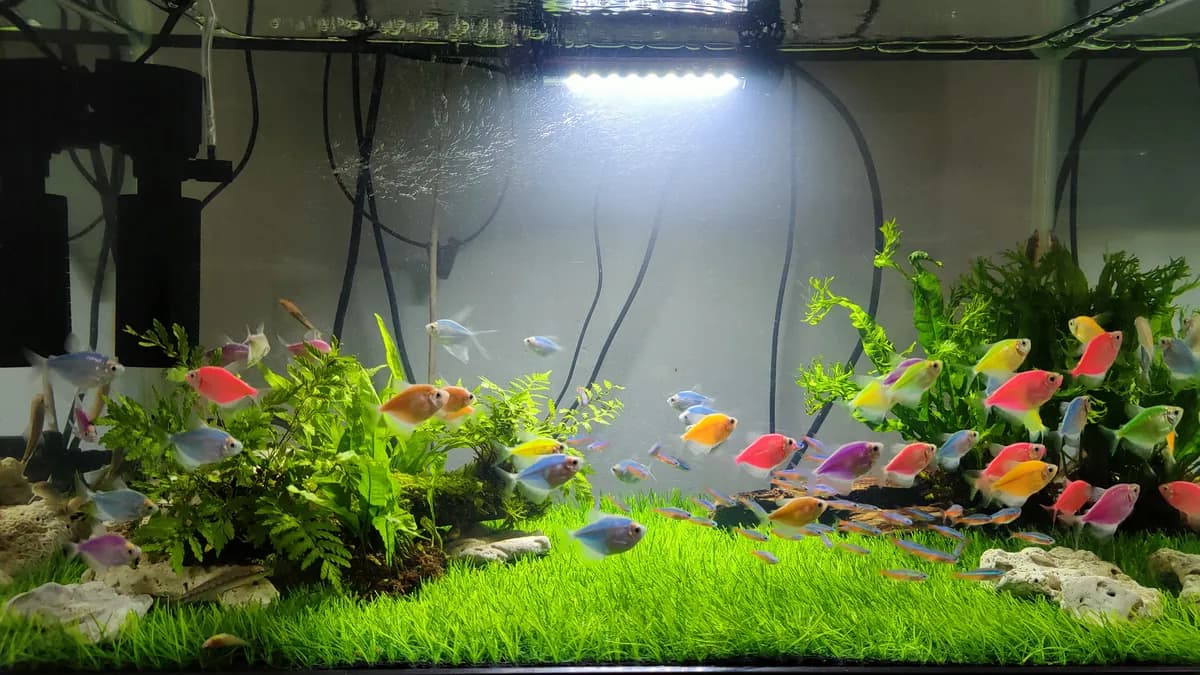
Photo: Trstcantik · CC0

Gear
Aquarium sand and gravel for a freshwater tank
By Fishy Dave
Fine inert sand for cories and loaches. Smooth gravel for a community tank you can vacuum. Planted soil only when you want a nutrient bed and will watch early ammonia. About 1 lb per gallon covers a 1 to 2 inch bed in a 20.
The floor of the tank is the first thing fish rest on and the last thing people rinse. Pick wrong and you fight cloudy water, worn barbels, or a bed you cannot vacuum. Pick right and weekly maintenance gets boring in a good way.
I once dumped a bag of play sand into a 20 because it was cheap. The tank looked like a snow globe for a week, and the cories spent the next month rubbing their noses on sharp grains. Aquarium sand costs more. It also ends the snow globe.
Match the substrate to the fish
There is no single winner. Our sand vs gravel guide already lays out the tradeoff. Gravel wins when you want easy siphoning and waste you can see. Fine aquarium sand wins when you keep diggers.
Peppered cories and kuhli loaches sift the floor. Soft sand protects barbels. Midwater community fish tolerate either. If you are still learning the siphon, start on smooth gravel and switch later if you add a digger group.
How much to buy for a 20-gallon
A useful ballpark is about 1 pound of substrate per gallon for a 1 to 2 inch bed. For a 20-gallon that means roughly a 20 lb bag. Sand usually sits shallower, about 1 to 1.5 inches. Gravel for plant roots often wants 1.5 to 2 inches, which can take a little more than one bag if you slope the back deeper.
Rinse in a clean bucket under cold water and stir until the runoff clears. Fine sand takes longer. Put the wet substrate in before you fill the rest of the way, or you will chase a dust cloud through every filter pad.
Planted beds and root tabs
A first low-tech planted tank does not need aqua soil. Inert sand or gravel plus root tabs under crypts and swords is enough. Tabs go under the crown, not on top of the bed.
Nutrient aqua soil is the other path. It feeds root feeders well and can leach ammonia early. Test. Change water. Do not tear the scape apart because a new soil bed bumped ammonia for a few days while you are watching it. Use a gravel vacuum suited to the grain: plunge in gravel, hover on sand.
What we would buy
The picks below are fine inert sand for diggers, smooth natural gravel for a community tank, and an optional bag of planted soil if you want a nutrient bed. Most freshwater tanks need only two of the three. We may earn a commission if you buy. See the affiliate disclosure.
Fine inert aquarium sand, 20 lb
Smooth, fine grains for peppered cories, kuhli loaches, and other diggers. pH-neutral bag meant for tanks, not a hardware-store substitute. Matches the sand pick on the sand vs gravel guide.
Rinse hard until the water clears. A 20-gallon long usually wants most of a 20 lb bag for about 1 to 1.5 inches. Hover the siphon. Skip play sand, blasting sand, and sharp silica.
See this listingSmooth natural aquarium gravel, 20 lb
Plain, rounded gravel for a general community tank. Debris stays visible, a normal siphon plunges cleanly, and root tabs stay put under crypts. The everyday floor when you are not keeping diggers.
Rinse well. Aim for roughly 1.5 to 2 inches so plants can root. About 20 lb covers a shallow 20-gallon bed; buy a second bag for a deeper front-to-back slope. Avoid neon dyed chips.
See this listingPlanted aquarium soil, small bag
Nutrient-rich aqua soil for a dedicated planted bed when inert gravel plus root tabs is not enough growth. Pairs with tabs later once the bag's nutrients fade. Optional, not required for a first low-tech tank.
Expect an early ammonia bump. Test daily the first two weeks and do water changes. Cap depth modestly so you can still clean. Skip this bag if you only want a few crypts on inert sand or gravel with tabs.
See this listing
Frequently asked questions
How much substrate for a 20-gallon tank?+
Plan on about 1 pound per gallon for a 1 to 2 inch bed. A 20-gallon usually wants roughly 20 lb for a shallow sand layer, or a little more if you want 1.5 to 2 inches of gravel for plant roots. Buy a second bag if you slope the bed deeper at the back.
Do I have to rinse aquarium sand and gravel?+
Yes. Put the substrate in a clean bucket, run cold water, and stir until the rinse water runs much clearer. Fine sand clouds longer than gravel. Skipping the rinse leaves a dust cloud that can clog the filter and stress fish for days.
Sand or gravel for cories and kuhli loaches?+
Fine, smooth aquarium sand. Coarse or sharp gravel can wear barbels. Keep sand about 1 to 1.5 inches deep and hover the siphon instead of plunging. See the sand vs gravel guide plus the peppered cory and kuhli pages for group size before you buy the bag.
Do I need aqua soil for a planted tank?+
Not for a first low-tech setup. Inert sand or gravel plus root tabs under crypts and swords is enough. Nutrient aqua soil grows root feeders well but can leach ammonia in the first weeks. Test, change water, and read the root tabs page before you tear the bed out.
Can I use play sand or blasting sand?+
No. Those bags are for construction, not barbels. Use sand sold for aquariums, or rounded pool filter sand that hobbyists already trust. Skip sharp silica and dyed gravel that flakes.