
Photo: Agaath · CC BY-SA 4.0

husbandry · freshwater
How to raise water hardness in a fish tank
Test GH and KH first so you know which one is low. Crushed coral in the filter raises both slowly, cuttlebone feeds snail shells, a remineralizer rebuilds RO water, and a small baking soda dose adds KH. Go up no more than about 2 degrees a day.
By Fishy Dave · Published 2026-10-19
Test GH and KH first so you know which number is low. Then pick the fix that matches it and raise the reading slowly, no more than about 2 degrees a day. For a 20 gallon tank on soft tap water, about half a cup to a cup of crushed coral in the filter is the usual starting point.
Soft water is not a problem by itself. Neons and cardinals like it. You only need to raise hardness when the fish or snails you keep came from harder water than your faucet gives you. If a bottle promises to fix your water overnight, believe it. The overnight part is what hurts fish.
Find out which number is low
GH is the calcium and magnesium that fish, snails, and shrimp use. KH is the carbonate buffer that keeps pH from swinging. The GH, KH, and pH guide explains what each one does. Run both tests on the tank and on a glass of tap water before you buy anything.
As rough targets, platies, guppies, and swordtails want GH around 10 or higher, mollies like it harder still, snails and cherry shrimp want GH 6 or more, and KH of 3 to 4 stops most overnight pH crashes.
| Fix | Raises | Speed | Best for |
|---|---|---|---|
| Crushed coral in the filter | GH and KH, pH a little | Days to two weeks | Soft tap, livebearers, snails |
| Cuttlebone | Calcium for shells, small GH change | Slow | Snails in soft water |
| GH remineralizer | GH only | Same day | RO, distilled, or rainwater |
| Baking soda | KH and pH, no GH | Same day | Low KH with pH crashes |
Crushed coral in the filter
Crushed coral is aragonite, a form of calcium carbonate. It dissolves slowly in soft, slightly acidic water. It adds calcium to GH and carbonate to KH and nudges pH up. As the water hardens and pH climbs toward 8, it dissolves more slowly, which is why it rarely overshoots.
Rinse it in a bucket until the water runs mostly clear. Put about half a cup in a fine mesh media bag for every 10 to 20 gallons and set the bag where water flows through it. That means behind the cartridge in a hang-on-back filter, in a media tray in a canister, or under the outflow in a sponge-filtered tank.
Test GH and KH after a week and add another half cup if you are still short. Coral slows down once biofilm coats it, so rinse the bag in old tank water every couple of months and top it up when the readings start to slide. You can also mix coral into the substrate at setup, but it is hard to adjust later, so start with the bag.
Cuttlebone for snail shells
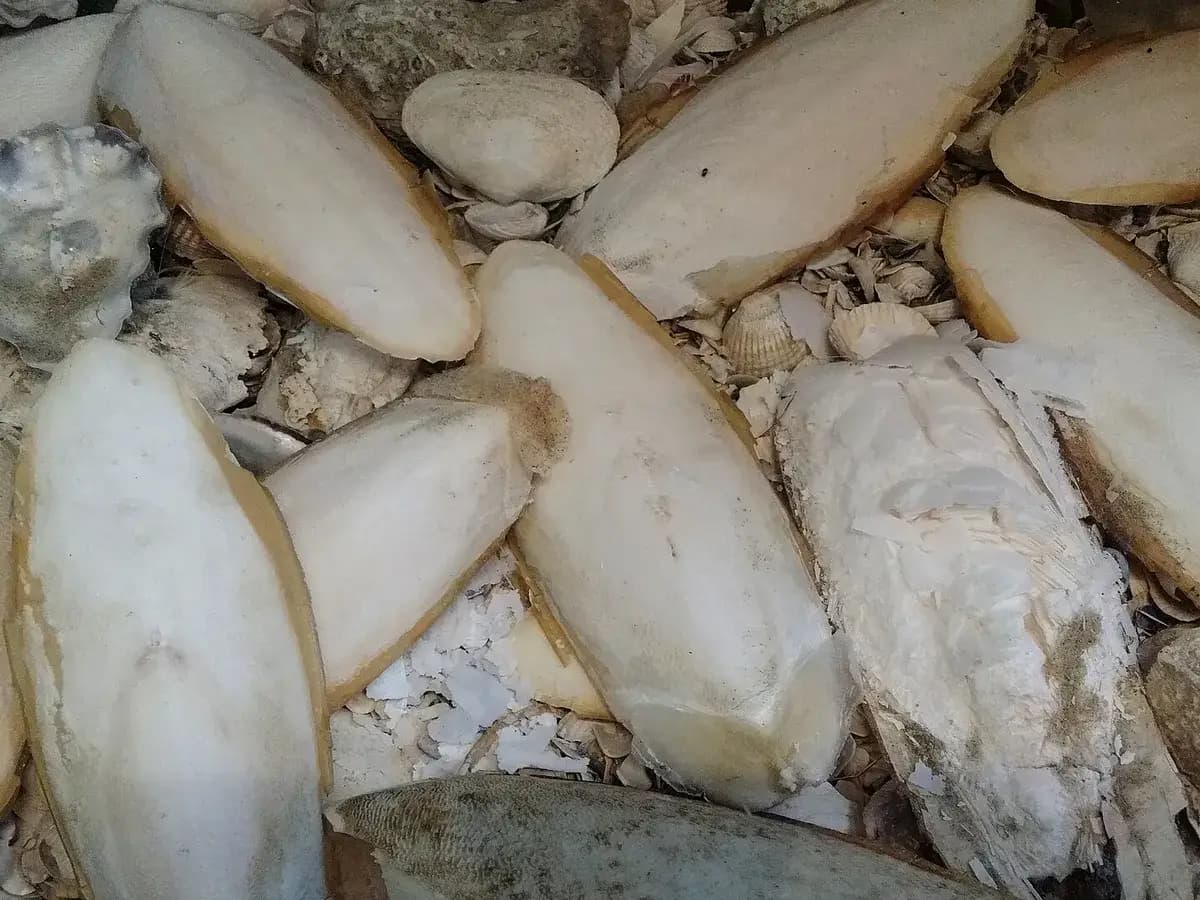
Cuttlebone is the internal shell of a cuttlefish, sold in the bird aisle. Buy plain pieces with no added flavor and take off any metal clip. Boil a piece for a few minutes or soak it for a day so it sinks, then break off a chunk and drop it in or tuck it in the filter.
Mystery snails and nerites rasp on it, which helps when shells show white pits or thin new growth at the lip. It barely changes GH in anything bigger than a small tank, so pair it with crushed coral if the whole tank is soft.
Remineralize RO water and rainwater
Reverse osmosis water, distilled water, and rainwater have almost no minerals and no buffer. Fish and shrimp do poorly in them long term, and pH drifts.
Seachem Equilibrium adds calcium, magnesium, and potassium with no sodium. The label dose is 1 tablespoon (16 g) per 20 gallons of RO water to raise GH by about 3 degrees. Mix it into a quart of water, then add it to the new water before a water change, not straight into the tank. It adds no KH, so pair it with crushed coral or a KH buffer. Many shrimp keepers use an all-in-one GH and KH mineral made for shrimp instead. Whichever you use, follow its chart and mix every batch to the same reading.
Top off evaporation with plain RO or dechlorinated tap, without minerals. Minerals stay behind when water evaporates, so dosing top-off water raises hardness every week.
Baking soda, in small doses
Plain baking soda is sodium bicarbonate. It raises KH and pH. It does nothing for GH and it adds sodium. You will see advice online to add a teaspoon per 5 gallons. That is a jump of about 8 degrees of KH at once, which is far too much.
A level teaspoon in 50 gallons raises KH by about 1 degree, so a 20 gallon tank needs a little under half a teaspoon per degree. Dissolve it in a cup of tank water, pour it in slowly, and wait a day before the next dose. Use it to stop a pH crash while crushed coral gets going, not as a daily habit.
Go slow and keep it steady
Raise GH or KH by no more than about 2 degrees a day. Fish handle a climb spread over a week well. A big jump in one afternoon stresses them the same way skipping acclimation does.
A steady reading matters more than the exact number. With crushed coral, a 25% change of soft tap water drops the reading by about a quarter for a day or two, and the coral brings it back. That swing is normal. Keep water changes to 25 to 30% so it stays small. With RO water, mix each batch to the tank's reading before it goes in.
When to leave soft water alone
If you keep cardinal tetras, rasboras, kuhli loaches, or most tetras, soft water suits them. Hardening the tank for one molly is the wrong trade. Stock fish that fit your tap, or give the livebearers their own tank.
Some rocks raise hardness too. Limestone and Texas holey rock are great in a livebearer tank and an unpleasant surprise in a cardinal tank. The vinegar test on the driftwood and caves page shows which rocks do it.
What to buy for harder water
A few listings we would open for this job. Skip anything you already own that still works.
API GH & KH test kit
You need both numbers before you add anything and again a week later. The drops tell you whether GH, KH, or both are low, which decides the fix.
Test the tap and the tank. If you already own an in-date GH/KH kit, skip this.
See this listingAragonite crushed coral, small bag
The slow, steady fix for soft tap water. It raises GH and KH together and dissolves less as the water hardens, so a sensible amount is hard to overdo.
A small bag covers several filter refills. Buy plain coral with no dye, and get a fine mesh media bag if your filter does not have a spare tray.
See this listingemours natural cuttlebone, 4 to 5 inch twin pack
Calcium that snails can rasp on directly. Useful in a soft-water tank with mystery or nerite snails whose shells show white pitting.
Boil or soak a piece so it sinks. It barely moves GH in a big tank, so treat it as snail food, not a hardness fix.
See this listingSeachem Equilibrium, 300 g
Rebuilds GH in RO, distilled, or rainwater with calcium, magnesium, and potassium and no sodium. Shrimp keepers on RO water need something like this.
It adds no KH, so pair it with crushed coral or a buffer. Skip it if your tap already reads 6 dGH or more.
See this listing
Frequently asked questions
How do I raise GH without raising pH?+
Use a GH remineralizer such as Seachem Equilibrium. It adds calcium and magnesium without carbonate, so pH barely moves. Crushed coral and baking soda both push pH up along with KH.
How long does crushed coral take to raise hardness?+
GH and KH usually start to rise within a few days and level off over one to two weeks. It works faster in softer, more acidic water. Test after a week before you add more.
Is baking soda safe for fish?+
In small doses, yes. A level teaspoon in 50 gallons raises KH by about 1 degree. Bigger doses swing pH fast and add sodium. It adds no calcium or magnesium, so it does nothing for snail shells or shrimp molts.
Can I use Epsom salt to raise GH?+
Epsom salt is magnesium sulfate. Magnesium counts toward GH, but snails and shrimp need calcium too, so Epsom salt alone is half a fix. A remineralizer gives you both in a tested ratio.
Will harder water hurt my neon tetras?+
Farm-bred neons handle moderate hardness if it rises slowly. Cardinals, which are mostly wild-caught, and fish you want to breed do better in soft water. If tetras are the main fish, keep the water soft and pick fish that like it.