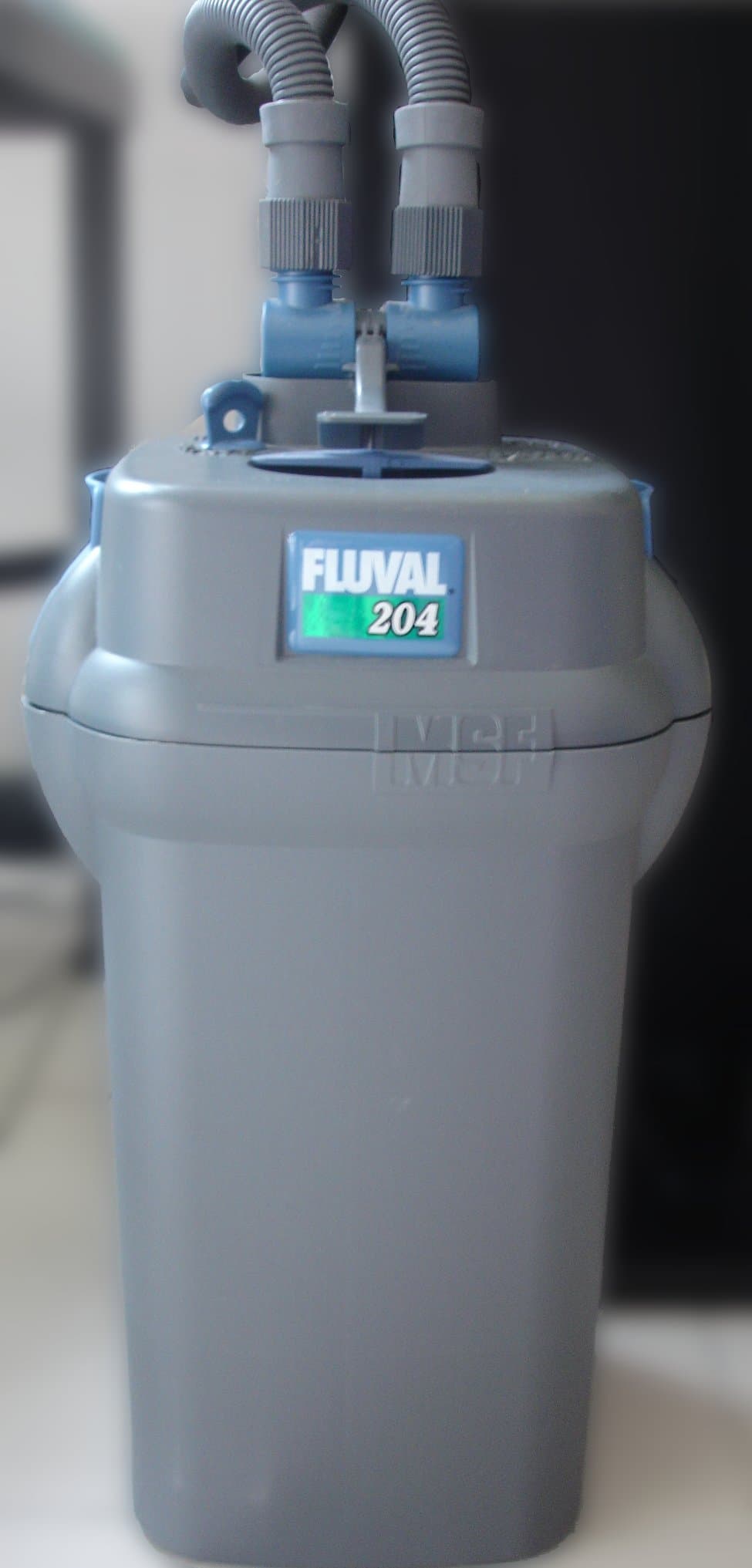
Photo: Pinpin · CC BY-SA 3.0

filtration
Canister filter for 29- to 75-gallon tanks
External filtration for planted 29–40 communities and fancy goldfish: hose clutter earns its keep, media stacks coarse to bio, prime after opening, and never rinse media in tap water.
When hose clutter earns its keep
A canister sits outside the tank, pulls water through an intake, pushes it through stacked media, and returns it through a spray bar or outlet. On a planted 29–40 community, or a fancy goldfish tank that makes real waste, that media volume beats a small hang-on-back fighting for rim space. Oscars want oversized filtration and disciplined water changes, not a nano HOB on full scream.
It is not the default for a 10-gallon betta. A sponge filter or a baffled HOB covers that job with less plumbing. Use a canister when the tank size and bioload justify the hoses, goldfish, angelfish communities, bristlenose groups on larger glass, and similar mid-to-large freshwater setups.
Media order and priming
Stack media in one clear order: coarse mechanical foam first so sludge does not bury the bio, then ceramic or other biological media, then optional polish pad or carbon at the end if you use it. Carbon removes some organics and medications, then saturates, it is not the biofilter. Many established tanks run foam and ceramic without monthly carbon swaps.
Prime after every time you open the canister. An air-locked restart dumps dirty water, sputters, or dry-runs the impeller. Follow the manufacturer primer, fill the unit, check hose seats, then plug in and watch the first minute of flow.
Maintenance reality
Never rinse media under the tap. Squeeze mechanical foam in a bucket of old tank water when flow slows. Stagger cleaning, do not sterilize every basket the same day or you throw away the cycle. O-rings dry out and tap valves crack; a sudden drip under the stand is a known failure mode, not a rare surprise.
The picks below are a ~30–45 gallon Fluval-class unit for community 29–40s, a larger 407-class for ~75 messy fish, and extra ceramic media for the bio baskets. A hang-on-back still owns many 10–20s; a sponge still owns nanos and quarantine. We may earn a commission if you buy. See the affiliate disclosure.
What we would buy
Fluval 207 Performance Canister Filter
Rated for roughly 20–45 gallons, the usual class for a planted 29–40 community without jumping to a floor-standing monster. Quiet pump, stacked baskets, and enough media volume that foam and ceramic can do the real work.
Prime after every open. Carbon is optional once the tank is established. Skip this for a lightly stocked 10-gallon betta, a sponge or small HOB is the right tool there.
See this listingFluval 407 Performance Canister Filter
Step-up for roughly 50–100 gallon duty: messy fancy goldfish, a 75 with angelfish or bristlenose groups, or an oscar that needs oversized filtration plus water changes, not a nano HOB pretending to keep up.
Oversize for heavy waste rather than running a small canister wide open. O-rings and tap valves fail with age; keep spares or expect a drip someday. After maintenance, prime before you walk away.
See this listingFluval BioMax ceramic rings, 500 g
Extra biological media for the middle baskets once coarse foam has taken the sludge. Ceramic rings hold nitrifying bacteria through a mechanical clean if you stagger the work.
Rinse only in old tank water. Do not replace all ceramic at once on a cycled tank. Skip a third bag if the canisters stock media already keeps ammonia at zero.
See this listing
Frequently asked questions
What size canister for a 40-gallon tank?+
Buy a unit rated around 30–50 gallons for a planted community 29–40. Fancy goldfish or heavy waste on a 40 often want the next size up. Match the filter to bioload, not the sticker alone.
Canister vs hang-on-back: which do I need?+
Different jobs. A HOB suits many 10–20 gallon communities. A canister earns the cabinet space on a 29–75 with real waste or a planted layout that wants quiet return. A sponge is still the gentle bio tool for nanos and quarantine. See those pages.
Why do I have to prime a canister?+
Opening the unit for cleaning lets air into the hoses. Priming fills the canister so the impeller can push water instead of air. Skip that step and you get sputtering, dry-running, or a dirty burp of air-locked water into the tank.
Can I rinse canister media under the tap?+
No. Chlorine kills the bacteria living in the foam and ceramic. Squeeze mechanical media in a bucket of old tank water. Stagger cleaning so you never wipe the whole stack in one day.