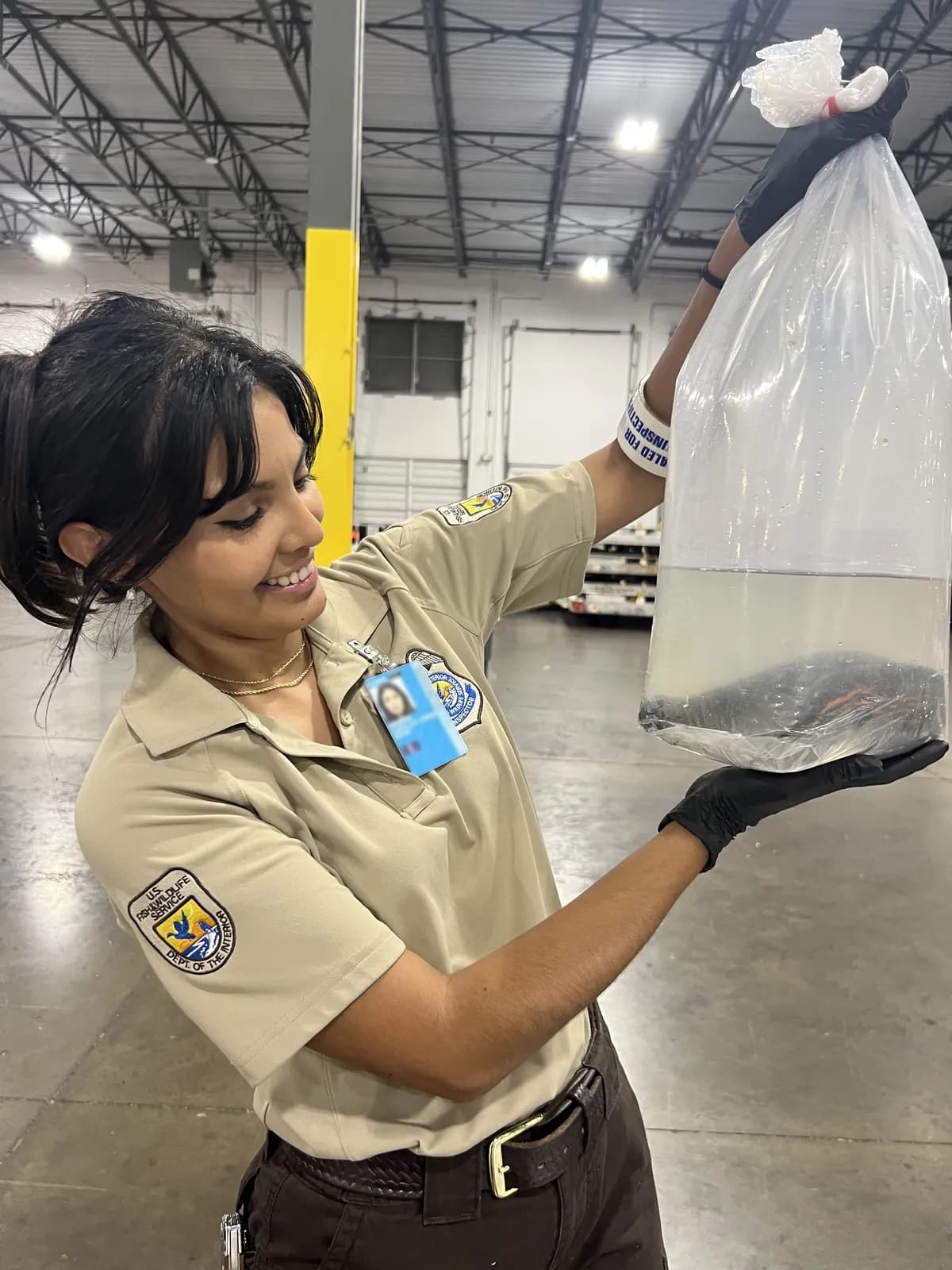
Photo: USFWS Headquarters · Public domain

husbandry
How to acclimate new fish
Float the closed bag for 15 to 20 minutes with the tank light off. Most community fish can then be netted straight in. Drip shrimp, saltwater fish, and anything from water much softer or harder than yours over 45 to 60 minutes. The bag water never goes in the tank.
By Fishy Dave · Published 2026-10-14
You got the fish home. The bag is sitting on the counter, slightly foggy, and the fish inside is very still. Here is what to do in the next hour.
For most freshwater community fish the job is short. Match the temperature, net the fish in, and throw out the bag water. Shrimp, saltwater fish, and fish moving between very different water need a slow drip. The rest of this page covers which is which.
Before you open the bag
Turn the tank light off and dim the room. A fish that has spent an hour in a dark bag panics under bright light and can jump or slam into the glass.
If you have a quarantine tank, that is where the fish goes first. The steps below work the same for both. See how to quarantine new fish for the routine and quarantine tank setup for the gear.
Step 1. Float for temperature
Float the sealed bag on the surface for 15 to 20 minutes. Fold the top over the rim or clip it to the glass so it stays upright. A bag from a store 30 minutes away is usually within a few degrees of your tank, and that is enough time to close the gap.
Do not open the bag and let it float for an hour. Ammonia builds up in the bag during the trip. While the bag is sealed, the carbon dioxide from the fish keeps the pH low and most of that ammonia in its less toxic form. Once you open it, carbon dioxide escapes, pH rises, and the ammonia turns harsher. Long, open floats are where fish get hurt.
Step 2. Decide whether to drip
Ask the shop for their pH and hardness, or test a little of the bag water with the same kit you use on your tank. Then compare.
Skip the drip for common hardy fish like platies, mollies, danios, guppies, and most barbs and cories when your water is close to the shop's. Close means GH within about 4 degrees (70 ppm) and pH within about half a point. After floating, net them in.
Drip for cherry shrimp and other invertebrates, any saltwater fish or coral, and wild-caught or soft-water fish like neon-type tetras, rasboras, and loaches. Drip for anything when GH differs by more than about 4 degrees or pH by more than a point.
Most pH shock stories are really about hardness. A fish moved from very soft water into hard water, or the other way around, has to change how it handles salts in its body, and that takes time. pH tends to follow hardness. That is why the GH, KH, and pH numbers matter more than the pH number on its own.
Step 3. Drip acclimation
Pour the fish and their bag water into a clean bucket or a large plastic cup that has never touched soap. Tilt the bucket so the fish stay covered. You want about an inch of water over them.
Run a length of airline tubing from the tank into the bucket as a siphon. Tie a loose knot in it, or fit a plastic airline valve, and tighten it until you get 2 to 4 drips per second.
Let the water in the bucket double over 15 to 20 minutes. Pour off half and let it double again. For shrimp, neons, and loaches, stretch the whole thing to 45 to 60 minutes. For saltwater fish, check that the salinity in the bucket matches the tank before you move on.
Step 4. Net the fish, toss the water
Move the fish with a net, or scoop shrimp out with a small cup and let most of the water drain between your fingers. Pour every drop of bag and bucket water down the sink.
Use a net that lives with the quarantine tank, not the main display. Rinse it in hot tap water afterward and let it dry.
The first evening
Leave the light off until tomorrow. New fish often hide, go pale, or sit near the bottom for a few hours. That is normal. Do not chase them with the net to check on them.
Skip feeding tonight. Offer a small meal the next morning and remove anything left after two minutes. If the fish are still gasping or lying on their sides the next day, test ammonia and nitrite before you think about disease.
Frequently asked questions
How long should I float the bag?+
15 to 20 minutes. That is long enough for a small bag to reach tank temperature. Floating longer does not help, and the fish keep breathing the same water the whole time.
Should I add tank water to the bag?+
For hardy community fish it is optional. For shrimp, saltwater fish, and fish from water much softer or harder than yours, yes. Drip it in over 45 to 60 minutes instead of pouring.
Can I pour the bag water into my tank?+
No. Shop water can carry ammonia, medication, and parasites from every tank on that system. Net the fish out of the bag or cup and throw the water away.
When can I feed new fish?+
Wait until the next day. Leave the light off for the rest of the evening and offer a small meal in the morning.
Do new fish need to be acclimated if I quarantine them?+
Yes, twice. Acclimate them from the bag into the quarantine tank, then again from quarantine into the display if the two tanks differ in temperature or hardness.