
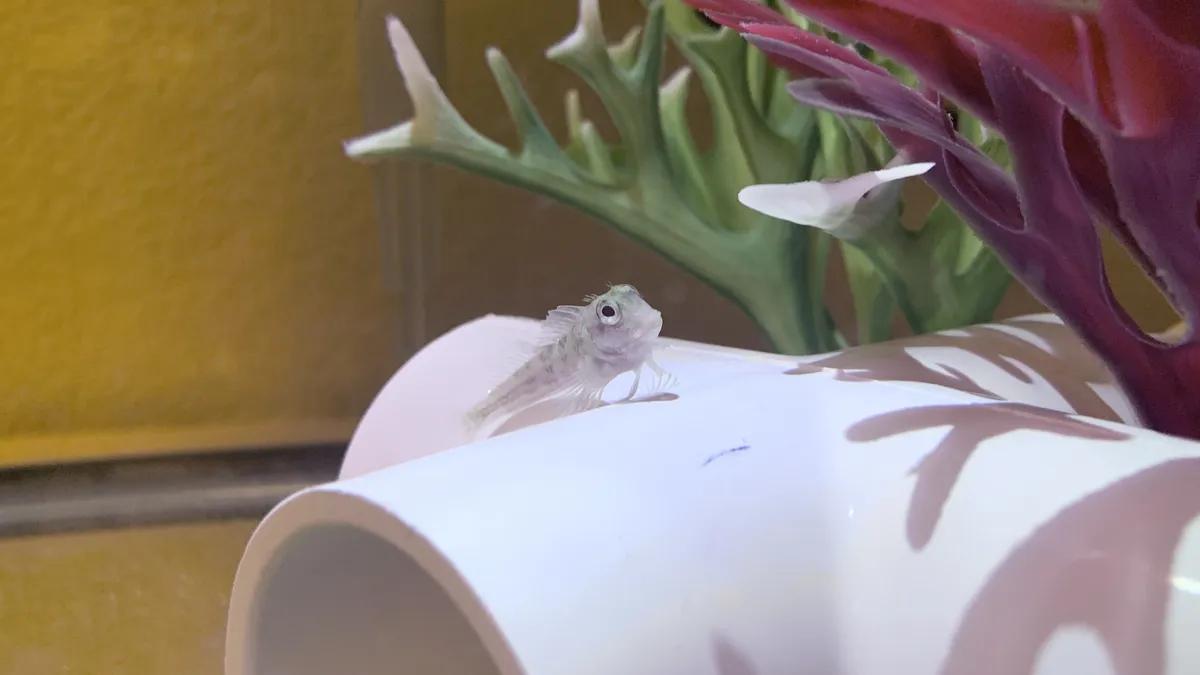
Photo: Coughdrop12 · CC BY-SA 4.0

kit
Quarantine tank setup: what a 10-gallon hospital tank needs
By Fishy Dave
A bare 10-gallon tank with a lid, a sponge filter that has lived in your display, an air pump, a 50 watt heater, and its own net and bucket.
A quarantine tank needs five things. A bare 10-gallon tank with a lid, a sponge filter that has been running in your display, an air pump, a 50 watt heater, and a net and bucket that never touch the display. That is the whole kit.
The same tank works as a hospital tank when a fish in the display gets sick. This page is the shopping list and setup. The routine itself, from timing to what to watch for, is in how to quarantine new fish.
The tank
A 10 gallon holds most purchases from a fish shop. Six neon tetras, three platies, or a pair of honey gouramis fit fine for a few weeks. Size up to a 20 long for a big school, for anything over about 4 inches, or for goldfish, which make too much waste for a 10.
Leave the bottom bare. You can see every dropping and every leftover pellet, and you can siphon the floor in a minute. Add a hide so the fish is not stuck in the open. A short piece of PVC pipe or a PVC elbow is the classic choice because it is cheap, it does not hold medication, and you can bleach it after use. A small clay pot or a plastic plant works too.
A seeded sponge filter
The filter is where most quarantine tanks fail. A new filter in a new tank has no bacteria, and a fish in it will be sitting in its own ammonia within days.
The fix is a sponge filter that lives in your display tank. Run it there next to your main filter, all the time. When new fish come home, move the sponge into the quarantine tank and the bacteria come with it. Run it on a small air pump with a check valve in the line.
If you have no seeded sponge, test ammonia and nitrite every day with a liquid test kit and change 25 to 50% of the water whenever either reads above zero.
Heat and a lid
Set the heater to match the display, usually 76 to 78°F for a tropical community. A 50 watt heater suits a 10 gallon in a normal room. Check it with a thermometer on the first day. Many heater dials are off by a few degrees.
Put a lid on it. New fish and sick fish are more likely to jump, and a covered tank holds its temperature better when you raise the heat to treat ich.
Its own tools
Give the quarantine tank its own net, its own bucket, and its own length of siphon hose. Mark them with tape. Sharing tools with the display is how a disease you caught in quarantine ends up in the display anyway.
Store your medication and water conditioner next to this tank. If you dose a medication, take out any carbon and follow the label on that one bottle. For white spot, the ich medication and aquarium salt page covers which bottle to keep here.
After each use
When the fish move to the display with a clean record, the sponge can go back with them. After a sick fish or a medication course, do not put that sponge back in the display. Empty the tank and wipe it with 1 part plain unscented bleach to 19 parts water, rinse it well, and let it dry. Do the same with the hide, net, and bucket. Then start a fresh spare sponge in the display so it is ready for next time.
What we would buy
Three things do the real work in a quarantine tank: the tank, the filter, and the heater. Everything else is small parts you may already own. We may earn a commission if you buy. See the affiliate disclosure.
10-gallon glass tank with a lid
A plain 10 gallon is cheap, easy to find, and fits on a shelf or a counter. Get one with a lid or buy a lid at the same time. Stressed fish jump, and a hospital tank with a lid also loses less heat.
Skip kits that come with a cartridge filter and gravel, since you will not use either. A used tank is fine if it holds water for a day in the bathtub or on a towel.
See this listingSponge filter with air pump and check valve
A sponge filter is the right filter here. It has a gentle flow, it will not suck up a weak fish, medication does not ruin it the way it ruins carbon, and you can keep it seeded in the display between uses.
Buy one sized for 10 to 20 gallons, a small air pump, airline tubing, and a check valve so water cannot siphon back into the pump. See the sponge filter and air pump pages for sizing.
See this listingAdjustable 50 watt heater
Quarantine water should match the display temperature, and some ich treatments call for raising the heat a few degrees. An adjustable heater lets you set the number instead of trusting a preset.
Use 100 watts for a 20 long. Check it with a separate thermometer, and unplug it for 15 minutes before a water change so it never runs out of the water.
See this listing
Frequently asked questions
What size quarantine tank do I need?+
A 10 gallon covers most community fish purchases, such as a group of six tetras or a few livebearers. Go to a 20 long for a school of ten or more, for fish over about 4 inches, or for goldfish. A 5 gallon works for a single betta or a few shrimp.
Is a quarantine tank the same as a hospital tank?+
It is the same gear used for two jobs. A quarantine tank holds new fish for two to four weeks before they join the display. A hospital tank holds a sick fish from the display so you can treat it without dosing every fish, plant, and snail you own. Most people keep one tank and use it for both.
Does a quarantine tank need gravel or plants?+
No. A bare bottom lets you see waste, uneaten food, and the fish's droppings, and you can siphon it clean in a minute. Many medications also harm plants or bind to gravel. Give the fish a PVC elbow, a clay pot, or a plastic plant for cover.
How do I keep a quarantine tank cycled between uses?+
Keep a spare sponge filter running in the display tank all the time. When you need the quarantine tank, move that sponge over and the bacteria come with it. Between uses, the empty tank can sit dry.
Do I need a separate net and bucket?+
Yes. A wet net or bucket can carry ich and bacteria back to the display. Label the quarantine gear with tape and keep it next to that tank.