
Photo: ML5 at English Wikipedia · Public domain

Gear
Ich medication and aquarium salt
By Fishy Dave
For white spot in a freshwater tank, buy one ich medication and dose it from the label for your real gallons. Hikari Ich-X and API Liquid Super Ick Cure are the two bottles we reach for. Aquarium salt is an optional extra for hardy fish in a tank without plants, shrimp, or snails.
Ich looks like salt grains on the body and fins. One medication, dosed for the real water volume, with carbon out, clears most cases.
This page covers what to buy. The ich treatment guide covers the full step-by-step. Keep dosing after the spots fall off.
Why the course runs past the last spot
Freshwater ich is a single-celled parasite, Ichthyophthirius multifiliis. The white spots are parasites under the skin, where medication cannot reach them. When a spot matures it drops off, forms a cyst on the glass or gravel, and splits into hundreds of free-swimming young that hunt for a fish. The medication kills that free-swimming stage.
At tropical temperatures the whole cycle takes a few days. In cooler water it takes longer. That is why Hikari has you keep dosing for three days after the fish look clean. Stopping the day the spots vanish is the usual reason ich comes back.
Before the first dose
Test ammonia and nitrite first. Ich often follows a stressful event, and medicating a tank with an ammonia problem adds to it. Fix the water with a partial water change if the numbers are off.
Take carbon, Purigen, and other chemical media out of the filter. They pull the medication out of the water. Leave the sponge and biological media running so the cycle keeps working.
Work out your real gallons. A 20-gallon tank with 2 inches of sand, rocks, and wood holds closer to 16 or 17. Hikari's directions give the math: length times width times water height in inches, divided by 231, minus what the gravel and decor take up. Overdosing is how scaleless fish get hurt.
Raising the heat
Warmer water speeds up the life cycle, so the medication reaches the free-swimming stage sooner. Most tropical community fish handle the upper 70s to low 80s F for a treatment. API's label says treatment may go faster at 82 F. Raise it a degree or two a day with an adjustable heater and check a thermometer, not the dial.
Warm water holds less oxygen, and formalin lowers it further. Add an air stone on an air pump while you treat. If fish start gasping at the surface, do a large water change and add air before anything else. Skip the heat for coolwater fish like white cloud minnows or goldfish.
Scaleless fish, shrimp, snails, and plants
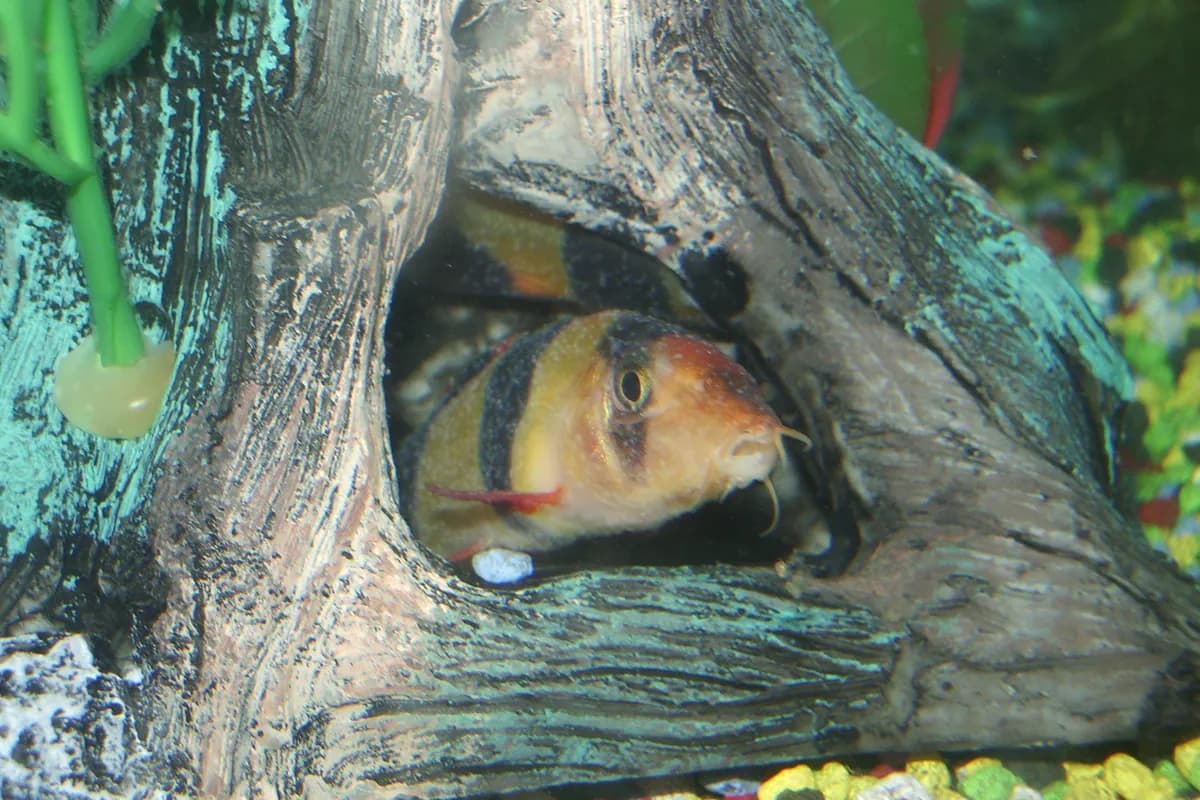
Corys, kuhli loaches, clown loaches, and plecos are more sensitive to malachite green than tetras or livebearers. API says to give them half the Super Ick Cure dose. Hikari says Ich-X is safe for them at the full dose. Either way, watch them closely for the first few hours after each dose.
Cherry shrimp, Amano shrimp, and snails should not be in the tank during treatment. Malachite green, formalin, and copper are all hard on invertebrates, and some ich medicines sold for marine tanks are copper-based, so read the ingredients. Move the fish to a quarantine tank and treat them there. Ich needs fish to finish its cycle. Leave the shrimp tank without fish for at least two weeks at tropical temperatures so the ich runs out of hosts.
Plants usually get through a malachite green course at the label dose. Salt is harder on them. Some stem plants and mosses melt even at modest salt levels, so in a planted tank we leave the salt out.
Where aquarium salt fits
Salt does not cure ich at the dose on the box. API sells it as an electrolyte and stress support and suggests using it alongside Super Ick Cure. Some keepers run much higher salt levels as a treatment on its own. That works on tough fish in bare tanks, but it is easy to get wrong, and we would not try it with a mixed community.
Our rule: hardy fish like livebearers, barbs, danios, or goldfish in a tank with no plants or invertebrates can take the box dose with the medication. Anything with corys, loaches, plecos, shrimp, snails, or a carpet of plants gets the medication alone.
Salt stays in the water until you change it out. If you dose 5 gallons' worth and then change 5 gallons, add salt back for those 5 gallons only. Adding a fresh full dose at every change builds the level up.
After the course
Do the final water change the label calls for, then put fresh carbon in for a day or two to pull out any leftover dye. Bring the temperature back down a degree a day. Rinse nets and buckets in hot water and dry them.
Then quarantine new fish from here on. Two to four weeks in a separate tank catches ich before it reaches the display, and if it does show up, you treat a 10-gallon instead of your whole tank.
What we would buy
Buy one medication, not both. Add the salt only if your fish can take it. We may earn a commission if you buy. See the affiliate disclosure.
Hikari Ich-X, 16 fl oz
Formalin plus malachite green chloride. Hikari says it is safe at full dose for corys and other scaleless fish, which makes it the easier bottle for a mixed community tank. The 16 oz bottle treats 960 gallons, so one bottle covers a full course in most home tanks.
Hikari's directions are 1 teaspoon (5 mL) per 10 gallons, with a water change of at least a third before each daily dose, and three more days of treatment after the last spot is gone. Hikari warns against sulfinate or sulfoxylate water conditioners with it. Do not use a bottle that froze in shipping (green crystals or clumps). Not for tanks with shrimp.
See this listingAPI Liquid Super Ick Cure, 4 fl oz
A malachite green medication on a slower schedule than Ich-X, with a dose every other day instead of daily water changes. It is in most fish stores, which helps when you spot ich on a Saturday night.
API's label is 1 teaspoon (5 mL) per 5 gallons, a second dose after 48 hours, then a 25% water change 48 hours after that. Scaleless fish get half the dose. API does not recommend it with shrimp or other invertebrates. The 4 oz bottle treats up to 118 gallons. If spots are still showing at the water change, the course is not done. Check the label before you repeat it.
See this listingAPI Aquarium Salt, 33 oz box
Evaporated sea salt for freshwater tanks, sold as a stress and gill support during treatment. API's directions say to use it with a medication such as Super Ick Cure, not instead of one.
Box dose is one rounded tablespoon per 5 gallons. Skip it with corys, kuhlis, plecos, shrimp, and snails, and skip it in a planted tank. Do not use table salt with anti-caking agents or iodine.
See this listing
Frequently asked questions
What is the best medicine for ich in freshwater fish?+
A malachite green or malachite green plus formalin medication, dosed from the label for your real water volume. Hikari Ich-X and API Liquid Super Ick Cure are both easy to find. Pick one and finish its course. The brand matters less than dosing the right gallons and keeping going after the spots are gone.
Can I use aquarium salt and ich medication together?+
API's own directions suggest its aquarium salt alongside Super Ick Cure, and plenty of keepers do that with hardy fish. Do not add salt with corys, loaches, plecos, shrimp, or snails, or in a tank full of live plants. If you are unsure, use the medication alone.
How much aquarium salt per gallon?+
API's box says one rounded tablespoon per 5 gallons, or half a rounded teaspoon per gallon. Salt does not evaporate or filter out, so after a water change you only add salt for the new water you put back in.
Is ich medication safe for shrimp and snails?+
Treat it as unsafe. API does not recommend Super Ick Cure in any tank with invertebrates, though it says snails can take half the dose. Hikari says Ich-X may harm some invertebrates. Move the fish to a hospital tank and treat them there instead.
Why did my ich come back after treatment?+
Usually the course stopped too early, the dose was worked out for the tank's sticker size instead of the real water, or carbon in the filter pulled the medication out. Spots on the fish are the stage the medicine cannot reach, so keep treating for several days after the last spot falls off.
Will ich medication stain my tank?+
It can. Both bottles carry a warning that the dye may stain silicone and ornaments, and Ich-X can stain clothes and countertops too. Wear gloves and pour over a towel.