Photo: Dizzy Respect · CC BY-SA 4.0

husbandry · freshwater
How to treat fin rot in freshwater fish
Ragged, shrinking, sometimes white-edged fins. Test first. Ammonia, nitrite, or filthy gravel usually starts it. Fix water, stop nipping, then medicate only if the infection is still advancing.
Published 2026-09-16
What fin rot looks like
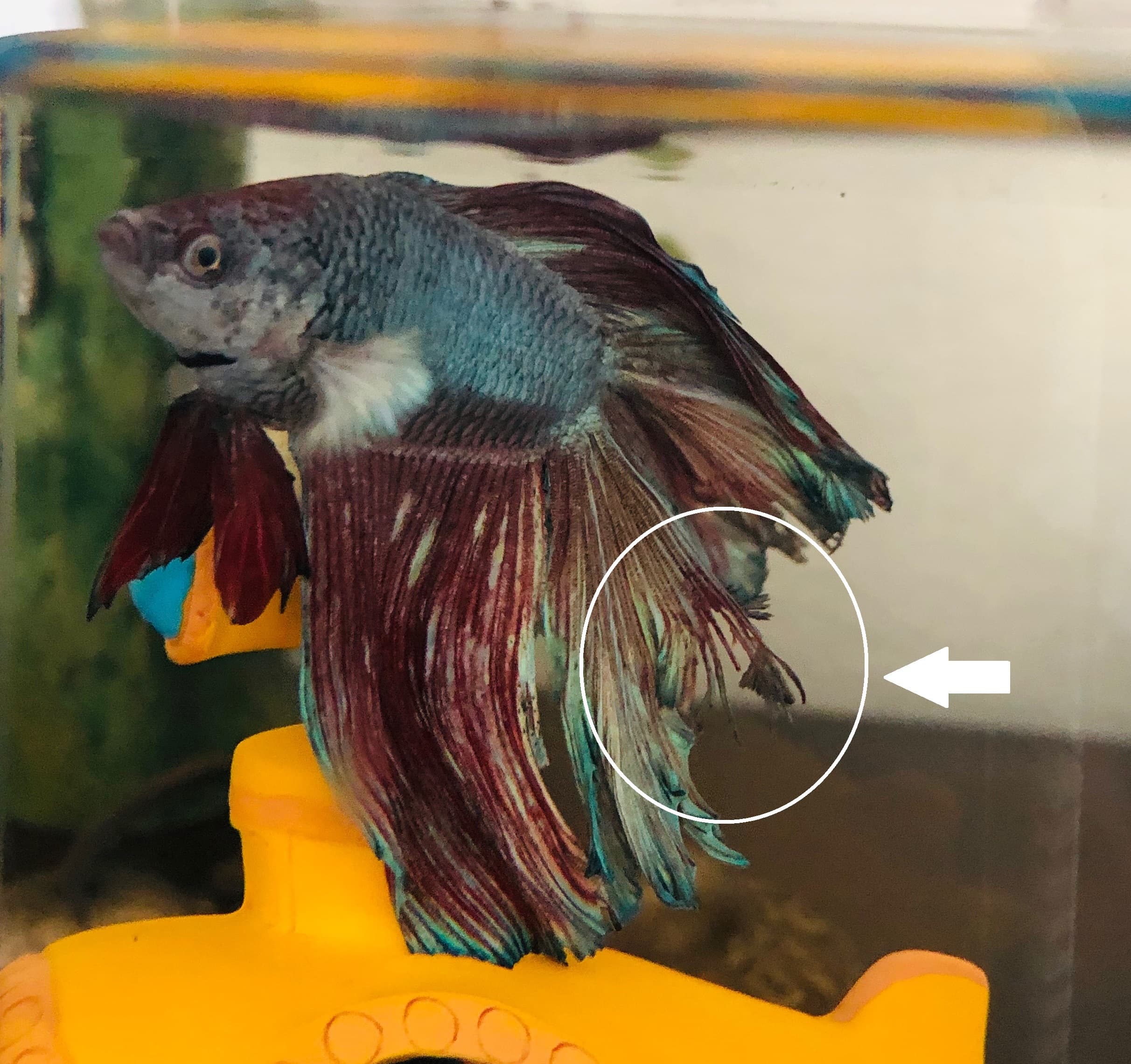
Fin rot is a bacterial attack on damaged or stressed fin tissue. Edges look ragged and keep shrinking. A pale or white margin is common. In worse cases the fin base reddens and the fish clamps or hangs near the surface. Bettas, guppies, and platies with long soft fins show it early because there is more tissue to shred.
Test first. Ammonia, nitrite, or a gravel bed that has not seen a real siphon is the usual cause. Medication on a filthy five-gallon will not outrun dirty water. Messy goldfish and angelfish tanks that need real filtration, a canister on a 29–75 gallon, not a toy HOB, are the same story: clean water first, bottle second.
Tell it apart from nips, ich, and columnaris
Nipped fins have clean bite marks or torn chunks with a hard edge. Separate nippers (tiger barbs are the classic villains) or give a long-fin betta safer neighbors. Ich is salt-grain white spots on body and fins, different disease, different bottle; see how to treat ich. Columnaris can look like cotton or a saddle patch and moves faster and uglier than routine fin edge rot. It is still bacterial, but do not home-brew a miracle mix. Name what you see, then follow one labeled product.
If only the tips look chewed and water tests clean, stock and décor are the suspects. If edges keep melting while ammonia or nitrite reads anything above zero, the chemistry is the patient.
Water first, then one bottle
Do large partial water changes with a chloramine-capable conditioner until ammonia and nitrite are zero. Siphon the gravel. Hold a warmer-but-sane temperature for the species, tropical community fish often sit fine in the upper 70s F; do not cook a coolwater fish. Extra aeration helps if you bump heat. Stop the nipping: move barbs, isolate a fighting betta, or remove sharp décor that shreds soft fins.
If the edges are still rotting after water quality is stable, pick one antibacterial labeled for fin and tail rot. Remove carbon and other chemical media so the dose stays in the water. Finish the course on the bottle, stopping early is how it rebounds. Salt is optional and hard on scaleless fish and plants; skip it when those livestock share the tank.
Quarantine new arrivals when you can so the display is not the hospital. When the infection is gone, leave the water-change habit in place. Fins grow slowly; clear edges and eating fish beat a perfect silhouette on day three.
Gear for treating fin rot
A few listings we would open for this job. Skip anything you already own that still works.
API Freshwater Master Test Kit
Fin rot on a dirty five-gallon is a water problem wearing a disease costume. Liquid reagents for ammonia, nitrite, nitrate, and pH tell you whether medication would even help.
Freshwater only. Skip strips as your only tool. If the bottles you already own are in date, you do not need another kit.
See this listingSeachem Prime, 500 ml
Large water changes are the first treatment. Dose chloramine-capable conditioner into the replacement water so the tap does not undo the work.
Dose the new water. Sulfur smell is normal. This is not a substitute for fixing the bioload or finishing a med course. Skip a second bottle if you already own a chloramine-capable conditioner.
See this listingAPI Melafix, 16 oz
A widely available antibacterial labeled for fin and tail rot when water quality is already under control and the edges are still rotting. One bottle. Remove carbon and finish the course.
Follow the label gallon dose. Not a miracle on ammonia. Skip this if you already have a labeled freshwater antibacterial in date and are mid-course. Tea-tree products are mild; ugly columnaris needs a stronger protocol, not a second home-brew cocktail.
See this listing
Frequently asked questions
Is it fin rot or nipped fins?+
Nipped fins look like clean bites or torn chunks with a hard edge. Fin rot looks ragged, shrinking, and often pale or white along the margin. Tiger barbs, some danios, and bad betta neighbors cause nips, fix stocking, not just the bottle.
Do I medicate before I test?+
No. Test ammonia and nitrite first. Medication on a dirty tank is theater. Large water changes and a real clean often stop early fin rot without a drug.
Should I use aquarium salt?+
Optional. Some keepers use a light salt support; it is hard on scaleless fish, live plants, and shrimp. Prefer water changes and a labeled antibacterial when the infection is clear. Skip salt in a planted community or a cory tank unless you know those animals tolerate it.
How long until fins grow back?+
Infection can stop in days once water is clean and the med course finishes. Tissue regrowth takes weeks. Old damage may leave permanently shorter fins even on a healthy fish.