
Photo: Valenzuela400 · CC BY-SA 4.0

Gear
Floating aquarium plants and a shrimp-safe fertilizer
By Fishy Dave
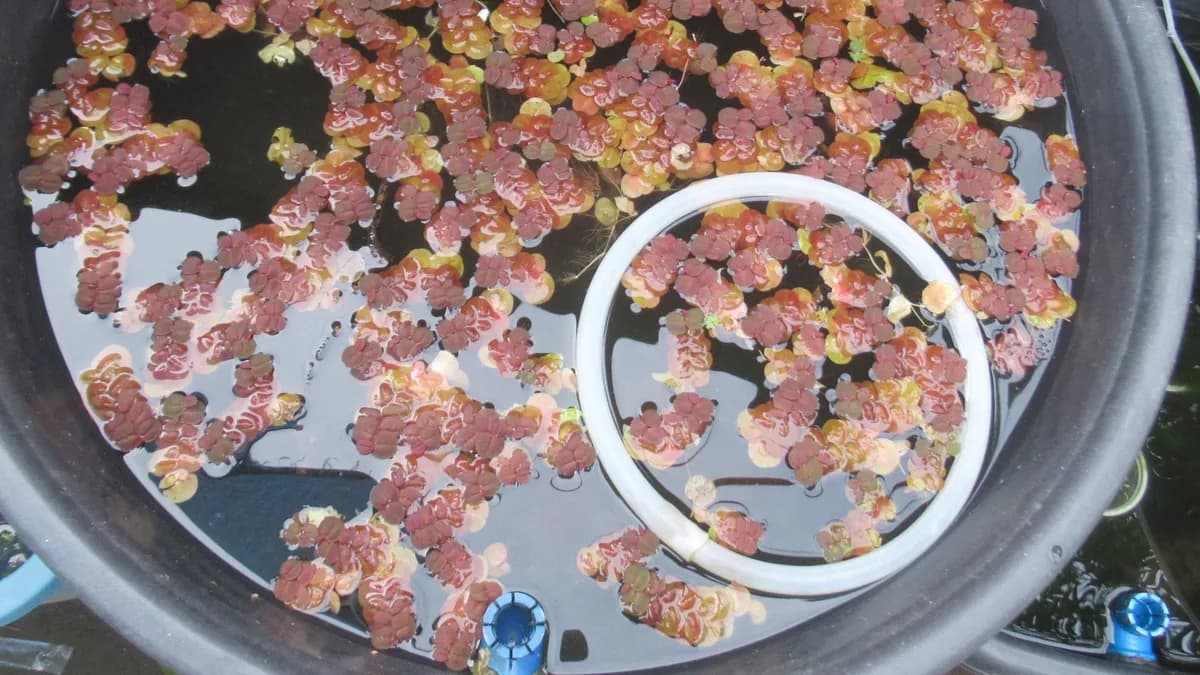
Red root floaters and Amazon frogbit dim a bright tank and take up nitrogen as they grow. Keep them inside a ring of airline tubing, scoop out about a third each week, and feed them with a copper-free fertilizer if shrimp share the water.
Floating plants are the cheapest way to calm down a bright tank. They cut the light, and male bettas and honey gouramis build bubble nests under them. Fry and cherry shrimp hide in the roots. They also take up nitrogen as they grow, and some of it leaves the tank each time you throw extras away.
The catch is that they grow. A cup of red root floaters can cover a 20-gallon in a few weeks under a decent light, and then you are the person with a bucket of spare plants and no takers. That is the good version of the problem. Duckweed is the bad version.
Red root floaters or Amazon frogbit
Red root floaters, Phyllanthus fluitans, have round leaves about half an inch across. Under a strong light with enough iron, the leaves and roots turn red. Under a weak light they stay green. Either way they are easy, and they fit a 10-gallon fine.
Amazon frogbit, Limnobium laevigatum, has bigger, spongy leaves about an inch across and roots that can hang several inches into the water. Fry hide in the roots and shrimp pick at them. Trim the roots when they reach the substrate or block your view.
Both want calm water and dry tops. Water sitting on the leaves makes them rot, so leave an inch or two of air between the surface and the lid, and wipe off condensation if the lid drips onto them.
| Plant | Leaf size | Notes |
|---|---|---|
| Red root floaters | About 1/2 inch | Turns red under strong light. Good in a 10 or 20. |
| Amazon frogbit | About 1 inch | Long roots. Regulated in CA, OR, and WA. |
| Salvinia minima | About 1/2 inch, fuzzy | Fast grower. Banned in Texas. |
| Dwarf water lettuce | Rosettes a few inches wide | Needs an open top or a tall gap. Banned in Texas. |
| Duckweed | A few millimeters | Hitchhiker. Very hard to get rid of. |
Salvinia, water lettuce, and duckweed
Salvinia minima has small fuzzy leaves and grows fast. Dwarf water lettuce makes rosettes a few inches wide with long roots, and it needs a bigger tank with an open top or plenty of room under the light. Texas bans every species of salvinia and water lettuce. California, Oregon, and Washington regulate Amazon frogbit. Check your state's list before you order any floater.
Duckweed is the one to keep out. Each frond is a few millimeters long and splits into more, and one frond hiding in a plant order can cover a tank in a month. It sticks to nets, hands, and the filter intake. You can scoop it every day for a year and still find one in the corner.
Never dump spare floaters into a pond, a ditch, or a yard drain. Let them dry out in the sun or bag them for the trash.
Keep them in a ring
Floaters do badly in surface current. A hang-on-back or a spray bar pushes them under, the tops stay wet, and they melt. The current also drags them into the filter intake.
A ring of airline tubing fixes most of that. Cut a length of tubing, join the ends with a straight airline connector, and hold the loop in place with a suction cup clip. Three feet of tubing makes a ring about a foot across, which suits a 20. Put it at the opposite end from the filter return.
Keep part of the surface open no matter what. Bettas and gouramis gulp air at the surface, and you need an open spot to drop food where the fish can find it.
How much to thin, and what they shade
Keep floaters to about half the surface. Most weeks that means scooping out about a third of the mat. A fish net works, or a plastic cup. Take out the oldest and yellowing plants first.
Each plant you throw out takes the nitrogen it used with it. That helps, but it does not replace water changes. The nitrates guide lists plants fifth, after water changes, testing your tap, feeding less, and vacuuming the gravel.
Floaters shade everything under them. Anubias, java fern, and crypts handle it, which is one reason they show up in the low-tech planted tank guide. Carpet plants like Monte Carlo and dwarf hairgrass need strong light at the bottom, and they stall or melt under a full mat. If you have a carpet, keep the ring over the back of the tank.
Feeding floaters in a shrimp tank
Floaters feed from the water, so root tabs do nothing for them. Fish waste covers some nitrogen, but floaters often run short of iron and potassium. Pale new leaves, leaves that shrink with each batch, or red root floaters that stay green under a bright light all point that way.
Copper is the worry in a shrimp tank. Dwarf shrimp do not handle much of it, and many plant fertilizers include a trace as a micronutrient. Seachem says Flourish is safe for shrimp at the normal dose. ThriveS, NilocG's shrimp formula, leaves copper out entirely.
The ThriveS label says 1 ml per 5 gallons, one to three times a week. That is 2 ml in a 10-gallon and 4 ml in a 20-gallon. In a low-light tank, start at once a week, and add a second weekly dose only if new leaves still look pale after three or four weeks. Dose after the weekly water change so you are not siphoning it straight back out.
NilocG also says to add a GH booster if you use soft tap water or RO water. Shrimp need those minerals to molt anyway.
Quarantine floaters before they go in
New floaters bring snails, snail eggs, and duckweed tucked into the roots. They are too delicate for a bleach dip. Float them in a tub of dechlorinated water under a lamp for a week or two and pick through the roots before they reach the display. The plant quarantine guide covers the alum soak if you want a dip that floaters survive.
Shipping is rough on them. A fresh order of red root floaters or frogbit often has a few soft or yellow leaves. Pull those off and expect new growth within a week or two.
What we would buy
Start with one floating plant and one fertilizer. Two kinds of floaters in a 10-gallon only means twice the thinning. We may earn a commission if you buy. See the affiliate disclosure.
Red root floaters, live
Small round leaves that turn red under a strong light. A good first floater for a 10 or a 20, and the one to pick if you want some color on the surface instead of plain green.
Orders usually come as a cup of 30 to 60 leaves, which is plenty. They multiply fast in a tank they like. Order when the weather is mild where you live so the box does not cook or freeze, and quarantine them before they reach the display.
See this listingAmazon frogbit, live
Bigger, spongy leaves about an inch across and long roots that fry and shrimp use as cover. Thinning is easier than with red root floaters because you lift out whole plants instead of scooping small leaves.
California, Oregon, and Washington regulate this plant, so check your state before you order. Trim roots that reach the substrate. Keep the tops of the leaves dry or they rot.
See this listingNilocG ThriveS shrimp fertilizer, 500 ml
An all-in-one liquid fertilizer made for planted shrimp tanks, with no added copper. It supplies the nitrogen, potassium, and iron that floaters pull from the water.
The label dose is 1 ml per 5 gallons, one to three times a week. The 500 ml bottle treats about 2,500 gallons, so a 20-gallon on one dose a week takes more than two years to finish it.
See this listing
Frequently asked questions
Do floating plants lower nitrates?+
A little. They take up nitrogen as they grow, and it leaves the tank when you throw out the extra plants. Water changes and feeding less still do most of the work. If nitrate climbs past 40 ppm within a week, more plants will not fix it.
Why are my floating plants melting?+
Usually it is surface current, wet leaves, or a lid dripping condensation on them. Put them in a ring of airline tubing away from the filter return and leave an inch or two of air under the lid. Some melt on a fresh shipment is normal. Pull the soft leaves and wait for new ones.
Will floating plants hurt my carpet plants?+
Yes, if they sit over the carpet. Monte Carlo and dwarf hairgrass need strong light at the substrate. Keep the floaters in a ring over the back of the tank, or over plants that take shade, like anubias, java fern, and crypts.
Is liquid fertilizer safe for cherry shrimp?+
Seachem and Aquarium Co-op both say their fertilizers are shrimp-safe at the label dose. If you want copper out of the picture, use a shrimp formula like ThriveS, which has no added copper. Copper medications are the bigger risk, so keep them out of a shrimp tank whatever fertilizer you use.
How do I get rid of duckweed?+
Net out every frond you can see, every day, for a few weeks. Check the filter box and the glass at the waterline, where single fronds hide. Pulling your other floaters for a while makes the last few easier to spot. Plenty of people never fully win, so check every plant order for it before it goes in.