
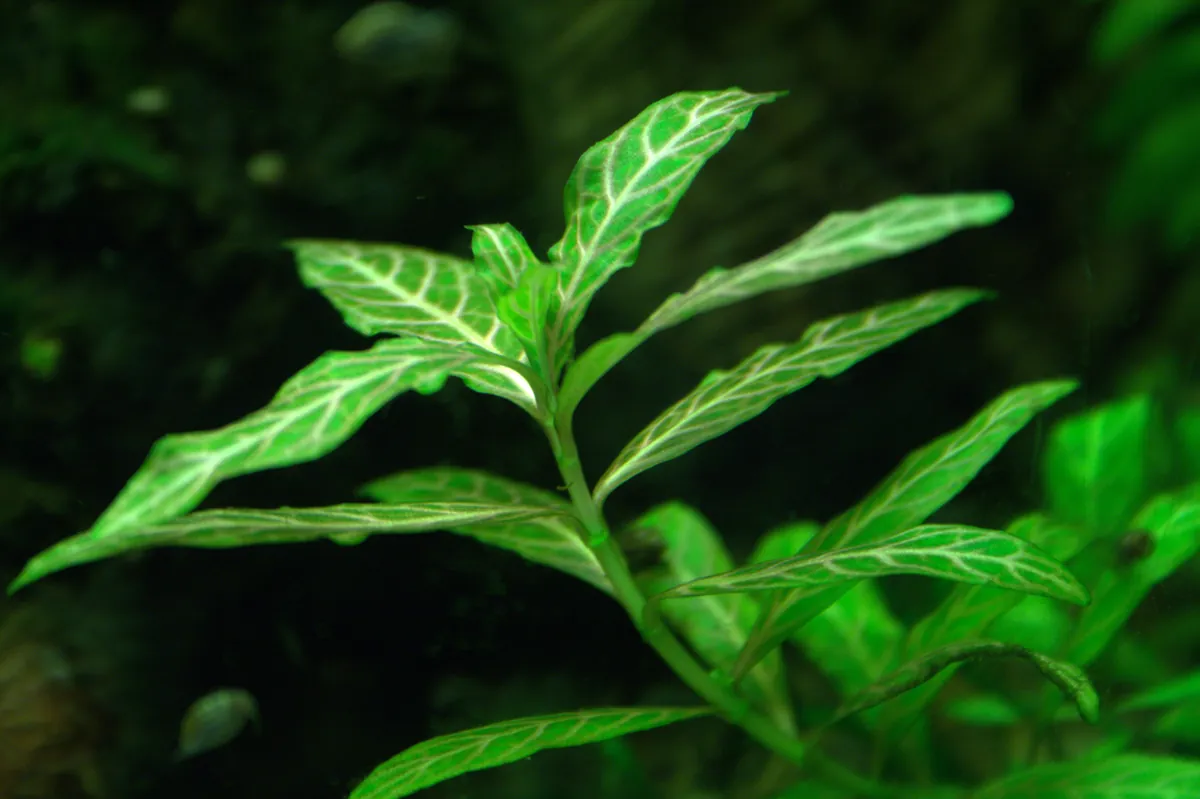
Photo: Averater · CC BY-SA 4.0

husbandry · freshwater
How to quarantine aquarium plants
Keep bladder snails, planaria, and hydra out of shrimp tanks and clean scapes. Dip tough plants in dilute bleach or alum, skip the harsh dip on moss and fine stems, and observe in a separate tub before they share water with the display.
By Fishy Dave · Published 2026-09-28
Why plant quarantine is not fish QT
New plants bring bladder snails, ramshorn snails, planaria, and hydra more often than they bring a named fish disease. Shrimp tanks and tight scapes notice that first. You do not need a cycled hospital tank with a heater and sponge the way you do for fish. You need a separate volume of water, light so the plants do not collapse, and enough days to see what crawled out of the rockwool.
This page is the hitchhiker filter before plants share water with cherry shrimp, nerites you actually want, or a low-tech scape you just finished. It is not a second planted-setup guide. For which plants to buy and how to light them, use the low-tech planted aquarium page. For livestock quarantine, use how to quarantine new fish.
Set up a spare tub
A clear plastic latch tub or a spare 5–10 gallon tank is enough. Fill with dechlorinated water at room temperature. Add a simple light on a short timer, even a desk lamp for a few hours a day, so stems and crypts do not starve in a dark closet. No filter required for a short hold. Change some water if it gets cloudy or smelly.
Pull plants out of pots. Tease off rockwool and loose substrate. Rinse under the tap into a bucket you will dump, not into the display. Net out obvious snails. Never pour the shop bag or cup water into the main tank. That water is the hitchhiker delivery system.
Bleach dip: one worked example
Use unscented household bleach only. Mix 1 part bleach to 19 parts water, about 1 cup bleach in a bit under 1.25 gallons, or measure a smaller batch at the same 1:19 ratio. Wear gloves. Have a second bucket ready with dechlorinator mixed at about 3× the usual aquarium dose.
Submerge tough plants for 90 to 120 seconds. Anubias and java fern can go to about 150 seconds. Keep roots out of the bleach when you can, focus the dip on leaves and stems. Start a timer. Pull the plants, rinse under running water for a full minute, then soak in the dechlorinator bucket for 5 to 10 minutes until you cannot smell bleach. Move them into the quarantine tub.
Skip bleach on moss, fine stems, floaters, and thin-leaved plants. Those melt. If you are unsure, use alum or observation instead of guessing with bleach. Potassium permanganate works for some keepers, but only dose it if you already know your mix and rinse. Wrong pink is how you burn a plant pack.
Alum for plants that hate bleach
Food-grade alum from the pickling aisle is the usual gentler soak for snail eggs, planaria, and hydra. Dissolve 1 tablespoon of alum per gallon of dechlorinated water. Soak plants for a few hours, commonly 2 to 3 hours. Some keepers run overnight or longer when snail eggs are the main worry. Rinse well, then move to the quarantine tub.
Alum is slower and milder than bleach. It is the better default for mixed stem packs and anything you would cry over melting. It is not a magic sterilizer for every algae spore. Pair it with eyes on the tub for a few more days.
When a plain tub is enough
Tissue-culture cups from a clean lab line, or plants you watched grow in a pest-free tank at home, often need only a rinse and a short hold. A dip is optional when the risk is already low. A dip is cheap insurance when the bunch sat in a shop trough next to mystery snails.
Watch the quarantine water for moving dots, jelly hydra on the walls, and snail eggs on leaves. Cull what you find. If snails already made it into the display, thin them out before they multiply. After a clean window of a few days to a couple of weeks, plant into the display the same way you would any new stem or epiphyte. Keep dedicated scissors and tweezers for QT if you are protecting a shrimp tank, and do not dunk those tools straight into the display without a rinse.
Gear for plant dips and a quarantine tub
A few listings we would open for this job. Skip anything you already own that still works.
Seachem Prime, 500 ml
After a bleach dip you need a real dechlorinator rinse, not a hope-and-a-faucet. Dose a soak bucket at a few times the usual aquarium rate so leftover chlorine is gone before plants hit the QT tub.
Same bottle you already use for water changes. Sulfur smell is normal. Skip a second conditioner if you already own a chloramine-capable dechlor you trust.
See this listingSanniti alum powder, 32 oz
Food-grade alum from the pickling aisle kills snails, planaria, and hydra on plants that would melt in bleach. At one tablespoon per gallon, a 32 oz jar covers years of plant orders, and the extra keeps fine in a dry cupboard.
Check the label says potassium aluminum sulfate; a few cheap tubs sold as alum are plain aluminum sulfate. Dissolve fully in dechlorinated water before the soak. Rinse plants well afterward. Skip if you already have pickling alum in the pantry under another grocery label.
See this listingClear plastic latch tub, about 15 qt
A shallow clear tub with a lid holds stems upright under a desk lamp for a few days to a couple of weeks. You can see snails and hydra against the walls without dedicating a second glass tank.
Food-safe plastic only. No soap residue. A spare 5 to 10 gallon tank works the same if you already own one, and the quarantine tank setup gear list covers the rest if you want it to do fish duty too. Hardware-store singles beat a bulk Amazon pack for one QT station.
See this listing
Frequently asked questions
Do I have to bleach every new plant?+
No. A plain quarantine tub with light and a few days to a couple of weeks of watching catches many hitchhikers without melting leaves. Use a bleach or alum dip when the plants came from a mixed shop tank, or when the display holds shrimp or a scape you do not want seeded with bladder snails.
Which plants should skip a bleach dip?+
Mosses, fine stems, floaters, and thin-leaved plants such as cabomba or dense carpet plugs. Those melt fast in bleach. Use alum, a gentle peroxide protocol you already trust, or observation-only quarantine instead.
Can I pour the shop bag water into the display?+
No. Dump shop water down the drain. Net or lift the plants, rinse in conditioned water if you want, then move them into the quarantine tub. Shop water is how snails, planaria, and hydra hitch a free ride.
How long should plants stay in quarantine?+
A few days is the floor if you dipped and see nothing moving. One to two weeks is common when you skip the dip or want extra eyes on snail eggs. Longer is fine if the tub stays lit and you change water so plants do not cook in stagnant mush.