Photo: CEphoto, Uwe Aranas · CC BY-SA 3.0

testing
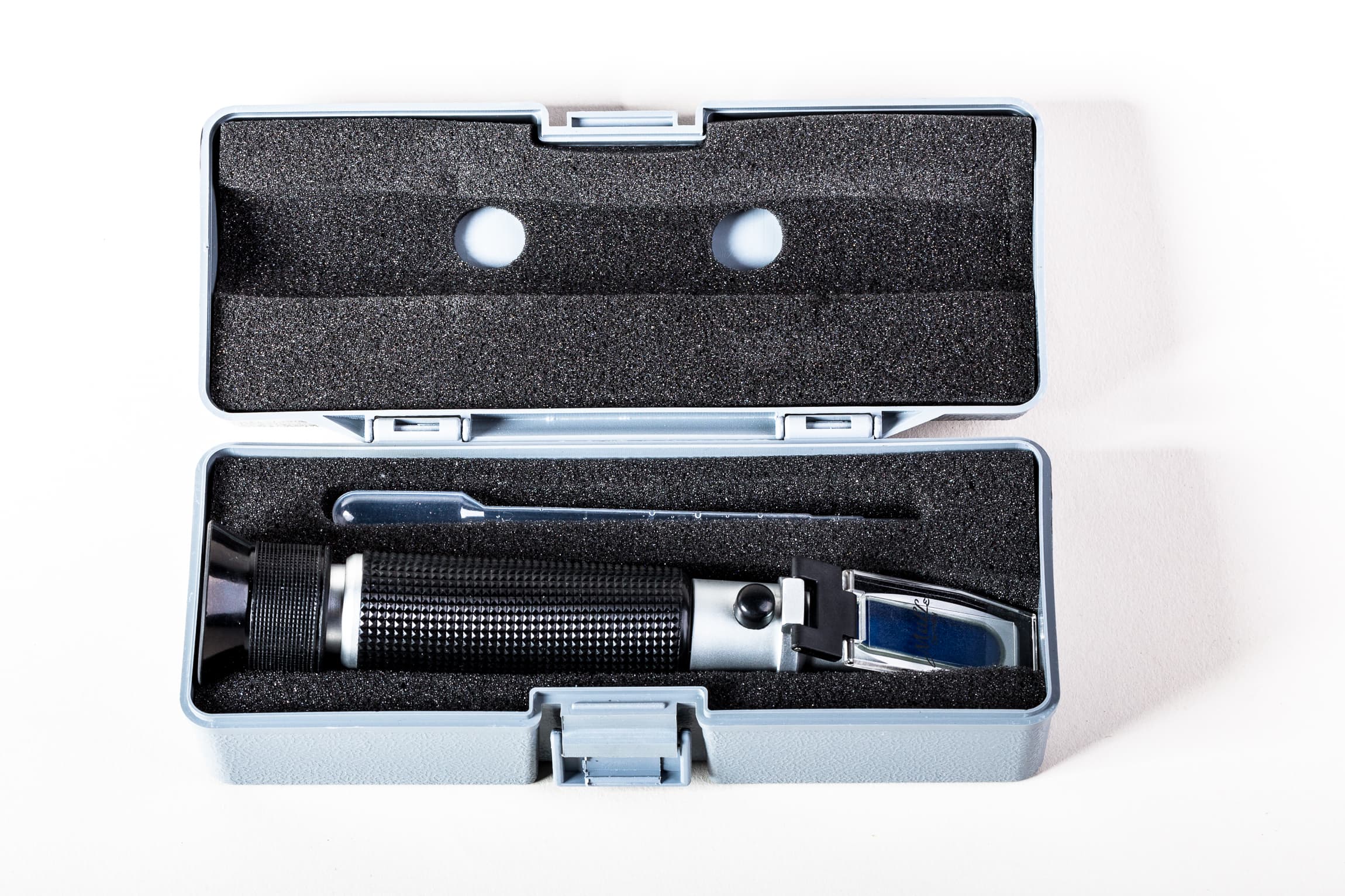
Aquarium refractometer for saltwater
Target about 1.023–1.026 specific gravity (roughly 32–35 ppt) for a FOWLR clown or firefish tank. ATC matters. Calibrate with the manufacturer's solution, often 35 ppt fluid, not a drop of RO and hope.
Know the number you are aiming for
For a fish-only-with-live-rock clown or firefish tank, aim for about 1.023–1.026 specific gravity, which is roughly 32–35 parts per thousand. Stability matters more than flipping between 1.024 and 1.025 every afternoon. Reef tanks often sit near the top of that range; FOWLR beginners should pick a target and hold it.
Freshwater test kits will not give you salinity. That is why the saltwater setup guide puts a refractometer on the day-one list next to salt mix and liquid nitrogen tests.
ATC and calibration
Automatic temperature compensation (ATC) reduces error when the instrument is not exactly at the printed calibration temperature. It is not magic. Let the refractometer sit at room temperature, put a couple of drops on the prism, close the cover, wait a few seconds, and read the scale.
Calibrate with the solution the manufacturer specifies. For many aquarium units that means 35 ppt calibration fluid, not a drop of RO and hope. An uncalibrated refractometer can be confidently wrong. Check monthly, after travel, and anytime the reading disagrees with how the tank looks.
Hydrometers still lie sometimes
A swing-arm hydrometer is better than guessing. Bubbles stuck to the arm and cheap plastic drift still produce bad numbers. Use one as a backup if you must; do not treat it as precision. Top-offs for evaporation are freshwater. Saltwater mix belongs in a bucket for water changes, measured before it hits the display.
Skip the calcium and alkalinity rabbit hole on this page. Those matter when you keep corals. A FOWLR clown pair needs salinity you can trust, plus the same ammonia/nitrite/nitrate discipline as any other tank. The picks below are an ATC refractometer, 35 ppt calibration fluid, and a Deep Six hydrometer only as backup. We may earn a commission if you buy. See the affiliate disclosure.
What we would buy
Dual-scale salinity refractometer with ATC
Dual scale for salinity (0–100‰) and specific gravity (1.000–1.070), automatic temperature compensation, no batteries. Typical handheld kit with case, dropper, and calibration screwdriver.
Let the instrument and the sample reach room temperature. Wipe the prism clean after each use. Recalibrate on a schedule and after bumps. Skip this if you already own a working ATC meter you trust.
See this listingBrightwell Aquatics Refractometer Calibration Standard, 60 ml
A refractometer you never calibrate also lies. This fluid is mixed for 35 ppt / about 1.026 SG so you can set the screw to a known marine value instead of guessing with RO.
Shake, use a few drops, wait for ATC if the unit has it, then wipe the prism. Do not pour used drops back into the bottle. Cap tight so evaporation does not change the standard.
See this listingCoralife Deep Six hydrometer
A swing-arm hydrometer is still a cheap backup for mixing salt when the refractometer is drying or you want a second opinion. The water test kit page already treats it as the salinity floor.
Tap out bubbles, read at eye level, rinse after. Skip this if you already calibrate the refractometer and do not want a second tool. It is a backup, not a reason to skip calibration fluid.
See this listing
Frequently asked questions
What salinity should a clownfish FOWLR tank run?+
About 1.023–1.026 specific gravity, roughly 32–35 ppt. Stability beats chasing a single perfect digit every hour.
Can I calibrate a refractometer with RO or distilled water?+
Only if the manufacturer says so. Many aquarium units are meant to be zeroed or checked with 35 ppt calibration fluid. RO alone is a common way to think you are calibrated when you are not.
Is a swing-arm hydrometer good enough?+
Better than nothing for mixing salt. Bubbles and drift lie. A calibrated ATC refractometer is the usual upgrade once you stay in marine.
Do I need calcium and alkalinity tests for a FOWLR clown tank?+
Not on day one. Salinity plus the nitrogen suite (ammonia, nitrite, nitrate, high-range pH) come first. Coral chemistry is a later reef problem.