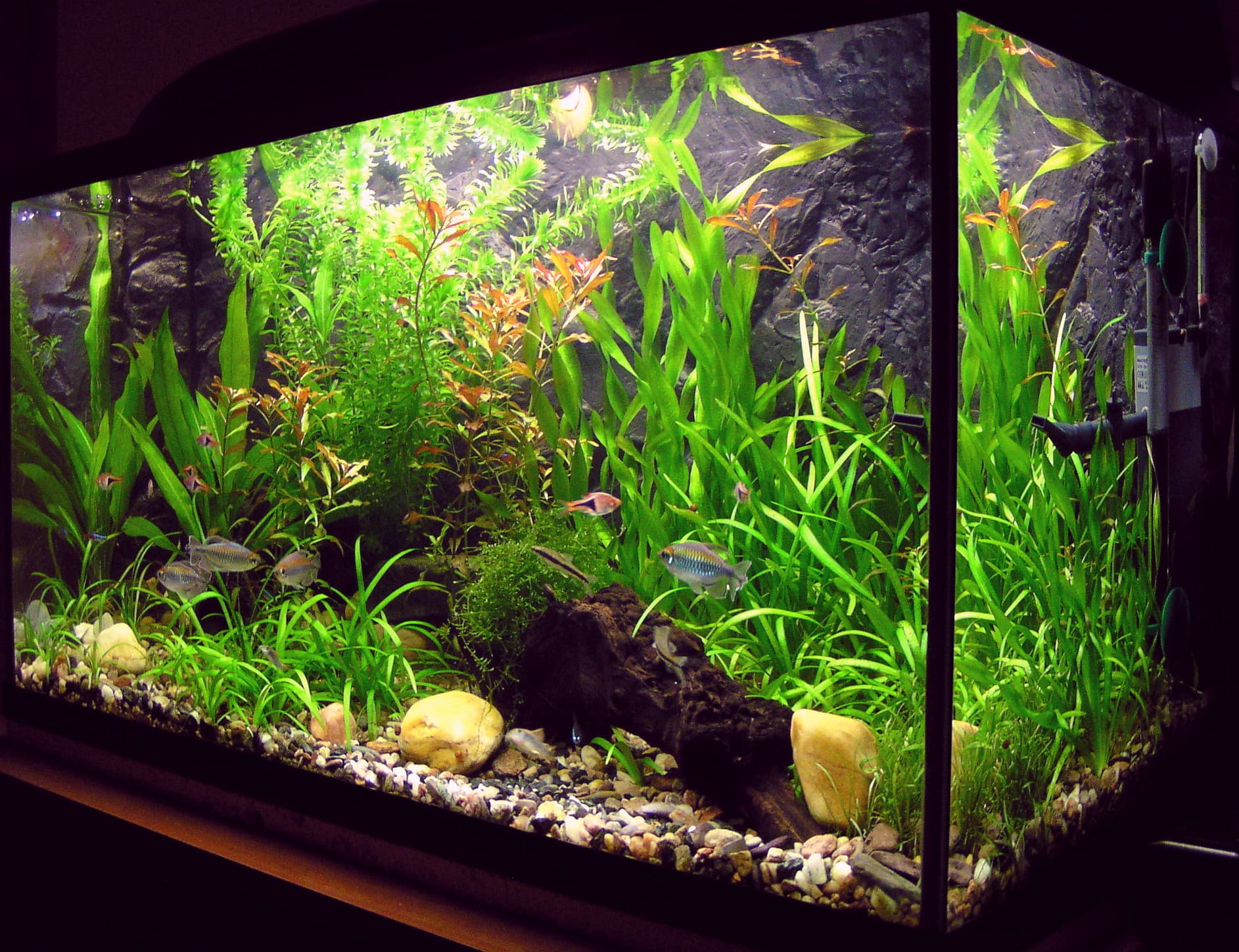
Photo: Aleš Tošovský · Public domain

other
Aquarium water conditioner (dechlorinator)
Municipal water usually carries chlorine or chloramine. Buy a bottle that handles chloramine, dose the replacement water, and do not treat a conditioner as a skip-the-siphon card.
Chlorine vs chloramine
Tap water is treated so people do not get sick. Aquariums see that as chlorine or, more often now, chloramine. Chlorine gas off if you wait long enough. Chloramine does not. A bottle that only claims chlorine can leave ammonia from broken chloramine in the bucket. Buy one that says it handles chloramine.
Call your utility or check their water-quality page if you want the local answer. When in doubt, assume chloramine and buy accordingly. The water-change guide already assumes a chloramine-capable dechlorinator in the weekly kit.
Dose the new water
Condition the water you are adding, at the rate on the bottle, then pour or hose it in temperature-matched. You can dose the display if you add water straight from the tap, but the mental model is still treat the incoming volume. Do not use conditioner as a weekly tank perfume on top of already-safe water.
Concentrated products (Prime is the usual example) use tiny doses. Two drops per gallon is a common small-tank pattern on that label. Measure; do not freestyle a capful into a 5-gallon. Sulfur smell from some concentrates is normal and fades.
Not a cycle, not a skip-the-siphon card
Some conditioners also bind ammonia and nitrite for a day or two. That helps during a fish-in cycle spike or a filter blunder. It does not remove the waste from the system. Your biofilter and partial water changes still do the real work. Link the cycle guide and the water-change guide before you treat a bottle as a protocol.
A test kit still matters. If ammonia or nitrite is up, change water and fix the cause. Conditioner is how you make the replacement water safe, not how you ignore the reading. The picks below are a concentrated chloramine conditioner, a larger easy-dose bottle, and a mid-size Tetra option for small tanks. We may earn a commission if you buy. See the affiliate disclosure.
What we would buy
Seachem Prime, 500 ml
Concentrated conditioner that removes chlorine and chloramine and temporarily detoxifies ammonia and nitrite. One 500 ml bottle covers a long stretch of weekly 25% changes on a 10–20.
Dose the new water. Sulfur smell is normal. This is not a substitute for water changes or a test kit. Skip a second bottle if you already own a chloramine-capable conditioner you trust.
See this listingAPI Stress Coat, 16 oz
Chlorine- and chloramine-capable conditioner in a larger, easy-dose bottle. Common chain-store pick when you want a pump-friendly jug for routine water changes without chasing a concentrate dropper.
Follow the cap dose for the gallons you are adding. Aloe slime-coat claims are secondary; the job here is making tap safe. Skip if Prime already sits next to your siphon.
See this listingTetra AquaSafe Plus, 8.45 oz
Chlorine, chloramine, and heavy-metal treatment in a mid-size bottle that suits 5–10 gallon keepers who do not want a liter of concentrate on the shelf.
Use on new setups and partial changes. Match temperature when you pour back. Skip a third conditioner if either of the first two already covers your tap.
See this listing
Frequently asked questions
Do I need a water conditioner that handles chloramine?+
Yes in most cities. Chloramine is chlorine bound to ammonia. A chlorine-only dechlor can leave that ammonia behind. Read the label for chloramine, not just chlorine.
Do I dose the tank or the new water?+
Dose the replacement water (or the tap stream as you fill). That is the water that carries the disinfectant. Spot-dosing the display as perfume every week does nothing useful.
Can Seachem Prime replace a water change?+
No. Binders that detoxify ammonia for a day or two are an emergency cushion during a cycle spike. Dissolved waste still leaves the tank when you siphon. See the water-change guide.
Does the sulfur smell mean the bottle went bad?+
A sulfur odor is normal on concentrated conditioners like Prime. It fades in the water. Follow the bottle dose; a little goes a long way.